• Following Us

  • Categories

  • Check out the Archives


  • Awards & Nominations

Star Trek: The Next Generation – Family (Review)

This January and February, we’ll be finishing up our look at the second season of Star Trek: The Next Generation and moving on to the third year of the show, both recently and lovingly remastered for high definition. Check back daily for the latest review.

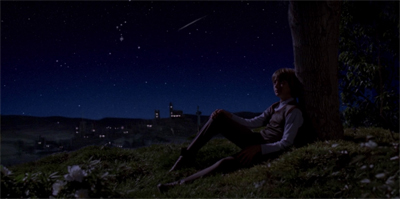
He’s still out there. Dreaming about starships and adventures. It’s getting late.

Yes. But let him dream.

– Robert and Marie try to figure out what all this “Star Trek” milarky is about

Starry, starry night...

Starry, starry night…

Continue reading

Star Trek: The Next Generation – Season 3 (Review)

This January and February, we’ll be finishing up our look at the second season of Star Trek: The Next Generation and moving on to the third year of the show, both recently and lovingly remastered for high definition. Check back daily for the latest review.

The third season is on a very short list of contenders for “the best season of Star Trek ever produced.” Maybe one or two other Star Trek: The Next Generation seasons make the list, maybe the first two seasons of the original Star Trek and maybe two seasons of Star Trek: Deep Space Nine. From beginning to end, the third season of The Next Generation hangs together remarkably well, churning out consistently entertaining adventures and several runs of truly classic episodes.

There are two main stretches in the season where the show produces episodes that could legitimately be ranked as the best of The Next Generation. The first comes around the midpoint of the season, from Yesterday’s Enterprise through to Sins of the Father, all episodes that would not look out of place on a “top ten episodes of The Next Generation” list. The second runs from Tin Man through to Sarek. And that’s ignoring the wonderful gems scattered throughout the season, from The Defector and The Hunted through to The Best of Both Worlds.

Of course, one of the most impressive aspects of the third season is the fact that the consistent quality visible on the television screen belies the chaos unfolding behind the scenes. The third season was a deeply troubled year of television, with plenty of unfortunate conflicts and moments of sheer desperation from the creative team. Perhaps the most wonderful demonstration of how far the show has come is obvious in the consistent professional quality of the output.

tng-bestofbothworlds1n

Continue reading

Star Trek: The Next Generation – Sins of the Father (Review)

This January and February, we’ll be finishing up our look at the second season of Star Trek: The Next Generation and moving on to the third year of the show, both recently and lovingly remastered for high definition. Check back daily for the latest review.

Sins of the Father is another watershed moment for Star Trek: The Next Generation and Star Trek as a whole. It’s really the first time that the franchise has invested in proper long-form world-building, rather than treating continuity as something that occasionally built up by sheer narrative momentum. It’s an episode that ends on an ambiguous note, suggesting more to come. It’s also an episode that nails down a lot of Klingon culture and tradition.

In a way, it’s the logical conclusion of a narrative style that has been building since The Enemy and The Defector earlier in the season; creating a sense that The Next Generation isn’t just the story of the crazy adventures that or crew have week in and week out, but a window into a much larger fictional universe. There’s a sense that the adventures of the Enterprise are set against a much larger and vaster universe, and Sins of the Father really gives us a glimpse at that.

It broadens the scope of The Next Generation, in terms of subject matter and also in terms of narrative possibilities.

Picard gets his Palpatine on...

Picard gets his Palpatine on…

Continue reading

Star Trek: The Next Generation – The Offspring (Review)

This January and February, we’ll be finishing up our look at the second season of Star Trek: The Next Generation and moving on to the third year of the show, both recently and lovingly remastered for high definition. Check back daily for the latest review.

The Offspring is an absolutely wonderful piece of Star Trek. In many ways, it is a spiritual successor to The Measure of a Man, the breakout show of the second season. (This similarity was one of the factors that led writer and script editor Melinda Snodgrass to harshly dismiss it as “fairly obvious and tired and stupid” in Captains’ Logs: The Unauthorized Complete Trek Voyages.) Sitting between two of the more epic and sweeping stories in the third season, The Offspring is a touching little story about parenting and childhood, and a nice character episode for Data.

It remains one of the most touching episodes of Star Trek: The Next Generation ever produced, and a fitting debut for both future staff writer René Echevarria and soon-to-be-prolific Star Trek director Jonathan Frakes.

Building a loving family...

Building a loving family…

Continue reading

Star Trek: The Next Generation – Yesterday’s Enterprise (Review)

This January and February, we’ll be finishing up our look at the second season of Star Trek: The Next Generation and moving on to the third year of the show, both recently and lovingly remastered for high definition. Check back daily for the latest review.

Yesterday’s Enterprise is one of the best-loved pieces of Star Trek ever produced. Its inclusion is a given in absolutely any “best of” poll being run for Star Trek: The Next Generation or even the franchise as a whole. A rather thoughtful piece of high-concept science-fiction exploring the importance of the right people in the right time, Yesterday’s Enterprise is proof that The Next Generation has truly come of age. After two years of wandering in the wilderness, the show has finally found its feet.

Of course, the production of Yesterday’s Enterprise was quite traumatic. The story and script went through multiple iterations between the original pitch and the version presented on the screen. The episode was written by pretty much the entire writing staff over the Thanksgiving weekend, racing against the clock to get it finished. Due to scheduling issues with Denise Crosby and Whoopi Goldberg, it was filmed in late December instead of early January.

As with so much of the third season, there’s a sense that the episode was held together by chewing gum and rubber bands. However, also like most of the third season, that sense only comes from those delving into the behind-the-scenes stories. Looking at the episode itself, this was a show on the top of its game.

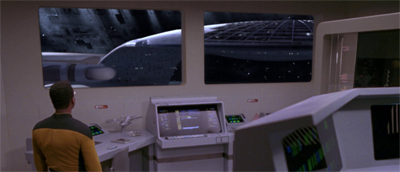
The battle bridge...

The battle bridge…

Continue reading

Star Trek: The Next Generation – The Defector (Review)

This January and February, we’ll be finishing up our look at the second season of Star Trek: The Next Generation and moving on to the third year of the show, both recently and lovingly remastered for high definition. Check back daily for the latest review.

The Defector is the script that earned Ronald D. Moore his place on the writing staff of Star Trek: The Next Generation. The writer had contributed the first script produced by Michael Piller, The Bonding, but it was his second pitch – improvised in the heat of the moment – that cemented Moore’s place with the franchise. He would stay on The Next Generation until it finished, before moving on to Star Trek: Deep Space Nine and eventually Star Trek: Voyager, although he departed Voyager quite quickly.

Although Moore retains the credit on the finished episode, apparently – like so many third season scripts – the final draft of The Defector was a collaborative effort involving the whole writing staff. The episode, the first instalment of The Next Generation to air in the nineties, turned out surprisingly well. Indeed, The Defector is one of the strongest episodes of a very strong season.

A defective defector?

A defective defector?

Continue reading

Star Trek: The Next Generation – Booby Trap (Review)

This January and February, we’ll be finishing up our look at the second season of Star Trek: The Next Generation and moving on to the third year of the show, both recently and lovingly remastered for high definition. Check back daily for the latest review.

Booby Trap is a bit of a mess. The writing credits for the episode, featuring four different writers credited with getting the idea from basic story to finished script. This wasn’t at all unusual in the show’s third season – consider the writing credits for Yesterday’s Enterprise – but it gives an indication of the chaos unfolding behind the scenes on the third season of Star Trek: The Next Generation.

It’s Michael Piller’s second credited script, and his first writing credit since he took over the writers’ room. (Although he did, along with Melinda Snodgrass, do a pass on Ronald D. Moore’s script for The Bonding.) As such, it is written with a very clear idea of where Piller wants to take the show, one that shines through a somewhat uneven and all-over-the-place plot, which often feels like several different scripts blended into one.

Building on what came before...

Building on what came before…

Continue reading

Star Trek: The Next Generation – The Bonding (Review)

This January and February, we’ll be finishing up our look at the second season of Star Trek: The Next Generation and moving on to the third year of the show, both recently and lovingly remastered for high definition. Check back daily for the latest review.

The Bonding is a pretty pivotal and momentous episode for Star Trek: The Next Generation. On one hand, it’s the first episode overseen by incoming executive producer Michael Piller. Piller would go on to become one of the most influential producers to work on Star Trek. Aside from steering The Next Generation towards success, he also created Star Trek: Deep Space Nine and Star Trek: Voyager, as well as overseeing the production of the first three Next Generation films.

However, The Bonding is also the first script written by Ronald D. Moore. Obviously, the version that made it to screen had been revised and tweaked by Melinda Snodgrass and Michael Piller, but The Bonding still feels like a Moore script. Ronald D. Moore would go on to be one of the more influential writers on The Next Generation and Deep Space Nine. He also worked (very) briefly on Voyager, before departing and heading up his own reboot of Battlestar Galactica.

So The Bonding is the beginning of something new, an original direction for The Next Generation. Featuring a powerful and wonderful opening half, The Bonding suffers a bit from falling into conventional Star Trek tropes towards the end of the episode. However, it’s still a clever and powerful piece of television.

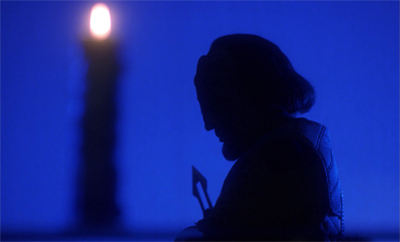
A bit of shadow...

A bit of shadowplay…

Continue reading

Star Trek: The Next Generation (DC) Annual #3 – The Broken Moon (Review)

This January and February, we’ll be finishing up our look at the second season of Star Trek: The Next Generation and moving on to the third year of the show, both recently and lovingly remastered for high definition. Check back daily for the latest review.

We’ll be supplementing our coverage of the episodes with some additional materials – mainly novels and comics and films. This is one such entry. This is actually supplementary to the first season of the Next Generation, specifically the episode Conspiracy.

If you were to construct a list of the most niggling unresolved plot threads in the history of the Star Trek franchise, “what was up with those things from Conspiracy?” would likely rank up there alongside “so, did Bajor ever join the Federation?” Funnily enough, author S.D. Perry would tie those two dangling plot points up in her Deep Space Nine relaunch book, Unity.

However, several other writers have tried to figure out what exactly was going on with those mind-controlling parasites who appeared at the end of the first season of Star Trek: The Next Generation and were never heard from again. According to Ronald D. Moore on Inside the Writers’ Room on the third Next Generation blu ray box set, various writers for the show tried to revisit the idea, but Roddenberry hated that episode so much nothing was ever developed.

The Broken Moon, the third annual for DC’s Next Generation comic book series, offers its own take on the mind-controlling parasites. While writer Michael Jan Friedman wisely avoids revealing too much about these creatures, the story suffers because it never figures out anything interesting to do with them.

It always bugged me...

It always bugged me…

Continue reading

Star Trek – The Wounded Sky by Diane Duane (Review)

This January and February, we’ll be finishing up our look at the second season of Star Trek: The Next Generation and moving on to the third year of the show, both recently and lovingly remastered for high definition. Check back daily for the latest review.

We’ll be supplementing our coverage of the episodes with some additional materials – mainly novels and comics and films. This is one such entry. This is actually supplementary to the first season of the Next Generation, specifically the episode Where No One Has Gone Before.

Diane Duane remains one of the most influential Star Trek tie-in writers ever to work on the franchise. She has been involved in publishing tie-in books pretty consistently since the early days of the publishing line. The Wounded Sky, her first tie-in novel, was lucky number thirteen in the “Pocket TOS” range, published in 1983. Her most recent tie-in novel, The Empty Chair, was published in 2006. As well as a distinguished career outside of Star Trek, she has written novels and comics for the franchise. She even has a television credit, for her work on the teleplay for Where No One Has Gone Before.

There’s a reason that Duane’s contributions to Star Trek fiction are held in such a high regard, and those reasons are quite clear on reading The Wounded Sky. It’s a beautiful and thoughtful piece of prose set within the Star Trek universe, one more concerned with continuing and advancing the spirit of exploration established in the television show than meddling in continuity minutiae or offering generic adventures starring James Tiberius Kirk.

It’s a whole-hearted recommendation for any fan of the original series.

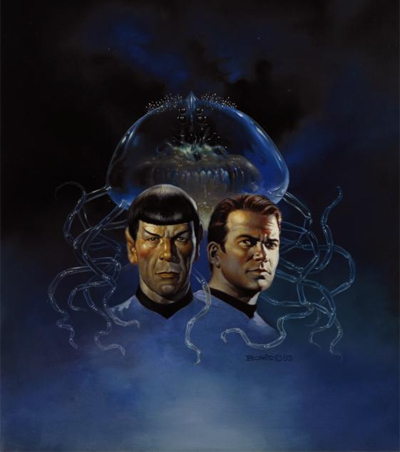
tos-thewoundedsky

Continue reading