• Following Us

  • Categories

  • Check out the Archives


  • Awards & Nominations

Non-Review Review: Get Out

This film was seen as part of the Audi Dublin International Film Festival 2017.

Get Out is a fantastic horror comedy from Jordan Peele.

The premise of Get Out is relatively straightforward, with Rose taking her African American boyfriend Chris home to meet her wealthy white parents. What follows is essentially a twenty-first century horror movie twist on Guess Who’s Coming to Dinner?, in which Chris finds himself growing increasingly uncomfortable in the presence of Rose’s very liberal parents. There is an awkward unease to his visit with the family, beneath all the welcoming smiles and the mannered politeness.

Terrorvision.

Terrorvision.

Get Out is a brilliantly wry and ironic piece of film-making, building a very traditional horror movie around a very intangible discomfort. After all, racism is not always something that can be cleanly defined and measured, often reflected in implications and patterns more than individual statements and actions. Get Out masterfully plays on this tension of something so horrifying being rendered so ethereal, most notably through its repeated (effective) use of scare chords and horror angles making normal social interactions especially uncomfortable.

Get Out is a promising directorial debut from veteran comedian Jordan Peele, one that skilfully uses the flexibility and surrealism of conventional horror beats to build a well-observed and uncanny piece of social commentary.
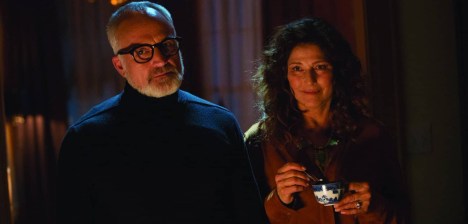
Couldn't be Keener.

Couldn’t be Keener.

Continue reading

Non-Review Review: The Age of Shadows

This film was seen as part of the Audi Dublin International Film Festival 2017.

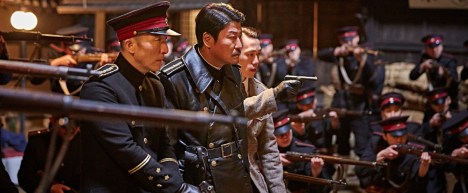
Kim Jee-woon’s The Age of Shadows is a picturesque patriotic period piece, an espionage thriller unfolding against the backdrop of late twenties Korea.

With the Japanese controlling the country, Captain Lee Jung-chool finds himself caught between the occupying forces and the local resistance. Alliances shift, manipulations unfold. Nobody can be trusted, and everything is doubt. Over the course of The Age of Shadows, the plot twists and turns, with shocking reveals and startling betrayals. Everything is beautifully captured on film, with some fantastic work by cinematographer Kim Ji-yong.

Arresting thriller...

Arresting thriller…

The Age of Shadows might be a little longer (and a little more twisty) than it really needs to be, padding out its run-time with gambits and counter-gambits that occasionally lean on flashbacks to provide essential context for the latest shift in allegiance. However, The Age of Shadows is also incredibly graceful, transitioning beautifully between a wide variety of tones and genres without ever missing a step. The Age of Shadows opens as an action film, contorts in a cat-and-mouse thriller, then becomes a more conventional patriotic epic.

In spite of its flaws with pacing and length, The Age of Shadows remains an impressive piece of cinema.

Feeling boxed in...

Feeling boxed in…

Continue reading

Non-Review Review: David Lynch – The Art of Life

This film was seen as part of the Audi Dublin International Film Festival 2017.

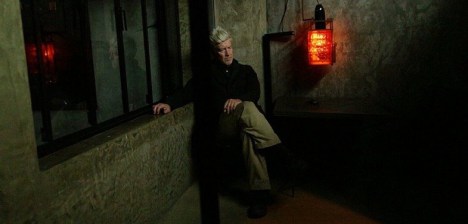
David Lynch: The Art of Life is a fairly conventional and straightforward affair as these sorts of documentaries go.

The documentary eschews a lot of the trapping of more adventurous entries in the genre. Indeed, most of David Lynch: The Art of the Life could have been filmed and recorded in David Lynch’s art studio, as the director talks at length about his life and the camera pans loving across his working space and intercuts his monologues with art work that seems to hit on some of the core themes of his narration at any given moment. There is something very standard about the way that David Lynch: The Art of Life is put together.

davidlynch1

Indeed, the film largely eschews any sense of outside context or material. The only voice heard over the course of the film is that of David Lynch himself, recording at his own home studio. Only rarely do the production team need to use material that doesn’t belong to Lynch to flesh out his dialogue, notably during his discussion of his time in Philadelphia. Those occasions are especially noticeable because the documentary takes great care to credit those sources, drawing attention to how much material comes from Lynch’s own archives and records.

However, there is a strong argument that Lynch is suited to this approach. Lynch is a surrealist artist, and it is very hard to argue that anybody has a stronger grip on or understanding of his work. Indeed, the most effective and striking aspect of David Lynch: The Art of Life is the way in which it allows Lynch to make his own arguments from his own perspective crafting a narrative that feels distinct and unique. For all that Lynch is a surrealist, David Lynch: The Art of Life allows him to make a strong case as the only sane man in an insane world.

davidlynch4

Continue reading

Non-Review Review: Trespass Against Us

This film was seen as part of the Audi Dublin International Film Festival 2017.

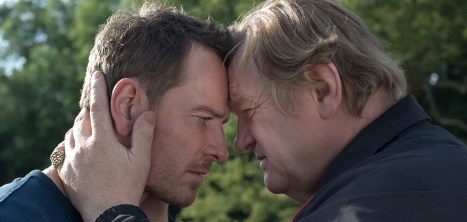
Trespass Against Us is a relatively solid crime thriller, albeit one that suffers slightly from heavy-handedness and clumsiness.

At its core, Trespass Against Us hews close to a tried and tested crime movie formula. Chad is a family man who is working hard to ensure that his children have a better life than he ever enjoyed, making sure that his children get an education that was never available to him and trying to do right by his long-suffering wife. At the same time, Chad struggles against his familial connections to organised crime, with his free-wheeling driving skills inevitably drawing him into his father’s tangled web of plotting and scheming.

"I knew it was you, Chad, and it breaks my heart."

“I knew it was you, Chad, and it breaks my heart.”

The most innovative aspect of Trespass Against Us lies in the decision to transpose those tried-and-tested character and plot beats to a novel setting. Audiences are well accustomed to epic crime stories about familial obligations set within the Irish American or Italian American communities, but Trespass Against Us unfolds against the backdrop of a family of Irish Travellers living in rural England. It is an interesting juxtaposition, given how relatively under-exposed that community is.

Trespass Against Us earns a lot of credit based on the novelty of its setting and the fantastic cast that it has assembled. However, a lot of that goodwill is squandered on a very conventional plot and an awkward clunking heavy-handedness that trips the script up in its third act.

"I keep telling you 'til Gordo's blue in the face..."

“I keep telling you ’til Gordo’s blue in the face…”

Continue reading

Non-Review Review: Berlin Syndrome

This film was seen as part of the Audi Dublin International Film Festival 2017.

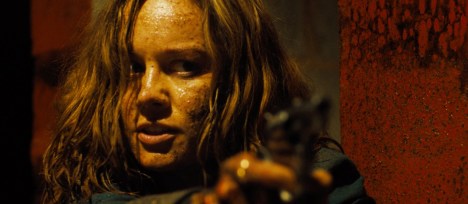
Berlin Syndrome is a potentially interesting psychological drama about kidnapping and captivity that gets  lost in a CriminalMinds-style focus on the perpetrator and an awkward attempt to shoehorn near-misses into the script.

Berlin Syndrome seems to be named in allusion to Stolkholm Syndrome, the psychological label applied to the co-dependent relationship that may form between captive and captor; the geographic shift in the title is a nod to the story’s setting. Shaun Grant and Cate Shortland’s adaptation of Melanie Joosten’s novel follows a young Australian backpacker who hooks up with a stranger for a one-night stand in Berlin only to find herself locked in a creepy apartment in the abandoned quarter.

Killer one night stand.

Killer one night stand.

Berlin Syndrome works best when it stays with Clare as she finds herself locked in this city apartment and trying simply to stay alive while weighing the possibility of escape. Cate Shortland brilliantly captures Clare’s sense of anxiety and uncertainty, balancing on a knife-edge as she tries to avoid provoking her captor while also trying to figure out a way out of this trap. However, Berlin Syndrome loses tension when it allows its focus to drift away from Clare and to focus upon the life and tribulations of Andi, the kidnapper.

The result is a film that struggles to maintain a sense of tone, veering radically between the trauma and terror of Clare’s experience and the more sensationalist thrills of a conventional serial killer narrative. Berlin Syndrome cannot decide whether it is a gripping psychological thriller or heightened schlock, and suffers from that lack of definition.

"This means nothing to me... ... oh, wrong song."

“This means nothing to me…
… oh, wrong song.”

Continue reading

Non-Review Review: Free Fire

This film was seen as part of the Audi Dublin International Film Festival 2017.

Free Fire is probably best described as “Character Actor Death Match.”

Director Ben Wheatley draws together a fine collection of recognisable and veteran character actors for his single-location thriller. Free Fire has a cast including Brie Larson, Armie Hammer, Cillian Murphy, Jack Raynor, Sam Riley, Sharlto Copley and Wheatley fixture Michael Smiley. The premise is remarkably straightforward. In Boston, in 1978, a bunch of Irish Republicans set out to buy some guns from an unreliable South African arms dealer, with various other parties caught in the crossfire.

All fired up.

All fired up.

The weapons deal gradually breaks down, whether due to mistrust between the parties or personal animosity between individuals. The abandoned industrial warehouse chosen to host the deal quickly descends into anarchy, with characters drawn into a sprawling (and intentionally muddled) fire-fight in which many of the participants seem entirely unclear about what is happening and which group to which their allegiance lies. “Sorry!” one character apologises over a cheap shot at a supposed ally. “I forgot which side I was on!”

Free Fire is a fast-moving free-wheeling absurdist action comedy that leans heavily upon a fantastic cast and on the director’s mischievous sense of fun.

Shooting the Brie-ze.

Shooting the Brie-ze.

Continue reading

Non-Review Review: Personal Shopper

This film was seen as part of the Audi Dublin International Film Festival 2017.

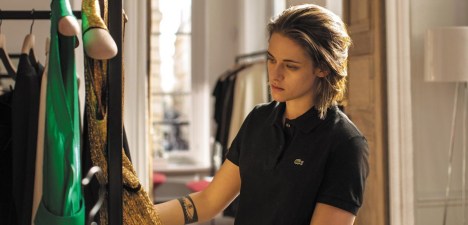
Personal Shopper is a fascinating study of personal disconnect and existential ennui filtered through the lens of a twenty-first century ghost story, but the film’s willingness to linger on extraneous detail is both its greatest strength and its most significant weakness. Personal Shopper is a movie that adds up a great deal less than the sum of its parts. While that feels undoubtedly like the intent of director Olivier Assayas, who takes great pleasure in the dangling threads and open endings, it still makes for a deeply unsatisfying picture.

Racking up an impressive indie resume.

Racking up an impressive indie resume.

Continue reading

Non-Review Review: Unless

This film was seen as part of the Audi Dublin International Film Festival 2017.

Unless is a film that woefully over-estimates its own profundity.

Unless is an indulgent, misguided, ill-judged, clumsy and offensive piece of work, a tone-deaf study of upper-middle-class ennui that laments the plight of characters at least two degrees of separation from an individual with an interesting perspective. Unless is a story about vicarious empathy, the tale of wealthy people whose response to horror and tragedy is to assume that they cannot feel true compassion for an individual’s suffering without embarking upon their own existential grief tourism.

Begging belief.

Begging belief.

All of this is compound by a script and direction that are suffocatingly heavy handed. As if afraid that its audience might somehow miss the subtle nuances of this tail of wealthy familial angst, Unless repeatedly trips into slow motion for the most mundane of moments as if hinting at some deeply-buried profundity. The music soars, even when the events of screen do not merit it, leading to a hilarious disconnect between the events happening and the movie’s estimation of them. And everything is ominously signposted, as characters muse endlessly in pseudo-evocative monologues about life.

Unless is, quite frankly, a terrible piece of film.

Norah battle to the strong.

Norah battle to the strong.

Continue reading

Non-Review Review: Their Finest

This film was seen as part of the Audi Dublin International Film Festival 2017.

Their Finest is a charming, if somewhat overly schmaltzy, Second World War comedy drama.

To be fair, the basic premise and setting do a lot to carry the film. The Second World still exerts a mythic power, particularly to the members of the United Kingdom that weathered the Blitz before marching (with American support) to victory. That moment is powerful and evocative, Britain serving as the “island fortress” holding Nazi German at bay. The imagery is striking, from the bombed out buildings to the rubble on the streets to the sounds of air raid sirens. It is a rich and evocative setting.

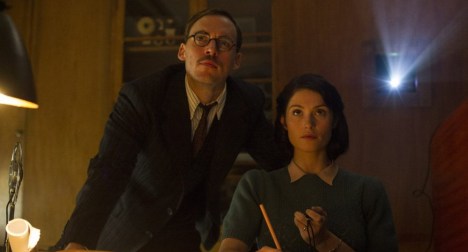
Projecting.

Projecting.

More than that, it is a setting that offers all manner of storytelling possibilities. As one of the defining moments of the twentieth century for Great Britain, it is the perfect fodder for telling smaller and more intimate tales. After all, everybody knows the basics of the Blitz, so there is more opportunity to explore the lives of those who exist at the fringe of the narrative. Those were extraordinary times, and so stories that might otherwise seem ordinary are elevated to be extraordinary by virtue of unfolding against those circumstances.

Their Finest is the tale of about one woman’s struggle to be heard and acknowledged as a writer against this backdrop, fighting the war at home in any number of ways. It is a fascinating premise, and one that feels relatively under-explored in the larger context of this defining historical moment. While Their Finest occasionally trips into cliché and melodrama, and occasionally even loses focus on the story that it is trying to tell. Still, a strong cast and a lot of charm carry Their Finest a long way.

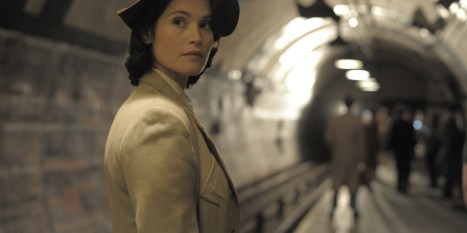
Station keeping.

Station keeping.

Continue reading

Non-Review Review: Mindhorn

This film was seen as part of the Audi Dublin International Film Festival 2017.

The first half of Mindhorn is a pretty enjoyable British show business farce.

Richard Thorncroft is a failed British character, struggling to keep his career alive following a run on the cult eighties television show Mindhorn. Throncroft made his name playing the eponymous detective with a bionic eye that literally allowed him to see the truth. Inevitably Thorncroft ended up washed up and forgotten, a failed star crashing to Earth. When he is offered one last job, he is forced to return to Mindhorn both literally and figuratively. It is a fairly standard set-up, with Mindhorn reveling in Thorncroft’s lack of self-awareness and decency.

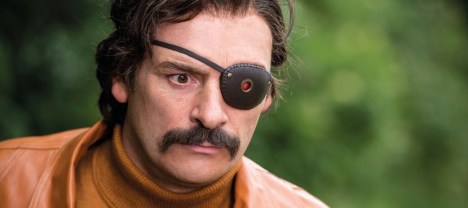
Not a patch on Bergerac.

Not a patch on Bergerac.

However, the second half of Mindhorn is something to behold, as this familiar set-up gives way to a high-energy surrealist farce.

Around midway through the film, Mindhorn makes a sharp pivot into something altogether more outlandish than the familiar British “failed celebrity” farce and evolves into something much less grounded and familiar. The result is one of the most enjoyable comedies in recent memory, and a cult film in waiting. As Thorncraft finds himself wading deeper and deeper into the chaos and insanity, Mindhorn feels like a psychological horror played as absurdist comedy. The result is nothing short of astounding.

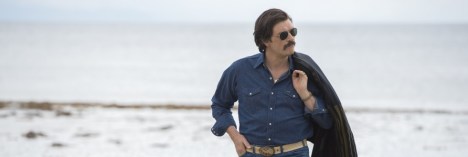
King of the Beach.

King of the Beach.

Continue reading