• Following Us

  • Categories

  • Check out the Archives


  • Awards & Nominations

Doctor Who: Arc of Infinity (Review)

To celebrate the fiftieth anniversary of the longest-running science-fiction show in the world, I’ll be taking weekly looks at some of my own personal favourite stories and arcs, from the old and new series, with a view to encapsulating the sublime, the clever and the fiendishly odd of the BBC’s Doctor Who.

Arc of Infinity originally aired in 1983.

We know who you are.

That changes nothing.

– the Doctor and Omega set one thing straight

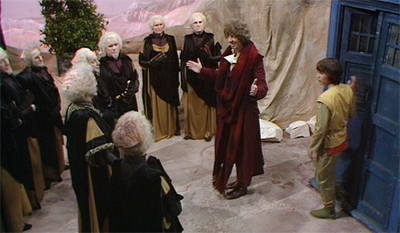
There really should be a bare minimum threshold of enjoyment for a Doctor Who story set on Gallifrey. I mean, these are beings who claim to control the whole of time and space. Their guards look like they modelled themselves on Adam Strange, replacing his jetpack with a cape, and there’s always an excuse for some good old-fashioned science-fiction ray-gun-related fun. How hard can it be to entertain an audience for four episodes in that particular setting?

Unfortunately, Arc of Infinity answers that question. Quite boring indeed, it seems.
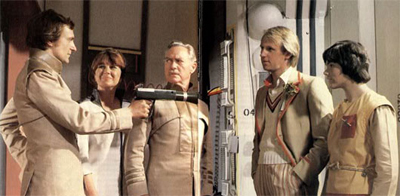
Going around in circuits...

Going around in circuits…

Continue reading

Doctor Who: Earthshock (Review)

To celebrate the fiftieth anniversary of the longest-running science-fiction show in the world, I’ll be taking weekly looks at some of my own personal favourite stories and arcs, from the old and new series, with a view to encapsulating the sublime, the clever and the fiendishly odd of the BBC’s Doctor Who.

Earthshock originally aired in 1982.

I would suggest you get your people well back. The hatch may be booby-trapped.

What about you?

Well, my arms are only this long. I can’t get any further away.

– the Doctor and Scott

Earthshock is regarded as one of the stronger stories of Peter Davison’s tenure on Doctor Who. It’s easy enough to see why. After all, it features not one but two memorable twists. It also harks back to the classic “base under siege” stories of the Patrick Troughton era. While it’s still very clearly a piece of early eighties Doctor Who, its production values hold up rather well compared to adventures from that era of the show. It’s written by Eric Saward and, like The Visitation, it has that same sense of tension and pace, building towards a truly massive final twist.

And yet, despite that, I find it very difficult to love Earthshock. I suspect a lot of that is down to how it seems like Doctor Who learned all the wrong lessons from Earthshock, retroactively tainting an otherwise very solid serial.

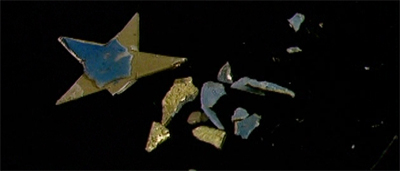
Shattered...

Shattered…

Continue reading

Doctor Who: Black Orchid (Review)

To celebrate the fiftieth anniversary of the longest-running science-fiction show in the world, I’ll be taking weekly looks at some of my own personal favourite stories and arcs, from the old and new series, with a view to encapsulating the sublime, the clever and the fiendishly odd of the BBC’s Doctor Who.

Black Orchid originally aired in 1982.

Why would I attack you? Have you done me any harm?

No!

No, then I’ve no reason to harm you. And besides…

Besides what?

Well, it wouldn’t be cricket.

– the Doctor, Ann Talbot and Muir

Black Orchid is pretty damn frustrating. There’s a lot of interest here, but sadly it’s mostly from a technical point of view. This is the first two-part adventure since The Sontaran Experiment. It’s also the first historical story told with no science-fiction elements excluding the TARDIS crew since The Highlanders. It’s also the penultimate adventure starring this version of the TARDIS crew, and the last Fifth Doctor serial before his world is turned upside down in Earthshock. So there’s a lot that should be interesting here.

Unfortunately, the writing is at best generic and at worst actively crap. Black Orchid feels exactly like the sort of thing that the BBC was doing without countless television shows other than Doctor Who, so Black Orchid needs to be able to do it to a reasonable standard. Instead, it feels like a murder mystery written by somebody writing with an Agatha Christie adaptation on in the background. It’s frustrating, because there’s a lot of potential here, but the end result is just disappointing.

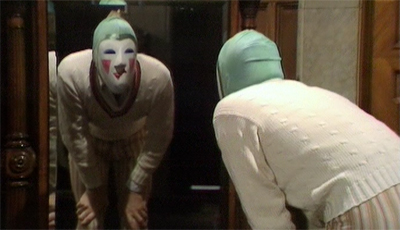
Clowning around...

Clowning around…

Continue reading

Doctor Who: Kinda (Review)

To celebrate the fiftieth anniversary of the longest-running science-fiction show in the world, I’ll be taking weekly looks at some of my own personal favourite stories and arcs, from the old and new series, with a view to encapsulating the sublime, the clever and the fiendishly odd of the BBC’s Doctor Who.

Kinda originally aired in 1982.

My dear, you can’t possibly exist, so please go away.

– a figment of Tegan’s imagination… or is it?

Every once in a while, there’s a story that undergoes something of a critical reappraisal among Doctor Who fans, as particular fans champion a forgotten story as a classic, attack the assertion that a given story is a classic or even suggest a stinker is in serious need of reevaluation. I actually like that, even fifty years after the show originally aired, there are still discussions to be had around what the good, bad and indifferent stories are. I think Kinda has cycled through this process quite a bit – a story initially overlooked in Peter Davison’s “much better than you remember, if you can get past the cheesy production values” first season, but one that has been somewhat re-appraised in the decades that followed.

A hot-shot colonist...

Continue reading

Doctor Who: Four to Doomsday (Review)

To celebrate the fiftieth anniversary of the longest-running science-fiction show in the world, I’ll be taking weekly looks at some of my own personal favourite stories and arcs, from the old and new series, with a view to encapsulating the sublime, the clever and the fiendishly odd of the BBC’s Doctor Who.

Four to Doomsday originally aired in 1982.

Come along, children. Not in front of our hosts.

– the Doctor finally manages to strike the right tone with his companions

Four to Doomsday is an interesting story, if only because it’s so rarely discussed. The second story of a particular Doctor seems to set the tone for their era. William Hartnell’s second story, The Daleks, introduced the iconic pepperpots. Patrick Troughton’s second serial, The Highlanders, introduced the companion Jamie, who would remain with him for the rest of his tenure. Jon Pertwee’s second story, The Silurians, saw Barry Letts taking over the role of producer. Tom Baker’s second story, The Ark in Space, is one of the most memorable and definitive instances of horror in the history of the show. Colin Baker had the misfortune to have Attack of the Cybermen as his second story, an adventure that set the tone for his time in the TARDIS. Sylvester McCoy didn’t really develop until his second season, but he’s probably the exception that proves the rule.

Peter Davison’s Four to Doomsday, on the other hand, just sort of… is.

Ground control to Major... dammit, why couldn't I get this image a year earlier in the show's run?

Ground control to Major… dammit, why couldn’t I get this image a year earlier in the show’s run?

Continue reading

Doctor Who: Castrovalva (Review)

To celebrate the fiftieth anniversary of the longest-running science-fiction show in the world, I’ll be taking weekly looks at some of my own personal favourite stories and arcs, from the old and new series, with a view to encapsulating the sublime, the clever and the fiendishly odd of the BBC’s Doctor Who.

Castrovalva originally aired in 1982.

Welcome aboard. I’m the Doctor. Or will be if this regeneration works out.

– the Doctor greets Adric

Tom Baker did seven years of Doctor Who. That is impressive. No matter which way you look it, and no matter how cynical you might be, it’s hard to argue that Baker’s departure wasn’t a fundamental and radical change to the series. In fact, his influence is so great that Castrovalva even opens with a rare pre-credits sequence, just to make sure that the viewers know that Baker is gone. (Despite the fact that John Nathan Turner apparently asked that the scene be shot so that the new season could open without having to show Tom Baker.)

Baker was going to be a tough act to follow. In fact, to many people, Tom Baker is still the Doctor. I don’t mean that in a sort of “stubborn fans refusing to acknowledge change” sort of way. I mean that in a “when The Simpsons make a Doctor Who reference they use Tom Baker” sort of way. He cast one hell of a shadow, and it’s hard to truly fathom how daunting it must have been to try and step out from that show.

That Peter Davison manages to do so is nothing short of amazing. Equally impressive is the fact that Castrovalva manages to be its own story. While it suffers – as with so many Bidmead scripts – from the fact that the technical limitations of the show can’t keep pace with his ideas, there’s still a lot to love here. And not just Peter Davison. Though he helps.

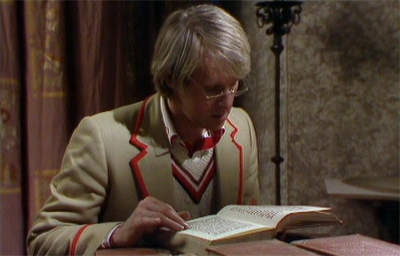
“Oh! The brainy specs!”

Continue reading

Doctor Who: Logopolis (Review)

To celebrate the fiftieth anniversary of the longest-running science-fiction show in the world, I’ll be taking weekly looks at some of my own personal favourite stories and arcs, from the old and new series, with a view to encapsulating the sublime, the clever and the fiendishly odd of the BBC’s Doctor Who.

Logopolis originally aired in 1981. It was the second instalment in the “Master” trilogy.

It’s the end… but the moment has been prepared for.

– the Doctor finally figures out what this year has been about

I don’t think the departure of a Doctor has even been a bigger deal than it was with Tom Baker. Sure, Christopher Eccleston’s first season was so fixated on death that his departure seemed preordained, even in the episodes written before his decision to leave. Similarly, Peter Davison’s final year seems designed to demonstrate that the universe is no longer suited to this particular iteration of the Doctor. Maybe David Tennant’s final year is focused on his passing, but the episodes are so spaced out that it makes little difference. However, we’ve just spent an entire year focused on the idea of entropy and decay, the inevitably of change and the notion that death is just a nature part of the cycle of things.

When the Doctor assures his companions that “the moment has been prepared for”, he may as well be looking at the camera, assuring those of us at home that the past year has been spent readying them for the unthinkable: the time when Tom Baker might not be the Doctor.

Final destination?

Final destination?

Continue reading

Doctor Who: Utopia (Review)

To celebrate the fiftieth anniversary of the longest-running science-fiction show in the world, I’ll be taking weekly looks at some of my own personal favourite stories and arcs, from the old and new series, with a view to encapsulating the sublime, the clever and the fiendishly odd of the BBC’s Doctor Who.

Utopia originally aired in 2007.

Ooo, new voice. Hello, hello. Hello. Anyway, why don’t we stop and have a nice little chat while I tell you all my plans and you can work out a way to stop me, I don’t think.

Hold on. I know that voice.

I’m asking you really properly. Just stop. Just think!

Use my name.

Master. I’m sorry.

Tough!

– the Master, Martha and the Doctor welcome a new old face back

It’s very hard to talk about Utopia without seguing into talking about The Sound of Drums or The Last of the Time Lords. Certainly the third season finalé is the most ambitious of Russell T. Davies’ end-of-season adventures. It’s a three-part adventure, the equivalent to one of those classic gigantic six-part serials. If you accept that logic, it breaks down neatly into the old two-parter-and-four-parter format that the writers used to use to prevent an extended story from dragging too much.

Utopia, of course, serves the function of the two-parter in this classic structure – the smaller chunk of the episode with its own plot points and characters and settings, but with very definite connections to the rest of the adventure. However, I’d argue that Utopia is a lot more successful than either of the two episodes following, and a lot of that stems from the fact that it devotes a considerable amount of time to quietly setting up plot points and characters that will pay off down the line.

It’s also a powerful subversion of the fundamental ethos of Doctor Who, which makes it particularly effective as we head into two episodes where the Master hijacks not only the TARDIS but the show itself.

No time like the end of the universe...

No time like the end of the universe…

Continue reading

Doctor Who: Death Comes to Time (Review)

To celebrate the fiftieth anniversary of the longest-running science-fiction show in the world, I’ll be taking weekly looks at some of my own personal favourite stories and arcs, from the old and new series, with a view to encapsulating the sublime, the clever and the fiendishly odd of the BBC’s Doctor Who.

Death Comes to Time originally broadcast on the BBC website in 2001.

I’m just another alien…

Alien to where?

Everywhere.

– the Doctor and Bedloe

There is quite a lot to like about Death Comes to Time. It offers a conclusion to Ace’s character arc. It features a stellar voice cast. Tannis is great villain. The script isn’t mired in continuity or slavishly devoted to the letter of the continuity of Doctor Who.

On the other hand, there’s quite a lot to loathe about Death Comes to Time. In moving away from Doctor Who continuity, it feels like a generic space opera. There’s a loss of the intimacy that defined the series. There’s a central revelation that makes no sense and a central moral philosophy which seems at odds with the very heart of Doctor Who. On top of that, it seems rather clumsily constructed. If it was intended as a pilot, the wrong characters are in focus for most of its not-insignificant runtime.

Hello, stonehenge!

Hello, stonehenge!

Continue reading

Doctor Who: The Caves of Androzani (Review)

To celebrate the fiftieth anniversary of the longest-running science-fiction show in the world, I’ll be taking weekly looks at some of my own personal favourite stories and arcs, from the old and new series, with a view to encapsulating the sublime, the clever and the fiendishly odd of the BBC’s Doctor Who.

The Caves of Androzani originally aired in 1984.

Androzani Major was becoming quite developed the last time I passed this way.

When was that?

I don’t remember. I’m pretty sure it wasn’t the future.

You’re a very confusing person to be with, Doctor, you know that?

I tried keeping a diary once. Not chronological, of course, but the trouble with time travel is one never seems to find the time.

– The Doctor and Peri reflect on travel in the TARDIS

At the risk of succumbing to cliché, The Caves of Androzani is my favourite Doctor Who serial from the classic series. A perfect encapsulation of Peter Davison’s tenure, a fitting farewell story that incarnation of the Doctor, and arguably the perfect regeneration adventure, The Caves of Androzani is one of the very few DVDs that I happen to own twice. And that’s quite a ringing endorsement.

Five outta five?

Continue reading