• Following Us

  • Categories

  • Check out the Archives


  • Awards & Nominations

Non-Review Review: Much Ado About Nothing

This film was seen as part of the Jameson Dublin International Film Festival 2013.

Joss Whedon’s adaptation of Much Ado About Nothing has delightfully intimate roots. Apparently, the movie stems from occasions in various Whedon households where he would host “Shakespeare Sundays”, with friends and family reading through classic plays in a very cosy environment. Much Ado About Nothing represents an extension of that intimacy. It’s literally filmed in Whedon’s own home, using money saved for his and his wife’s twentieth anniversary. Whedon even wrote the music, and his extended family are heavily involved. Jed Whedon supervised the music and his sister-in-law Maurissa Tancharoen can be seen singing at points.

That’s the wonderful charm of Much Ado About Nothing, a movie that seems to have grown and developed out of a genuinely personal creative space, a project deeply personal and intimate to Whedon, filmed while he was editing one of the biggest movies of all time. In a way, Much Ado About Nothing feels like the most talented and highest quality student film ever produced.

muchadoaboutnothing1

Continue reading

Non-Review Review: Stoker

This film was seen as part of the Jameson Dublin International Film Festival 2013.

Stoker is, without spoiling anything, essentially a vampire movie without a vampire. It’s a psychological thriller with a decidedly charged sexual undercurrent. It’s also a story of the things we keep secret, the dangers of blood and unwholesome desires. Park Chan-wook does an excellent job adapting Wentworth Miller’s screenplay for film, and the result is a strange and macabre beauty, a film that is occasionally a little too ethereal for its own good, but remains compelling and uncomfortable viewing.

Shear terror...

Shear terror…

Continue reading

Non-Review Review: The Look of Love

This film was seen as part of the Jameson Dublin International Film Festival 2013.

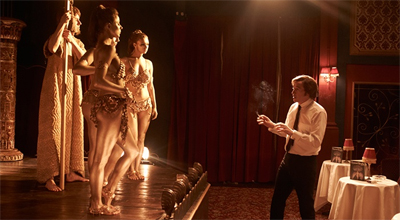
Paul Raymond (or “Paul Ray-monde!” as he introduces himself in flashback) is a pretty compelling character. The so-called “king of Soho”, Raymond was at one point the wealthiest man in Britain, owning an empire built on the back of gentlemen’s clubs, pornography and property. Michael Winterbottom’s exploration of Raymond’s life and times is a fascinating exploration of a very contradictory figure. On one hand, with his sharp suits and dignified dialogue with the press, Raymond presented himself as something approaching a gentlemen. He owned a nice house, his children partook of “all the right activities” and he was even fond of quoting Oscar Wilde. On the other hand, his empire was founded and built on an idea that was so simplistic it would be condescending if it wasn’t so successful: Raymond acquired his wealth through simple acknowledgement of the fact that people will pay to look at naked women.

All that glitters...

All that glitters…

Continue reading

Non-Review Review: Le Capital

This film was seen as part of the Jameson Dublin International Film Festival 2013.

Thanks to Costa-Gavras, Le Capital looks amazing. It’s crisp, it’s vibrant and it’s beautiful. For a movie about financial corruption, it moves along relatively quickly and with a lot of visual flair. The problem with Le Capital, though, is that it’s really a very simplistic version of a story we’ve all seen countless times before. A person assumes a large amount of power, only for that power to have a potentially corrupting influence. Okay, Marc Tourneuil is already a successful executive when good fortune thrusts him into the role of CEO of one of France’s largest banks, and he’s certainly not naive when he negotiates his salary and bonus scheme, but Le Capital hints early on that there is some level of decency to Tourneuil before the wealth and influence start chipping away. As such, as the movie explores his corruption and the way that power erodes him, Le Capital feels like an engaging modern telling of a story that we’ve already heard quite frequently.

Byrne the bondholders...

Byrne the bondholders…

Continue reading

Non-Review Review: Far Out Isn’t Far Enough – The Tomi Ungerer Story

This film was seen as part of the Jameson Dublin International Film Festival 2013.

A lot of the strength of a documentary lies in the subject matter. If you can find an interesting premise or subject, then you’ve got a hook. Far Out Isn’t Far Enough, the debut from director Brad Bernstein, picks a fascinating central character – writer and artist Tomi Ungerer. It is very tough to reduce Ungerer to a one-line synopsis or to define him in a relatively short strong of words, but Far Out Isn’t Far Enough takes a look at the life and times of the artist who made an enormous impression on American popular consciousness, only to fade from view surprisingly quickly – retiring first to Nova Scotia and then to Ireland. Far Out Isn’t Far Enough is a fascinating portrayal of a unique talent, with Ungerer making for a charming and engaging subject. While Far Out Isn’t Far Enough might gloss over his departure from the scene a bit, it’s a fascinating overview of the life and work of a truly gifted individual.

faroutisntfarenough1

Continue reading

Non-Review Review: The Good Man

This film was seen as part of the Jameson Dublin International Film Festival 2013.

Films about social justice can occasionally seem a bit clunky. Part of this is down to the way that most seem to have been conceived as simplistic morals rather than engaging stories, but there’s also a tendency to earnestly moralise in a manner that condescends to the audience. The Good Man manages to avoid the worst of these problems with a smartly-constructed third act that dovetails its two central narratives into one another, and because it accepts that the problem with our attitudes towards disadvantage and poverty in the rest of the world isn’t down to a simply lack of awareness. It is, the film suggests, easy to know about a problem, and easy to try to help. Understanding, on the other hand, is a far more challenging proposition.

We're all connected...

We’re all connected…

Continue reading

Non-Review Review: Side Effects

This film was seen as part of the Jameson Dublin International Film Festival 2013.

On one level, Side Effects is a deliciously pulpy medical thriller, with the kind of zig-zagging twisty plot that you’d expect from a Michael Crichton novel. It’s more than satisfying on these terms, almost serving as a feature-length pilot for an imaginary medical drama starring Jude Law. After all, with House off the air, there’s a clear gap in the market for a smooth English actor playing the lead in an unconventional medical drama. If he is sarcastic, all the better. While the genius of the early years of House came from mashing up the medical subgenre with the police procedural to produce a then-unique hybrid, Scott Z. Burns instead blends the medical drama with a decidedly more trashy and sordid thriller to provide a satisfyingly twisty drama.

However, on another level, Side Effects teases issues that are far more interesting than the movie it eventually becomes. It’s very frustrating when your red herrings feel like they’d produce a more thoughtful or insightful piece of cinema than the final story. Side Effects broaches topics that mainstream cinema hasn’t really engaged with, and the opening scenes flirt with the idea of providing an entirely different film. It’s not always fair to judge a film for what it isn’t, but the problem is that Side Effects sets up a much more tempting and intriguing look at medicine than we get with the final product.

Love isn't the only drug...

Love isn’t the only drug…

Continue reading

Non-Review Review: Mea Maxima Culpa – Silence in the House of God

This film was seen as part of the Jameson Dublin International Film Festival 2013.

It’s very hard to know how to react to the seemingly bottomless pit of sex abuse allocations that have surfaced against the Catholic Church over the past couple of decades. Mea Maxima Culpa reveals that not only does the institutional abuse reach far into the past of the religious organisation, but that the Vatican was aware of these betrayals and violations of trusts for forty years. Mea Maxima Culpa is brutally candid in the way that it exposes the steps that the Catholic Church took to insulate and protect itself from these allegations and insinuations, even pointing out that most modern concessions and apologies are more concerned about the violation of the sanctity of the priesthood than with the damage done to the victims.

Mea Maxima Culpa is rough and overwhelming at times, but it’s hard to fault the documentary for this candid approach to the most uncomfortable subject matter. It’s well-constructed, thoughtful and also quite affecting – a powerful piece of documentary cinema that really exposes the true extent of a problem that has only been acknowledged in the past decade or so.

meamaximaculpa6

Continue reading

Non-Review Review: Broken

This film was seen as part of the Jameson Dublin International Film Festival 2013. It was the opening gala.

Broken is that rarest of beasts, a suburban ensemble drama that manages to merge charming humanism with gritty reality. Mark O’Rowe’s adaptation of Daniel Clay’s novel is filled to the brim with humour and joy, but isn’t afraid of the darker shades of emotion. It’s unflinching and occasionally brutal, a candid exploration of the intersecting lives of those inhabiting a small close. However, this honesty lends the film credibility in its lighter moments. The smiles, the giggles and the laughter that come from many off the movie’s more human moments feel earned, and there’s a wonderful sense of balance to Broken, as if to concede that life cannot be composed of entirely happy moments, nor entirely sad. That’s the wonder of it all, and Broken skilfully manages to combine those extremes into a single charming and engaging coming of age drama.

A close call...

A close call…

Continue reading

Non-Review Review: Warm Bodies

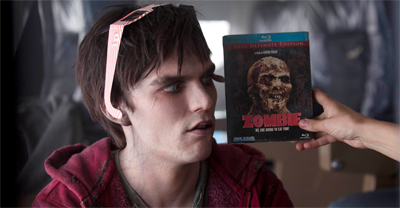
Warm Bodies is a very curious film – a weird genre fusion that feels like it really shouldn’t work, but with just barely enough charm to pull it off. The movie hinges on the wonderfully crazy idea of blending zombie horror with romantic comedy. Drawing from the book of the same name, the film is light enough and fast enough that it never overstays its welcome. There are times when it overplays its hand, when it threatens to descend into sentimental nonsense, and when the two genres seem to threaten to smother one another. However, it has enough charm and wit that it never veers too far off course before correcting itself.

At its best, it demonstrates that there’s life in these two old genres yet.

Uncanny.

Uncanny.

Continue reading