• Following Us

  • Categories

  • Check out the Archives


  • Awards & Nominations

Non-Review Review: The Hate U Give

The Hate U Give is an earnest and sincere attempt to grapple with a very important issue.

The Hate U Give is essentially structured around the aftermath of a police shooting in the United States, following a young woman named Starr who witnesses one of her oldest friends gunned down by a police officer during what should have been a routine traffic stop. What follows forces Starr to reassess everything that she thought she knew about the life that she was living. The Hate U Give puts the audience squarely in Starr’s position as the community around her begins to fracture and fray.

Taking a hands-off approach.

This is a very timely and very relevant movie, particularly in the context of current tensions within the United States. It frequently seems like a lot of the core issues in the United States come down to a complete lack of empathy or understanding, an inability or unwillingness of certain Americans to examine life as lived by people outside their frame of reference; individuals who respond instinctively with fear to social and political movements like “Black Lives Matter”, who refuse to properly consider the context of events like the protests in Ferguson.

The Hate U Give is occasionally a little clumsy in its storytelling, in how it approaches the arguments that it is making. It is a little broad in places, certain elements exaggerated for effect. Nevertheless, The Hate U Give offers an engaging and insightful exploration of a turbulent moment in contemporary American culture.
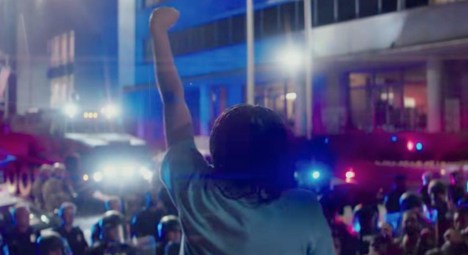
“All power to all the people.”

Continue reading

Non-Review Review: Beautiful Boy

Beautiful Boy is a cocktail essentially comprised of three contrasting main ingredients, none of which particularly gel.

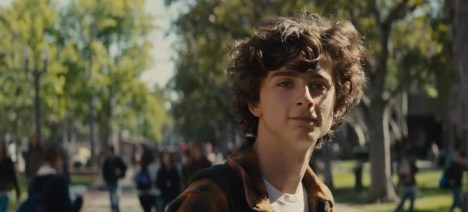
Most obviously, it is a traditional performance-driven piece of awards fare designed to showcase the talents of Timothée Chalamet and Steve Carrell; there is a lot of shouting, a lot of confrontation, a lot of listless staring. On top of that, it is also a more modern piece of awards fare, one younger and hipper than stodgy old dramas about addiction; Beautiful Boy might be a good seventy-percent intercut montage set to music of beloved artists like David Bowie and John Lennon. The remaining third is a fifties moral panic anti-drugs film for the twenty-first century.

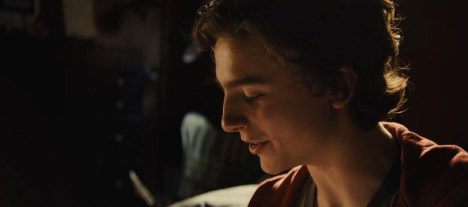
This movie is Timothée Chala-meh.

These three styles of film are constantly battling within Beautiful Boy. There must be a way to synthesise these three competing approaches into a holistic and satisfying piece of work, but instead Beautiful Boy bounces frantically from one mode to another, never settling on a single cohesive tone or approach. This is disappointing, as Beautiful Boy is a very earnest and sincere piece of work. There’s a strong sense that the film is trying to articulate something that is both important and profound. However, it just cannot clearly translate that sentiment into speech.

Beautiful Boy is a mess of a film, but a fascinating mess in a number of places.

Yes. Most of the screenshots of this film will be of Timothée Chalamet. Why?

Continue reading

Non-Review Review: Bumblebee

In some respects, Bumblebee feels like the Transformers movie that the franchise has been trying and failing to produce for over a decade.

Bumblebee has its share of problems. Some of those are inherited from a franchise working from a template established by Michael Bay, which means that the style of action direction carries over in certain cases. Some of those are inherited from the fact that the film is “based upon the toys produced by Hasbro Entertainment”, which means that the film occasionally feels obliged to cram in various characters and elements for reasons more toyetic than narrative.

“You really don’t get this ‘robots in disguise’ thing, do you?”

That said, Bumblebee largely works due to a combination of factors. Hailee Steinfeld is the most likable protagonist in the series to date, if not the most likable character in general. The direction from Travis Knight largely steers clear of the cluttered excesses that define the other films in the franchise. The script from Christina Hodson cleverly pushes the film down both in scale and spectacle, meaning that Bumblebee is the first Transformers film not to loose sight of its humanity (let alone its human characters) in its storytelling.

Bumblebee is perhaps not the best film that it could be, but is very easily the best Transformers film to date.

A girl and her robot.

Continue reading

Non-Review Review: The Favourite

If the stock comparison to The Killing of a Sacred Deer is The Shining, then the obvious comparison to The Favourite is Barry Lyndon.

It is a stock comparison, bordering on facile. After all, there is a world of difference between Yorgos Lanthimos’ story of two women competing for the attention of Queen Anne and Stanley Kubrick’s story of the rise and fall of a roguish Irish gentleman. However, the similarities are striking. Both are eighteenth century period pieces that boldly eschew the conventions of period dramas. Both The Favourite and Barry Lyndon rely heavily on natural light and repeatedly draw the audience’s attention to the nature of the narrative of constructed.

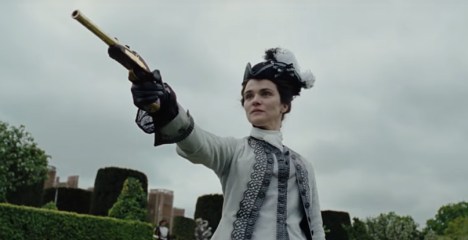
You Only Live Weisz.

However, the most striking point of comparison might be thematic and philosophical rather than simply literal or textual. Just as The Killing of a Sacred Deer explored the collapse of a family unit through the prism of decaying masculinity in a manner that recalled The Shining, the world of The Favourite is defined by its study of power, pettiness and pomposity. As in Barry Lyndon, the fickleness of comfort and the arbitrary nature of security are a recurring fascination for The Favourite, which meditates repeatedly on how precarious such positions can be.

The Favourite is a story of cruelty, both human and natural.

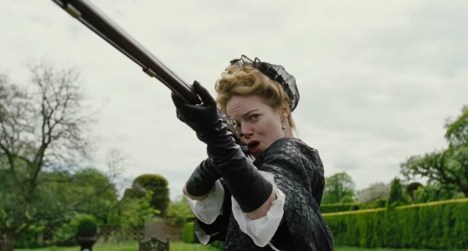
A Stone-Cold Schemer.

Continue reading

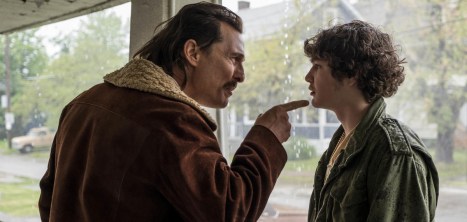
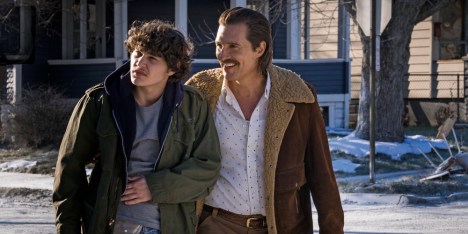
Non-Review Review: White Boy Rick

White Boy Rick struggles to articulate what it is actually saying.

The basic premise of White Boy Rick is quite clear from the outset. The film is set in Detroit. Barring a coda, the bulk of the action unfolds in the four years following on from 1984, during Ronald Reagan’s second term. Although the President himself is not directly discussed in the context of the narrative, there is an early conversation in which two agents of the Federal Bureau of Investigation and one member of the Detroit Police Department ruminate upon Nancy Reagan’s famous “just say no” appeal.

Ricked off.

White Boy Rick is an earnest and well-intentioned movie exploring the consequences of the so-called “War on Drugs” in eighties America, and the manner in which that campaign was both fruitless in terms of its nominal objectives and actively harmful to the communities in which it unfolded. White Boy Rick attempts to position itself as a tragedy about a young man – the eponymous character’s age is something of a recurring battle cry – who happens to get wrapped up in something much bigger than his own circumstances.

Unfortunately, White Boy Rick struggles to construct a strong and engaging narrative around this central thesis statement, repeatedly stumbling in trying to graft the character’s arc and decisions to the broader social commentary that it wants to make. The result is a deeply frustrating film that squanders potentially interesting subject matter.

Daddy’s home.

Continue reading

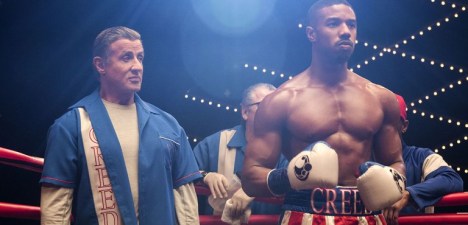
Non-Review Review: Creed II

Creed II is a much better sequel than Rocky IV deserves.

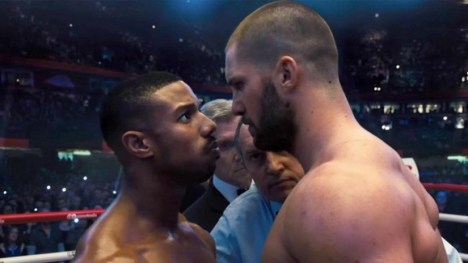
At the heart of Creed II is the grudge match that fans of the franchise had been anticipating since the core concept of this “legacy-quel” series was first suggested. Adonis Creed in the ring against Viktor Drago. The son of Apollo Creed squaring off against the son of Ivan Drago, a generational rematch of the bout that cost Apollo Creed his life in Rocky IV. Adonis Creed is haunted by the name that he inherited from a father that he never met, and so it seems only reasonable that his film series would circle back around to allowing him closure on this.

A Rocky Road Less Travelled.

There is an irony in all of this. One of the central themes of Creed was the challenge of this spin-off movie franchise existing in the shadow of the original beloved Rocky series. Co-writer and director Ryan Coogler rose to that challenge, and created one of the great franchise success stories of the twenty-first century. As a result, it occasionally feels like Creed II is not so much fighting to escape the shadow of Rocky IV as much as it is wrestling with the weight of Creed.

Creed II is a solid and sturdy sequel to Creed, although not a superior one. It isn’t necessarily the sequel that Creed deserves.

To the Viktor, the spoils…

Continue reading

Non-Review Review: Mowgli

Watching Mowgli, it very quickly becomes clear why Warner Brothers sold the film to Netflix, rather than pressing forward with a theatrical release.

Mowgli was always going to suffer in comparison to The Jungle Book, Jon Favreau’s live-action reimagining of the animated Disney classic. When the two projects were in development, they seemed like obvious dueling movies; like The Prestige and The Illusionist, or Deep Impact and Armageddon, or Volcano and Dante’s Peak. It seemed like a game of chicken between two major studios; two rakes on the same beloved property arriving in cinemas at close proximity to one another. When it became clear that The Jungle Book would hit cinemas first, the fear was that Mowgli would look like an inferior imitation.

Bagheering belief.

Those fears were misplaced. Indeed, the most striking thing about Mowgli is how different and distinct it is from The Jungle Book. Despite the similar premise and being based on the same material, there is little chance of any casual audience member confusing them. Ironically, this ends up being an issue of itself. Mowgli is distinct from the iconic Disney film, but for good reason. Andy Serkis’ film is drawing more directly from the work of Rudyard Kipling. This explains the significant differences in terms of tone and narrative. These differences are intriguing and engaging, revealing in their own ways.

However, these differences are also informative. Mowgli‘s relative fidelity to its source material ultimately serves to underscore just how effectively Disney changed the underlying story in The Jungle Book, and just how carefully crafted that other film is to a larger audience. Mowgli is not a bad film, although it does have some serious flaws. However, it is a much less appealing and much weirder film than The Jungle Book. As a result, it makes sense that the film would end up at home on Netflix, where it can afford to be a little stranger and a little more eccentric than the perfectly calibrated Jungle Book.

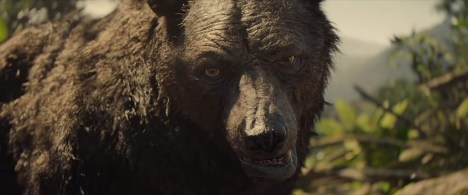
Bear with me.

Continue reading

Non-Review Review: Green Book

Green Book feels like a movie lost in time.

If Green Book feels displaced, it is not from the early sixties backdrop against which the story unfolds. Instead, Green Book feels like an awards season movie that was produced in the early nineties, and which slipped gently under the radar until it was unearthed at some recent point. Green Book very much belongs to those early nineties awards fare meditations upon race and class in America – especially Driving Miss Daisy, the film it most strongly evoked.

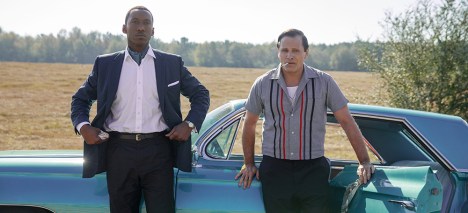
Going by the Book.

As a piece of nineties awards fare, Green Book would be judged rather kindly. It is crowd pleasing. It is broad. It is earnest, without being unnecessarily confrontational. It is also appreciably smarter than many of those nineties commentaries on race in America, consciously subverting and even inverting a lot of the expectations of the form. it is designed in such a way as to leave the audience with a big grin on their face, playing with familiar sets of narrative logic that nests a classic “odd couple” movie inside an exploration of the prejudices of the Deep South in the sixties.

However, Green Book is not a lost piece of nineties awards fare. It is a product of the current era. While it might track ahead of similarly ill-judged (and sadly contemporaneous) awards season movies about race like The Blind Side or The Help, it is still far more clumsy than a movie tackling these ideas should be in a twenty-first century context. Green Book feels positively outmoded when compared to fellow high-profile films about race like BlacKkKlansman or Sorry to Bother You or If Beale Street Could Talk. Green Book feels like a relic.

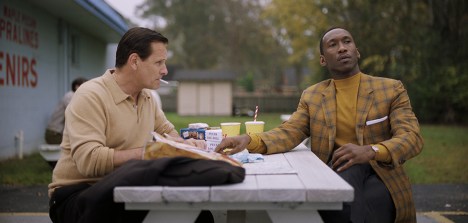
Food for thought.

This is a paradox. Green Book is significantly better in terms of production than many of the films to which it consciously invites comparison, films by white directors inspired by true events and coloured by nostalgia. However, it is significantly weaker than many of the more vital and dynamic films grappling with the same subject matter. Green Book often feels caught between these two extremes, and this presents a challenge in properly assessing it.

Green Book is a very good example of the kind of movie that it wants to be. However, it leaves unanswered the question of whether movies like this still have a place in the modern cinematic landscape.

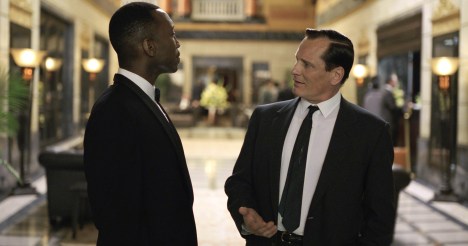
“Doctor Shirley, you can’t be serious?”

Continue reading

Non-Review Review: Roma

There’s a lyrical beauty to Roma, a decidedly intimate and personal project for director Alfonso Cuarón following on from his triptych of more mainstream fare.

Roma is a very different beast from Harry Potter and the Prisoner of Azkaban, Children of Men and Gravity. It is much smaller in scale, focusing on the life of a maid who works for a slightly-above-middle-class family in early seventies Mexico city. Shot in black and white, often favouring quiet scenes and still shots, there is an observational aspect to most of Roma, a sense in which the movie very gently and very elegantly watches life unfold in slow motion without any sense of hurry or panic. For most of its runtime, Roma is content to just be.

This is not a surprise. After all, Cuarón has been candid about how much of the film is drawn from his own childhood. Even without that outside knowledge creeping in, Roma seems to tacitly acknowledge it in the central role that the cinema plays in the story. At one point, the young children take a trip to the picturehouse to see the space thriller Marooned, with Cuarón making a point to showcase a sequence that evokes his own work in Gravity. As much as this is a story about a young woman who works as a maid to a privileged Mexican family, it is undoubtedly filtered through the lens of childhood.

Although nominally set against the backdrop of early seventies Mexico, Roma repeatedly suggests that the larger world is but the echo chamber for the uncertainty and tumult within a family unit; when earthquakes happen and revolutionaries march, they are simply expressions of more intimate traumas and challenges facing these characters. In the world of Roma, it is as below as above, reflecting the way in which a child might see the outside world as nothing more than an extrapolation of the home life that they know so well.

This lends Roma an almost magical quality. Although the film and its characters are complex and developed, there is something poetic in the way in which Cuarón chooses to tell this particular tale. Cuarón never rushes or hurries his characters, instead giving them room to breath. He finds a zen-like calm in the stability of the everyday, the safety of routine against the backdrop of larger anxieties and uncertainties. The characters in Roma repeatedly navigate life-changing events, but underscored with a childlike certainty that they can survive them.

Roma is a genuinely moving piece of cinema.

Continue reading

Non-Review Review: Won’t You Be My Neighbour?

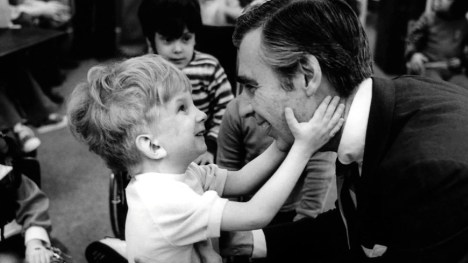
Won’t You Be My Neighbour? is an affecting and thoughtful exploration of a key figure in American popular consciousness.

Documentary maker Morgan Neville has established himself as a masterful navigator of the history of popular culture, of the depth and shadow often obscured by memory. Neville is perhaps most famous for his fascinating exploration of the back-up singers who provided a foundation for more recognisable stars in 20 Feet from Stardom, and he was also responsible for the documentary They’ll Love Me When I’m Dead, which probably made a more coherent narrative of The Other Side of the Wind than the film itself.

Won’t You Be My Neighbour? tells the story of children’s entertainer Fred Rogers, a staple of American television since the late sixties. Although the performer passed away more than a decade and a half ago, he casts a long shadow. There has been a renewed interest in his persona. Jim Carrey is playing a fictionalised version of the present in Kidding, while Tom Hanks will play a more official version of the man in a biography directed by Marielle Heller. (The film was originally titled Are You My Friend?, but is reportedly in the process of being retitled.

It is interesting to wonder why Fred Rogers is of such great interest at this precise moment, something that Won’t You Be My Neighbour? skirts around without tackling directly. Instead, Won’t You Be My Neighbour? is a sweet and affecting documentary that maybe brushes a little too lightly against its subject in places, but speaks most convincingly to what he represented and why he is so beloved.

Continue reading