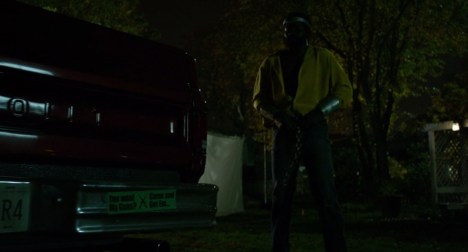
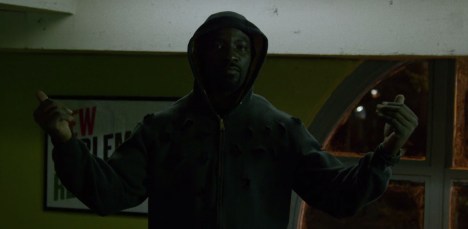
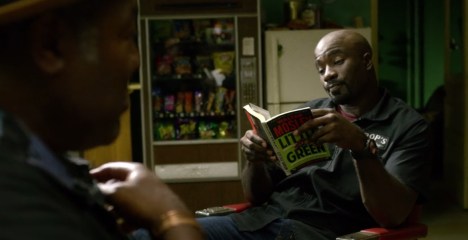
Luke Cage is an exceptional black superhero show.
Those twin concepts cannot be divorced from one another. The thrill of Luke Cage is how skilfully and how cleverly executive producer Cheo Hodari Coker interweaves those two strands. Luke Cage is not simply a story about Harlem that happens to feature superpowers, nor is just a superhero story that happens to feature African American characters. Coker carefully crafts the show that those two parts of itself become inseparable and indivisible. Luke Cage relishes its superhero storybeats, and bringing them together in service of a different kind of protagonist.
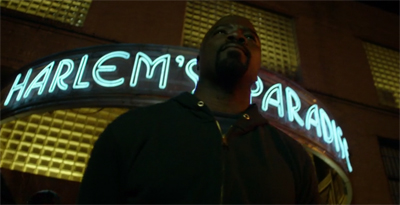
It feels entirely appropriate that Luke Cage should be the focus of this series, the first superhero story of the franchise age to focus on a black protagonist. (There are a number of earlier examples from Blade to Catwoman to Steel, but those largely predate the current shared-universe-driven popular consciousness.) Luke Cage was the first black comic book hero to have his own on-going monthly title, and one of the earliest high-profile examples of a black superhero character not to incorporate “black” into his name, like the Black Panther or Black Lightning.
Of course, it feels shameful that it took this long. Hawkeye has somehow managed to appear in four blockbuster feature films before Marvel Studios produced a franchise film with a black lead actor. Spider-Man has been rebooted three separate times, but Black Panther will not open until 2018. Guardians of the Galaxy came out of nowhere long before Marvel Studios or Warner Brothers opened a summer tentpole superhero film with a minority or female lead. Meanwhile, Marvel has an influx of blonde white guys named Chris.

As such, Luke Cage is definitely overdue. And it keenly understands this. Every aspect of Luke Cage is filtered through an African American perspective that helps to give it a vibrance and energy that revitalises the format. In terms of plotting and structure, Luke Cage is perhaps the most traditional superhero story since Thor. However, the true beauty of the thirteen-episode miniseries lies in the improvisation around those beats and how the production team choose to hit the requisite notes. Luke Cage feels like an extended jazz album riffing on old standards.
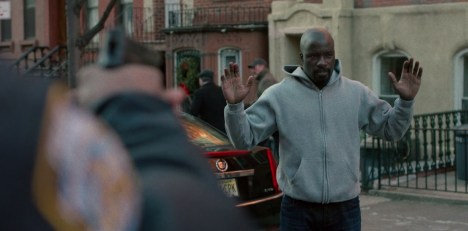
However, as delayed as this appearance might be, it still feels perfectly attuned to the climate of late 2016. As Method Man reflects in and interview with the Sway Universe podcast in Soliloquy of Chaos, a great example of how keenly Luke Cage engages with black culture, “You know, here’s something powerful about seeing a black man that’s bulletproof, and not afraid.” That has never been more true.
Continue reading →
Filed under: Television | Tagged: luke cage, marvel, netflix, non-review review, review, Television | 4 Comments »

























 the m0vie blog