• Following Us

  • Categories

  • Check out the Archives


  • Awards & Nominations

Doctor Who – The Ark (Review)

To celebrate the fiftieth anniversary of the longest-running science-fiction show in the world, I’ll be taking weekly looks at some of my own personal favourite stories and arcs, from the old and new series, with a view to encapsulating the sublime, the clever and the fiendishly odd of the BBC’s Doctor Who.

The Ark originally aired in 1966.

Yes, I bet it’ll take some time to get the whole of the population down here, so the sooner you get started, the better, I should think.

Don’t worry. It may not take as long as you think.

What do you mean? Are you up to something?

Em… no.

– Dodo (yes, Dodo) outwits a Monoid

The Ark is an interesting piece of Doctor Who, both in terms of structure and in terms of theme. It’s a very clever concept, with the four-parter effectively split into two halves as the Doctor and his companions join the same story at two different intervals. It’s a wonderful high concept, with the action jumping from across time while keeping a fixed location. However, The Ark is also notable because of its less-than-subtle political under-currents, one of the relatively rare times where Doctor Who has seemed reactionary, conservative and downright colonial in its attitudes.

The end of the world as we know it...

The end of the world as we know it…

Continue reading

Doctor Who: The Dæmons (Review)

To celebrate the fiftieth anniversary of the longest-running science-fiction show in the world, I’ll be taking weekly looks at some of my own personal favourite stories and arcs, from the old and new series, with a view to encapsulating the sublime, the clever and the fiendishly odd of the BBC’s Doctor Who.

The Dæmons originally aired in 1971.

I’ve bought you a nice cuppa, Sergeant. I hope you like china.

For goodness sake, Miss Hawthorne.

What’s the matter? Don’t you like tea?

Something’s gone badly wrong. We’ve no idea what’s happening to Miss Grant and the Captain, the Doctor should be back here by now, I can’t get through to the Brigadier and you’re nattering on about tea.

You must learn the art of waiting, Sergeant. The Doctor will come, or else he won’t, and that’s all that can be said. Now, milk or lemon?

– Miss Hawthorne helps Sergent Benton get his priorities straight

Barry Letts was a very talented man. I feel like I don’t stress that often often. I’ll freely concede that the UNIT era isn’t my favourite part of Doctor Who history, but there are times when you really have to admire the skill and competence of Letts as the show’s producer. In fact, he served as both a director and a writer on the series. He had a very clear vision for the show, and he implemented it remarkably well, to the point where his work on the show still stands out as something quite distinguished from the work of other producers.

The Dæmons is a very clear illustration of just how carefully and how thoughtfully Letts had overhauled the show for the seventies. While it’s not the most Letts-ian episode ever produced (he would produce, write and direct Pertwee’s final episode, Planet of the Spiders), but it is a great illustration of Letts’ approach to the programme and perhaps a testament to his lasting legacy.

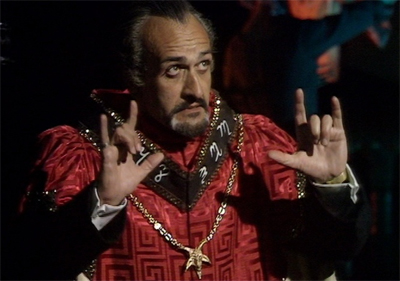
Rock on, you crazy Master...

Rock on, you crazy Master…

Continue reading

Doctor Who: Colony in Space (Review)

To celebrate the fiftieth anniversary of the longest-running science-fiction show in the world, I’ll be taking weekly looks at some of my own personal favourite stories and arcs, from the old and new series, with a view to encapsulating the sublime, the clever and the fiendishly odd of the BBC’s Doctor Who.

Colony in Space originally aired in 1971.

Are you some kind of scientist?

I’m every kind of scientist.

– Caldwell and the Doctor

Colony in Space is an interesting story for many reasons. For one thing, it’s the first colour adventure to travel to another world. It was the first time since Jon Pertwee took over the title role that the character had been allowed to leave the surroundings of modern-day Earth. Even if he did land in a quarry. Colony in Space demonstrated the possibilities to tell futuristic and extraterrestrial stories in the new and remodelled version of Doctor Who, and the show began to slowly venture further and further afield over the next few years, with the Doctor finally regaining control of his TARDIS in The Three Doctors a little under two years later.

However, Colony in Space is also interesting because it is a script from Malcolm Hulke, who has really become one of the more Doctor Who script writers more inclined to pepper his scripts with political and moral philosophy. Colony in Space is an interesting exploration of those themes, even if it does run a little bit long in places. (That said, Hulke is one of the better writers of the six-part format in the show’s history.)

Go on, try to fight the urge to pronounce the episode title like "colony... IN SPACE!"

Go on, try to fight the urge to pronounce the episode title like “colony… IN SPACE!”

Continue reading

Doctor Who: The Claws of Axos (Review)

To celebrate the fiftieth anniversary of the longest-running science-fiction show in the world, I’ll be taking weekly looks at some of my own personal favourite stories and arcs, from the old and new series, with a view to encapsulating the sublime, the clever and the fiendishly odd of the BBC’s Doctor Who.

The Claws of Axos originally aired in 1971.

Are you trying to tell me you can absorb the total output of this complex in a police box?

Yes.

– Hardiman and the Master discover that self-confidence is a genetic Time Lord trait

The Claws of Axos tends to come in for a fair bit of criticism for pretty much being the quintessential Earth-based Jon Pertwee story, with very little exceptional to distinguish it from the pack. Personally, I’m actually quite fond of it, perhaps precisely for that reason. I think you’re hard-pressed to find an adventure in the early part of Jon Pertwee’s tenure that so effectively and so efficiently captures the spirit of the show – both good and bad. That kind of makes The Claws of Axos stand out if only because it so perfectly embodies those early Pertwee years.

Eye see you…

Continue reading

Doctor Who: Terror of the Autons (Review)

To celebrate the fiftieth anniversary of the longest-running science-fiction show in the world, I’ll be taking weekly looks at some of my own personal favourite stories and arcs, from the old and new series, with a view to encapsulating the sublime, the clever and the fiendishly odd of the BBC’s Doctor Who.

Terror of the Autons originally aired in 1971.

That jackanapes! All he ever does is cause trouble!

– nice to see the Doctor taking the Master seriously

I think you can make a fairly credible argument that Jon Pertwee’s first season of Doctor Who stands out as one of the best years the show ever produced. Facing the challenge of migrating from black-and-white to colour, and forced to tell stories entirely set on present-day Earth, the writers and producers managed to craft a season of television that I think stands quite well when measured against the very best of vintage BBC science-fiction. Sure, there may have been walking shop-front dummies, lizard people, animal men and haunted space suits, but the stories were surprisingly mature and relatively clever. The writers used the framework of Doctor Who to tell four very good and very philosophical stories exploring both bold science-fiction high-concepts (alternate universes) and also moral quandaries (how humanity relates to the unknown).

Terror of the Autons is the first story in Jon Pertwee’s second season. I’m actually quite fond of it, and it’s packed to the brim with iconic imagery, so it’s very difficult to be too critical of it. After all, any adventure that left so large an impression on the public imagination must have something to recommend it. However, there’s a very clear sense of regression here. It seems, from this first serial of Pertwee’s second year, that the agenda has changed somewhat.

Terror of the Autons is arguably more indicative of Pertwee’s time in the lead role than any of those stories from his first year. It’s exciting, it’s fast-paced, it has a decidedly man-of-mystery feeling to it, but it also feels somewhat light and a little insubstantial. Not that there’s anything wrong with that, but it just feels like a definite regression.

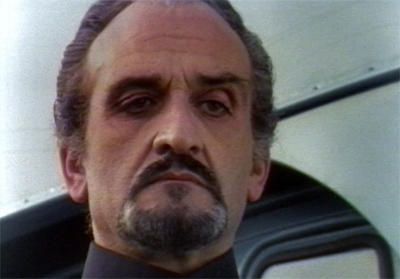
Master of the Whoniverse?

Master of the Whoniverse?

Continue reading

Doctor Who: Attack of the Cybermen (Review)

To celebrate the fiftieth anniversary of the longest-running science-fiction show in the world, I’ll be taking weekly looks at some of my own personal favourite stories and arcs, from the old and new series, with a view to encapsulating the sublime, the clever and the fiendishly odd of the BBC’s Doctor Who.

Attack of the Cybermen originally aired in 1985.

We realise this must be confusing for you.

– Threst tells it how it is

There is a tendency, these days, to be more sympathetic in appraisals of the Colin Baker years. Everybody – including Baker – accepts that his tenure could have gone a lot smoother. Watching Attack of the Cybermen, I can’t help but feel sorry for just about everybody involved. Rewatching Colin Baker’s first season, I can’t help but feel that the problem with this period of the show wasn’t that the production crew were making new mistakes or deviating from good ideas. It seems quite apparent that a lot of the major problems were embedded during Peter Davison’s time in the role.

The problem with Colin Baker’s first year on the show was that the writers and producers allowed those already significant flaws to attain critical mass.

A crushing blow...

A crushing blow…

Continue reading

Doctor Who: The Tomb of the Cybermen (Review)

To celebrate the fiftieth anniversary of the longest-running science-fiction show in the world, I’ll be taking weekly looks at some of my own personal favourite stories and arcs, from the old and new series, with a view to encapsulating the sublime, the clever and the fiendishly odd of the BBC’s Doctor Who.

The Tomb of the Cybermen originally aired in 1967.

In fact you might say they’ve had a complete metal breakdown.

Oooooh….

I’m sorry, Jamie.

– traveling with the Doctor can be quite pun-ishing

The Tomb of the Cybermen is a bit of miracle. Originally thought lost to history in the great BBC archives purge (along with most of the Troughton era), The Tomb of the Cybermen was recovered completely intact from Hong Kong in 1992, a quarter of a century after the adventure aired and several years after the original series had been cancelled by the BBC. It remains perhaps the most significant recovery in recent memory, and fosters hope that there might be a few other serials that have been preserved in their entirety. Still, even outside of its significant historical context, I’d make the argument that The Tomb of the Cybermen stands as the best adventure to feature the metallic men.

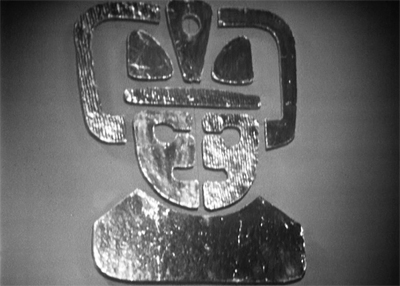
Sealing your tomb…

Continue reading

Doctor Who: Revenge of the Cybermen (Review)

To celebrate the fiftieth anniversary of the longest-running science-fiction show in the world, I’ll be taking weekly looks at some of my own personal favourite stories and arcs, from the old and new series, with a view to encapsulating the sublime, the clever and the fiendishly odd of the BBC’s Doctor Who.

Revenge of the Cybermen originally aired in 1975.

Then what is it? You’ve no home planet, no influence, nothing. You’re just a pathetic bunch of tin soldiers skulking about the galaxy in an ancient spaceship.

– the Doctor pretty much sums it up

To be fair, the title should the first clue that something is not quite right here.

Tom Baker’s first season of Doctor Who contains two genuine classics in the form of Genesis of the Daleks and The Ark in Space, along with the quite good Sontaran Experiment, but it was bookended by two absolute clunkers. Indeed, Revenge of the Cybermen and Robot both feel like holdovers from the Barry Letts era of the show, and they’d both probably seem a whole lot more entertaining as vehicles for Jon Pertwee rather than Tom Baker.

Sadly, we’ve got what we’ve got, so let’s just try to work through this.

Sadly it's A bomb, not THE bomb...

Sadly it’s A bomb, not THE bomb…

Continue reading

Doctor Who: Horror of Fang Rock (Review)

To celebrate the fiftieth anniversary of the longest-running science-fiction show in the world, I’ll be taking weekly looks at some of my own personal favourite stories and arcs, from the old and new series, with a view to encapsulating the sublime, the clever and the fiendishly odd of the BBC’s Doctor Who.

Horror of Fang Rock originally aired in 1977.

So you found the trouble then?

Yes, I always find trouble.

– Vince and the Doctor

The show was on something of a hot streak when Horror of Fang Rock aired. While producer Philip Hinchcliffe’s tenure on the show is roundly praised, and is a personal favourite, the standard of the show had been particularly high. The beloved Talons of Weng-Chiang had closed out the previous season, following hot-on-the-heels of the well-regarded Robots of Death – both classic and iconic stories that stand as the very best of Tom Baker’s time in the lead role. Horror of Fang Rockis right on up there, as perhaps one of the best gothic horrors that the series has ever produced.

Something wicked this way comes...

Continue reading

Doctor Who: Bad Wolf (Review)

To celebrate the fiftieth anniversary of the longest-running science-fiction show in the world, I’ll be taking weekly looks at some of my own personal favourite stories and arcs, from the old and new series, with a view to encapsulating the sublime, the clever and the fiendishly odd of the BBC’s Doctor Who.

Bad Wolf originally aired in 2005.

The Dalek stratagem nears completion. The fleet is almost ready. You will not intervene.

Oh, really? Why’s that, then?

We have your associate. You will obey or she will be exterminated.

No.

Explain yourself.

I said no.

What is the meaning of this negative?

It means no.

But she will be destroyed.

No! Because this is what I’m going to do. I’m going to rescue her. I’m going to save Rose Tyler from the middle of the Dalek fleet and then I’m going to save the Earth, and then, just to finish off, I’m going to wipe every last stinking Dalek out of the sky!

But you have no weapons, no defences, no plan.

Yeah. And doesn’t that scare you to death. Rose?

Yes, Doctor?

I’m coming to get you.

– the Daleks, the Doctor and Rose give the Ninth Doctor perhaps his best moment

Looking back at the first season, I’d argue that it’s the most cohesive run of episodes that Russell T. Davies produced on the dhow. Now because of the whole “bad wolf” thing, as that feels a bit like a clumsy link randomly inserted. Instead, as we watch the final episode, it becomes quite clear what Davies was trying to do with his first year on the show. The patterns, the themes, the subtext, the references – it all becomes quite clear. More than any other season of Davies’ tenure, the first season is really one gigantic story – and not just because the show never leaves Earth or the finalé returns to the setting of The Long Game.

The first season is a bridge. It’s a link between the last years of the classic series into the new and revived show as written by Davies. It’s a moment to gather up the dead, tidy away the loose ends and basically manage the stage so that the show can really come into its own. One of the things I loved about Davies’ Doctor Who was how accessible it all was, but it still had all this continuity ticking away in the background.

This first season finalé feels like it isn’t only a conclusion to Christopher Eccleston’s time in the lead role, it’s also closing the last of the dangling threads from the eras of Colin Baker and Sylvester McCoy in the eighties. As soon as David Tennant steps into the lead role, it seems the show is entirely and utterly free of everything that came before. It’s a testament to Davies’ skill that we’re not even sure that he’s doing it.

Come with me if you want to live...

Come with me if you want to live…

Continue reading