• Following Us

  • Categories

  • Check out the Archives


  • Awards & Nominations

Doctor Who: The Face of Evil (Review)

To celebrate the fiftieth anniversary of the longest-running science-fiction show in the world, I’ll be taking weekly looks at some of my own personal favourite stories and arcs, from the old and new series, with a view to encapsulating the sublime, the clever and the fiendishly odd of the BBC’s Doctor Who.

The Face of Evil originally aired in 1977.

The Evil One!

Well, nobody’s perfect, but that’s overstating it a little.

– Leela and the Doctor make a great first impression

The Face of Evil is probably the most underrated story of the entire Hinchcliffe era, and it’s not hard to see why. For one thing, it is positioned in the middle of a run of classic stories. Any story sitting between The Deadly Assassin and both Robots of Death and The Talons of Weng-Chiang is probably going to be written off for being anything less than a perfect piece of Doctor Who.

More than that, though, The Face of Evil feels like it arrive a bit too early. Doctor Who is a show that can be many things at many different times, and The Face of Evil eschews the gothic horror evident throughout the Hinchcliffe era for the more intellectual and abstract science-fiction of Tom Baker’s final year. The Face of Evil feels more like a companion to Warriors’ Gate or Full Circle than to Planet of Evil or Brain of Morbius.

Still, it’s a triumph for the show, and one highly recommended. A wealth of good ideas, a great execution and the introduction of one of the show’s more iconic companions.

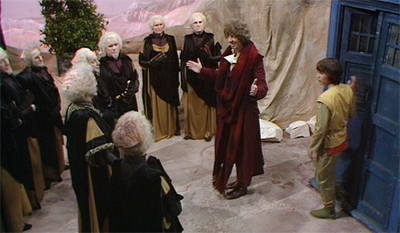
Face to face with evil...

Face to face with evil…

Continue reading

Doctor Who: The King’s Demons (Review)

To celebrate the fiftieth anniversary of the longest-running science-fiction show in the world, I’ll be taking weekly looks at some of my own personal favourite stories and arcs, from the old and new series, with a view to encapsulating the sublime, the clever and the fiendishly odd of the BBC’s Doctor Who.

The King’s Demons originally aired in 1983.

Do our demons come to visit us? Bid them attend us.

Demons? Very odd indeed.

Makes a nice change for you not to take everything in your stride, I must say.

– King John, the Doctor and Tegan set the mood

The show’s twentieth anniversary deserved better than this. Okay, there are a number of qualifications that can made, excuses that can be offered. The King’s Demons was never intended to close out the season, and was instead intended as a two-part episode to bridge into the triumphant return of the Daleks, a return that ended up postponed a year and reworked into Resurrection of the Daleks. There’s also the fact that The King’s Demons wasn’t the last piece of Doctor Who to air as part of the show’s twentieth anniversary year, even if it was the season finalé. The Five Doctors would be broadcast later in the year to celebrate the anniversary.

However, none of these excuses take away from the fact that The King’s Demons is an exceptionally weak piece of television, and a demonstration of everything wrong about how John Nathan Turner and the Doctor Who production staff approached the show’s twentieth season.

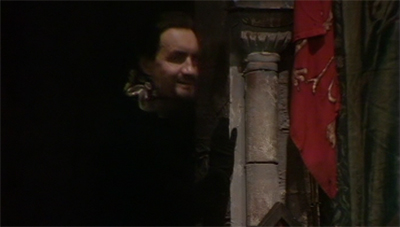
Hardly a Master piece...

Hardly a Master piece…

Continue reading

Doctor Who: Arc of Infinity (Review)

To celebrate the fiftieth anniversary of the longest-running science-fiction show in the world, I’ll be taking weekly looks at some of my own personal favourite stories and arcs, from the old and new series, with a view to encapsulating the sublime, the clever and the fiendishly odd of the BBC’s Doctor Who.

Arc of Infinity originally aired in 1983.

We know who you are.

That changes nothing.

– the Doctor and Omega set one thing straight

There really should be a bare minimum threshold of enjoyment for a Doctor Who story set on Gallifrey. I mean, these are beings who claim to control the whole of time and space. Their guards look like they modelled themselves on Adam Strange, replacing his jetpack with a cape, and there’s always an excuse for some good old-fashioned science-fiction ray-gun-related fun. How hard can it be to entertain an audience for four episodes in that particular setting?

Unfortunately, Arc of Infinity answers that question. Quite boring indeed, it seems.

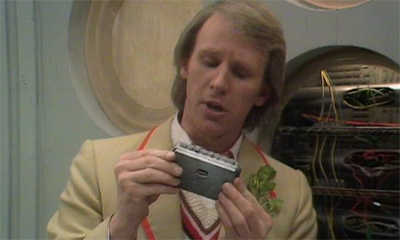
Going around in circuits...

Going around in circuits…

Continue reading

Doctor Who: Time-Flight (Review)

To celebrate the fiftieth anniversary of the longest-running science-fiction show in the world, I’ll be taking weekly looks at some of my own personal favourite stories and arcs, from the old and new series, with a view to encapsulating the sublime, the clever and the fiendishly odd of the BBC’s Doctor Who.

Time-Flight originally aired in 1982.

I’ve never heard such an extravagant explanation.

– Hayter’s gonna hate

Time-Flight is a much maligned piece of Doctor Who, and hardly the best way to round out a season that has, generally speaking, done a reasonable job introducing a new lead actor following the departure of the most iconic actor ever to play the role. The show’s nineteenth season holds together reasonably well, with Earthshock generally highly regarded and only Time-Flight considered to be a complete failure.

And yet, despite that, I can’t hate Time-Flight. That’s not to suggest that the traditional criticisms of the serial are off-base. They are entirely spot-on. The production is shoddy, the plot is nonsense and the dialogue is terrible. It seems like everybody was trying to push one last story out the door before breaking for holidays, and nobody cared too much about the final product. And yet, despite that, I find myself able to forgive quite a lot of the show’s problems.

Don’t get me wrong. It’s not good Doctor Who. It’s not even passable Doctor Who. However, I’d argue that it is nowhere near the worst that the Davison era would produce.

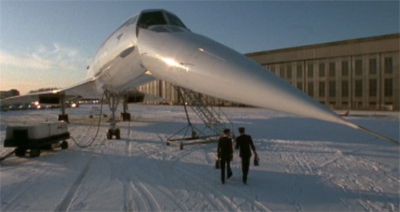
Keeping the nose clean...

Keeping the nose clean…

Continue reading

Doctor Who: Logopolis (Review)

To celebrate the fiftieth anniversary of the longest-running science-fiction show in the world, I’ll be taking weekly looks at some of my own personal favourite stories and arcs, from the old and new series, with a view to encapsulating the sublime, the clever and the fiendishly odd of the BBC’s Doctor Who.

Logopolis originally aired in 1981. It was the second instalment in the “Master” trilogy.

It’s the end… but the moment has been prepared for.

– the Doctor finally figures out what this year has been about

I don’t think the departure of a Doctor has even been a bigger deal than it was with Tom Baker. Sure, Christopher Eccleston’s first season was so fixated on death that his departure seemed preordained, even in the episodes written before his decision to leave. Similarly, Peter Davison’s final year seems designed to demonstrate that the universe is no longer suited to this particular iteration of the Doctor. Maybe David Tennant’s final year is focused on his passing, but the episodes are so spaced out that it makes little difference. However, we’ve just spent an entire year focused on the idea of entropy and decay, the inevitably of change and the notion that death is just a nature part of the cycle of things.

When the Doctor assures his companions that “the moment has been prepared for”, he may as well be looking at the camera, assuring those of us at home that the past year has been spent readying them for the unthinkable: the time when Tom Baker might not be the Doctor.

Final destination?

Final destination?

Continue reading

Doctor Who: Warriors’ Gate (Review)

To celebrate the fiftieth anniversary of the longest-running science-fiction show in the world, I’ll be taking weekly looks at some of my own personal favourite stories and arcs, from the old and new series, with a view to encapsulating the sublime, the clever and the fiendishly odd of the BBC’s Doctor Who.

Warrior’s Gate originally aired in 1980. It was the third instalment of the E-Space Trilogy.

We found it.

Yes, well, that’s one of the advantages of living in a rapidly shrinking micro-universe.

What are the others?

Other what?

Other advantages?

Ah, well, it’s difficult to say.

– Adric, the Doctor and Romana discuss modern living

I’m actually very, very fond of Warriors’ Gate. It’s a piece of bold science-fiction that actually manages to accomplish what a lot of these stories in Tom Baker’s final season try to do. It offers an effective bit of speculative fiction while playing to the theme of entropy, decay and collapse. Both Stephen Gallagher’s fine script and Paul Joyce’s direction come together to produce a very thoughtful and clever Doctor Who story that manages to avoid a lot of the problems facing this era of the show.

More than that, though, it turns some of those disadvantages into advantages. After all, when else is the show’s tiny production budget going to produce something this beautiful?

Shades of grey...

Shades of grey…

Continue reading

Doctor Who: State of Decay (Review)

To celebrate the fiftieth anniversary of the longest-running science-fiction show in the world, I’ll be taking weekly looks at some of my own personal favourite stories and arcs, from the old and new series, with a view to encapsulating the sublime, the clever and the fiendishly odd of the BBC’s Doctor Who.

State of Decay originally aired in 1980. It was the second instalment of the E-Space Trilogy.

You are incredible.

Yes, I suppose I am, really. I’ve never given it much thought.

– who says Romana and the Doctor weren’t meant for one another?

Just when it seemed that the John Nathan-Turner era was going to be all about hokey pseudo-science concepts and galaxy-conquering cacti, State of Decay comes along and offers a good old-fashioned gothic science-fiction adventure from long-time writer Terrance Dicks. It feels like a very conscious throw-back in the midst of an otherwise new and distinctive season, but I honestly don’t mind this story about vampires on an alien world, if only because it feels right that Baker should get to do one last gothic horror before he finishes up in the lead role.

Towering over the locals...

Continue reading

Doctor Who: The Leisure Hive (Review)

To celebrate the fiftieth anniversary of the longest-running science-fiction show in the world, I’ll be taking weekly looks at some of my own personal favourite stories and arcs, from the old and new series, with a view to encapsulating the sublime, the clever and the fiendishly odd of the BBC’s Doctor Who.

The Leisure Hive originally aired in 1980.

Look what you’ve done.

What have I done?

You’ve got the century wrong, you’ve got the season wrong and you’ve got K9’s sea-water defences wrong.

Well, I can’t get everything right.

Just something would be a help.

– Romana and the Doctor really do seem like an old married couple, don’t they?

The Leisure Hive represented a bold new beginning for the show, as it saw John Nathan-Turner move into the role of producer, very quickly putting his mark on the show with a new theme tune and opening sequence, a stronger emphasis on science-fiction and arguably a very “gimmick-y” approach to the show itself. Nathan-Turner would go on to be the longest-serving – and most controversial – producer of the show, serving in the role until the series’ untimely cancellation in 1989. It really is quite tough to discuss The Leisure Hive without getting side-tracked on to any number of tangents, isn’t it?

Is Baker getting to old for the role?

Continue reading

Doctor Who: Shada (2003) (Review)

To celebrate the fiftieth anniversary of the longest-running science-fiction show in the world, I’ll be taking weekly looks at some of my own personal favourite stories and arcs, from the old and new series, with a view to encapsulating the sublime, the clever and the fiendishly odd of the BBC’s Doctor Who.

Shada originally broadcast on the BBC website in 2003.

Doctor, a fool would realise that it was written in code!

Skagra, this thing is written in code!

– Skagra and the Doctor have some communication difficulties

Has a failed Doctor Who story every haunted the collective consciousness in the way that Shada does? There’s a wealth of adventures that were proposed and never produced, from the last Master story that never happened in The Final Game, through to the laundry list of unproduced adventures that would have made up Colin Baker’s second season if the show hadn’t been parked by the BBC. However, Shada is something different. So different, in fact, that it has been told quite a few times. In fact, it might be the only Doctor Who story I end up covering twice.

This was a webcast version, a very simply animated version of the tale produced for the BBC website, using an audio play adapted from Douglas Adams’ original script by Big Finish, the fan collective who produce a range of celebrated audio plays for the classic series. Starring Paul McGann, the Eighth Doctor who never really got a chance to develop the role in live action, it’s an interesting glimpse at what might have been.

Lost in time...

Lost in time…

Continue reading