• Following Us

  • Categories

  • Check out the Archives


  • Awards & Nominations

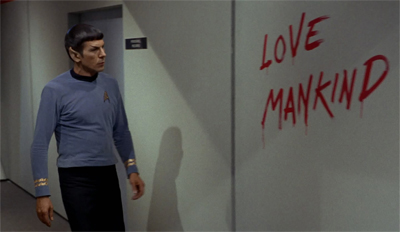
Star Trek – What Are Little Girls Made Of? (Review)

To celebrate the release of Star Trek: Into Darkness this month, we’ll be running through the first season of the classic Star Trek all this month. Check back daily to get ready to boldly go. It’s only logical.

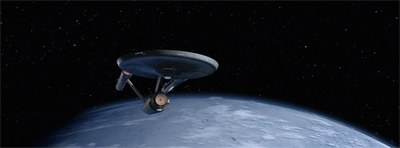
What Are Little Girls Made Of? is the first episode from a script written by Robert Bloch, perhaps best known as the author of Psycho. Interestingly, it wasn’t the first script Bloch wrote for the show. Apparently Bloch contributed Catspaw first, when the show asked him for a Halloween special, even though it wouldn’t be produced until the series’ second year. And, to be fair, you can sense that What Are Little Girls Made Of? is a bit more comfortable with the Star Trek conventions than Bloch’s other two episodes. An uncredited re-write from Gene Roddenberry probably helped.

With Bloch’s third script, Wolf in the Fold, serving as a loose adaptation of (or spiritual successor to) his celebrated short story Yours Truly, Jack the RipperWhat Are Little Girls Made Of? stands out among Bloch’s contributions to the show. It’s an iconic episode, one that has undoubtedly influenced the way that we remember Star Trek, serving as the source for all manner of Star Trek memes like Kirk overwhelming a hot android with his sexual charisma, and defeating a less physically attractive robot with a logic puzzle. It features some of the most iconic costuming of the original Star Trek show, and also serves as the root of the whole “what constitutes life?” philosophical strand that would find itself embodied by Data on Star Trek: The Next Generation.

It helps that, like so much of this first season of Star Trek, it is just good pulpy fun.
A cold reception...

A cold reception…

Continue reading

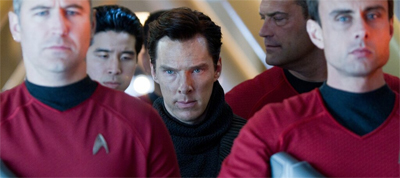
Non-Review Review: Star Trek – Into Darkness

Note: This is a spoiler-lite review. If you want a spoiler-heavy in-depth look at the film, click here.

Towards the climax of Star Trek: Into Darkness, Kirk and the Enterprise flee an aggressor by entering warp. At that speed, several factors the speed of light itself, they surmise that they must be safe from their pursuer. Of course, they prove to be wrong – brutally so. Everything in Into Darkness moves fast, so fast that the Enterprise’s top speed seems more like a casual jog than a breakneck acceleration. The plot rockets along with incredible speed, from plot point to plot point, counting on the momentum to sustain the film and carry it across the line.

There is enough material here to produce a trilogy of films. Indeed, cynics might suggest that a lot of the movie’s iconography and plot points are indeed recycled from the central “trilogy” of the original Star Trek films, running from the homages to Star Trek II: The Wrath of Khan right down a climactic visual reference to Star Trek IV: The Voyage Home. Abrams and his team of writer continue their work from 2009’s breakout blockbuster Star Trek by putting the franchise’s most compelling images and cues into a high-speed blender.

Into Darkness just substantially increases the concentration.

Seeing red...

Seeing red…

Continue reading

Star Trek – The Naked Time (Review)

To celebrate the release of Star Trek: Into Darkness this month, we’ll be running through the first season of the classic Star Trek all this month. Check back daily to get ready to boldly go. It’s only logical.

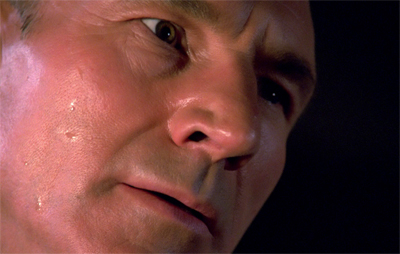
Star Trek is, by its nature, an inherently optimistic television show. I seem to keep mentioning that in these reviews, as the first season of the show subverts and plays with the notion of an idealised future. However, despite the suggestion that evil is necessary in The Enemy Within or the death of the last of a species in The Man Trap or the suggestion that man’s next evolutionary phase would be truly horrifying in Where No Man Has Gone Before, Star Trek is still a hopeful vision of a possible future. It’s a story about a world where mankind hasn’t wiped each other out and where we can go (relatively) peacefully among the stars. It’s a world without racism or classism. There is sexism in Star Trek, but I’ll give the producers the benefit of the doubt and assume it’s not intentional.

So The Naked Time feels a little weird, being – as it is – a story about the collapse of civilisation at the end of a world. Not our world, mind you, but there’s a very clear sense of social collapse mirrored in the literal collapse of planet Psi-2000.

How logical...

How logical…

Continue reading

Star Trek – The Enemy Within (Review)

To celebrate the release of Star Trek: Into Darkness this month, we’ll be running through the first season of the classic Star Trek all this month. Check back daily to get ready to boldly go. It’s only logical.

One thing that I don’t think the original Star Trek gets nearly enough credit for is the quality of the writers that Gene Roddenberry recruited to contribute scripts. Television obviously operated under a different model at the time, but there’s an impressive selection of science-fiction literary giants who contributed scripts to the show. More than that, it’s impressive how many of those stories became truly iconic Star Trek stories.

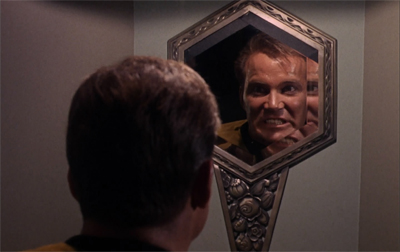
The Enemy Within is the work of author Richard Matheson, best known for stories like I Am Legend or What Dreams May Come. It’s very much a high-concept science-fiction story, but it’s also notable because it establishes two of what would become the show’s favourite tropes: transporter accidents and evil duplicates. Indeed, the two devices would be reunited in the following season’s Mirror, Mirror. These narrative elements even featured in the last season of Star Trek: Enterprise to air, in episodes like Daedalus and In a Mirror, Darkly.

Perhaps it’s a demonstration of how important these outside writers were to the development of Star Trek as a franchise that Matheson would effectively codify two stock narrative devices that would still be in use four decades later.

Mirror, mirror...

Mirror, mirror…

Continue reading

Star Trek – Crew by John Byrne (Review)

To celebrate the release of Star Trek: Into Darkness this month, we’ll be running through the first season of the classic Star Trek all this month. Check back daily to get ready to boldly go. It’s only logical.

We’ll be supplementing our coverage of the episodes with some additional materials – mainly novels and comics and films. This is one such entry.

Majel Barrett Roddenberry was the first lady of the Star Trek franchise, in more ways than one. She was married to Gene Roddenberry and remained a part of the franchise after his death. She guest starred on the shows occasionally, continued to lend her voice to the computers and offered the occasional interview to the press. Although her actual influence on the television shows was relatively minimal (and she was occasionally prone to protesting various plot developments including the Dominion War on Star Trek: Deep Space Nine), she did remain involved in Star Trek until she passed away in 2008.

However, she was also involved from the start. She had the recurring role of Christine Chapel throughout the original television show, and appeared in the unaired pilot, The Cage, as Christopher Pike’s first officer. Identified only as “Number One”, this almost made her the literal “first lady” of Star Trek. I’m surprised that Number One hasn’t been used more often as a character, with her appearances in tie-ins generally restricted to her time on board Pike’s Enterprise.

John Byrne’s miniseries might have the title Crew, and feature supporting roles for Christopher Pike and Mister Spock, but it is very much the story of Number One. Published a year after her death, and dedicated to her memory, Crew feels like a fitting farewell to the actress responsible for one of the franchise’s earliest and most intriguing supporting characters.

Fate protects fools, little children... and ships named Enterprise.

Fate protects fools, little children… and ships named Enterprise.

Continue reading

Star Trek: Early Voyages #1 – Flesh of my Flesh (Review)

To celebrate the release of Star Trek: Into Darkness this month, we’ll be running through the first season of the classic Star Trek all this month. Check back daily to get ready to boldly go. It’s only logical.

We’ll be supplementing our coverage of the episodes with some additional materials – mainly novels and comics and films. This is one such entry.

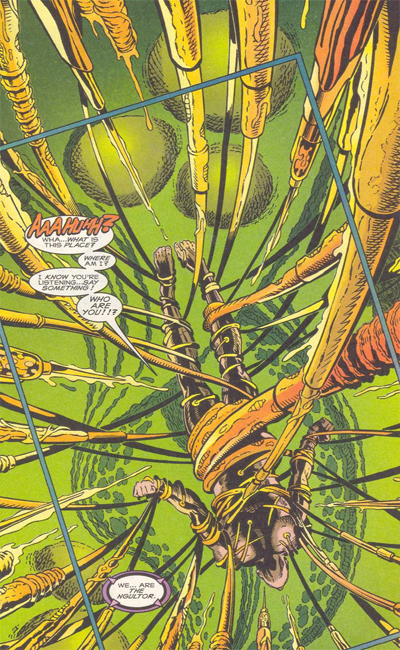
In the late nineties, Marvel were publishing Star Trek comic books. One of those books, perhaps the book garnering the most critical praise, was Star Trek: Early Voyages. Written by Dan Abnett and Ian Edginton, the series was intended to follow the mission of the USS Enterprise under the command of Captain Christopher Pike. Published monthly, the comic is perhaps the best indication of what a Star Trek show starring Christopher Pike might have actually looked like. Although the series was cancelled suddenly after only seventeen issues, ending on a cliffhanger, it is still a fascinating look at what might have been.

Looks like they've hooked a Pike...

Looks like they’ve hooked a Pike…

Continue reading

Watch! New Star Trek Into Darkness Trailer!

This is a bit of a surprise. Given how secretive JJ Abrams can be about his projects, I really hadn’t expected to see too much more of Star Trek: Into Darkness before the release date, so the new trailer is a bit of a pleasant shock.

That said, it isn’t as if the new trailer gives anything new away. John Harrison is a very bad man with a very sexy evil voice. Kirk is pursuing him. There are explosions, chase sequences and soul-searching. I honestly love that we know relatively little about Into Darkness before it has been released. It seems like we know absolutely everything about other blockbusters, while we can’t even confirm the identity of John Harrison. Which is great. I love speculating. It’s so much more fun than actually knowing.

Anyway, the latest trailer is below. Also, we’ll be doing a bit of a Star Trek geek-athon starting 1st May. I suspect it might be the most intense month of Star Trek fun anywhere on the interwebs. Which is quite a boast, but I wouldn’t make it if I didn’t think I could back it up. Anyway, enjoy!


Watch! New Star Trek: Into Darkness Trailer!

I’m pretty excited for the upcoming Star Trek: Into Darkness, especially since it’s now releasing a week earlier in the UK and Ireland. Anyway, there’s a new trailer released, which continues the trend of telling us absolutely nothing about the film while teasing the sense of fun and character dynamics that we all know and love. Check out the trailer below.

Star Trek: The Next Generation – The Battle (Review)

To celebrate the twenty-fifth anniversary of Star Trek: The Next Generation, and also next year’s release of Star Trek: Into Darkness, I’m taking a look at the recent blu ray release of the first season, episode-by-episode. Check back daily for the latest review.

The Battle represents a curious midpoint in the evolution of the Ferengi. When they first appeared in The Last Outpost (after being mentioned in Encounter at Farpoint), the aliens had been considered as viable replacements for the Klingons and Romulans as the primary antagonists of Star Trek: The Next Generation. Despite the presence of Worf on the Bridge, the bible for The Next Generation expressly forbade plots involving the Klingons or Romulans, with the creators afraid of returning to that particular well. (It would be towards the end of the season that both races would make a comeback, in big ways.) With neither of those races available, there was a void, and the Ferengi had been created to fill that void.

However, their introduction in The Last Outpost had been an unmitigated disaster, reducing the species to failed comic relief in their very first episode. The Battle is the second story to feature the aliens, and it never seems quite sure how to handle them. Does it present them as a credible threat, or merely as an awkward annoyance not to be taken seriously? The Battle can’t decide, and that’s just the most obvious of the episode’s fundamental problems.

They have yet to figure out an angle that works for the Ferengi…

Continue reading

My Best of 2011: Super 8 & Understanding as a Child…

It’s that time of the year. To celebrate 2011, and the countdown to 2012, I’m going to count down my own twelve favourite films of the year, one a day until New Year’s Eve. I’m also going to talk a bit about how or why I chose them, and perhaps what makes this list “my” best of 2011, rather than any list claiming to be objective.

Super 8 is number ten. Check out my original review here.

When I was a child, I talked like a child, I thought like a child, I reasoned like a child. When I became a man, I put childish ways behind me.

– Corinthians 13:11

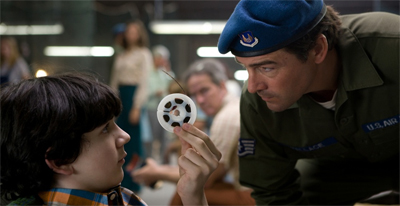
It seems easy to lambast modern mainstream cinema as devoid of originality or of new ideas. It seems that every other film is a sequel or a prequel or a remake of another film, with Hollywood seemingly eager to cannibalise itself. I’ll concede that there are more franchises than before, but I also think that indie and original cinema is thriving in its own environment. I’d make the case that there’s room for all sorts of film, and that originality and quality don’t necessarily equate. Still, I doubt that will appease too many of the people who are sick of “the same old nonsense”, and I imagine that those people will cynically pick apart Super 8 as exactly the sort of copycat movie that demonstrates everything that’s wrong with modern cinema.

Naturally, I take a different approach, even if I can concede it’s hardly the most original of films. Then again, I’d make the case that this is precisely the appeal.

Continue reading