












This May and June, we’re taking a trip back in time to review the fifth season of The X-Files and the second season of Millennium.
“This is how it will all end,” Jose Chung idly speculated half-way through Jose Chung’s “Doomsday Defense.” He advised Frank that the end of the world will not begin “with floods, earthquakes, falling comets or gigantic crabs roaming the earth. No, doomsday will start simply out of indifference.” He may have been correct. It is one thing to kill a person; it is quite another to destroy their spirit, hollowing out the shell before slotting them comfortably back into a functioning society.
A Room With No View plays Chung’s observation and plays it straight. Well, mostly – there is something darkly comical about Landon’s reaction to discovering that he is being abducted into Oregon. Appropriately enough, Lucy Butler’s hideout in Hood County is relatively close to the town of Boring, Oregon. A Room With No View is a bleak and cynical piece of work, an existential apocalyptic horror story perfectly suited to Millennium. It is an episode that would seem strange or unusual in any circumstances, but fits quite comfortably here.
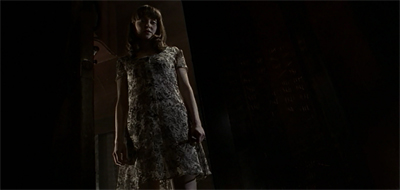
Here’s Lucy!
On paper, A Room With No View could easily seem cynical or exploitative. It is the story about a sadistic kidnapper who abducts teenagers to torture and sexually abuse them in a dungeon. The basic plot elements of A Room With No View come from the pop culture serial killer playbook, to the point where it is not too hard to image the episode as a trashy instalment of CSI or Criminal Minds or – truth be told – the first season of this show. In basic structure, A Room With No View could seem as crude as Wide Open or Weeds or Loin Like a Hunting Flame.
However, it is the execution of A Room With No View that marks as a genuine classic. For all that the episode trades in the stock tropes of serial killer fiction, it is doing something unique and provocative with them. Writer Ken Horton and director Thomas J. Wright construct a potent allegory for abuse and under-achievement, a haunting horror story that is all the more unsettling for its refusal to conform to audience expectations for a story like this.
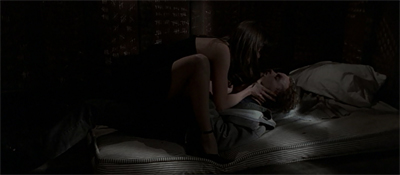
Blue is not always the warmest colour…
Filed under: Millennium | Tagged: a room with a view, a room with no view, abuse, average, children, demons, frank black, horror, individuality, ken horton, kids, lucy butler, mediocrity, millennium, monster, numbers, schools, standardised testing, thomas j. wright | 1 Comment »



 the m0vie blog