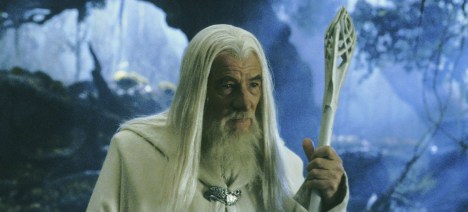
I published a new In the Frame piece at The Escapist this evening. With the twentieth anniversary of Peter Jackson’s The Lord of the Rings fast approaching, it seemed like a good opportunity to place the films in the context of their times.
Obviously, every work reflects the time in which it is produced – it speaks to a variety of factors (consciously or unconsciously) acting on the creative talent as it evolves into its final form. However, audiences also can’t help but engage with a work in the context of the time in which it is released. Peter Jackson shot most of his Lord of the Rings trilogy before 9/11, even if The Lord of the Rings: The Fellowship of the Rings was released in theatres three months after the attack. Still, it’s not to feel like the films’ earnestness and sincerity resonated with an audience looking for meaning in seemingly chaotic and arbitrary time.
You can read the piece here, or click the picture below.
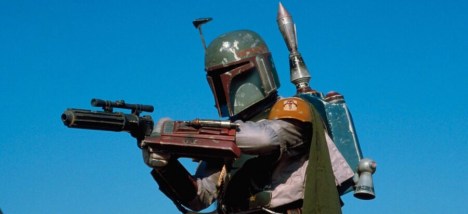
I published a new In the Frame piece at The Escapist this evening. With the recent trailer for the upcoming Book of Boba Fett, it seemed like a good opportunity to reflect on the character of Boba Fett.
Boba Fett is an interesting character, in large part because there has always been a huge dissonance between how cool he looks and how cool he acts. This is the more compelling facet of the character, the dissonance between the characters as a cool action figure and his general uselessness within the larger narrative of the saga. George Lucas seemed to play with this idea very pointedly and purposefully, and it’s a nuance that many subsequent takes on the character have tended to ignore or overlook.
You can read the piece here, or click the picture below.
So, as I have mentioned before, I am launching a new video series as a companion piece to In the Frame at The Escapist. The video will typically launch with every second Monday’s article, and be released on the magazine’s YouTube channel the following week. This is kinda cool, because we’re helping relaunch the magazine’s film content – so if you can throw a subscription our way, it would mean a lot.
With the release of the latest trailer for The Batman, it seemed like a good time to delve into a recurring debate among Batman fans, the argument over whether portrayals of the character are too dark and gritty. It’s a strange argument, given that the only solo Batman movie in the past decade has been The LEGO Batman Movie, so it’s worth unpacking.
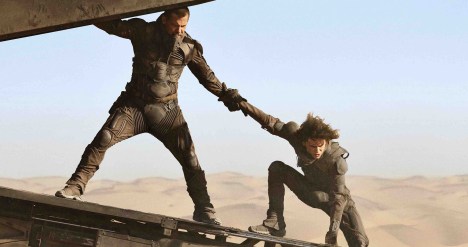
I published a new In the Frame piece at The Escapist this evening. With Dune continuing its dominance at the global box office, it seemed like a good opportunity to take a look at the movie’s size and scale.
It is stating the obvious to describe Dune as “big.” However, the description is accurate. Still, what’s notable about Dune is how Denis Villeneuve uses that sense of scale and spectacle. Dune is so large that it often threatens to burst out of the IMAX frame, to break the confines of the generous format. Villeneuve uses that size to underscore the core theme of the book, the question of how small these individuals can seem when confronted with systems and forces that operate on unimaginable scales.
You can read the piece here, or click the picture below.
I published a new In the Frame piece at The Escapist this evening. With Doctor Who: Flux launching this weekend, it seemed like a good excuse to take a look back at Chris Chibnall’s tenure as showrunner.
One of the more interesting recurring aspects of Chris Chibnall’s tenure as showrunner of Doctor Who has been the way in which he has embraced a lot of the narrative and visual language associated with “prestige television” – the anamorphic lenses, the muted colour scheme, the serialisation, the minimalism, the self-seriousness. It’s an approach that is an awkward fit for the show, particularly when the era around it seems so lacking in substance. It feels like an unconvincing attempt to argue that Doctor Who is “serious business.”
You can read the piece here, or click the picture below.
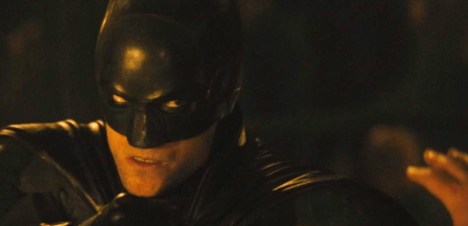
I published a new In the Frame piece at The Escapist yesterday evening. The latest trailer for The Batman has reopened a familair debate within fandom around a sensitive topic: the question of a grim and gritty Batman.
Certain fans react strongly against takes on comic book characters that do not match their own particular tastes. In particular, there’s a tendency to react strongly to interpretations of the Caped Crusader that emphasise the character as grounded and pulpy, to act as if these takes exist at the expense of others. In reality, there is a rich variety of takes on the Dark Knight in popular culture, of various shapes and sizes. There is a Batman for all seasons, and often these arguments feel less about trying to argue for more diverse takes on classic characters and instead about arguing that there is only one right take.
You can read the piece here, or click the picture below.
I published a new In the Frame piece at The Escapist this evening. With the release of Dune, it seemed like a good opportunity to take a look at the new film.
Dune is an epic science-fiction story. It is a classic of the genre. One of the reasons that it has held up for so any decades is because its themes remain universal. Dune is essentially a story about what it means to be human. In particular, it interrogates that question through a postcolonial lens. The default logic of these sorts of narratives asks the oppressed to assert their dignity and humanity. (Even Denis Villeneuve’s last film, Blade Runner 2049, is about a synthetic human proving his humanity.) In contrast, Dune inverts this by directing challenging the humanity of those who would indulge in colonialism and imperialism.
You can read the piece here, or click the picture below.
So, as I have mentioned before, I am launching a new video series as a companion piece to In the Frame at The Escapist. The video will typically launch with every second Monday’s article, and be released on the magazine’s YouTube channel the following week. This is kinda cool, because we’re helping relaunch the magazine’s film content – so if you can throw a subscription our way, it would mean a lot.
With the release of Halloween Kills, it seemed like a good opportunity to take a look back at the larger Halloween franchise. In particular, the enduring and lasting appeal of Michael Myers as a character. What is it that makes Michael Myers such an icon of horror cinema?
So, as I have mentioned before, I am launching a new video series as a companion piece to In the Frame at The Escapist. The video will typically launch with every second Monday’s article, and be released on the magazine’s YouTube channel the following week. This is kinda cool, because we’re helping relaunch the magazine’s film content – so if you can throw a subscription our way, it would mean a lot.
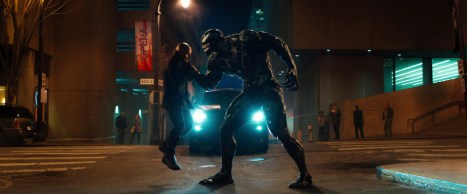
With the release of Venom: Let There Be Carnage, it seemed like a good opportunity to take a look back at Venom. It’s a bad movie, but an endlessly fascinating one. More than that, it feels like a conscious throwback to an older style of superhero movie, one that predates the modern blockbuster template.
I published a new In the Frame piece at The Escapist this evening. With the pending release of Venom: Let There Be Carnage, it seemed like a good opportunity to take a look back at Venom.
Venom is not a good movie. It is a mess of a movie. It is chaotic, random, unstructured, nonsensical. However, it is interesting. What is particularly interesting about Venom is the way in which it feels like something of a throwback to an era of a different kind of superhero movie. Venom recalls the superhero movies from the turn-of-the-millennium, films that played faster and looser with their established characters without worrying about fidelity or faithfulness. There’s something interesting in looking at Venom as a superhero movie out of time.
You can read the piece here, or click the picture below.

















 the m0vie blog