• Following Us

  • Categories

  • Check out the Archives


  • Awards & Nominations

The X-Files – all things (Review)

This September, we’re taking a trip back in time to review the seventh season of The X-Files and the first (and only) season of Harsh Realm.

Say what you will about The X-Files, but the show was never afraid to be weird.

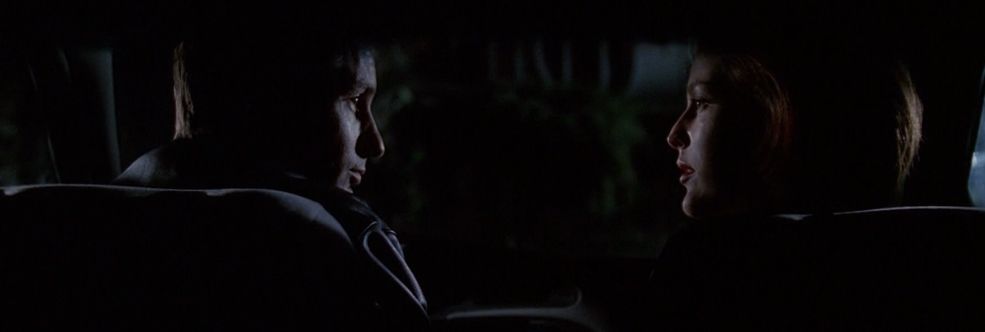
all things is a very odd piece of television. It is moody and atmospheric, philosophical and meandering. It is hard to contextualise, even within the framework of a season as eccentric and disjointed as the seventh season of The X-Files. It doesn’t really work, but that’s not a big problem. The seventh season is full of episodes that don’t quite work. There is definite ambition here, and a clear desire to say something that means something to actor (and director and writer) Gillian Anderson.
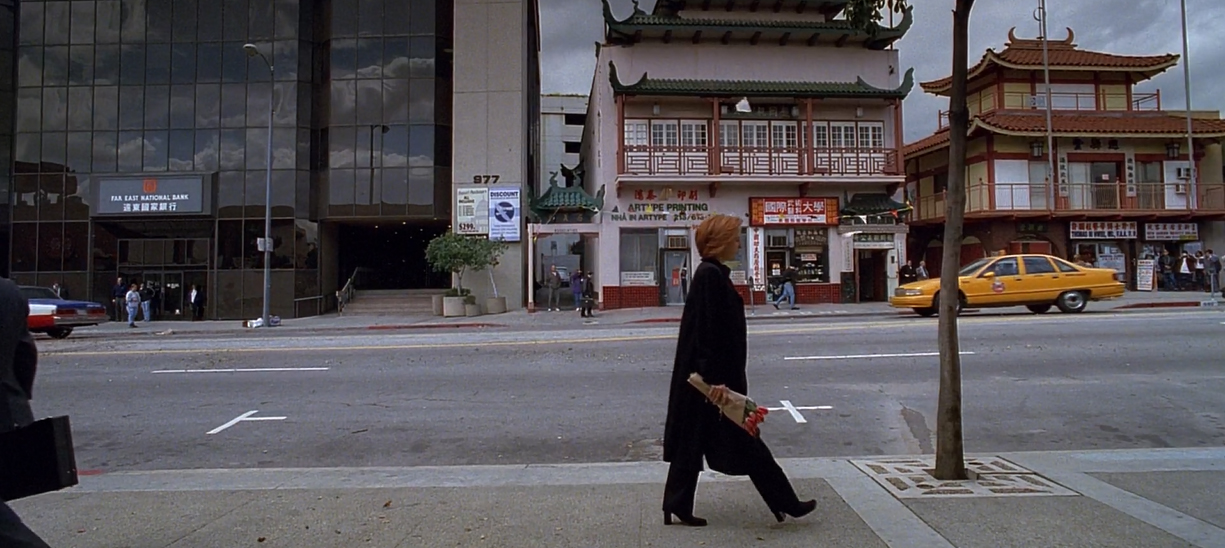
Walk o' life...

Walk o’ life…

Anderson exerts a very conscious gravity over all things. She is not the first actor to write and direct an episode of The X-Files, but she is the first to write and direct an episode centring on her character. all things is an episode written and directed by Gillian Anderson, with a heavy emphasis on Scully. This is as close to a treatise on the character as the actress is ever likely to produce. Perhaps this accounts for the heavy atmosphere and solemn tone of the piece.

all things is a mess of an episode, but it is an interesting mess. It is an episode that feels consciously at odds with both the show around it and the character at its centre. It is an awkward (and occasionally ridiculous) piece of television, but it looks and feels utterly unlike any other episode of The X-Files. That has to count for something.
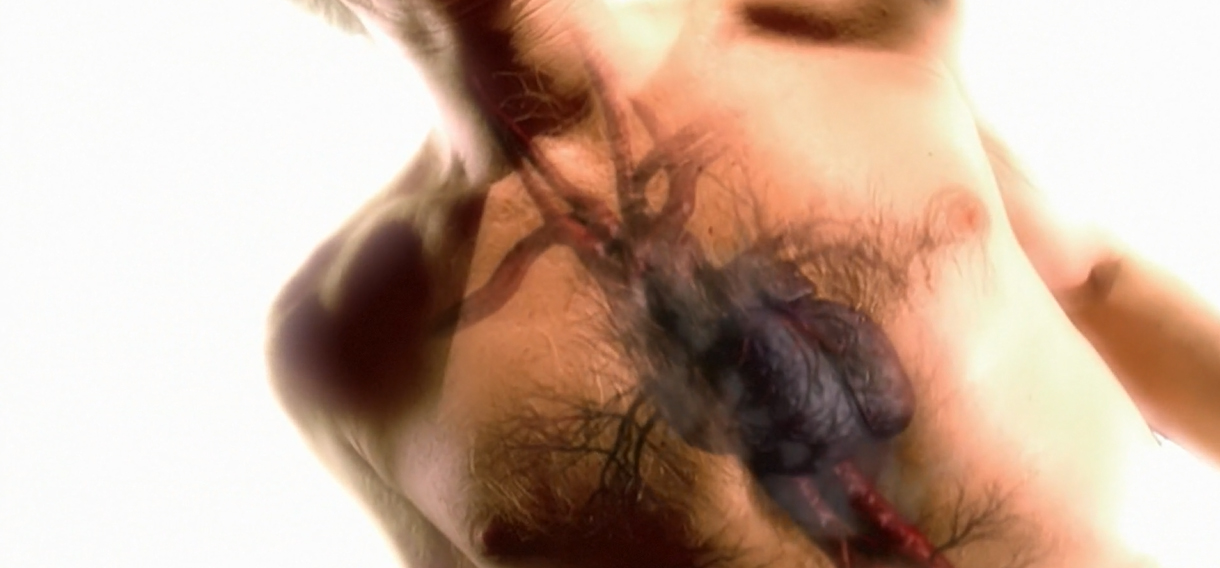
The beating of the world's heart...

The beating of the world’s heart…

Continue reading

The X-Files – Season 6 (Review)

This July, we’re taking a trip back in time to review the sixth season of The X-Files and the third (and final) season of Millennium.

The sixth season of The X-Files is notable for many different reasons. It was the first season after the release of The X-Files: Fight the Future. It was the first season following the move to Los Angeles. It saw the “end” (at least nominally) of the show’s conspiracy mythology in the massive Two Fathers and One Son two-parter. It was the first season to begin closer to the end of the show’s nine-year run than to the beginning. It was also the first season to open past the hundred-episode mark.

That last landmark is important, because it marks the point at which The X-Files could effectively be sold into syndication. One hundred episodes meant that a network could air the show five nights a week for twenty weeks, filling up almost half a year’s worth of broadcasting slots. Reaching the one hundred episode mark meant that a show was a bona fides success, and that anything else was really just gravy on top. The bulk of the work had been done. The X-Files would be a rare prime-time drama to pass two hundred episodes.

xfiles-howtheghostsstolechristmas2a

Of course, times have changed. By 2011, the number of episodes required for a syndication deal had slipped from one hundred to a mere eighty-eight, with the goal being four seasons of twenty-two episodes. (This trend happened while The X-Files was on the air, with the show dropping from twenty-four or twenty-five episodes in a season at the start of its run to twenty-two or twenty towards the end.) Even then, streaming has changed the media landscape, making it more possible than ever to syndicate show with shorter runs, like Community.

So syndication beckoned for The X-Files. In fact, syndication would pose no shortage of trouble for the show in the years ahead. During the seventh season, David Duchovny would file a lawsuit against Fox alleging that the company’s syndication policy had cost him financially. After the show went off the air, Carter would find himself embroiled in a similar lawsuit over syndication rights, delaying production of The X-Files: I Want to Believe. There are worse ways to argue that The X-Files was a victim of its own success than to look at the syndication of the show.

xfiles-arcadia7

Nevertheless, it was clear that The X-Files had accomplished everything that it could ever want by the start of the sixth season. Chris Carter had his five seasons and a movie. Fox had a show they could syndicate. David Duchovny had forced the production to move to Los Angeles so that he could spend time with his family. Although nobody knew it at the time, the fifth season secured the highest rankings that a season of The X-Files would enjoy in the Nielsen Ratings. So going into the sixth season of The X-Files, there was only one question hanging in the air.

What now?

xfiles-therainking25

Continue reading

The X-Files – Bad Blood (Review)

This May and June, we’re taking a trip back in time to review the fifth season of The X-Files and the second season of Millennium.

Despite a notable absence of Darin Morgan, Bad Blood makes a much more convincing case for Vince Gilligan as the heir apparent to Darin Morgan than Small Potatoes did at the end of the fourth season.

Bad Blood finds Gilligan touching on some of the same broad ideas as Small Potatoes – how Mulder is perceived and how he perceives himself, a sly awareness of the show’s tropes and conventions. However, Bad Blood feels a lot more honed and focused than Small Potatoes. It felt like Small Potatoes only got to the meat of the story it wanted to tell in its final third, while Bad Blood is shrewd enough to put its core concepts front-and-centre. While Bad Blood has the same broad humour of Small Potatoes, it feels a lot more convincing when it comes to characters.

The tooth is out there...

The tooth is out there…

It could be argued that Gilligan drew quite heavily on the work of Darin Morgan in some of his scripts. There is no shame in this. After all, Darin Morgan is perhaps the most widely-praised writer to work on The X-Files. In this context, Bad Blood is something of a spiritual successor to Jose Chung’s “From Outer Space.” Gilligan’s script is not quite as structurally or philosophically ambitious as Darin Morgan’s final credited script for the series, but it does hit on the same fundamental idea that truth is an inherently subjective construct.

Bad Blood is essentially an episode that is not only about how Mulder and Scully see each other, but how they see themselves.

Mulder knows what's at stake...

Mulder knows what’s at stake…

Continue reading

The X-Files – Emily (Review)

This May and June, we’re taking a trip back in time to review the fifth season of The X-Files and the second season of Millennium.

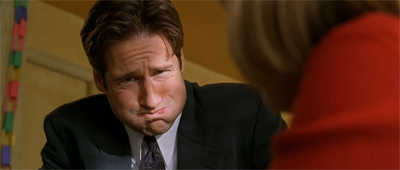
The biggest problems with Emily can be summed up in five words:

“… and then Mulder showed up.”

Sorry, Mulder.

Sorry, Mulder.

Continue reading

The X-Files – Christmas Carol (Review)

This May and June, we’re taking a trip back in time to review the fifth season of The X-Files and the second season of Millennium.

Part of the challenge of the fourth and fifth seasons is watching The X-Files adapt the speed of its mythology.

The mythology has a very clear momentum in the first three seasons. For all that Chris Carter and his writers loved teasing out new questions, there was a clear sense of momentum and movement. The show had gone from a series about an isolated alien abduction in The Pilot to a series with a date set for the alien colonisation of Earth in Talitha Cumi. For all that the series was accused of being ambiguous and mysterious, there was a sense that it was at least going somewhere.

And so this is Christmas...

And so this is Christmas…

Things changed during the fourth season, most likely as the prospect of The X-Files: Fight the Future loomed in the future. It was clear that Fox would not allow Carter to set an end date on the television show before transitioning to feature films, and that the series would have to stretch beyond Carter’s original roadmap for it. All of a sudden, the mythology started stalling. The fourth season’s mythology had no clear direction in which to go, as evidenced by the fact that the decision to give Scully cancer in Leonard Betts was an eleventh hour decision with no long-term planning.

The fifth season’s mythology comes with its own particular set of problems. The movie had been written during the fourth season and filmed during the gap between the fourth and fifth seasons. This is quite evident in the way that the movie carries over abandoned elements of the fourth season mythology like the bees, who do not register at all in the fifth season. However, this also meant that the end point of the fifth season was essentially set in stone for the production team. The End would have to lead into Fight the Future, no matter what happened in the intervening nineteen episodes.

Picture perfect...

Picture perfect…

This means a lot of things for the fifth season. It means that the fifth season is stuck with the “Mulder as a skeptic… sort of” setup until Fight the Future, even if the show generally ignores it as much as it can. It also means that the mythology episodes probably should not contain any earth-shattering revelations or introduce any major character who were not already written into the film. Although Patient X and The Red and the Black effectively throw out these constraints almost completely, Christmas Carol and Emily try to adhere to them.

The result is a mythology episode that adheres rather closely to the successful approach adopted by Tempus Fugit and Max, a story that takes the backdrop of what the show has already revealed about the conspiracy and then uses that as a setting in which it can tell a decidedly more intimate and personal story.

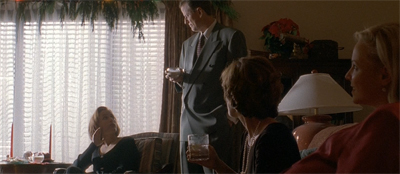
It's a Scully family Christmas...

It’s a Scully family Christmas…

Continue reading

The X-Files – Our Town (Review)

This August (and a little of September), we’re taking a trip back in time to review the second season of The X-Files. In November, we’ll be looking at the third season. And maybe more.

A rare “monster of the week” script from Frank Spotnitz, Our Town could be seen as a mirror to Humbug. Humbug seemed to mourn the way that eccentric little communities seemed to be fading into history in the nineties – the loss of unique and distinct little hamlets. Our Town seems to offer a counterpoint, suggesting that perhaps the intrusion of the outside world into these tightly-knit communities is not a bad thing.

Inspired by the classic Spencer Tracy film Bad Day at Black Rock, Our Town sees Mulder and Scully investigating a small-town disappearance that eventually leads the duo to uncover a horrifying secret at the heart of the local community.

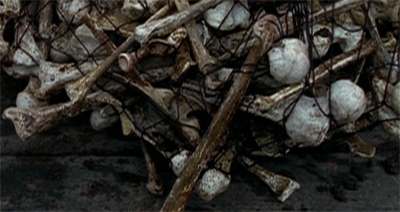
Fresh bones...

Fresh bones…

Continue reading

The X-Files – One Breath (Review)

This August (and a little of September), we’re taking a trip back in time to review the second season of The X-Files. In November, we’ll be looking at the third season. And maybe more.

If there were ever any doubt that The X-Files is fundamentally about faith in the nineties, One Breath should put the matter to rest.

An astounding, moving, staggering and thoughtful piece of work, One Breath not only wraps up the arc that opened the second season, it also provides closure to the themes that writers Glen Morgan and James Wong had been seeding throughout this first stretch of the season. One Breath bookends the meditation on faith that began in Little Green Men and serves as a counterpoint to the paranoia of Blood and the nihilism of 3.

One Breath is a tremendous piece of work, the best episode of the season and one that deserves to be mentioned among the very best the show ever produced.

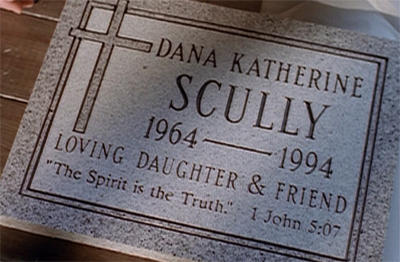
Grave stakes...

Grave stakes…

Continue reading

The X-Files – Ascension (Review)

This August (and a little of September), we’re taking a trip back in time to review the second season of The X-Files. In November, we’ll be looking at the third season. And maybe more.

Ascension is effectively a giant chase sequence and an epilogue to the first six episodes of the second season. While lacking the tight focus of Duane Barry, Ascension moves fast enough and provides enough plot momentum that it feels like a satisfactory conclusion. For an episode that was essentially written to deal with a cast member’s unexpected pregnancy, it’s a pretty fantastic piece of television.

Keep watching the skiis... er, skies!

Keep watching the skiis… er, skies!

Continue reading

The X-Files – The Host (Review)

This August (and a little of September), we’re taking a trip back in time to review the second season of The X-Files. In November, we’ll be looking at the third season. And maybe more.

The Host and Little Green Men represent a fantastic one-two punch combination to open the second season of The X-Files. It’s very hard to think of two back-to-back standalone stories that most effectively sum up the show, capturing a lot of what makes the series so beautifully compelling and enduring. The two episodes are also quite surprising. It feels strange that Chris Carter didn’t write Little Green Men, given the importance of the premiere to the show. However, in light of that, it also feels strange that Carter did write The Host.

Working on The X-Files, Carter tends to gravitate towards “event” episodes. His name is frequently seen on episodes that push the show forward – in multiple senses. Carter is the architect of the show’s grand mythology, so his name pops up quite frequently on those scripts. However, Carter is also prone to write occasional “big” episodes of a given season. He wrote and directed The Post-Modern Prometheus and Triangle, for example, two of the more unique and distinctive episodes of the fifth and sixth seasons.

Through the looking glass...

Through the looking glass…

So, seeing Chris Carter’s name on the first “monster-of-the-week” of the new year rather than the all-important season premiere feels a little strange – particularly since The Host is an episode that seems a lot less ambitious than Little Green Men. After all, Little Green Men depicted Samantha Mulder’s abduction, revealed the show’s aliens and tried to make Vancouver look like Puerto Rico. In contrast, The Host is about an overgrown mutant worm.

And yet, perhaps that’s the point. The second season of The X-Files was a massively important year for the show. Along with the Fox Network itself, this was the year that The X-Files defined its own identity and really began to aggressively carve out a niche. The show did not make the top 100 shows of the 1993-1994 season, but almost reached the top 50 shows of the 1994-1995 season. That’s a meteoric rise, and the second season is very ruthlessly refining itself.

X marks the spot...

X marks the spot…

To describe The Host as a simple “monster-of-the-week” is to miss the point entirely. The show doesn’t exist yet another entry in a genre that the show established during its first year on the air. Instead, The Host is clearly constructed to be the monster-of-the-week episode. It’s an hour of television that is designed to get a reaction, to push buttons, to get people talking. This is an episode squarely aimed at anybody who heard the buzz over the summer hiatus and wanted to see what the fuss was about.

It works very well in this capacity. There is a reason that The Host as endured as a classic episode of The X-Files, packed with all manner of iconic and memorable imagery. Chris Carter constructed The Host as an example of what The X-Files does very well – and it’s a piece of science-fiction horror that sticks with people. It’s incredibly hard to forget. And that’s the beauty of it.

A monster mash-up...

A monster mash-up…

Continue reading

The X-Files – Lazarus (Review)

And, with Lazarus, we enter a long mediocre stretch in the second half of the first season of The X-Files. To be fair, none of the episodes in this run are anywhere near as bad as Space, but – with the exception of E.B.E., Tombs and The Erlenmeyer Flask – they all feel a little flat. It’s as if the first half of the season was more experimental, as The X-Files tried to figure out what it wanted to be, with the second half dedicated to settling into its particular groove.

Lazarus isn’t terrible. It just feels a little rote, a little paint-by-numbers, a littler average and safe. It’s a conventional enough supernatural (or psychological) thriller, but it lacks that extra “umph” to make it something particularly worthy of a viewer’s time.

The mask is slipping...

The mask is slipping…

Continue reading