• Following Us

  • Categories

  • Check out the Archives


  • Awards & Nominations

Star Trek: The Next Generation – Sarek (Review)

This January and February, we’ll be finishing up our look at the second season of Star Trek: The Next Generation and moving on to the third year of the show, both recently and lovingly remastered for high definition. Check back daily for the latest review.

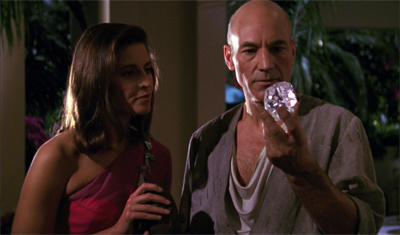
Sarek is a rather wonderful episode of Star Trek: The Next Generation. It’s a celebration of the franchise’s history, but without being overwhelmed by the weight of continuity. It’s also a heart-breaking story about an old man coming to terms with his mortality, assessing the legacy that he leaves behind and the future he had hoped to shape. The beauty of Sarek, then, is the way that the episode ties these two threads together – offering a rather touching metaphorical exploration of Gene Roddenberry’s own influence on the franchise and his own deteriorating health.

Back to the future...

Back to the future…

Continue reading

Star Trek: The Next Generation – Captain’s Holiday (Review)

This January and February, we’ll be finishing up our look at the second season of Star Trek: The Next Generation and moving on to the third year of the show, both recently and lovingly remastered for high definition. Check back daily for the latest review.

Captain’s Holiday is another one of those infamously troubled episodes from the third season that turned out fairly okay, considering all the meddling and tinkering unfolding in the background. That said, it’s more like Ensigns of Command than Yesterday’s Enterprise, but it’s still a watchable and entertaining episode of Star Trek: The Next Generation, and also probably the strongest comedy episode so far.

Then again, when the show’s other comedy “highlights” include The Outrageous Okona and Manhunt, you can see why this might seem like damning with faint praise.

A hidden gem?

A hidden gem?

Continue reading

Star Trek: The Next Generation – Déjà Q (Review)

This January and February, we’ll be finishing up our look at the second season of Star Trek: The Next Generation and moving on to the third year of the show, both recently and lovingly remastered for high definition. Check back daily for the latest review.

Déjà Q is, in a way, the most quintessential of Star Trek: The Next Generation stories, one of the most perfect embodiments of the show’s philosophy. It’s the story about an alien who engages on a voyage of self-discovery, with the Enterprise crew serving as guides. It’s essentially an episode about what it means to be human, and is built upon the fundamentally assumption that being human allows a person the capacity for altruism and self-sacrifice.

It’s easy to imagine Déjà Q turning out unwatchable. This sort of “humans are brilliant!” storytelling was a staple of the show’s troubled first season, leading to episodes like The Last Outpost and Lonely Among Us. However, Déjà Q turns out to be quite the treat. It’s helped by the presence of John de Lancie’s superbly sardonic Q and Richard Danus’ decidedly wry script. Both of these help to temper the episode’s earnestness, leading to a show that is endearing rather than irritating.

Watching Déjà Q, there’s a sense that this is very much what Gene Roddenberry wanted the first two seasons of The Next Generation to be, but – at that stage in its young life – the show was never quite capable of producing something this charming.

Well, he knows how to make an entrance...

Well, he knows how to make an entrance…

Continue reading

Star Trek: The Next Generation – The High Ground (Review)

This January and February, we’ll be finishing up our look at the second season of Star Trek: The Next Generation and moving on to the third year of the show, both recently and lovingly remastered for high definition. Check back daily for the latest review.

The High Ground is a rather earnest issue-driven episode of Star Trek: The Next Generation, dealing with one of the big issues of the day: international terrorism. However, the moral ambiguity of terrorism was a decidedly more contentious and controversial issue in early 1990 than the plight of Vietnam veterans explored in The Hunted or the Cold War politics of The Defector.

The High Ground is an allegory for the Troubles in Northern Ireland at a point in time where the Troubles were on-going. 1990 saw a number of high-profile terrorist actions conducted by the IRA. They bombed the London Stock Exchange in July. Using an explosive device, they murdered Sergeant Charles Chapman in May. Nobody has ever been prosecuted for his death. In February 1991, the IRA launched a mortar attack on 10 Downing Street. So this was the context in which The High Ground aired.

And, to be fair, there’s something admirable about the show’s willingness to engage with a controversial issue, even if the end result leaves a lot to be desired.

Holding hands around the universe...

Holding hands around the universe…

Continue reading

Star Trek: The Next Generation – The Hunted (Review)

This January and February, we’ll be finishing up our look at the second season of Star Trek: The Next Generation and moving on to the third year of the show, both recently and lovingly remastered for high definition. Check back daily for the latest review.

The Hunted is a piece of allegorical Star Trek. Like The Defector before it, there’s a sense that the show is a little behind the curve – that it’s really dealing with issues that aren’t at the peak of their relevance. The Cold War with the Romulans felt like a bit of a throwback in the era of glasnost, and the ghosts of Vietnam raised by The Hunted feel like echoes of a national debate that had already taken place in the mid- to late-eighties.

And yet, despite that, it works. Like The Defector, there’s a sense that The Next Generation is distant enough from the issue that it can engage objectively. The treatment of Jarok in The Defector or Roga Danar in The Hunted feels infinitely more nuanced and sophisticated than the portrayal of Finn in The High Ground, when The Next Generation was rather consciously trying to engage with a more relevant and topical issue.

Effectively The Next Generation‘s Vietnam story, The Hunted serves as a startlingly effective piece of television. It might be the best action-driven episode of the show to date.

Keep soldiering on...

Keep soldiering on…

Continue reading

Star Trek: The Next Generation – The Vengeance Factor (Review)

This January and February, we’ll be finishing up our look at the second season of Star Trek: The Next Generation and moving on to the third year of the show, both recently and lovingly remastered for high definition. Check back daily for the latest review.

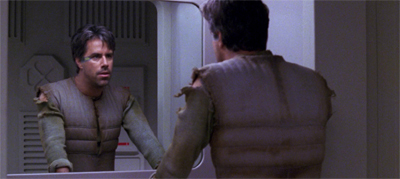
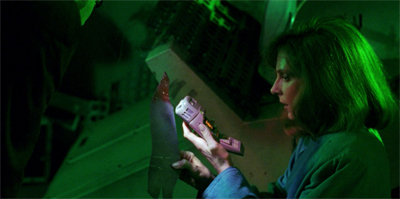
The Vengeance Factor is an ambitious little episode that never quite manages to follow through on its potential. Something of a Riker-centric romance to compliment the Troi-centric romance in The Price, the episode is an exploration of vengeance and generational strife – the cost of feuds that last decades, even centuries. It’s a story where Yuta’s thirst for revenge keeps her young, and one that opens with Crusher tracking the acts of piracy back to the Gatherers using a blood stain on a shard of metal. Subtle, it is not.

However, there’s something almost endearing about The Vengeance Factor, from its very eighties leather Mad Max reject space pirates through to the way that channels the optimism of Star Trek quite well. Although the ending is unbelievably forced, at least it is striking and effective. Far from perfect, and not among the high points of this third season, The Vengeance Factor still marks a sharp improvement from The Price.

There will be blood...

There will be blood…

Continue reading

Star Trek – The Romulan Way by Diane Duane and Peter Morwood (Review)

This January and February, we’ll be finishing up our look at the second season of Star Trek: The Next Generation and moving on to the third year of the show, both recently and lovingly remastered for high definition. Check back daily for the latest review.

We’ll be supplementing our coverage of the episodes with some additional materials – mainly novels and comics and films. This is one such entry.

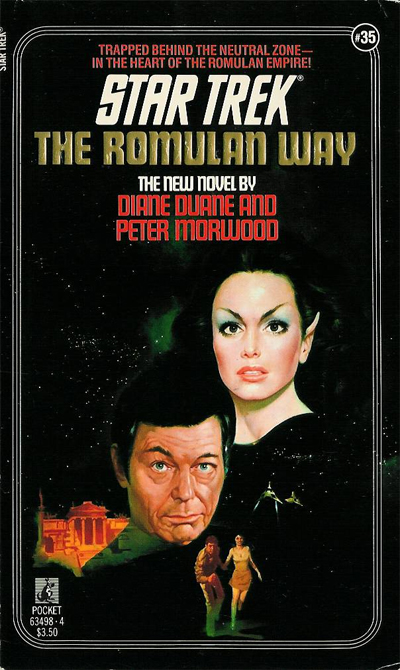
The Romulan Way is the second book in Diane Duane’s “Rihannsu” cycle – although the first book in the series, My Enemy, My Ally was only retroactively distinguished from standard Star Trek tie-ins. Much like My Enemy, My Ally had been roughly contemporaneous with John M. Ford’s The Final Reflection, Duane’s follow-up was published around the same time as Ford’s own sequel to his earlier work, How Much for Just the Planet? Expanding on My Enemy, My Ally, The Romulan Way sees Duane delving more thoroughly into Romulan history and culture.

The Romulan Way was published amid a sea of change at Paramount and Pocket Books in the late eighties, with shifting mandates and objectives for these tie-in books that represented a conscious effort to hem in some of the more creative tendencies of mid-eighties Star Trek novelist. To demonstrate how rapidly things were changing, both The Romulan Way and How Much for Just the Planet? were both published within three years of their predecessors. After this point, it would take Duane another thirteen years to write the third volume in her saga, and John M. Ford would never write another Star Trek tie-in again.

It’s very hard to condone any publishing philosophy that leads to results like that.

tos-theromulanway

Continue reading

Star Trek: The Next Generation – Booby Trap (Review)

This January and February, we’ll be finishing up our look at the second season of Star Trek: The Next Generation and moving on to the third year of the show, both recently and lovingly remastered for high definition. Check back daily for the latest review.

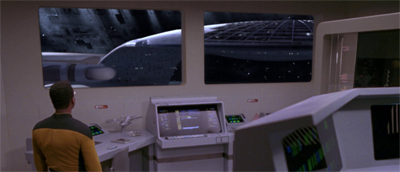
Booby Trap is a bit of a mess. The writing credits for the episode, featuring four different writers credited with getting the idea from basic story to finished script. This wasn’t at all unusual in the show’s third season – consider the writing credits for Yesterday’s Enterprise – but it gives an indication of the chaos unfolding behind the scenes on the third season of Star Trek: The Next Generation.

It’s Michael Piller’s second credited script, and his first writing credit since he took over the writers’ room. (Although he did, along with Melinda Snodgrass, do a pass on Ronald D. Moore’s script for The Bonding.) As such, it is written with a very clear idea of where Piller wants to take the show, one that shines through a somewhat uneven and all-over-the-place plot, which often feels like several different scripts blended into one.

Building on what came before...

Building on what came before…

Continue reading

Star Trek: The Next Generation – The Bonding (Review)

This January and February, we’ll be finishing up our look at the second season of Star Trek: The Next Generation and moving on to the third year of the show, both recently and lovingly remastered for high definition. Check back daily for the latest review.

The Bonding is a pretty pivotal and momentous episode for Star Trek: The Next Generation. On one hand, it’s the first episode overseen by incoming executive producer Michael Piller. Piller would go on to become one of the most influential producers to work on Star Trek. Aside from steering The Next Generation towards success, he also created Star Trek: Deep Space Nine and Star Trek: Voyager, as well as overseeing the production of the first three Next Generation films.

However, The Bonding is also the first script written by Ronald D. Moore. Obviously, the version that made it to screen had been revised and tweaked by Melinda Snodgrass and Michael Piller, but The Bonding still feels like a Moore script. Ronald D. Moore would go on to be one of the more influential writers on The Next Generation and Deep Space Nine. He also worked (very) briefly on Voyager, before departing and heading up his own reboot of Battlestar Galactica.

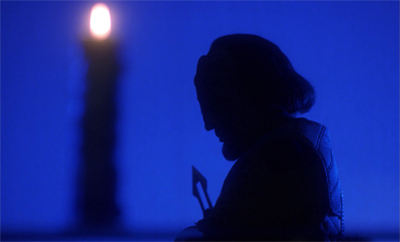
So The Bonding is the beginning of something new, an original direction for The Next Generation. Featuring a powerful and wonderful opening half, The Bonding suffers a bit from falling into conventional Star Trek tropes towards the end of the episode. However, it’s still a clever and powerful piece of television.

A bit of shadow...

A bit of shadowplay…

Continue reading

Star Trek: The Next Generation – The Survivors (Review)

This January and February, we’ll be finishing up our look at the second season of Star Trek: The Next Generation and moving on to the third year of the show, both recently and lovingly remastered for high definition. Check back daily for the latest review.

Michael Wagner remains something of a forgotten figure among Star Trek fans. While anybody familiar with the behind-the-scenes workings on Star Trek: The Next Generation is aware of the contributions made by the wonderful Michael Piller, and quite a few would be familiar with the work of Maurice Hurley during the first two seasons, Wagner’s four-episode tenure as executive producer and head writer is something of a mystery.

Situated right in the middle of that four-episode run, and the only Star Trek script on which Wagner does not share a credit, The Survivors seems like the most obvious indicator of what Wagner’s version of The Next Generation might have looked like. Of course, it’s impossible to extrapolate from a single episode of television, let alone a single episode of an era that was over before it already began, but it is interesting to look at how Wagner’s work here differs from the style that would be imposed by Piller.

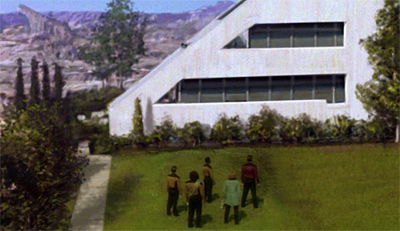
The Survivors is a decidedly high-concept science-fiction mystery, feeling almost like an episode of an anthology featuring the regular cast. Built around a guest star, The Survivors is very much radically opposed to Piller’s vision of character-driven Star Trek.

"Nice house. Can't see much about the neighbourhood, though."

“Nice house. Can’t see much about the neighbourhood, though.”

Continue reading