• Following Us

  • Categories

  • Check out the Archives


  • Awards & Nominations

Non-Review Review: The Jesus Rolls

The Jesus Rolls is a loaded premise on a number of levels.

Most obviously, it is a film that takes a memorable supporting character from a beloved film and asks them to hold focus for ninety-odd minutes. Not all characters are designed to support a feature film, as the cavalcade of failed Saturday Night Live films will attest. It’s possible to get lucky, as with cases like Wayne’s World, but these happen relatively infrequently. Jesus might be a character who works best as part of the larger wacky ensemble of The Big Lebowski, where he exists in a heightened world of wandering cowboys, conceptual artists, pornographers and nihilists.

The risks are compounded by the change of authorship. Jesus Quintana was a character created by the Coen Brothers, and so makes a great deal of sense in their world of dysfunctional and cartoonish eccentrics. While actor John Turturro has experience as a writer and director, he is very clearly a different sort of filmmaker. Turturro’s last theatrically released feature was Fading Gigalo, released in 2013. There’s little in Turturro’s filmography to suggest that his approach to Jesus will mesh with the character’s origin in a stylised Raymond Chandler homage.

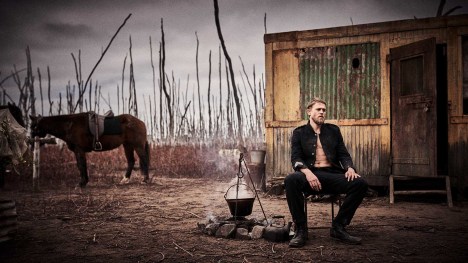
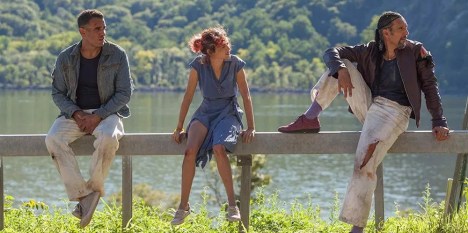
The Jesus Rolls is a strange sort of misfire. It’s a surprisingly flat film, which says a lot considering its gonzo inspirations and its bawdy preoccupations. There’s a hollowness to it all, an emptiness and a lack of focus. It lacks the energy or zeal that might excuse its paper-thin approach to its plot and protagonist, aspiring towards a weightiness that neither its characterisation nor its content can support. The Jesus Rolls often feels like a series of interlocking vignettes rather than a movie, but none of which succeed at holding the audience’s attention.
Continue reading

174. Birdemic: Shock and Terror (-#5)

Hosted by Andrew Quinn and Darren Mooney, and this week with special guests Donal Smith and Donal Sweeney, The 250 is a (mostly) weekly trip through some of the best (and worst) movies ever made, as voted for by Internet Movie Database Users.

This time, James Nguyen’s Birdemic: Shock and Terror.

Software salesman Rod has the perfect life. He has just closed the biggest deal in the history of his company, which has itself just been bought out by a giant conglomerate. More than that, a chance encounter with an old school friend leads to a blossoming romance with a Victoria’s Secret model. Everything is going well, until death swoops in from above.

At time of recording, it was ranked 5th on the list of the worst movies of all time on the Internet Movie Database.

Continue reading

New Escapist Column! On the “The Hunt” as Empty Provocation…

I published a new piece at Escapist Magazine last week. This is one has been a while in the making, since at least August last year.

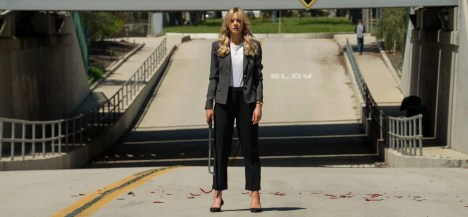
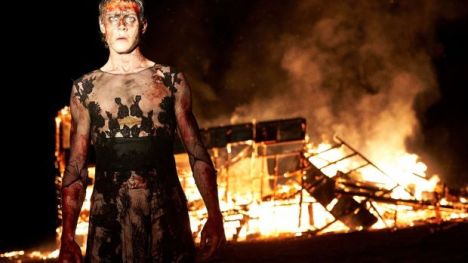
The Hunt was massive controversial before anybody had actually watched the finished cut of the film. It attracted the ire of Fox News and, through that, Donald Trump. Universal pushed the film back, eventually settling on a mid-March release date, with the advertising leaning heavily into that controversy as a selling point. As such, it’s impossible to discuss The Hunt without discussing the maelstrom around it. This means that the movie itself feels like a disappointment and a damp squib. Its potent political content is nothing more than empty provocation, its biting social commentary just an elaborate troll. The Hunt has nothing to say, which is particularly disappointing as it is sandwiched between the genuinely political provocations of The Invisible Man and Promising Young Woman.

You can read the piece here, or click the picture below.

Non-Review Review: The Hunt

The Hunt could never live up to the controversy.

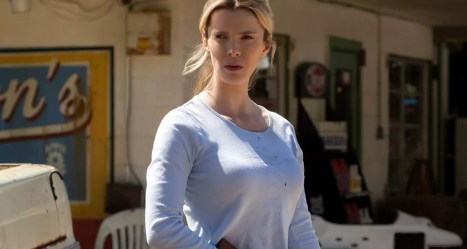
After all, The Hunt was a film that attracted a considerable deal of attention. The basic premise of the movie finds a number of “deplorables” kidnapped and taken to a secret location, where wealthy liberals hunt them for sport. This premise attracted the attention of Fox News back in August. From there, it attracted the attention of the President of the United States. Donald Trump tweeted angrily about The Hunt, and within a day it was pulled from the release calendar.

The Hunt arrives in cinemas cresting that wave of controversy. The trailer for the new release date openly acknowledges the controversy and leans into it, encouraging prospective audience members to “decide for [themselves]” about it. So The Hunt arrives as an object of curiosity and fascination. Unfortunately, none of that feels earned. Indeed, it looks like the most remarkable thing about the shift in release dates was that it allowed The Hunt to avoid a direct class with the similar-but-superior “elites riff on The Most Dangerous Game” film Ready or Not.

The Hunt goes looking for controversy, but comes home empty handed.

Continue reading

Non-Review Review: Calm With Horses

This film was seen as part of the Virgin Media Dublin International Film Festival 2020. Given the high volumes of films being shown and the number of reviews to be written, these may end up being a bit shorter than usual reviews.

Calm With Horses is a solid, atmospheric crime drama.

There are very few surprises in Nick Rowland’s West of Ireland gangster film. The plot is fairly straightforward, focusing on a muscle-bound enforced for a local crime family who finds himself torn between the man that he wants to be and the tool that his employers see him to be. There are familiar dreams of escape, and those inevitable consequences that ripple outwards from a single morally-justified-but-strategically-stupid decision towards inevitable disaster. Thematically, Calm With Horses belongs to that familiar genre of violent men trying to live with their violence. Even the metaphors are familiar.

That said, Calm With Horses benefits from strong execution. The film received funding as part of the WRAP initiative, encouraging film production on the western coast of the island. Rowland skillfully leverages the film’s location work in Clare and Galway, providing his moody character study with a rich sense of atmosphere. In its strongest moments, Calm With Horses taps into a lingering melancholy that suggests a desolation extending beyond the rugged rural landscapes. There is a sense that these characters are as stark and haunted as the landscapes that they wander.

Calm With Horses doesn’t really offer any new twists on a familiar genre, but elevates its familiar trappings through the execution.

Continue reading

Non-Review Review: Promising Young Woman

This film was seen as part of the Virgin Media Dublin International Film Festival 2020. Given the high volumes of films being shown and the number of reviews to be written, these may end up being a bit shorter than usual reviews.

Promising Young Woman is a deeply uncomfortable watch. As it should be.

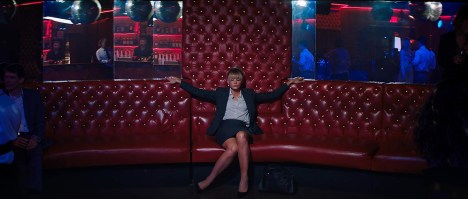
The basic premise of Emerald Fennell’s theatrical debut is decidedly thorny. Cassandra is a thirty-year-old woman who spends her weekends going to bars and acting so drunk that she can barely stand. Inevitably, a “nice guy” arrives to volunteer to help. He usually bundles her into the back of a taxi and takes her back to his place. Then, things get very uncomfortable – particularly when they realise that Cassandra is nowhere near as incapacitated as she appears to be. It’s a hell of a hook.

Promising Young Woman is the kind of film that is going to generate lots and lots of “discourse.” It will stoke strong opinions. It will spark uncomfortable conversations. It is an incredibly loaded film. All of this makes Fennell’s accomplishment all the more impressive. Promising Young Woman is a remarkably confident and assured debut feature, a film which navigates an almost impossibly fraught subject with a surprising amount of charm and wit. Promising Young Woman is heartbreaking and hilarious, raw and riotous, often pivoting between extremes in the space of a single scene. It’s a deft balancing act.

However, the most remarkable thing about Promising Young Woman isn’t just the way that Fennell manages all these tensions within the film. Promising Young Woman manages to create a palpable and compelling tension with the audience – a perfectly calibrated push-and-pull that knows exactly which buttons to push and when, for maximum effect. Promising Young Woman is a film that challenges its audience as much as its characters, and that is what makes it such a striking piece of film-making.

Note: It is probably best to see Promising Young Woman as blind as possible, without any real foreknowledge of what the film is doing or how it does it. This review will not go into too much depth, but discussing the film means discussing some of those mechanics. Consider this a light spoiler warning, and an unqualified recommendation.

Continue reading

Non-Review Review: Radioactive

This film was seen as part of the Virgin Media Dublin International Film Festival 2020. Given the high volumes of films being shown and the number of reviews to be written, these may end up being a bit shorter than usual reviews.

The life of Marie Curie is fascinating. Radioactive is not.

Curie is easily one of the great figures of the twentieth century, a scientist who changed the way in which mankind fundamentally understood the workings of the universe. That is no small accomplishment, and there is plenty of dramatic fodder to be found in her personal life; the manner in which she was marginalised by the scientific community because of her gender, her complicated relationship with Pierre Curie, even the tabloid scandal that defined so much of her later life. There are any number of interesting angles through which a biopic might approach Curie.

Unfortunately, Radioactive is greedy. Jack Thorne’s screenplay doesn’t just want to encompass the totality of Curie itself, the script hopes to offer something close to a cinematic biography of radiation itself. There is no doubt that Radioactive is ambitious, with director Marjane Satrapi even trying to break up scenes of exposition with helpful cinematic illustrations of the concepts under discussion. However, there is simply too much to cover. Radioactive struggles to maintain a consistent throughline, often feeling like a bullet point summary of Curie’s Wikipedia page rather than a compelling narrative of itself.

Radioactive could use some refining.

Continue reading

Non-Review Review: It Must Be Heaven

This film was seen as part of the Virgin Media Dublin International Film Festival 2020. Given the high volumes of films being shown and the number of reviews to be written, these may end up being a bit shorter than usual reviews.

It Must Be Heaven offers a Chaplin-esque meditation on what it means to be “a citizen of the world,”, albeit filtered through a Palestinian lens.

Writer and director Elia Suleiman neatly divides his comedy into three acts. Playing himself, the veteran Palestian director journeys from Palestine in a bid to finance his latest movie. First, he visits Paris. Then, he visits New York. Along the way, he acts a silent and deadpan observers of the chaos of the world around him. Over the course of the film Suleiman only talks on a handful of occasions. Indeed, it would be handy enough to exorcise those sequences and reduce him to a classic silent film protagonist. However, the world buzzes around him.

So much of It Must Be Heaven is a purely observational film. Suleiman drifts idly from one scene to the next, always watching with mild bemusement as he steps into another story that is already in progress, often without any larger context: a father and son squabble across the balconies of their shared home, two brothers threaten a restaurant owner for serving wine in their sister’s food, a woman marches slowly and certainly from a well carrying two containers of water in a rather relaxed relay. Sometimes narratives reveal themselves through the act of looking, and sometimes they don’t. Such is life.

It Must Be Heaven seems more like a resigned sigh than a profound statement, a candid acknowledgement of how people are strange all over, even if some places offer their own unique brands of eccentricity.

Continue reading

Non-Review Review: True History of the Kelly Gang

This film was seen as part of the Virgin Media Dublin International Film Festival 2020. Given the high volumes of films being shown and the number of reviews to be written, these may end up being a bit shorter than usual reviews.

It’s very lucid,” notes a supporting character of the eponymous text.

The young teacher has just read the introductory paragraph of a letter that outlaw Ned Kelly has prepared for his son, a way of sharing the truth of events with his heir. Kelly will subsequently bind the paper to himself, wrapping it to his midsection beneath plates of metal armour. That same teacher will later ruminate on the blood-stained documents, dismissing Kelly’s story as nothing more than “the ravings of a madman.” Perhaps both statements are true. Perhaps the letter is more true for the fact that it is incoherent and existential poetry.

True History of the Kelly Gang prefaces its title with a warning to the audience that “nothing you’re about to see is true.” The word “true” then serves as a bridge from that preamble into the movie itself, lingering on the screen long enough to be incorporated into the no-frills titlecard for True History of the Kelly Gang. Truth and fiction linger and intersect, contradictions rippling through the finished film. Watching True History of the Kelly Gang, one gets a sense of how these contradictory statements can each be accurate in their own way.

True History of the Kelly Gang is both a vivid waking dream and a complete narrative mess, simultaneously.

Continue reading

Non-Review Review: Military Wives

This film was seen as part of the Virgin Media Dublin International Film Festival 2020. Given the high volumes of films being shown and the number of reviews to be written, these may end up being a bit shorter than usual reviews.

Military Wives is illustrates the appeal in hitting the right notes off the sheet music.

Military Wives is the latest entry in a particularly popular subgenre of midbudget film, the type of movie about a quirky hobby against the backdrop of everyday British life. There are any number of examples, from Swimming With Men to Finding Your Feet to Calendar Girls, arguably extending out to more class-conscious examples like Billy Elliot and Brassed Off. Perhaps the most iconic and successful example, the film which proved the international viability of the format, remains The Full Monty. These are films that largely hinge on an appealing juxtaposition between perceived British stoicism and enjoyable eccentricity.

Military Wives is loosely based on a true story of the military wives choir that became a minor national sensation when it played the Festival of Remembrance in 2011. Indeed, they went on to have a Christmas number one with their song Wherever You Are. However, Military Wives hews very closely to the established template. Once again, there is a conflict between stoicism and whimsy. The stoicism is of the most sombre sort, with the story focusing on the wives of soldiers deployed to Afghanistan, waiting to hear word home. The whimsy arises from the juxtaposition of having those wives sing Yazoo and Tears For Fears.

Military Wives never deviates too far from the template, but it doesn’t have to. Rachel Tunnard and Rosanne Flynn’s script understands why this sort of story works, and director Peter Cattaneo (a veteran of The Full Monty) is smart enough to trust actors Kristin Scott Thomas and Sharon Horgan to carry the film. There is occasionally a sense that Military Waves is working from a rough sketch rather than a finished plan, but it is mostly built to specifications.

Continue reading