• Following Us

  • Categories

  • Check out the Archives


  • Awards & Nominations

The X-Files – Nothing Important Happened Today II (Review)

This December, we’re taking a trip back in time to review the ninth season of The X-Files.

Of course, the ninth season was broadcast in a radically different world than the eighth season.

Nothing Important Happened Today I was broadcast early in November 2001, less than two months after hijackers commandeered control of several airline jets and sent them crashing into various American landmarks. The attacks upon the World Trade Centre and the Pentagon changed the world in a way that very few events can claim. History can be comfortably divided into “before 9/11” and “after 9/11”, a rare marker of cultural significance generally reserved for events like World Wars.
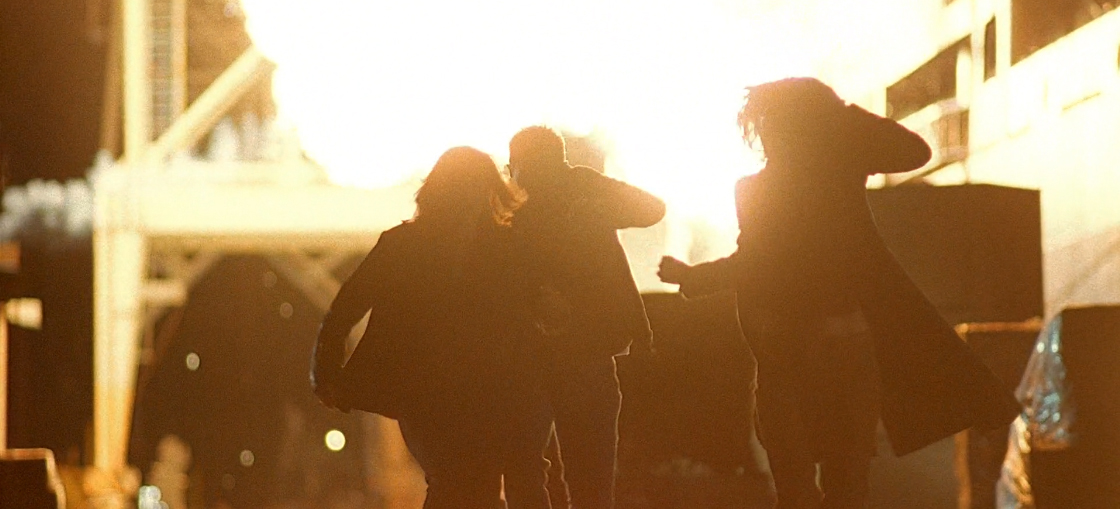
World on fire...

World on fire…

Tom Brokow has argued that 9/11 was “when the twenty-first century truly began.” Anne-Marie Slaughter argued that 9/11 was “the defining event of the new millennium.” Phillip E. Wegner suggested that 9/11 represented the end of “the long nineties” that had begun with the collapse of the Berlin Wall. It is not an exaggeration to suggest that 9/11 changed absolutely everything. It defined American foreign policy for over a decade after the fact, cemented a culture of anxiety and surveillance, cast an incredibly long shadow over world culture and politics.

Over two-and-a-half thousand people were killed on 9/11. Estimates suggest that up to twenty-one thousand civilians and more than two thousand American troops died during the War in Afghanistan. Studies suggest that up to half a million Iraqis have died of war-related causes and nearly four-and-a-half thousand American troops have died during the Iraq War. These are just the losses that can be tangibly measured; it is to say nothing of the lives caught in ripple effects and unforeseen (or foreseeable) consequences.
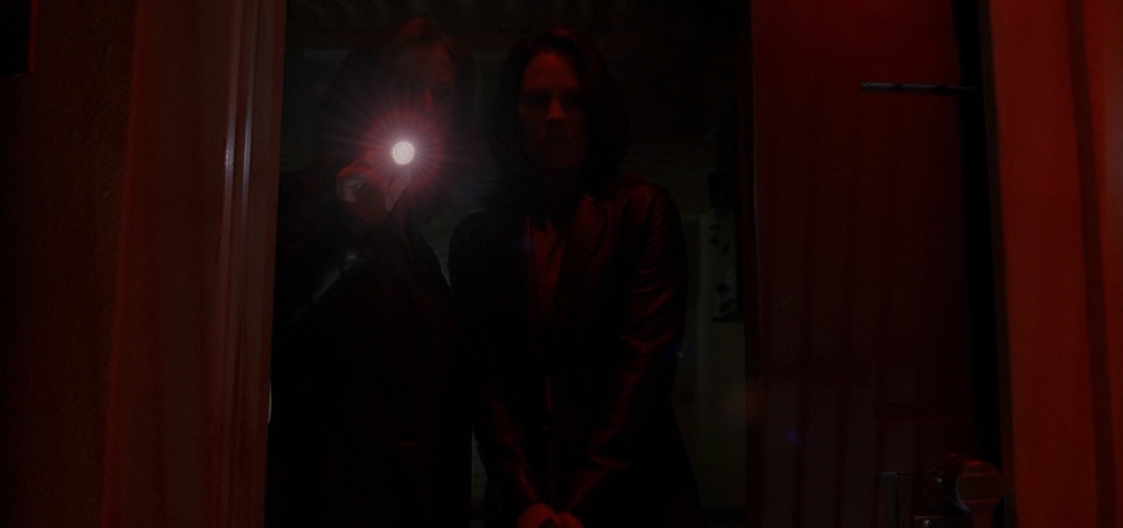
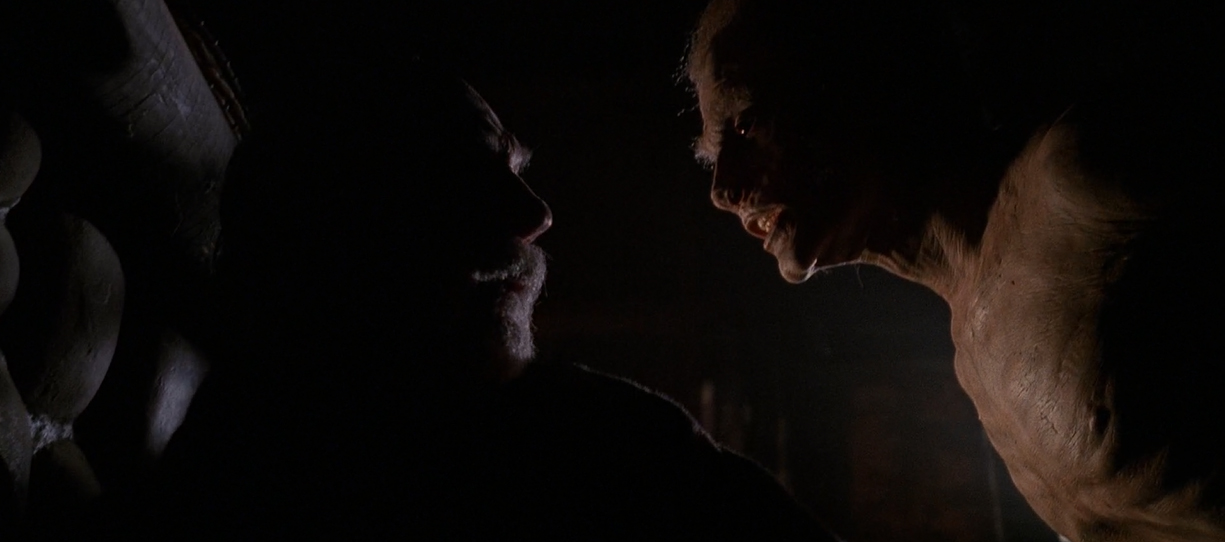
Shining a light on what happened...

Shining a light on what happened…

It is very cavalier and insensitive to suggest that The X-Files was a victim of 9/11 in any real sense. With everything else going on in the wake of 9/11, the cancellation of a television show means nothing. The cancellation of a show (even a popular show) is not even a footnote in any account of how the world changed. It is entirely reasonable to argue that The X-Files might have been cancelled even if 9/11 never happened. The show was nine years old, and had just lost one of its two leads. It was entirely possible that the show could never have recovered from that anyway.

Still, The X-Files was a show indelibly and undeniably anchored in the context of the nineties. It was a show that tapped into the zeitgeist in that historical lacuna following the end of the Cold War, when there were no more enemies to fight and where there was room for introspection and reflection about government authority. By the start of the ninth season, the show’s cultural moment had passed.

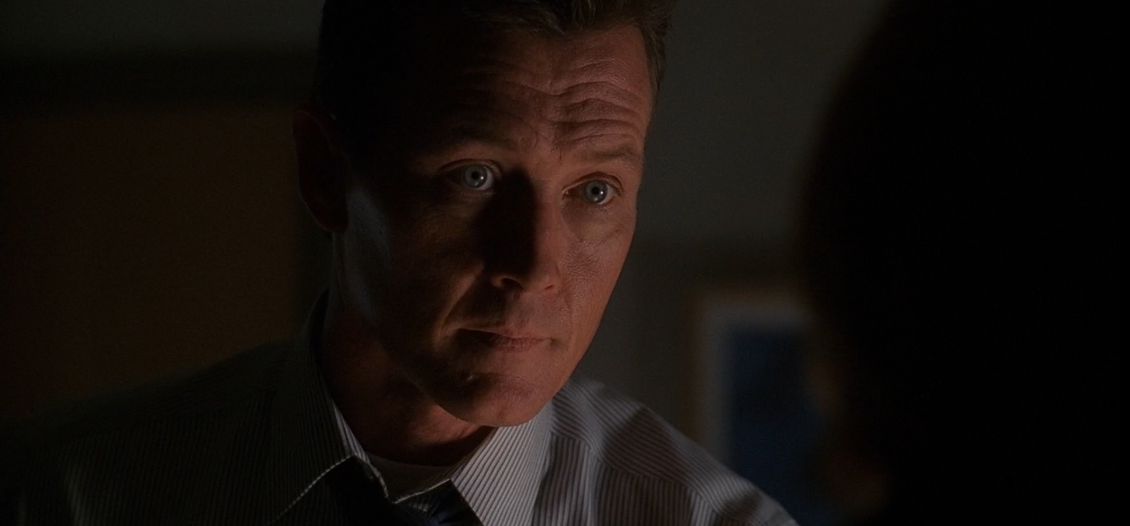
A Doggett lead...

A Doggett lead…

Continue reading

The X-Files – Vienen (Review)

This October/November, we’re taking a trip back in time to review the eighth season of The X-Files and the first (and only) season of The Lone Gunmen.

It feels strange to see the black oil after such a long time.

Technically, the last time that the black oil was brought up was in Two Fathers and One Son, where it was retroactively confirmed to be the “Purity” alluded to in The Erlenmeyer Flask. However, the last time it was an active plot element was really The X-Files: Fight the Future. After that, it lost amid plot developments involving gestating aliens and faceless rebels. So, in a way, putting the black oil at the centre of Vienen feels just a little surreal against the backdrop of “super soldiers” and other more immediate concerns.

Explosive action!

Explosive action!

Vienen feels very old-fashioned. Even the structure of the episode harks back to the first season mythology episodes, when the show was allowed to use aliens and conspiracies without the burden of tying them to a larger narrative. It features the black oil, but Vienen feels closer to Fallen Angel or E.B.E. than Tunguska or Terma. Trying to tie it into the larger plot of the mythology is an exercise in futility, but that is not the point here. Vienen is no more or less a mythology episode than Empedocles, despite its inclusion in the “mythology” DVD collections.

It is an excuse to bring back an iconic baddie for one last run-around with Mulder, continuing the orderly transition of power from the what the show was to what it might be in the future.

You should really use a dipstick for that...

You should really use a dipstick for that…

Continue reading

The X-Files – Empedocles (Review)

This October/November, we’re taking a trip back in time to review the eighth season of The X-Files and the first (and only) season of The Lone Gunmen.

Empedocles returns to one of the most enduring Ten Thirteen themes: the idea of evil as contagion.

Both The X-Files and Millennium have touched upon this theme. On The X-Files, episodes like Aubrey and Grotesque suggested that evil was something that could be passed from person to person. Despite the fact that Millennium was based around a forensic profiler, Chris Carter described it as a show about “the limits of psychology”; it seemed like evil could often be traced to sinister forces at work in the world. Looking at Ten Thirteen’s output as a whole, it seems that Carter believes wholeheartedly in the idea of evil as an external force.

Man on fire...

Man on fire…

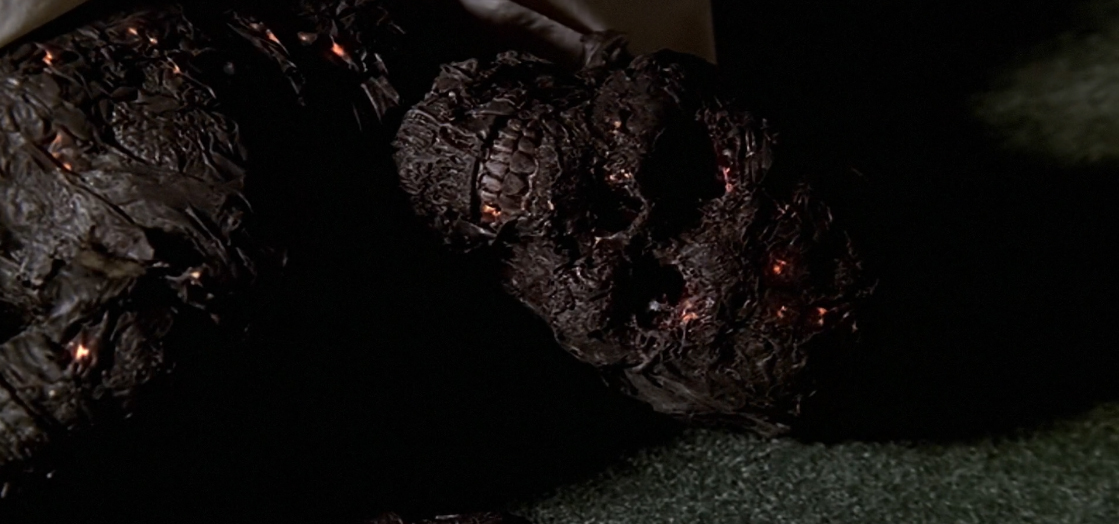
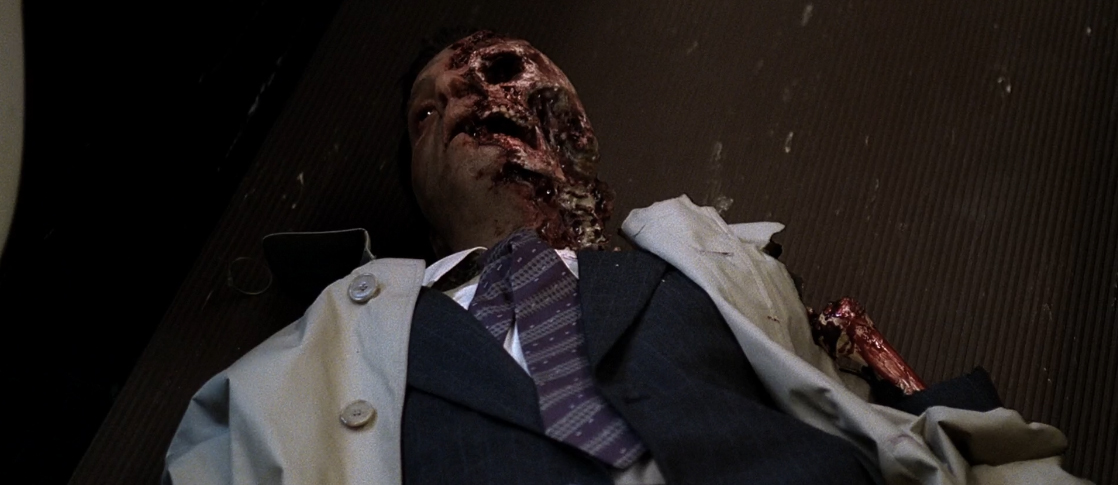
Empedocles offers perhaps the most straightforward example of this recurring theme. Reyes describes the case as “a thread of evil… connecting through time, through men, through opportunity.” It is a narrative thread that connects from the murder of Luke Doggett in New York to a workplace shooting in New Orleans. Evil is at work in the world, in a way that is palpable and discernible. Empedocles is not a subtle episode of television, linking this contagion of evil images of hellfire and burning.

There is undoubtedly something just a little simplistic about all of this. One of the luxuries of conspiracy theory, as The X-Files has repeatedly suggested, is the way that it serves to impose a logical and linear narrative on trauma; to make sense of acts and events that would otherwise suggest a brutally random universe. The mythology running through the first six seasons of the show suggested a conspiracy of powerful men might provide such a nexus of causation, but Empedocles offers something a bit broader.

It burns...

Burn with me.

As with a lot of the eighth season mythology, Empedocles cuts out the middle-man. The eighth season largely eschews the blending of “self” and “other” that run through first seven seasons of the show, largely rejecting the narrative of collaboration and complicity implied by the Syndicate. The eighth season of The X-Files repeatedly suggests that evil is inhuman, presenting its antagonists as distinctly “other” forms that infiltrate and pervert the body in perhaps the purest distillation of the show’s many viral metaphors.

In its own way, Empedocles is just as much a mythology or conspiracy episode as Three Words or Vienen. Like those episodes, Empedocles posits a conspiracy theory based upon the subversion of human identity by something alien and external. Empedocles posits a conspiracy of evil.

Crispy...

Crispy…

Continue reading

The X-Files – Medusa (Review)

This October/November, we’re taking a trip back in time to review the eighth season of The X-Files and the first (and only) season of The Lone Gunmen.

Medusa is an odd episode of the eighth season, precisely because of its normality.

Medusa was produced directly before This is Not Happening, the episode that marked the return of David Duchovny to the show as a regular; he would remain a regular for the rest of the season. When it came to the broadcast order of the season, the episodes were shuffled around slightly. Medusa aired directly before Per Manum, an episode which featured an appearance by David Duchovny in flashback. Whether the season is watched in broadcast or production order, David Duchovny’s name appears in the opening credits from the next episode until the end of the season.

"I want to take his face... off."

“I want to take his face… off.”

Medusa marks the end of the short-lived “Scully and Doggett era” of The X-Files. This is the last point in the eighth season (and also the last point ever) that Doggett and Scully have a show to themselves. The ninth season introduces the characters of Monica Reyes and Walter Skinner to the opening credits. Of course, it is interesting to wonder whether there ever really was a “Scully and Doggett era.” Certainly, the eighth season took its time to let Scully and Doggett get comfortable with one another between Within and Via Negativa.

This puts Medusa in the very strange position of having to close out an “era” of the show that essentially spanned four episodes: Surekill, Salvage, Badlaa and Medusa. This is the eighth season’s last example of “business as usual”, which seems all the more unusual that business has only recent approached something resembling normality.

He's practically just skin and bones...

He’s practically just skin and bones…

Continue reading

The X-Files – The Gift (Review)

This October/November, we’re taking a trip back in time to review the eighth season of The X-Files and the first (and only) season of The Lone Gunmen.

Sweeps have arrived. And so has David Duchovny.

David Duchovny appeared in three of the four episodes of The X-Files broadcast in February 2001. (The fourth, Medusa, is very much the “blockbuster” episode of this stretch of the season, with a large budget and impressive scale.) This was very much a conscious choice on the part of the production team. Although Duchovny’s shooting schedule meant that the episodes were filmed across the season, the show made a choice to broadcast them all as part the February Sweeps.

He's back...

He’s back…

Indeed, even the order of the episodes in question has been jumbled around. The Gift is the third broadcast episode of the eighth season to feature an appearance by David Duchovny; it was filmed before Badlaa, but broadcast after it so as to open the Sweeps season. However, Per Manum would be the fourth broadcast episode of the eighth season to feature an appearance by David Duchovny; not only was it filmed before The Gift, it was actually filmed between Via Negativa and Surekill.

There is a sense, looking at the differences between the production and broadcast orders of the eighth season, that the production team were well aware of just how big a deal the return of David Duchovny would be. In fact, the decision to broadcast The Gift before Per Manum seems like a very canny attempt to tease those viewers excited about the return of Mulder. The character is much more prominent in Per Manum, so it feels like the decision to air his smaller supporting role in The Gift earlier is an effort in building suspense and excitement.

"The name's Doggett, John Doggett."

“The name’s Doggett, John Doggett.”

The Gift doesn’t offer much in the way of advancement for the season’s on-going story arcs. Although the teaser is smart enough to build to the reveal of David Duchovny, the character only appears in quick flashes throughout the episode. Mulder has less than half-a-dozen lines over the course of the show’s forty-five minutes. He does not directly encounter (or engage with) Doggett or Scully, only appearing for a brief moment as a vision in the basement at the end of the episode. Fans eagerly anticipating Mulder’s return would undoubtedly be frustrated.

However, there is something almost endearing in the show’s playful teasing of its fanbase. It feels almost like the show getting comfortable with itself once again. Indeed, the structure of the episode – paralleling Mulder’s investigation with that of Doggett rather than intersecting them – seems to suggest that perhaps the show might be in good hands without the need to have Mulder literally validate his successor.

Now that's branding...

Now that’s branding…

Continue reading

The X-Files – Surekill (Review)

This October/November, we’re taking a trip back in time to review the eighth season of The X-Files and the first (and only) season of The Lone Gunmen.

And with Surekill, the eighth season of The X-Files hits a problem.

The eighth season of The X-Files starts out strong, doing a good job of introducing a new major character without forcing him down the audience’s throat and allowing viewers to come to terms with the idea of The X-Files without Mulder. Even if some of the episodes are not jaw-droppingly amazing, there is a novelty to the format and a genuine curiosity that makes the opening seven episodes of the season more intriguing and exciting than the show has been in quite some time.

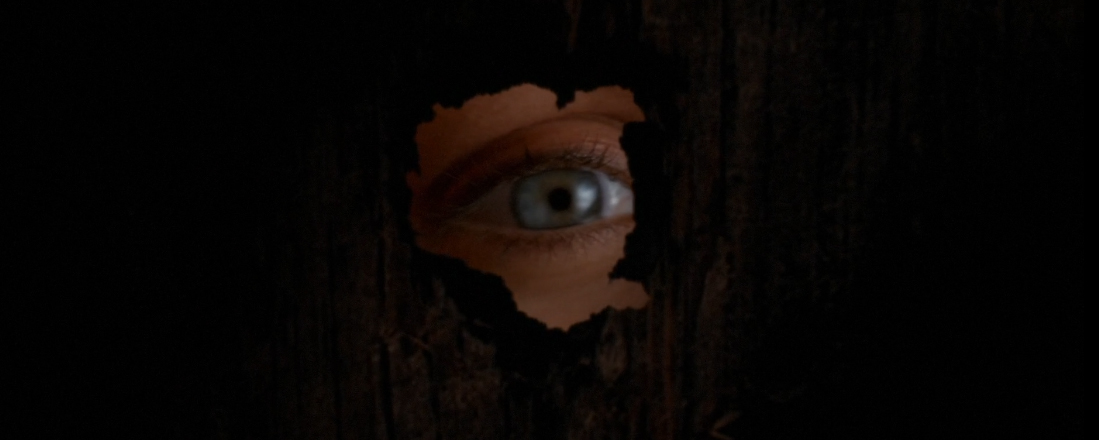
A hole lot of trouble...

A hole lot of trouble…

The eighth season also finishes strong. It is tempting to put this all upon the return of David Duchovny to the show, bringing a sense of stability to the series. That is definitely a factor, but discussions of the eighth season tend overlook how the final stretch of the year is the most serialised that the show (and the mythology) has ever been and ever will be. For one brief (roughly ten-episode) run, it seemed like The X-Files had burst into the twentieth century with a new-found purpose and joie de vivre.

Notably, this leaves something of a lull in the middle of the season, between the opening stretch and before the season begins gathering momentum. This is the point at which it feels like this grand experiment might not actually work out, after all. It is very much an attempt to do by-the-book “monster of the week” stories in the traditional style of The X-Files, now that Doggett has settled in. Unfortunately, this only has the effect of reinforcing that one of the key ingredients of a classic by-the-book “monster of the week” story is sorely missing. Doggett is no Mulder.

Throwing in the towel...

Throwing in the towel…

Continue reading

The X-Files – Redrum (Review)

This October/November, we’re taking a trip back in time to review the eighth season of The X-Files and the first (and only) season of The Lone Gunmen.

Redrum is perhaps notable as the highest concept episode of the eighth season of The X-Files, a character drama that unfolds backwards.

As a rule, the eight season is more conservative than the seasons around it. In terms of narrative, it may be the most conservative season of The X-Files since the show’s first year. Redrum is perhaps the season’s biggest formal experiment. While very few high-profile prime-time television shows would attempt to tell a story backwards, Redrum feels a lot less bold than something like HumbugJose Chung’s “From Outer Space”Musings of a Cigarette-Smoking Man, The Post-Modern Prometheus, Bad Blood, Triangle, X-Cops or even Improbable.

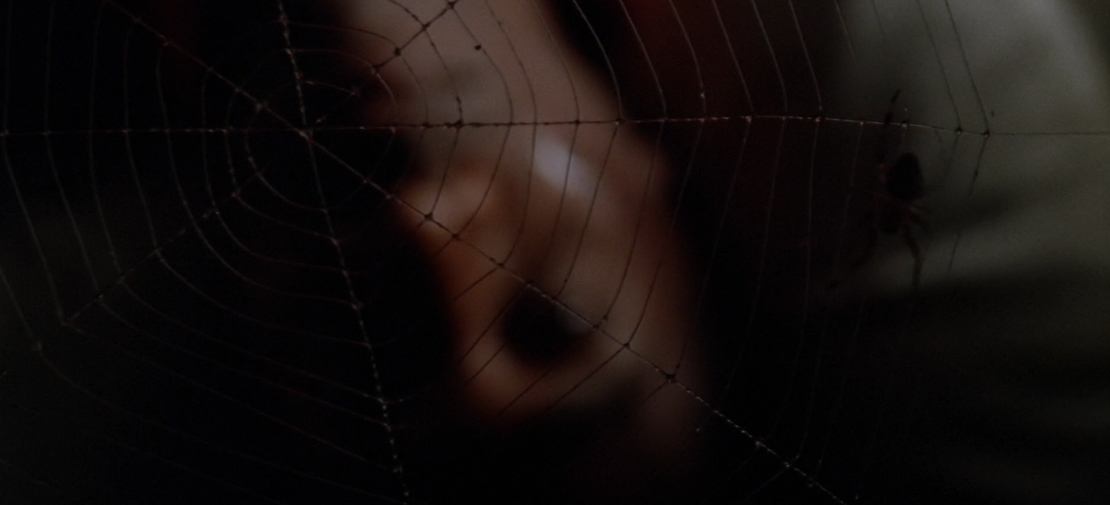
A tangled web...

A tangled web…

On paper, this should be a highlight of the season. Redrum features a guest performance from Joe Morton, receiving a coveted “special guest star” credit for his work. (Notably, Kim Greist did not earn a similar credit on Invocation.) The high-concept premise of the episode seems like it would make a great pitch for Sweeps, like X-Cops did only a year earlier. In fact, Redrum was produced as the first stand-alone episode of the season, priming it for the slot occupied by Drive and Hungry in earlier seasons.

There is a sense that the production team are wary of Redrum. The episode was pushed back from its production slot relatively deep into the season. It was with second-last episode of the eighth season to air before the Christmas break. The show attracted a relatively small amount of publicity, particularly as compared to the “where’s Mulder?” hype of that greeted the début of the season. There is a sense that Redrum would have garnered more attention only a year or two earlier.

"The teacup that I shattered did come together."

“The teacup that I shattered did come together.”

It is easy to see why the production team were so wary of Redrum. The eighth season is a point of transition for The X-Files. The show is still reeling from the loss of David Duchovny; there is a sense that the show never moves past that. The agenda for the eighth season is to convince viewers that The X-Files is still a viable television show, even without the lead actor who helped to make it famous. While the show is smart enough not to downplay the change, the production team are keen to demonstrate the show can still do what it always did.

As such, the eighth season finds the show adopting a “back to basics” approach, harking back to many of the tropes that made The X-Files such a breakout hit in the first place. There is a lot more horror and mood in the eighth season, a lot more of the traditional scares. That means that Redrum ends up feeling very much like the odd episode out.

It's all gone a bit Martha Wayne...

It’s all gone a bit Martha Wayne…

Continue reading

The X-Files – Invocation (Review)

This October/November, we’re taking a trip back in time to review the eighth season of The X-Files and the first (and only) season of The Lone Gunmen.

There is something rather strange about how the first six episodes of the eighth season approach Doggett as a character.

Despite the fact that he is one of the two leads on The X-Files, the series takes its time in getting around to him. Robert Patrick is effectively stepping into the shows of David Duchovny, but the early stretches of the eighth season seem quite unsure what to make of Special Agent John Doggett. Robert Patrick might appear in the opening credits, but there is a sense that the writing staff are not yet entirely comfortable with the character. Perhaps worried about alienating fans still grieving for Mulder, the show keeps a respectful distance from Doggett.

Good grief.

Good grief.

Within and Without introduced Doggett as the agent in charge of the hunt for Mulder. While Scully and Skinner were looking at Mulder as a potential victim, they frequently found themselves competing with Doggett’s decisions to paint Mulder as a potential suspect. Doggett was introduced in a surprisingly abrasive manner, literally (and clumsily) attempting to undermine the relationship between Mulder and Scully – perhaps a literal expression of fannish anxiety about the show’s new lead.

This is not to suggest that the show has been hostile (or even disinterested) towards Doggett. Both Patience and Roadrunners emphasise that Scully needs to learn to trust Doggett and that he really does have her best interests at heart. However, the show tends to look at Doggett as an object of curiousity. In the first six episodes of the season, the show tends to view Doggett from an outside perspective. He might play an active role in the narrative, but he is not really a viewpoint character.

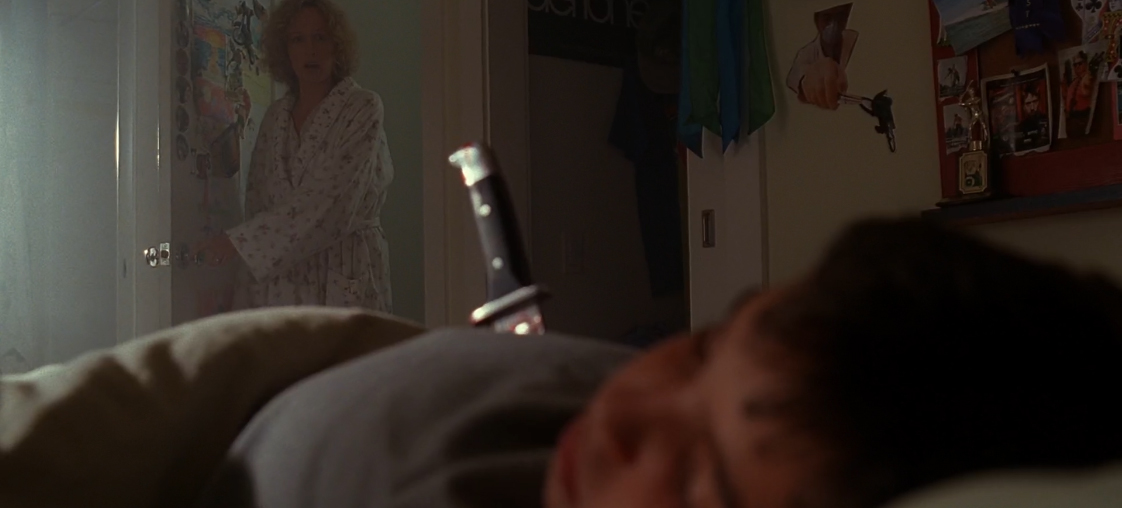
Knife to see you...

Knife to see you…

The show generally approaches Doggett through the character of Scully. (In Redrum, it is Martin Wells.) Leaning heavily on Scully makes sense; the audience trusts Scully, so if she can trust Doggett then maybe they can as well. More than that, it offers a nice twist on the dynamic during the first season of the show. In The Pilot, Scully was introduced as a viewpoint character into the bizarre world of Fox Mulder. Seven years later, the audience is so accustomed to that bizarre world that she is the viewpoint character into the grounded world of John Doggett.

This decision to treat Scully as the viewpoint character gives Invocation a surreal tone. In many ways, Invocation is the show’s first real Doggett-centric story; it is the first time that the character gets to drive the central narrative instead of running in parallel, it is the first time that the show hints at a personal back story for Doggett beyond “generic law enforcement and armed forces experience.” However, it is all filtered through the lens of Dana Scully. It emphasises the fact that Doggett is a mystery, which seems strange given how straight-laced he seems.

"Luke, I was your father."

“Luke, I was your father.”

Continue reading

The X-Files – Patience (Review)

This October/November, we’re taking a trip back in time to review the eighth season of The X-Files and the first (and only) season of The Lone Gunmen.

Patience is necessary.

The eighth season of The X-Files is conservative. There are arguments to be made that this is true in a political sense, but it is certainly true in a narrative sense. The eighth season generally plays it quite safe when it comes to the structuring and plotting. The most structurally ambitious episode of the eighth season is perhaps Redrum, which feels a lot less “out there” than episodes like The Post-Modern Prometheus, Bad Blood, Triangle, X-Cops or First Person Shooter. Narratively, the eighth season plays it relatively “safe.”

Batsh!t crazy...

Batsh!t crazy…

There is a reason for this, of course. Losing David Duchovny for half the season and rotating in Robert Patrick represents perhaps the biggest risk that the show will ever take. Given how essential Duchovny had been to the show’s success, the eighth season is taking quite the gamble. With that in mind, it makes sense to play it safe. Without Mulder around, the show’s primary goal is to reassure fans that it is still The X-Files. This is not the time for experimental “event” episodes, because “Mulder is not in this episode” is an experimental event of itself.

As such, the eighth season feels largely like a return to a more traditional X-Files aesthetic, a “back to basics” approach. In that respect, Patience is essentially about kicking the tires and taking the show for a gentle test drive in its new configuration.

The show won't be caught with its pants down...

The show won’t be caught with its pants down…

Continue reading

The X-Files – Without (Review)

This October/November, we’re taking a trip back in time to review the eighth season of The X-Files and the first (and only) season of The Lone Gunmen.

Taken as a whole, the eighth season of The X-Files is remarkable.

It is not a perfect season of television, by any stretch. The eighth season doesn’t hit as many highs as the fourth, fifth or sixth seasons. As great as Robert Patrick is as John Doggett, and as skilfully as he is introduced, it is impossible to replace the easy dynamic between Mulder and Scully. The actual mythology of the season feels overcrowded and convoluted, with “supersoldiers” feeling a tad cliché and Mulder’s terminal illness going nowhere of note. The season’s recurring motifs of darkness, death and body horror are not for everybody.

I bet David Duchovny really missed working on The X-Files...

I bet David Duchovny really missed working on The X-Files

At the same time, there is a staggering consistency and reliability to the season. From the outset, the eighth season seems to know what it wants to be and where it wants to go. There is a stronger sense of purpose to the eighth season than to any other season of the show, with the possible exception of the third. Even the lead-up to the release of The X-Files: Fight the Future did not feel this single-minded and focused. In terms of consistency of theme and imagery, this is the closest the show ever came to pulling off a season-long arc.

It is tempting to credit this renewed vigour and energy to the absence of David Duchovny; the search for Mulder provides a solid and compelling hook for the season ahead. However, there is more to it than that. Mulder’s disappearance is a part of it, but the big thematic bow wrapped around the eighth season is Scully’s pregnancy. After all, David Duchovny returns to the show two-thirds of way through the season; it is Scully’s pregnancy that provides the season’s finalé.

"Thank goodness we all wore different ties. That might have been awkward."

“Thank goodness we all wore different ties. That might have been awkward.”

Continue reading