• Following Us

  • Categories

  • Check out the Archives


  • Awards & Nominations

Doctor Who: Tooth and Claw (Review)

To celebrate the fiftieth anniversary of the longest-running science-fiction show in the world, I’ll be taking weekly looks at some of my own personal favourite stories and arcs, from the old and new series, with a view to encapsulating the sublime, the clever and the fiendishly odd of the BBC’s Doctor Who.

Tooth and Claw originally aired in 2006.

I want her to say “we are not amused.” I bet you five quid I can make her say it.

Well, if I gambled on that, it’d be an abuse of my privileges of traveller in time.

Ten quid?

Done.

– Rose and the Tenth Doctor are “cute”

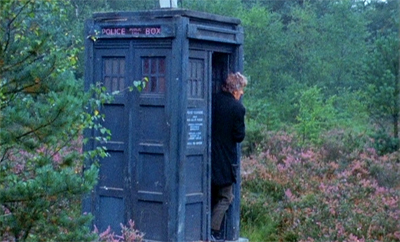
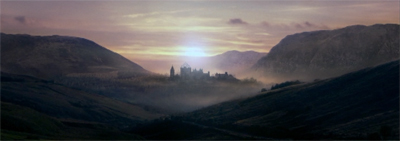
There’s something quite interesting at the heart of Tooth and Claw, which might be the best  “historical celebrity + monster” mash-up of the Davies era. It’s a wonderful pulpy genre hybrid run-around with Queen Victoria, ninja monks and a werewolf, but it’s also a quite interesting vehicle to explore the way that the show deals with historical characters. After all, Queen Victoria is a British icon, a monumentally important part of the British Empire. It would be tempting to reduce her to a bunch of catch-phrases and a stiff upper lip. It’s a testament to Davies as a writer that he can flesh her out a fully-drawn character.

However, there does seem to be something quite strange about a show that opens with a cheap shot at Margaret Thatcher only to wallow in the iconic status of Queen Victoria.
This year's Bad Wolf is in Torchwood...

This year’s Bad Wolf is in Torchwood…

Continue reading

Doctor Who: Horror of Fang Rock (Review)

To celebrate the fiftieth anniversary of the longest-running science-fiction show in the world, I’ll be taking weekly looks at some of my own personal favourite stories and arcs, from the old and new series, with a view to encapsulating the sublime, the clever and the fiendishly odd of the BBC’s Doctor Who.

Horror of Fang Rock originally aired in 1977.

So you found the trouble then?

Yes, I always find trouble.

– Vince and the Doctor

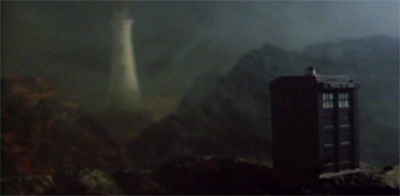
The show was on something of a hot streak when Horror of Fang Rock aired. While producer Philip Hinchcliffe’s tenure on the show is roundly praised, and is a personal favourite, the standard of the show had been particularly high. The beloved Talons of Weng-Chiang had closed out the previous season, following hot-on-the-heels of the well-regarded Robots of Death – both classic and iconic stories that stand as the very best of Tom Baker’s time in the lead role. Horror of Fang Rockis right on up there, as perhaps one of the best gothic horrors that the series has ever produced.

Something wicked this way comes...

Continue reading

Doctor Who: The Unquiet Dead (Review)

To celebrate the fiftieth anniversary of the longest-running science-fiction show in the world, I’ll be taking weekly looks at some of my own personal favourite stories and arcs, from the old and new series, with a view to encapsulating the sublime, the clever and the fiendishly odd of the BBC’s Doctor Who.

The Unquiet Dead originally aired in 2005.

What the Shakespeare is going on?

– Charles Dickens

It feels appropriate that Mark Gatiss should script the first episode of the revived Doctor Who not written by Russell T. Davies himself. Davies wrote the bulk of the first season’s thirteen episodes, and you could argue that he occasionally spread himself a bit too thin. However, I would argue that the first year of the revived show also had the strongest string of secondary writers on the bench, including Rob Shearman writing Dalek, Steven Moffat writing The Empty Child and The Doctor Dances, Paul Cornell writing Father’s Day and Gatiss writing The Unquiet Dead.

Gatiss and Moffat are two of the most prolific writers for the new series, with Moffat even succeeding Davies as showrunner. It’s also worth noting that both Gatiss and Moffat are fans of the classic show with considerable writing experience in television. It’s very clear that Davies isn’t just recruiting fans of the classic show, even those who may have written material while it was off the air (Gatiss wrote spin-off novels, Moffat wrote The Curse of Fatal Death), but recruiting those with practical experience about how television today works.

And that was a very shrewd decision.

Ghosts of Cardiff...

Ghosts of Cardiff…

Continue reading

Doctor Who: The Talons of Weng-Chiang (Review)

To celebrate the fiftieth anniversary of the longest-running science-fiction show in the world, I’ll be taking weekly looks at some of my own personal favourite stories and arcs, from the old and new series, with a view to encapsulating the sublime, the clever and the fiendishly odd of the BBC’s Doctor Who.

The Talons of Weng-Chiang originally aired in 1977.

Ah! Eureka! Do you know what that is?

You ask me so that you can tell me.

That’s right. It’s a trionic lattice, an integral part of a time cabinet. It’s impossible to open it without it.

You mean it’s a key.

Yes. He’s not only a scientific fool, he’s an absent-minded one.

Perhaps he has another eureka.

No, eureka’s Greek for “this bath is too hot.”

– the Doctor and Leela

The Talons of Weng-Chiang is generally agreed to be one of the (if not the) greatest Doctor Who adventures ever produced. It tends to hover around the top of various official polls, with only Caves of Androzani and City of Death coming close to it in public opinion. As such, I feel a little bit guilty when I confess that it doesn’t rank as one of my absolute favourite adventures. I like it a great deal, I think it embodies a great deal of what works about the Philip Hinchcliffe era of the show. However, if I’m looking for a dark pseudo-historical adventure, I am more likely to pick either The Pyramids of Mars or The Horror of Fang Rock.

I can see why a lot of people respond to The Talons of Weng-Chiang, and it has a lot to recommend it, but there are a number of minor problems that hold the serial back from the cusp of perfection, in my opinion.

Read it at your (Yellow) Peril...

Read it at your (Yellow) Peril…

Continue reading

Doctor Who: The Parting of the Ways (Review)

To celebrate the fiftieth anniversary of the longest-running science-fiction show in the world, I’ll be taking weekly looks at some of my own personal favourite stories and arcs, from the old and new series, with a view to encapsulating the sublime, the clever and the fiendishly odd of the BBC’s Doctor Who.

The Parting of the Ways originally aired in 2005.

Everything must come to dust. All things. Everything dies. The Time War ends.

– Rose

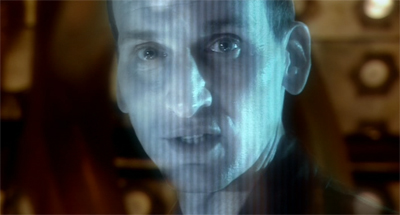
And so the first season of Russell T. Davies’ revived Doctor Who comes to a close. If you asked me, it’s the best season of the show that Davies has produced. The year contains a few clunkers, and it doesn’t contain the highest concentration of enjoyable episodes, but I think the first year has a much clearer direction and purpose than any of the years that followed. Although apparently Christopher Eccleston’s departure was only decided after the show went into production, the first season seems like it is constantly building to the death of the Doctor. The entire first season seems to build, logically and rationally, towards that moment.

He's not all there...

He’s not all there…

Continue reading

Doctor Who: Bad Wolf (Review)

To celebrate the fiftieth anniversary of the longest-running science-fiction show in the world, I’ll be taking weekly looks at some of my own personal favourite stories and arcs, from the old and new series, with a view to encapsulating the sublime, the clever and the fiendishly odd of the BBC’s Doctor Who.

Bad Wolf originally aired in 2005.

The Dalek stratagem nears completion. The fleet is almost ready. You will not intervene.

Oh, really? Why’s that, then?

We have your associate. You will obey or she will be exterminated.

No.

Explain yourself.

I said no.

What is the meaning of this negative?

It means no.

But she will be destroyed.

No! Because this is what I’m going to do. I’m going to rescue her. I’m going to save Rose Tyler from the middle of the Dalek fleet and then I’m going to save the Earth, and then, just to finish off, I’m going to wipe every last stinking Dalek out of the sky!

But you have no weapons, no defences, no plan.

Yeah. And doesn’t that scare you to death. Rose?

Yes, Doctor?

I’m coming to get you.

– the Daleks, the Doctor and Rose give the Ninth Doctor perhaps his best moment

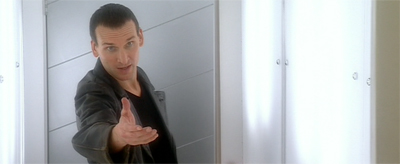
Looking back at the first season, I’d argue that it’s the most cohesive run of episodes that Russell T. Davies produced on the dhow. Now because of the whole “bad wolf” thing, as that feels a bit like a clumsy link randomly inserted. Instead, as we watch the final episode, it becomes quite clear what Davies was trying to do with his first year on the show. The patterns, the themes, the subtext, the references – it all becomes quite clear. More than any other season of Davies’ tenure, the first season is really one gigantic story – and not just because the show never leaves Earth or the finalé returns to the setting of The Long Game.

The first season is a bridge. It’s a link between the last years of the classic series into the new and revived show as written by Davies. It’s a moment to gather up the dead, tidy away the loose ends and basically manage the stage so that the show can really come into its own. One of the things I loved about Davies’ Doctor Who was how accessible it all was, but it still had all this continuity ticking away in the background.

This first season finalé feels like it isn’t only a conclusion to Christopher Eccleston’s time in the lead role, it’s also closing the last of the dangling threads from the eras of Colin Baker and Sylvester McCoy in the eighties. As soon as David Tennant steps into the lead role, it seems the show is entirely and utterly free of everything that came before. It’s a testament to Davies’ skill that we’re not even sure that he’s doing it.

Come with me if you want to live...

Come with me if you want to live…

Continue reading

Doctor Who: The Caves of Androzani (Review)

To celebrate the fiftieth anniversary of the longest-running science-fiction show in the world, I’ll be taking weekly looks at some of my own personal favourite stories and arcs, from the old and new series, with a view to encapsulating the sublime, the clever and the fiendishly odd of the BBC’s Doctor Who.

The Caves of Androzani originally aired in 1984.

Androzani Major was becoming quite developed the last time I passed this way.

When was that?

I don’t remember. I’m pretty sure it wasn’t the future.

You’re a very confusing person to be with, Doctor, you know that?

I tried keeping a diary once. Not chronological, of course, but the trouble with time travel is one never seems to find the time.

– The Doctor and Peri reflect on travel in the TARDIS

At the risk of succumbing to cliché, The Caves of Androzani is my favourite Doctor Who serial from the classic series. A perfect encapsulation of Peter Davison’s tenure, a fitting farewell story that incarnation of the Doctor, and arguably the perfect regeneration adventure, The Caves of Androzani is one of the very few DVDs that I happen to own twice. And that’s quite a ringing endorsement.

Five outta five?

Continue reading

Doctor Who: Robot (Review)

To celebrate the fiftieth anniversary of the longest-running science-fiction show in the world, I’ll be taking weekly looks at some of my own personal favourite stories and arcs, from the old and new series, with a view to encapsulating the sublime, the clever and the fiendishly odd of the BBC’s Doctor Who.

Robot originally aired in 1974 and 1975.

There you are. Now come along, Doctor, you’re supposed to be in the sick bay.

Am I? Don’t you mean the infirmary?

No, I do not mean the infirmary. I mean the sick bay. You’re not fit yet.

Not fit? I’m the Doctor.

No, Doctor, I’m the doctor and I say that you’re not fit.

You may be a doctor, but I’m the Doctor. The definite article, you might say.

– Harry meets the Doctor

Robot feels a bit like trying to fit a round peg into a square hole, or a Tom-Baker-shaped peg into a Jon-Pertwee-shaped hole. At the time that Baker assumed the role as everybody’s favourite time-travelling phone-booth dweller, Pertwee had just finished the longest stint as the character, portraying the Doctor for five years. Of course, Baker himself would go on to break that record, playing the part for seven years, but it gives you a sense of just how big of a transition it was. As such, it’s easy to understand why outgoing producer Barry Letts felt the need to essentially cast Tom Baker in what feels distinctly like a Jon Pertwee story. As a concept, the central character aside, Robot feels like it would have fit in quite well as part of Pertwee’s last season, which is – I think – part of the problem here.

Tom Baker is a lot of things, but he’s not Jon Pertwee. As a result, Robot feels a little clunkier than it really should, as if the show is actively working against the character who should be driving it.

The Doctor will see you now...

The Doctor will see you now…

Continue reading

Doctor Who: The Eleventh Hour (Review)

To celebrate the fiftieth anniversary of the longest-running science-fiction show in the world, I’ll be taking weekly looks at some of my own personal favourite stories and arcs, from the old and new series, with a view to encapsulating the sublime, the clever and the fiendishly odd of the BBC’s Doctor Who.

The Eleventh Hour originally aired in 2010.

So, coming?

No.

You wanted to come fourteen years ago.

I grew up.

Don’t worry. I’ll soon fix that.

– the Doctor and Amy

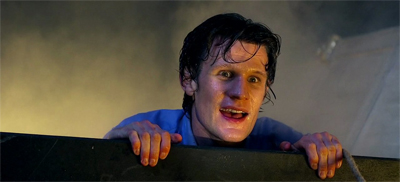
The arrival of a new producer on Doctor Who always represents a shift in some way shape or form. The change from Barry Letts to Philip Hinchcliffe must have seemed radical, even at the time. Graham Williams following Hinchcliffe represented a similarly strange departure. The departure of Russell T. Davies, the producer who had brought Doctor Who back to television after over a decade, was always going be a pretty significant change for those watching. Steven Moffat’s first episode as producer might not seem like it’s a shocking departure from what came before, but it also quite efficiently and effectively distinguishes Moffat’s tenure from that of his direct predecessor.

While by no means as radical a shift as Spearhead from Space, there is a very clear feeling that The Eleventh Hour brings with it significant tonal and thematic changes to the tale of the Doctor.

A mad man with a box...

A mad man with a box…

Continue reading

Doctor Who: Spearhead From Space (Review)

To celebrate the fiftieth anniversary of the longest-running science-fiction show in the world, I’ll be taking weekly looks at some of my own personal favourite stories and arcs, from the old and new series, with a view to encapsulating the sublime, the clever and the fiendishly odd of the BBC’s Doctor Who.

Spearhead from Space originally aired in 1970.

Oh well, at least he won’t get very far.

You mean, before your men shoot him again?

I don’t find that funny.

– The Brigadier and Liz discuss the Doctor’s (second) escape

Looking back now, it’s hard to believe that Spearhead from Space had so much riding on it, if only because of the deft combination of Robert Holmes’ sharp script and Derek Martinus’ confident direction. Indeed, the serial served as something of a second pilot for the show, demonstrating that the survival of the series during the transition between William Hatnell and Patrick Troughton had not been a fluke, broadcasting in colour for the first time, and setting up an entirely new status quo set primarily on present-day Earth. It’s a miracle that it all works so well, let alone that fact that it remains one of the most accessible adventures featuring the character.

We need a Doctor in the TARDIS!

Continue reading