• Following Us

  • Categories

  • Check out the Archives


  • Awards & Nominations

Doctor Who: Scream of the Shalka (Review)

To celebrate the fiftieth anniversary of the longest-running science-fiction show in the world, I’ll be taking weekly looks at some of my own personal favourite stories and arcs, from the old and new series, with a view to encapsulating the sublime, the clever and the fiendishly odd of the BBC’s Doctor Who.

Scream of the Shalka originally streamed in 2003.

Doctor Who survived its cancellation across a variety of media. There were unofficial videos starring Colin Baker and Sylvester McCoy. There were audio plays. There were mountains of books. The BBC even came up with the clever idea of offering on-line content, with a series of illustrated audio plays, including the Seventh Doctor story Death Comes to Time and the Sixth Doctor adventure Real Time, as well as an adaptation of the aborted Douglas Adams serial Shada. Most of these were little more than powerpoints with sound playing over them. However, for the show’s fortieth anniversary, the BBC came up with an altogether more ambitious idea – a brand new fully animated adventure starring a new Doctor and promising a wave of new adventures, striving boldly forward into the new century.

The Doctor is in…

You can hear the serial, free, here.

Continue reading

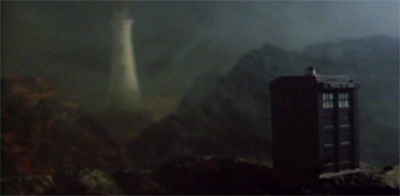
Doctor Who: Horror of Fang Rock (Review)

To celebrate the fiftieth anniversary of the longest-running science-fiction show in the world, I’ll be taking weekly looks at some of my own personal favourite stories and arcs, from the old and new series, with a view to encapsulating the sublime, the clever and the fiendishly odd of the BBC’s Doctor Who.

Horror of Fang Rock originally aired in 1977.

So you found the trouble then?

Yes, I always find trouble.

– Vince and the Doctor

The show was on something of a hot streak when Horror of Fang Rock aired. While producer Philip Hinchcliffe’s tenure on the show is roundly praised, and is a personal favourite, the standard of the show had been particularly high. The beloved Talons of Weng-Chiang had closed out the previous season, following hot-on-the-heels of the well-regarded Robots of Death – both classic and iconic stories that stand as the very best of Tom Baker’s time in the lead role. Horror of Fang Rockis right on up there, as perhaps one of the best gothic horrors that the series has ever produced.

Something wicked this way comes...

Continue reading

Doctor Who: The Talons of Weng-Chiang (Review)

To celebrate the fiftieth anniversary of the longest-running science-fiction show in the world, I’ll be taking weekly looks at some of my own personal favourite stories and arcs, from the old and new series, with a view to encapsulating the sublime, the clever and the fiendishly odd of the BBC’s Doctor Who.

The Talons of Weng-Chiang originally aired in 1977.

Ah! Eureka! Do you know what that is?

You ask me so that you can tell me.

That’s right. It’s a trionic lattice, an integral part of a time cabinet. It’s impossible to open it without it.

You mean it’s a key.

Yes. He’s not only a scientific fool, he’s an absent-minded one.

Perhaps he has another eureka.

No, eureka’s Greek for “this bath is too hot.”

– the Doctor and Leela

The Talons of Weng-Chiang is generally agreed to be one of the (if not the) greatest Doctor Who adventures ever produced. It tends to hover around the top of various official polls, with only Caves of Androzani and City of Death coming close to it in public opinion. As such, I feel a little bit guilty when I confess that it doesn’t rank as one of my absolute favourite adventures. I like it a great deal, I think it embodies a great deal of what works about the Philip Hinchcliffe era of the show. However, if I’m looking for a dark pseudo-historical adventure, I am more likely to pick either The Pyramids of Mars or The Horror of Fang Rock.

I can see why a lot of people respond to The Talons of Weng-Chiang, and it has a lot to recommend it, but there are a number of minor problems that hold the serial back from the cusp of perfection, in my opinion.

Read it at your (Yellow) Peril...

Read it at your (Yellow) Peril…

Continue reading

Doctor Who: The Caves of Androzani (Review)

To celebrate the fiftieth anniversary of the longest-running science-fiction show in the world, I’ll be taking weekly looks at some of my own personal favourite stories and arcs, from the old and new series, with a view to encapsulating the sublime, the clever and the fiendishly odd of the BBC’s Doctor Who.

The Caves of Androzani originally aired in 1984.

Androzani Major was becoming quite developed the last time I passed this way.

When was that?

I don’t remember. I’m pretty sure it wasn’t the future.

You’re a very confusing person to be with, Doctor, you know that?

I tried keeping a diary once. Not chronological, of course, but the trouble with time travel is one never seems to find the time.

– The Doctor and Peri reflect on travel in the TARDIS

At the risk of succumbing to cliché, The Caves of Androzani is my favourite Doctor Who serial from the classic series. A perfect encapsulation of Peter Davison’s tenure, a fitting farewell story that incarnation of the Doctor, and arguably the perfect regeneration adventure, The Caves of Androzani is one of the very few DVDs that I happen to own twice. And that’s quite a ringing endorsement.

Five outta five?

Continue reading

Doctor Who: Robot (Review)

To celebrate the fiftieth anniversary of the longest-running science-fiction show in the world, I’ll be taking weekly looks at some of my own personal favourite stories and arcs, from the old and new series, with a view to encapsulating the sublime, the clever and the fiendishly odd of the BBC’s Doctor Who.

Robot originally aired in 1974 and 1975.

There you are. Now come along, Doctor, you’re supposed to be in the sick bay.

Am I? Don’t you mean the infirmary?

No, I do not mean the infirmary. I mean the sick bay. You’re not fit yet.

Not fit? I’m the Doctor.

No, Doctor, I’m the doctor and I say that you’re not fit.

You may be a doctor, but I’m the Doctor. The definite article, you might say.

– Harry meets the Doctor

Robot feels a bit like trying to fit a round peg into a square hole, or a Tom-Baker-shaped peg into a Jon-Pertwee-shaped hole. At the time that Baker assumed the role as everybody’s favourite time-travelling phone-booth dweller, Pertwee had just finished the longest stint as the character, portraying the Doctor for five years. Of course, Baker himself would go on to break that record, playing the part for seven years, but it gives you a sense of just how big of a transition it was. As such, it’s easy to understand why outgoing producer Barry Letts felt the need to essentially cast Tom Baker in what feels distinctly like a Jon Pertwee story. As a concept, the central character aside, Robot feels like it would have fit in quite well as part of Pertwee’s last season, which is – I think – part of the problem here.

Tom Baker is a lot of things, but he’s not Jon Pertwee. As a result, Robot feels a little clunkier than it really should, as if the show is actively working against the character who should be driving it.

The Doctor will see you now...

The Doctor will see you now…

Continue reading

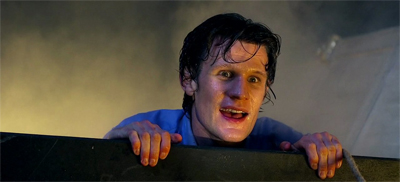
Doctor Who: The Eleventh Hour (Review)

To celebrate the fiftieth anniversary of the longest-running science-fiction show in the world, I’ll be taking weekly looks at some of my own personal favourite stories and arcs, from the old and new series, with a view to encapsulating the sublime, the clever and the fiendishly odd of the BBC’s Doctor Who.

The Eleventh Hour originally aired in 2010.

So, coming?

No.

You wanted to come fourteen years ago.

I grew up.

Don’t worry. I’ll soon fix that.

– the Doctor and Amy

The arrival of a new producer on Doctor Who always represents a shift in some way shape or form. The change from Barry Letts to Philip Hinchcliffe must have seemed radical, even at the time. Graham Williams following Hinchcliffe represented a similarly strange departure. The departure of Russell T. Davies, the producer who had brought Doctor Who back to television after over a decade, was always going be a pretty significant change for those watching. Steven Moffat’s first episode as producer might not seem like it’s a shocking departure from what came before, but it also quite efficiently and effectively distinguishes Moffat’s tenure from that of his direct predecessor.

While by no means as radical a shift as Spearhead from Space, there is a very clear feeling that The Eleventh Hour brings with it significant tonal and thematic changes to the tale of the Doctor.

A mad man with a box...

A mad man with a box…

Continue reading

Doctor Who: Rose (Review)

To celebrate the fiftieth anniversary of the longest-running science-fiction show in the world, I’ll be taking weekly looks at some of my own personal favourite stories and arcs, from the old and new series, with a view to encapsulating the sublime, the clever and the fiendishly odd of the BBC’s Doctor Who.

Rose originally aired in 2005.

So, I’m going to go up there and blow them up, and I might well die in the process, but don’t worry about me. No, you go home. Go on. Go and have your lovely beans on toast. Don’t tell anyone about this, because if you do, you’ll get them killed.

(beat)

I’m the Doctor, by the way. What’s your name?

Rose.

Nice to meet you, Rose. Run for your life!

– the Doctor and Rose

It’s amazing to think of the pressure weighing down on Rose. Sure, Doctor Who has gone from strength-to-strength since its revival in 2005, but there was a time when its resurrection seemed unlikely, to say the least. Although fans had kept the show alive in various media, it must have seemed highly unlikely that they show would ever return to television, let alone as a massive success. Producer Russell T. Davies might have seemed like an unlikely choice. Although he had written some spin-off material, like other British television writers including Steven Moffat and Paul Cornell, Davies was best known for producing shows like Queer as Folk and The Second Coming. Nevertheless, he had been campaigning to bring the show back for quite some time, notably in 1998 and 2002, before finally bringing the revived show to screen in late March 2005.

Although the edges are still a bit rough in places, Rose serves as an effective introduction to the Russell T. Davies, and contains the seeds of what would become the show’s success. Borrowing (and reinventing) heavily from perhaps the last seismic re-tooling of the series in Spearhead from Space, the show presents a version of Doctor Who for a new generation.

Run!

Run!

Continue reading

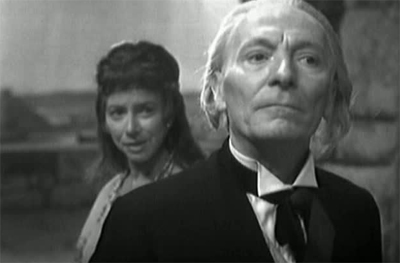
Doctor Who: The Aztecs (Review)

To celebrate the fiftieth anniversary of the longest-running science-fiction show in the world, I’ll be taking weekly looks at some of my own personal favourite stories and arcs, from the old and new series, with a view to encapsulating the sublime, the clever and the fiendishly odd of the BBC’s Doctor Who.

The Aztecs originally aired in 1964.

Don’t you see? If I could start the destruction of everything that’s evil here, then everything that is good would survive when Cortes lands.

But you can’t rewrite history! Not one line!

– Barbara and the Doctor discuss time travel

The Aztecs is generally considered one of the show’s very best historicals, so I think it’s absolutely wonderful that the adventure has managed to survive the purges that wiped out a significant portion of the Hartnell era and a huge chunk of Patrick Troughton’s work.

A low-tec culture?

Continue reading

Doctor Who: The Keys of Marinus (Review)

To celebrate the fiftieth anniversary of the longest-running science-fiction show in the world, I’ll be taking weekly looks at some of my own personal favourite stories and arcs, from the old and new series, with a view to encapsulating the sublime, the clever and the fiendishly odd of the BBC’s Doctor Who.

The Keys of Marinus originally aired in 1964.

While the initial thirteen-episode block helped established Doctor Who, it was the follow-up stories that built on those initial blue-prints. Marco Polo was a historical adventure in the style of An Unearthly Child, paying homage to the original educational aim of the series, designed to teach kids about history and science. However, the real breakout of the initial run had been The Daleks, with those adorable psychotic pepper pots. Keen to capitalise on the success of the futuristic adventure, another adventure serial was commissioned to take place on an alien world, with Terry Nation’s The Keys of Marinus helping to establish science fantasy as a concrete part of the show’s identity.

All a-Voord!

Continue reading

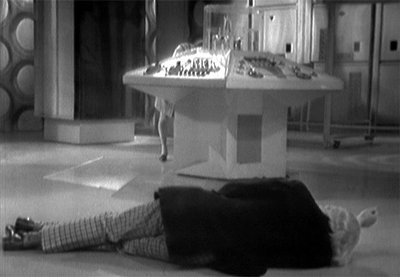
Doctor Who: The Edge of Destruction (Review)

To celebrate the fiftieth anniversary of the longest-running science-fiction show in the world, I’ll be taking weekly looks at some of my own personal favourite stories and arcs, from the old and new series, with a view to encapsulating the sublime, the clever and the fiendishly odd of the BBC’s Doctor Who.

The Edge of Destruction originally aired in 1964.

The Edge of Destruction is an interesting little two-parter. Basically created to fill out a two-episode gap in the end of the initial run of episodes following the four-part An Unearthly Child and the seven-part The Daleks. It wasn’t possible to bring Marco Polo forward into this production block, as it was too long, and there wasn’t any budget provided for a guest cast or for new sets. So, as seemed to happen quite a lot on the show, the production team’s ingenuity forced their creativity. The Edge of Destruction (or Inside the Spaceship) ended up being a two-part “bottle” episode, featuring only the four members of the lead cast.

After seven episodes of The Daleks, I can’t blame the Doctor for wanting a nap…

Continue reading