• Following Us

  • Categories

  • Check out the Archives


  • Awards & Nominations

Millennium – Walkabout (Review)

This February and March, we’re taking a trip back in time to review the fourth season of The X-Files and the first season of Millennium.

Walkabout continues to demonstrate the flexibility of Millennium‘s format.

Millennium is often unfairly dismissed as a “serial-killer-of-the-week” show, an impression undoubtedly created by the stretch of early- to mid-season episodes that adopted an almost procedural formula in their exploration of evil. However, after Sacrament, the show takes a break from those narratives to do something a little more experimental and nuanced. Covenant had seen Frank investigating a murder that had already been solved. Here, Frank finds himself struggling to piece together a fractured memory of his own recent experiences.
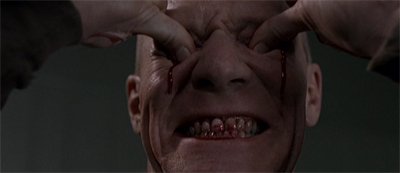
A bleedin' disaster!

A bleedin’ disaster!

Walkabout is the third of four scripts from writer Chip Johannessen in the first season of Millennium. Each is a rather strange entity; doing something strange or unconventional for the show, helping to define the boundaries for this young television series. Walkabout is perhaps most interesting for the way that it engages with an aspect of Millennium that has been bubbling away in the background since The Pilot. Although Walkabout never explores the nature or purpose of Frank’s visions, the episode is built around the visions as a concept rather than simply a tool.

Walkabout is an unsettling and effective mood piece that grows more conventional as it progresses. While the final act is a little clunky, Walkabout is a fascinating piece of television and a demonstration of how Millennium has found its own voice.
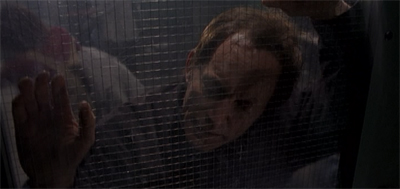
"Let me outta here!"

“Let me outta here!”

Continue reading

Millennium – The Judge (Review)

This February and March, we’re taking a trip back in time to review the fourth season of The X-Files and the first season of Millennium.

The Judge feels very much like an episode that might have worked better later in the first season of Millennium. It deals with pretty big ideas and themes at the heart of the show, but in ways that feel almost clumsy and haphazard. Millennium is still a show that is finding its way, and The Judge pokes and prods at ideas close to the heart of the series as a whole. The episode feels rather clumsy, as though the show hasn’t reached a point where it really has a handle on itself, let alone the sorts of hefty existential questions suggested by The Judge.

At its core, The Judge is fascinated with issues of moral authority and justice – in particular, it asks questions about whether such authority can exist outside (or even inside) the mechanism of the state. Given that Millennium is the story about a man working with a private group to the potential collapse of civil order on the eve of the millennium, The Judge feels like it would be the perfect opportunity to broach questions about the Millennium Group and the work that they do. After all, the Millennium Group and the supporting cast have been haunting the narrative since The Pilot.

Judge not...

Judge not…

While these tough questions hover at the very edge of the episode, it never seems like The Judge addresses them. Then again, The Judge is the fourth episode of the first season of a new show. Millennium is still young. The Judge is written by Ted Mann; it is the first episode of Millennium that is not written by a veteran of The X-Files, by somebody who isn’t Chris Carter or hasn’t experience working within Chris Carter’s world. It is, perhaps, too much to expect it to have a handle on all of that. And The Judge deserves a great deal of credit for marking out areas that the show may want to explore as it grows and develops.

At the same time, while it has some interesting big ideas and a great cast, The Judge feels little clumsy and awkward in its execution. It avoids a lot of the interesting implications of what it says, and it features a rather convenient and contrived final act that seems to exist solely so Frank Black can move on to doing other stuff in the next installment. The Judge is a misfire, but it is an intriguing and interesting misfire. It is precisely the sort of episode that you might expect at this stage in the season.

You've got male (body parts)!

You’ve got male (body parts)!

Continue reading

Millennium – Gehenna (Review)

This February and March, we’re taking a trip back in time to review the fourth season of The X-Files and the first season of Millennium.

Written by Chris Carter and directed by David Nutter, Gehenna feels very much like a continuation of The Pilot.

More to the point, it feels like a restatement of many of the key themes of The Pilot, an attempt to reinforce many of the core ideas in that first episode, and hint at something larger. In many ways, it is about ensuring that Millennium retains its identity as it transitions from a pilot that had a relatively relaxed schedule and high budget into a weekly (well, eight-day) production schedule. Gehenna is about Carter and Nutter proving that Millennium can do what it wants and needs to do week-in and week-out, while also indicating towards larger threads.

Touching (or, at least, seeing) evil...

Touching (or, at least, seeing) evil…

This isn’t a bad way to approach the first regular episode of a television series. Indeed, Carter had done something similar with The Pilot and Deep Throat on The X-Files, structuring the episodes as a one-two punch of reinforced themes and world-building. Gehenna is very much about convincing the audience that The Pilot was not just a flash in the pan, and that the series has a long clear arc ahead of it. Much like Deep Throat really sketched the outline of the alien conspiracy only hinted at in The Pilot, Gehenna features more than a few nods towards a larger evil at work in Frank’s world.

There are points where Gehenna feels a little bit too forced, and a little bit too eager to restate and repeat the themes and ideas of The Pilot. However, it is an interesting episode that does hint towards the show’s future in a number of interesting ways.

Ear today...

Ear today…

Continue reading

Star Trek – Wolf in the Fold (Review)

The first Star Trek pilot, The Cage, was produced in 1964. To celebrate its fiftieth anniversary, this December we are reviewing the second season of the original Star Trek show. You can check out our first season reviews here. Check back daily for the latest review.

Wolf in the Fold is Robert Bloch’s third and final contribution to Star Trek.

In keeping with What Are Little Girls Made Of? and Catspaw, the result is intriguing, bizarre and more than a little bit dysfunctional. More than any of the other writers drafted in to write for the science fiction show, Bloch’s fingerprints remain all over his script. Writers like Gene L. Coon and D.C. Fontana generally do a good job reconciling the work of science-fiction writers like Ray Bradbury, Theodore Sturgeon, Norman Spinrad or Harlan Ellison to make their stories fit within the frame work of Star Trek. However, even after re-writes, Bloch’s voice remains his own.

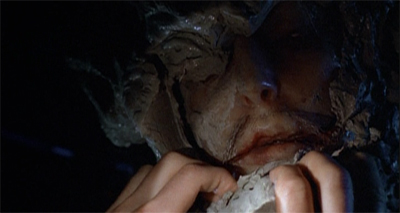
Knife to see you...

Knife to see you…

Of course, it’s quite clear that Wolf in the Fold has been through the standard re-write process. The script is a mess, struggling to tie together two basic plots (Scotty is accused of murder; the Enterprise is possessed by Jack the Ripper) in ways that don’t always work. There’s a really long and awkward expositional scene in the middle of the episode that consists primarily of Majel Barrett reading off weird-sounding words in order to assure viewers that Jack the Ripper really could be an immortal hate-fueled killing machine, given the rules of the Star Trek universe.

The are very serious problems with Wolf in the Fold. On a storytelling level, the pacing is a mess and the tone is all over the place. Bloch’s scripts continue to be even more problematic than usual when it comes to issue of gender – “Star Trek does slasher horror” is as borderline misogynistic as you might fear. However, there is something endearingly bizarre about the whole thing, as Bloch once again forces Kirk and his crew to confront an irrational universe that doesn’t necessarily conform to their understanding of it.

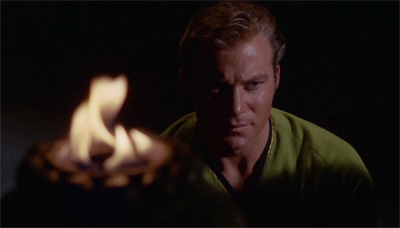
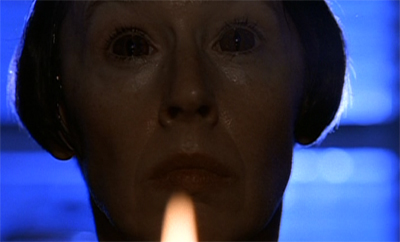
Flame on...

Flame on…

Continue reading

The X-Files – Grotesque (Review)

This November (and a little of December), we’re taking a trip back in time to review the third season of The X-Files and the first (and only) season of Space: Above and Beyond.

Grotesque is probably Howard Gordon’s strongest script for The X-Files.

F. Emasculata had demonstrated that Howard Gordon and Chris Carter worked very well together as a writing team. Carter was very good at big philosophical concepts, while Gordon was very adept at structuring a plot. Gordon knows how to build momentum and suspense, and his best scripts benefit from that particular talent. It helps that Gordon and Carter are probably the writers with the best understanding of Mulder as a character at this point in the show’s run.

Here there be monsters...

Here there be monsters…

Grotesque is an intriguing episode, particularly when examined in the context of the third season. The first and second season of The X-Files had been rather experimental in nature – the show tried to figure out what worked and what didn’t. The third season built off the successes of those earlier seasons. The idea seemed to be that the show would do more of what had worked, only better. So there were more two-part mythology episodes, more grounded stories, more comedy.

Grotesque is fascinating because it draws as much from earlier stories that didn’t work, using the lessons that the show had learned in the years since in order to make them work this time around.

Face-off...

Face-off…

Continue reading

The X-Files – Die Hand Die Verletzt (Review)

This August (and a little of September), we’re taking a trip back in time to review the second season of The X-Files. In November, we’ll be looking at the third season. And maybe more.

Die Hand Die Verletzt is a fascinating piece of work, for a number of reasons. The most striking reason, however, is that it is essentially a comedy episode. While The X-Files has always had a wry sense of humour – Mulder’s viewing habits are a recurring joke, after all – this is the first time the series has tried to produce a full-length comedy episode. Die Hand Die Verletzt is still a horror story, and the comedy is pretty black, but it does seem to prove that the show can do an entire episode that is funny.

The implications of this are far-reaching. At its height, the beauty of The X-Files was its versatility. The show could tell just about any sort of story imaginable, flitting between prestige drama, out-and-out horror, pastiche, broad comedy, political thriller, satire or even romance. While you could always bet on at least a hint of the supernatural and a dash of horror, The X-Files could really be anything that Chris Carter and his writers wanted it to be. It was even a show that could collide with other shows, as in The Springfield Files or X-Cops.

She's the devil in disguise...

She’s the devil in disguise…

To be fair, the second season is already reaching towards that approach to The X-Files. Although he has yet to produce a script for the series, the show has hired Darin Morgan to work on the writing team; his sensibilities would be proven truly and brilliantly gonzo. Irresistible proved that you could produce an episode of The X-Files without an overt supernatural horror, focusing on a more grounded horror. Red Museum provided an “almost crossover” with another television series.

However, Die Hand Die Verletzt is the point at which the show does something that looks truly weird in the context of what has come before, yet feeling strangely comfortable in light of what has followed. The script may mark the departure of Glen Morgan and James Wong from the show – the duo leaving to produce Space: Above & Beyond – but it isn’t the end of an era so much as the start of a new one.

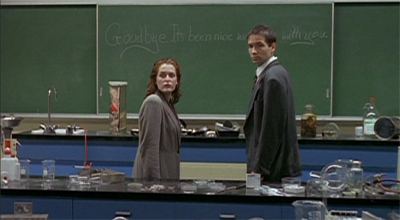
The writing's on the... er... chalkboard...

The writing’s on the… er… chalkboard…

Continue reading

Non-Review Review: Deliver Us From Evil

Deliver Us From Evil is a film where ambition seems to outpace ability. A wonderfully surreal blend of cop action movie with exorcism horror, the movie manages to score a few clever juxtapositions – even if it never seems to decide whether it’s gloweringly serious or wryly ironic. While Deliver Us From Evil never finds the right balance of po-faced gravitas and witty self-awareness, it is a surprisingly enjoyable ride.

After all, it is very hard to hate a film where a demonic presence seeks to establish itself upon the world using the music of The Doors as a recurring motif.

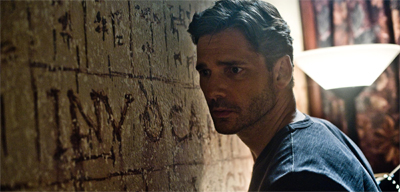
The writing's on the wall...

The writing’s on the wall…

Continue reading