• Following Us

  • Categories

  • Check out the Archives


  • Awards & Nominations

The X-Files – Sein und Zeit (Review)

This November, we’re taking a trip back in time to review the seventh season of The X-Files and the first (and only) season of Harsh Realm.

Sein und Zeit and Closure don’t fit together at all.

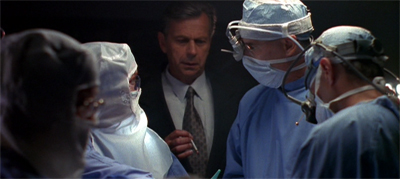
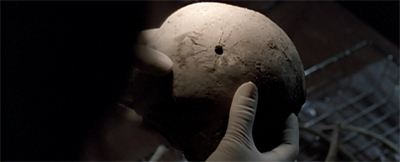
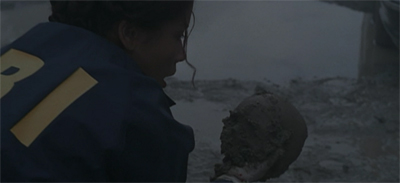
There is a clear demarcation that exists between the two episodes, to the point where they cannot really be described as a single two-part story. Following the disappearance of Amber Lynn LaPierre from her home, Sein und Zeit closes with the arrest of a serial child-murderer and the discovery of a mass grave. There is not a whiff of the show’s central mythology to be found, despite Mulder’s insistence and anxiety. Although Closure picks up where Sein und Zeit left off, it embarks on its own separate story that does draw heavily from the show’s established mythology.
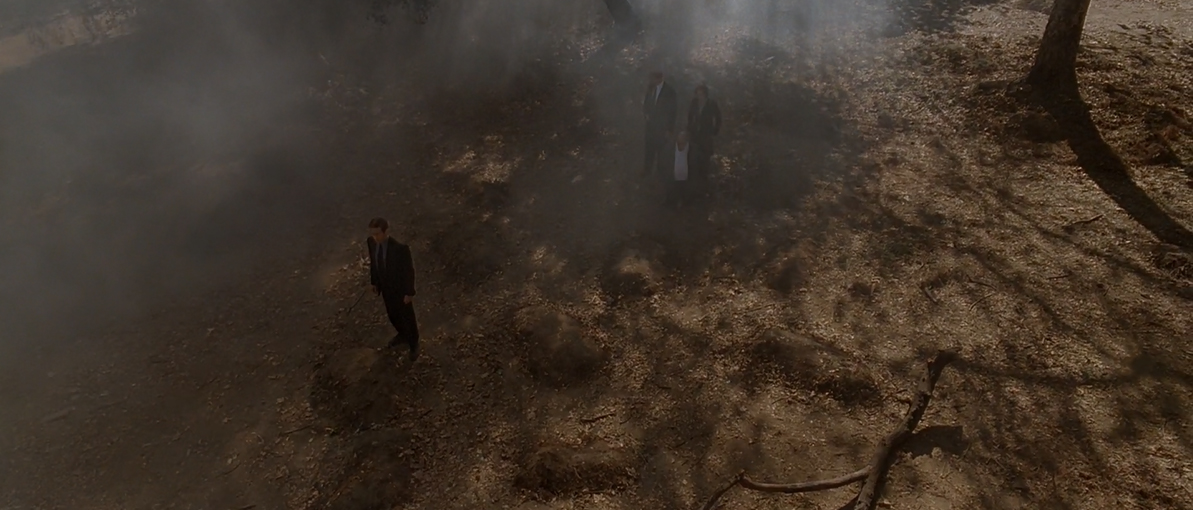
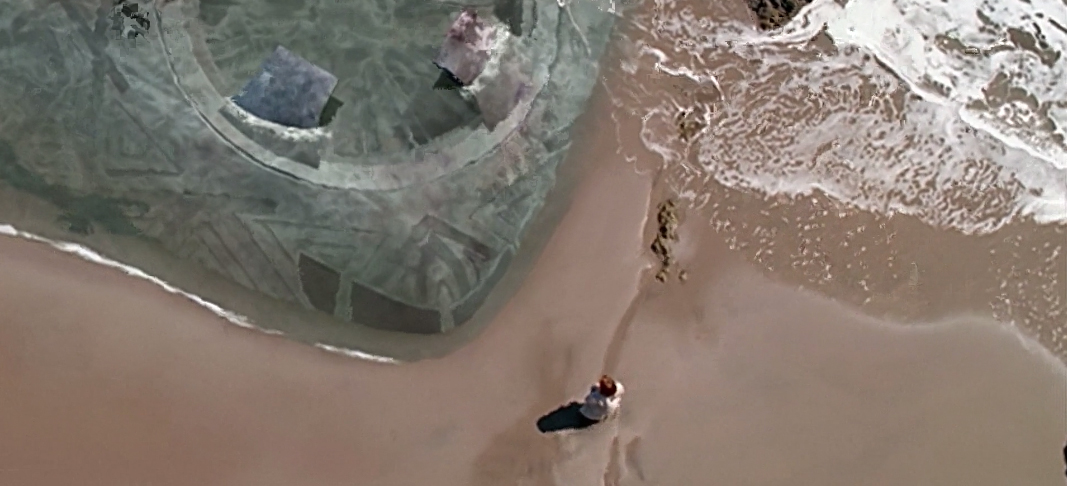
A grave subject...

A grave subject…

Even the guest casts of the two episodes are almost unique. Outside of David Duchovny and Gillian Anderson, only two guest stars appear in both episodes. Rebecca Toolan and Megan Corletto both play characters who die in Sein und Zeit, but appear as ghosts in Closure. The featured guest stars in Sein und Zeit do not reappear in Closure, and vice versa. Even the series’ recurring cast is firmly divided between the two halves; Walter Skinner appears in Sein und Zeit, while the Cigarette-Smoking Man plays an important role in Closure.

There is a yin-and-yang structure to Sein und Zeit and Closure, a sense that the two episodes are almost at odds with one another when it comes to the fate of Samantha Mulder. Sein und Zeit dares to ask what might happen if there was no rhyme or reason to her abduction; what if it was just a tragedy, like the tragedies that happen to happy families all the time? Mulder has invested so much of himself in the quest to explain what happened on that night in late November 1973; what would happen if there were no meaningful explanation?
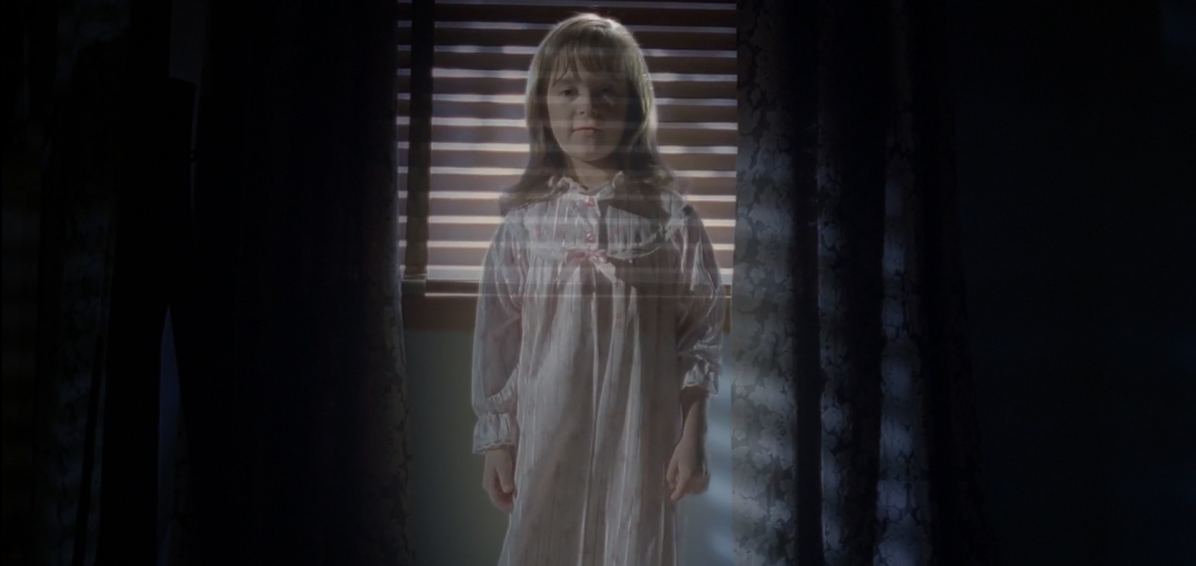
"Conscience... it's just the voices of the dead... trying to save us from our own damnation."

“Conscience… it’s just the voices of the dead… trying to save us from our own damnation.”

It is a very bleak suggestion. It is a particularly bleak suggestion coming at the middle of the show’s seventh season, as the resolution to Mulder’s character arc. The audience has spent seven years watching Mulder dig deeper and deeper into a sinister conspiracy against mankind, largely motivated by the fact that his sister’s disappearance is a part of some larger puzzle. What if it wasn’t? What if Mulder’s whole quest were simply a lie that he had told himself? What if Mulder wanted to believe so badly that he convinced himself that this made sense?

What if the disappearance of Samantha Mulder meant nothing?
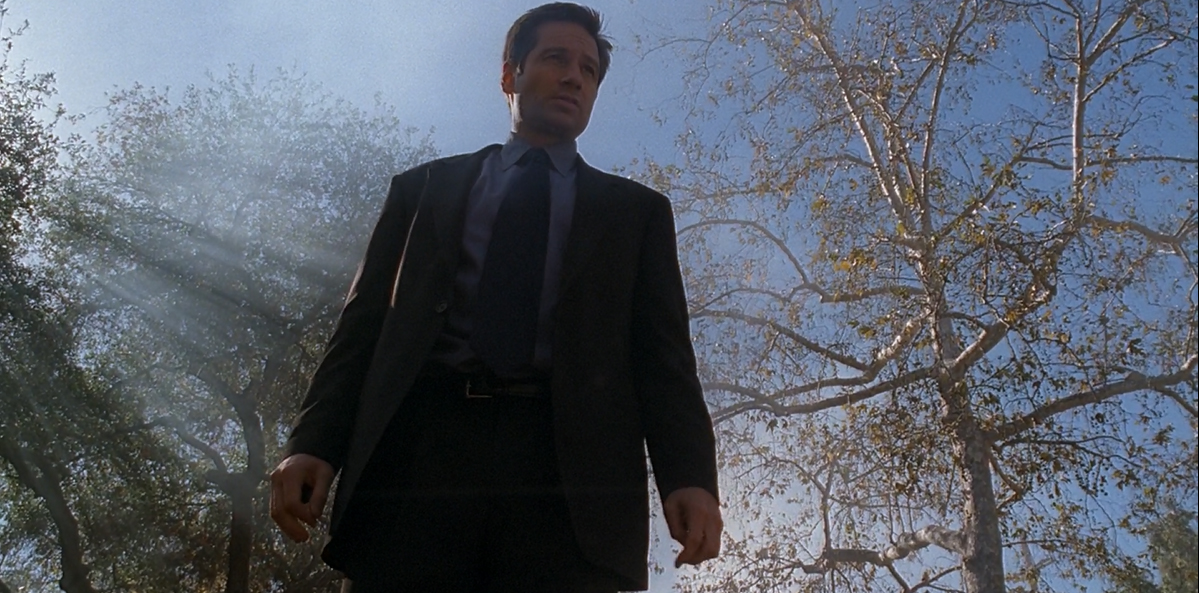
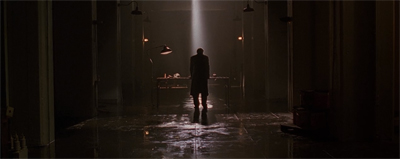
A man alone.

A man alone.

Continue reading

The X-Files – The Sixth Extinction II: Amor Fati (Review)

This November, we’re taking a trip back in time to review the seventh season of The X-Files and the first (and only) season of Harsh Realm.

My formula for greatness in a human being is amor fati: that one wants nothing to be different, not forward, not backward, not in all eternity. Not merely bear what is necessary, still less conceal it—all idealism is mendacity in the face of what is necessary—but love it.

– Friedrich Nietzsche, Ecce Homo

Everything burns...

Everything burns…

Continue reading

The X-Files – Biogenesis (Review)

This July, we’re taking a trip back in time to review the sixth season of The X-Files and the third (and final) season of Millennium.

‘When Alexan­der saw the breadth of his domain, he wept for there were no more worlds to con­quer.’ Ben­e­fits of a clas­si­cal education.

– Hans Gruber, Die Hard

In hindsight, “ending” the mythology with a two-parter in the middle of the season was always a risky proposition.

Airing Two Fathers and One Son during February Sweeps was a logical decision. Ending the mythology that had been running through the show for five-and-a-half seasons was certain to grab the attention of casual viewers, reeling them in to boast up ratings. The X-Files had always aired mythology two-parters during Sweeps, putting them forward as examples of the best that the series could do and cementing the show’s claim to be “blockbuster television.” Choosing to wrap up the mythology during February Sweeps was just an extension of that approach.

Look what just washed up...

Look what just washed up…

And it worked. Two Fathers earned the second highest Nielsen score of the sixth season, landing just behind The Rain King. Two Fathers was the last time that The X-Files would rate so highly. As such, the decision to “close off” the mythology in the middle of the season was a very shrewd decision. However, it did raise questions about what the show would do at the very end of season. After all, The X-Files liked to bookend its seasons with mythology episodes, counting on a mythology cliffhanger to carry viewers across the long gap between seasons.

How do you tell a mythology story when you’ve just worked so hard to tidy it all away?

Behind the curtain...

Behind the curtain…

Continue reading

The X-Files – One Son (Review)

This July, we’re taking a trip back in time to review the sixth season of The X-Files and the third (and final) season of Millennium.

Two Fathers and One Son are a mixed bag.

They are very messy and convoluted episodes of television, attempting to resolve a long-running plot without committing to a resolution. They swing wildly between clichéd ambiguity and b-movie exposition. They strain to stitch together half-a-decade of storytelling into a ninety-minute finalé, while trying to avoid drawing attention to any of the countless elements that might contradict or undermine the story that they are telling. They are both ambitious and efficient, energised and noncommittal.

They're here.

They’re here.

At the same time, Two Fathers and One Son make a valiant effort to bring the vast sprawling global conspiracy down to a more manageable level. Over the years, the conspiracy has evolved from a few alien abductions to a vast plot against the majority of mankind. Although they doesn’t always succeed, Two Fathers and One Son try to ground this crazy story about faceless rebels and looming colonisation in the trauma of a single family unit. The fate of mankind plays out against the backdrop of a family collapsing under its own weight.

While it doesn’t work as well as it might, it does help to draw attention to the larger themes that have played out across The X-Files as they relate to power and control, legacy and guilty, abuse and exploitation. It seems appropriate that Two Fathers and One Son should push these ideas to the fore as it attempts to close off the show’s long-running conspiracy thread, reminding viewers of what it was actually talking about.

Baby steps...

Baby steps…

Continue reading

The X-Files – S.R. 819 (Review)

This July, we’re taking a trip back in time to review the sixth season of The X-Files and the third (and final) season of Millennium.

And we’re back on familiar ground.

The first half of sixth season of The X-Files is perhaps the weirdest that the show ever really became. It seemed like the series transformed into a goofy workplace romantic comedy, as Mulder and Scully worked at boring desk jobs during the day before investigating paranormal activity together in their spare time. It was utterly unlike anything that the show had done before or anything that it would do after. It is very strange to see so many oddities packed together so tightly.

He survived by the Skin(ner) of his teeth...

He survived by the Skin(ner) of his teeth…

Triangle, Dreamland I, Dreamland II, How the Ghosts Stole Christmas and The Rain King have enough surreal content to sustain two or three seasons of The X-Files. Broadcasting them almost back-to-back left some fans a little shell-shocked. At the time, it must have seemed like The X-Files had become a completely different television show than it had been only five or six months earlier. However, with the benefit of hindsight, it becomes clear that those episodes were just a very strange blip in the larger context of the series.

S.R. 819 is the episode that marks the clear return to the classic “tried and tested” model of The X-Files. It has everything from ambiguous conspiracies to body horror to car park confrontations. It is very much business as usual. Which is both the best and worst thing about it.

Do the Mathes, son...

Do the Mathes, son…

Continue reading

The X-Files – Triangle (Review)

This July, we’re taking a trip back in time to review the sixth season of The X-Files and the third (and final) season of Millennium.

There are a lot of reasons to celebrate Triangle.

The episode gets a lot of attention for its wonderful use of long tracking shots. According to Chris Carter’s commentary, there are only twenty-four individual shots stitched together to produce the forty-five-minute episode. Considering the amount of split-screen action at the climax, that is not a lot. Triangle is an artistic tour de force for writer and director Chris Carter. The success that both Birdman and True Detective enjoyed in 2014 due to their extended takes suggests that Carter was significantly ahead of the curve.

Dragging up the past...

Dragging up the past…

There are other aspects to note. Triangle also ushers in a new mood and tone for the sixth season of The X-Files. The show had moved to Los Angeles, and would struggle with how to retain its identity in the new (and bright) surroundings of California. The Beginning and Drive had both answered the question in their own way, but Triangle ushers in a whole new approach to storytelling. Triangle is the first of a series of light and breezy episodes in the early stretch of the sixth season where The X-Files almost turns into a paranormal sitcom.

However, there is one other reason to celebrate Triangle. It is an extended forty-five minute pun on the word “ship.”

Cigarette-Smoking Nazi...

Cigarette-Smoking Nazi…

Continue reading

The X-Files – The Beginning (Review)

This July, we’re taking a trip back in time to review the sixth season of The X-Files and the third (and final) season of Millennium.

The more things change, the more they stay the same.

The opening shot of The Beginning makes it quite clear that things have changed. The camera opens staring at the sunny cloudless sky of California, doubling for Arizona. It pans down to an open desert. As the production team conceded with Anasazi, the desert was just about the only American environment that Vancouver could not easily mimic – to the point where the team had to paint rocks red in order to convincingly set a scene in New Mexico. California makes for a much more convincing desert.

Bursting on to the scene...

Bursting on to the scene…

The contrast is striking. The sixth season of The X-Files is bright and sunny; it is aware of its new production reality and chooses to embrace them rather than pointlessly resist them. Things had changed, and there was nothing to be gained from pretending otherwise. It is no wonder that the opening sequence of The Beginning features a group of working-stiff conspirators in transit; the perfect opening image for a season still figuring out how Los Angeles works. The Beginning loads all of that into its opening shot, getting it out in the open before it gets down to business.

At the same time, The Beginning is keen to stress that not too much has actually changed. The naming of the fifth season finalé and the sixth season premiere is decidedly symmetrical – The End and The Beginning. In fact, naming the second part of a two-part episode “The Beginning” is a very clear attempt at reassurance. It is a beginning without actually being a beginning; it is a conclusion without actually being a conclusion. The wheel keeps on turning. All that is missing is the ouroboros.

Dude, that's totally not sterile...

Dude, that’s totally not sterile…

The closing shot as much as confirms this, revealing that the bold new alien design revealed in The X-Files: Fight the Future is not so bold and new after all. Instead, the monster obviously inspired by Alien is something of a missing link, a tether connecting the grey aliens seen in episodes like Duane Barry to the black oil introduced in Piper Maru. It is all one big circle in perpetual motion. Everything is connected. Everything fits together. The show might have moved two thousand miles south, but it hasn’t missed a step.

For better or worse, The Beginning is about assuring viewers that – no matter what has changed – everything remains the same. It is up to the viewer to decide whether that is a good or a bad thing.

The truth is in there...

The truth is in there…

Continue reading

Millennium – Skull and Bones (Review)

This July, we’re taking a trip back in time to review the sixth season of The X-Files and the third (and final) season of Millennium.

Skull and Bones brings a lot of the problems with the third season of Millennium to the fore.

Most obviously, the third season of Millennium is making a conscious effort to return to the aesthetic and style of the first season, with an emphasis on horrific crimes and abhorrent psychologies. In interviews around the launch of the third season, Chris Carter repeatedly suggested that something had been lost in the second season. TEOTWAWKI was an issue-driven episode about school shootings and Y2K. Closure was a story about how spree killers can engage in random patterns of violence and there is no way to reliably discern a pattern of logic in truly evil behaviour.

The hole in things...

The hole in things…

At the same time, the third season is struggling to deal with the legacy and impact of the second season. The Innocents and Exegesis rather clumsily attempted to write their way out of The Fourth Horseman and The Time is Now by downplaying the impact of the end of the world at the end of the second season. However, the third cannot completely erase what happened. The absence of Catherine Black and the presence of Peter Watts are constant reminders. The Millennium Group itself cannot revert back to its first season self.

Skull and Bones plays out this conflict, creating an impression of a show trapped at a crossroads with a problem it cannot resolve. Skull and Bones is an episode that attempts to both minimise the impact of the second season of Millennium while still acknowledging and building upon it. It is not an approach that lends itself to satisfactory or fulfilling storytelling. However, it does articulate just how confused the show must be at this point in its life cycle.

There are going to be a lot of Yorrick captions this time...

There are going to be a lot of Yorrick captions this time…

Continue reading

The X-Files – Season 5 (Review)

This May and June, we’re taking a trip back in time to review the fifth season of The X-Files and the second season of Millennium.

The fifth season of The X-Files represents the height of the show’s popularity.

Bookended by the production and release of the motion picture, the fifth season also earned the highest overall Neilsen ratings of any of the show’s nine seasons. The X-Files was a cultural force to be reckoned with, and had come a long way from its origins as little-seen cult television show. In the late nineties, it seemed like it wasn’t just aliens conspiring to colonise the planet; Chris Carter and his team were doing a pretty good job of it themselves. The fifth season has all the swagger and confidence of a show enjoying the view as it stands on top of the world.

xfiles-postmodernprometheus33

The fifth season might not be able to match the third season for consistency from episode to episode. The fifth season might also struggle to match the breathless ambition of the fourth season’s best (and wildest) episodes. However, it is a highly enjoyable season of television on its own terms. The season feels a little more relaxed and organised than the fourth season, and more confident in itself than the third. The fifth season even makes better use of its own internal themes and motifs than any of the previous seasons, with most of the staff seemingly on the same page.

Oddly enough, this thematic consistency does not translate into clear or fully-formed arcs. Unlike the second season of Millennium, it seems like the fifth season of The X-Files has no real idea of where it is going or how it wants to get there. This is slight problem when the fifth season needs to build to a feature film that was shot in the gap between the fourth and fifth seasons. The X-Files gets a lot of credit for popularising serialised storytelling on prime-time television, but the fifth season demonstrates just how sloppy the show could sometimes be in that regard.

xfiles-badblood10

Still, this is a minor problem. With only twenty episodes, the fifth season is the shortest season of The X-Files produced at this point in the show’s history. The ninth season would run the same length, but there is an argument to be made that it is technically the shorter season; The Truth was written and broadcast as a single feature-length episode rather than two individual episodes. However, production necessities required a lot of innovation and experimentation in the fifth season, leading to a very playful and very off-format season of television.

While it is probably very difficult to argue that the fifth season of The X-Files was the show’s best run of episodes, it is a highly enjoyable collection of shows that brings together a lot of what was so much fun about The X-Files. The last season to be filmed in Vancouver, and the season that moves us closer to the end of the series than the beginning. Although certain segments of fandom would argue that it is the last truly great season of The X-Files, that feels unduly harsh to both the sixth and eighth seasons. Nevertheless, it is thrilling to watch a show so thoroughly enjoying its moment in the sun.

xfiles-theend32

Continue reading

Millennium – Season 2 (Review)

This May and June, we’re taking a trip back in time to review the fifth season of The X-Files and the second season of Millennium.

The second season of Millennium is understandably polarising.

It is returned from its summer hiatus as what was, on the surface, a radically different television show. The Millennium Group was no longer simply a forensic consultancy firm, but had transformed into a secret society dating back millennia; it had become, as Frank would concede in The Fourth Horseman, “a cult.” More than that, the show had changed around the Millennium Group. Serial killers had been the show’s bread and butter in its first season, prompting some critics to describe it as a “serial killer of the week” procedural; now they were a rare occurrence.

millennium-thebeginningandtheend2

More than that, Frank Black had also changed. In interviews around the first season, Lance Henriksen had been very proud to play a hero who solved problems with his mind rather than with a gun. In contrast, the second season opened with Frank Black brutally murdering the man who kidnapped his wife. The yellow house had been a symbol of everything pure and good in the world of Frank Black, of the family he worked hard to protect. The second season had exiled Frank Black from this family and had him move deeper and deeper into the Millennium Group itself.

However, there were other changes that were less profound, but just as striking. Frank Black was suddenly a fan of the music of Bobby Darin. He suddenly had a sense of humour that led him to crack more than two jokes in a season. at the same time, he was also more short-tempered and grouchy. The first season had presented Frank Black as a rock in the middle of otherwise chaotic seas; in the second season, it was clear that Frank himself was feeling the strain and the stress. In short, Frank Black felt a lot more human.

millennium-aroomwithnoview9

The entire mood of the show changed around Frank. Millennium was suddenly a lot weirder. Though the first season had largely moved away from the classic “Frank hunts a serial killer” formula by the end of the year, the second season abandoned any sense of formula altogether. Watching the second season of Millennium on a week-to-week basis, it was almost impossible to predict what the next show would be like. Although there was a very strong thematic continuity between episodes, there was less of a rigid structure to their construction.

The second season of Millennium was a radical departure from what had come before. It was also the best season of television ever produced by Ten Thirteen.

millennium-luminary28

Continue reading