• Following Us

  • Categories

  • Check out the Archives


  • Awards & Nominations

The X-Files: Conspiracy (IDW) (Review)

This June, we’re going to be taking a look at the current run of The X-Files, beginning with the IDW comic book revival and perhaps taking some detours along the way. Check back daily for the latest review.

IDW is quite different from Topps and Wildstorm, the two prior comic book companies to hold the license for The X-Files.

Part of that simply reflects changes in the comic book industry over time, with a greater fixation on concepts like shared universes and continuity, along with an increased emphasis on the importance of “the canon.” Part of that is simply down to the way that IDW operates as a publisher. The company is the fourth-largest comic book publisher in America, behind Marvel, DC and Image. While the company publishes a number of creator-owned properties, its success has largely been based around licensing properties.

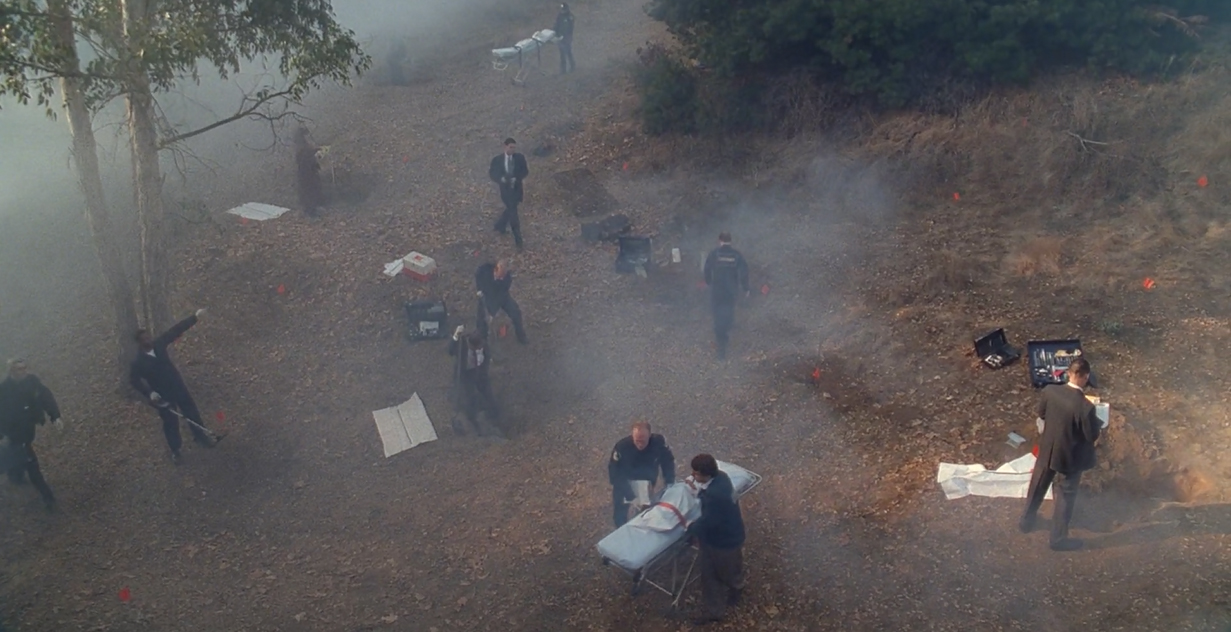
A mutant phenomenon...

A mutant phenomenon…

In doing so, the company has adopted a model quite close to that of Marvel or DC. It tends to organise its books around these properties in the same way that Marvel or DC might organise themselves around the so-called “families.” Much like books like Detective Comics, Nightwing or Batgirl are considered part of the “Batman” family or books like Wolverine, Namor and X-Force fall under the X-Men banner, IDW tends to group its books into familiar families based around licensed properties. Transformers, G.I. Joe, Teenage Mutant Ninja Turtles.

It is not uncommon for each of those lines to support multiple books. For example, the company would publish a number of miniseries as companion pieces to their monthly Star Trek or Doctor Who comics. The same would be true of The X-Files: Season 1o, with the company publishing a number of tie-in books around that. Year Zero and Millennium are the most obvious example, providing the company with the opportunity to publish several branded X-Files books within the same month.

I bet super soldiers wish that they could do this.

I bet super soldiers wish that they could do this.

At the same time, the company engages with its properties in much the same way that Marvel or DC might. Marvel and DC tend to fall into a pattern of massive so-called “events” that serve to draw particular books away from their own internal narratives and towards a more “epic” story. Civil War focused on a fight between Captain America and Iron Man, but crossed over into over one hundred comic book issues published over seven months. There are countless other examples, from House of M to Crisis on Infinite Earths to Siege to Final Crisis.

IDW has organised several of its own blockbuster events to tie together its own licensed properties; Infestation and and Infes2ation come to mind. To celebrate the landing of the license, it was decided that the 2014 crossover would be themed around The X-Files. It is just a shame that the result was terrible.
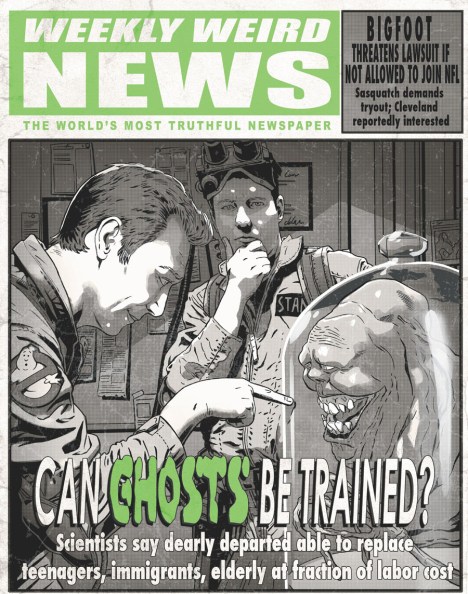
We ain't afraid of no ghosts...

We ain’t afraid of no ghosts…

Continue reading

The X-Files: Season 10 (IDW) #8 – Being for the Benefit of Mr. X (Review)

This June, we’re going to be taking a look at the current run of The X-Files, beginning with the IDW comic book revival and perhaps taking some detours along the way. Check back daily for the latest review.

Being for the Benefit of Mr. X is effectively another origin story, following on from Hosts.

While Hosts explained exactly how the Fluke Man came to be, and even gave the character tangible motivation, Being for the Benefit of Mr. X is largely driven by flashbacks that proceed to explain and elaborate upon Mulder’s second informant. Mister X has long been one of the franchise’s most interesting and underdeveloped character, in part owing to the fact that the show fleshed out very little about him and in part due to Steven Williams’ performance. While the show revealed a lot about Deep Throat or the Cigarette-Smoking Man, Mister X remains a mystery.

Marking the spot.

Marking the spot.

The question, of course, is what this actually adds to the story being told. It is fun to revisit the origin of Mister X, but he is very much an outdated concern at this point in the show’s life. In fact, the character’s last appearance was in flashback in Unusual Suspects at the start of the fifth season, following his death in Herrenvolk at the start of the fourth season. Unlike the Cigarette-Smoking Man, Mister X was never literally resurrected. Unlike Deep Throat, he never turned up to haunt Mulder in episodes like The Blessing Way or The Sixth Extinction II: Amor Fati.

It is not as if writer Joe Harris has constructed a particularly compelling origin story for Mister X. The story told in Being for the Benefit of Mr. X is solid and sturdy, integrating quite smoothly with the continuity of the show and the character as we understand it. However, there are no real surprises or tangents, no twists or surprises. Being for the Benefit of Mr. X is a solid “done in one” story. It just feels a tad unnecessary.

In too Deep (Throat)...

In too Deep (Throat)…

Continue reading

The X-Files: Season 10 (IDW) #1-5 – Believers (Review)

This June, we’re going to be taking a look at the current run of The X-Files, beginning with the IDW comic book revival and perhaps taking some detours along the way. Check back daily for the latest review.

Five years can be a long time.

To be fair, there was a six-year gap between the broadcast of The Truth and the release of The X-Files: I Want to Believe, so the gap was not unprecedented. Nevertheless, the fact is that Mulder and Scully had been retired for five years since their last film and eleven years since their last television episodes. Even the most hardcore fans of The X-Files had begun to doubt that the show would ever return in any tangible form. However, the show was entering its twentieth anniversary year, and forces were stirring in the background.

X-appeal.

X-appeal.

Occasionally interviews would surface with David Duchovny or Gillian Anderson mooting the possibility of doing a third feature film. After all, despite the promise made in the opening of The Truth, 2012 had come and gone without an alien invasion or a global apocalypse. The franchise had set its own alarm clock and slept through it. There were still fitful stirrings, suggestions of possible future developments. As the franchise passed what many regarded as its “best before” date, Frank Spotnitz even speculated that fans might be treated to a reboot.

In many ways, the revival of The X-Files began somewhat innocuously. In January 2013, comics publisher IDW announced that they would be publishing a monthly series focusing on the continuing adventures of Mulder and Scully. This was not necessarily news of itself. IDW had a long history of managing licensed properties, such as the JJ Abrams Star Trek reboot and the Russell T. Davies Doctor Who relaunch. That was very much their market niche in the comic book industry, especially with nostalgic titles like Ghostbusters or Teenage Mutant Ninja Turtles.

How the years 'shroom by...

How the years ‘shroom by…

While the launch of the title did suggest that there was an audience for stories featuring Mulder and Scully, it did not necessarily lead to the promise of greater things. Indeed, the announcement that IDW would be publishing The X-Files: Season 10 consciously and clearly evoked the approach that the publisher Dark Horse had adopted towards Buffy: The Vampire Slayer and Angel, running entire seasons of comic book stories that served as the new “canon” for the characters. But nobody was expecting Sarah Michelle Gellar to reprise the role of Buffy Summers.

However, the IDW comic book launch served to bring Chris Carter out of semi-retirement and back into the media spotlight. Joss Whedon had consulted with Dark Horse on Buffy: Season Eight, the prolific television writer and producer was also working on his own concurrent projects that included directing episodes of The Office and preparing Doctor Horrible’s Sing-Along Blog. In contrast, Chris Carter had been largely silent since the release of I Want to Believe. The launch of the comic book brought him back.

Where there's smoke...

Where there’s smoke…

Continue reading

The X-Files – The Truth (Review)

This December, we’re taking a trip back in time to review the ninth season of The X-Files.

It is interesting how the popular memory of a thing can differ from the actual thing itself.

Memory was always a key theme of The X-Files, particularly in the early years of the show. Although the aliens and the conspirators were plucked from the demented imaginations of the most paranoid tinfoil hat enthusiasts, a surprising amount of the show was rooted in real history that had been allowed to slip by under the radar: the genocide of the Native Americans; the resettlement of German and Japanese war criminals after the Second World War; radiation experiments upon prisoners; the Tuskegee syphilis experiment.

Daddy's home.

Daddy’s home.

The truth is contained in the gap between memory and history. In a way, then, it feels entirely appropriate that the popular memory of The X-Files should remain quite distinct from the show itself. The popular memory of The X-Files tends to suggest that the mythology makes no sense, that it does not fit together in any tangible form. This is an opinion repeated so often that it has become a critical shorthand when discussing the end of the show; much like the assertion “they were dead all along” tends to come when discussing Lost.

The truth is that the mythology of The X-Files largely made sense. Sure, there were lacunas and contradictions, inconsistencies and illogicalities, but the vast majority of the mythology was fairly linear and straightforward. It had been fairly straightforward for quite some time. The show had been decidedly ambiguous in its first few seasons, only confirming that colonisation was the conspiracy’s end game in Talitha Cumi at the end of the third season. Elements like the black oil and the bees tended to cloud matters, but the internal logic was clear.

Everything burns...

Everything burns…

Significant portions of both The X-Files: Fight the Future and Two Fathers and One Son had been dedicated to spelling out the finer details of the mythology in great detail. Mankind were not the original inhabitants of Earth; the former occupants had returned and were making a rightful claim; the conspirators had agreed to help them, selling out mankind for a chance to extend their own lives. Everything else was window dressing. The production team had laid everything out during the fifth and sixth seasons.

Still, the general consensus of The X-Files was that it was a show driven by mysteries that was always more interested in questions than answers. This was certainly true, but it was somewhat exaggerated. When the cancellation was announced, the media immediately demanded answers. A month before The Truth was broadcast, Tim Goodman complained about how the show offered “precious few answers to Carter’s riddles.” Two days before the broadcast, Aaron Kinney wondered of the conspirators, “Who are these people and what is their agenda?”

The Truth on trial...

The Truth on trial…

It does not matter that these answers have mostly been provided and that the truth is mostly know. This was the context of the conversation unfolding around The Truth, and it likely explains a number of the creative decisions taken during the production of the episode. The Truth plays as an extended video essay dedicated to providing answers that were offered three or four seasons earlier in relation to mysteries that are no longer part of the show. The Truth is a passionate and intense argument that the mythology of The X-Files does make sense.

For viewers tuning back into the show for the first time in years, this means long expository monologues and skilfully edited montages that do not tie into the plot of the episode in any significant way. For those who stuck with the show for these past few seasons, it means rehashing everything that the show has taken for granted since the fifth or sixth season. While it feels like The Truth is desperately longing for vindication, to the extent where the show puts itself on trial in the person of Fox Mulder, this does not make for compelling viewing.

Happy ending.

Happy ending.

Continue reading

The X-Files 102: Ten “Mythology” Episodes

Next week sees the release of The X-Files on blu ray for the first time, just over a month before the new six-episode series premieres on Fox in January. We’re running daily reviews of the show (and its spin-offs) between now and the end of the year, but we thought it might be worth compiling some guides for newer viewers who are looking to experience the length and breadth of what The X-Files has to offer. Every day this week, we’ll be publishing one quick list of recommended episodes every day, that should offer a good place to start for those looking to dive into the show.

There is no getting around the shadow of the “mythology”, the serialised central narrative of The X-Files which explored a sinister conspiracy between the United States government and alien forces building towards a sinister end. While the show was on the air, the mythology was a focal point for discussion and debate around the show, with many viewers speculating about the particulars of the allegiance between the shadowy syndicate and the mysterious visitors from outer space. It was one of the boldest and most distinctive features of the show.

xfiles-oneson4

Continue reading

The X-Files – Essence (Review)

This October/November, we’re taking a trip back in time to review the eighth season of The X-Files and the first (and only) season of The Lone Gunmen.

The mythology of The X-Files is a strange beast.

In the show’s declining years, it frequently became a stick with which the show might be beaten by critics and fans who had grown exhausted of ambiguity and labyrinthine plotting. Steven King lamented the fact that the show “blundered off into a swamp of black oil, and in that swamp it died.” In assessing the impact of the series, Joyce Millman described the mythology as a “sadistically convoluted plot line.” Juliette Harrisson complained that the entire mythology ended up “so twisted and incomprehensible by the end.”

Oh, baby.

Oh, baby.

In hindsight, it seems like history has not been kind to the mythology. In the years since the show went off the air, it seems that fans have come to value the episodic “monster of the week” stories ahead of the central story arc about aliens plotting to colonise the planet. This is ironic, given the attention devoted to the mythology while the show was on the air. The mythology dominated season premieres and finalés, taking the limelight during Sweeps and commanding impressive production values.

This assessment of the mythology is at once fair and unfair. Examined from far enough away, the mythology was linear and logical: alien colonists were coming back to reclaim the planet and enslave (or exterminate) mankind. Everything else was just window-dressing, with the mythology exploring the compromise and collaboration that facilitated this plan. The mythology was, at its best, an exploration of human weakness and the corruption of authority; a timeless (and almost Shakespearean) tragedy. From a sufficient distance, it was not hard to follow.

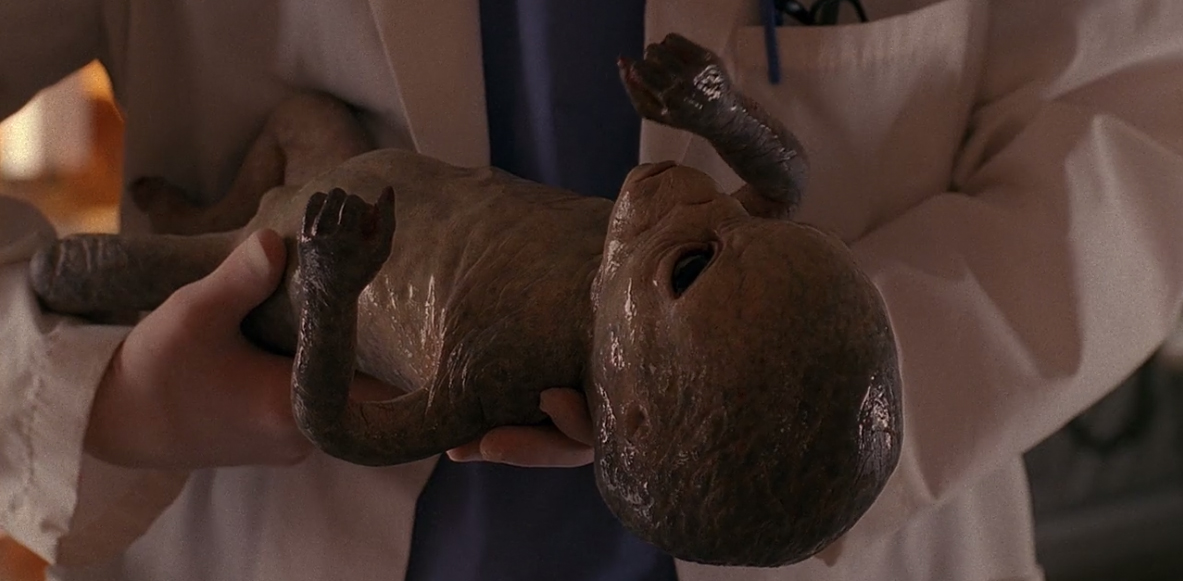
Oh, alien baby.

Oh, alien baby.

However, the details tend to create confusion, with everything getting a little muddled as The X-Files piles compelling and memorable visuals on top of one another. Are the bees intended to spread smallpox to thin the population as Zero Sum suggests, or to spread the black oil to aid in repopulation as The X-Files: Fight the Future implies? Is the black oil a sinister body-hopping parasite as suggested in Piper Maru and Vienen, or is it an organism that turns the body into a host for a gestating alien organism like in Fight the Future or The Beginning?

The eighth season does a lot to simplify the mythology by stripping out the conspirators and the vaccine and the rebels and the hybrids, replacing them with a more blunt central narrative about “alien replicants” mounting a stealth invasion. That said, things begin to get a bit cluttered and crowded as the season reaches its conclusion. Essence and Existence have a very clear structure and clear objectives, but there is a sense that that the narrative could still be streamlined a bit.

Oh, blood-splattered alien babies...

Oh, blood-splattered alien babies…

Continue reading

The Lone Gunmen – Pilot (Review)

This October/November, we’re taking a trip back in time to review the eighth season of The X-Files and the first (and only) season of The Lone Gunmen.

It is meant to be a joke.

It is an episode known as The Pilot, because it is a proof of concept for a new series that can be shown to executives in the hopes that they might green-light it and give the production team a series order. That is, after all, what a television pilot is. It is the first episode of a television show to be filmed, usually with considerable space between it and the rest of the first season. There is time for network notes and feedback, to determine what works and what doesn’t. There is space for recasting and reshooting, which becomes more problematic on a weekly schedule.

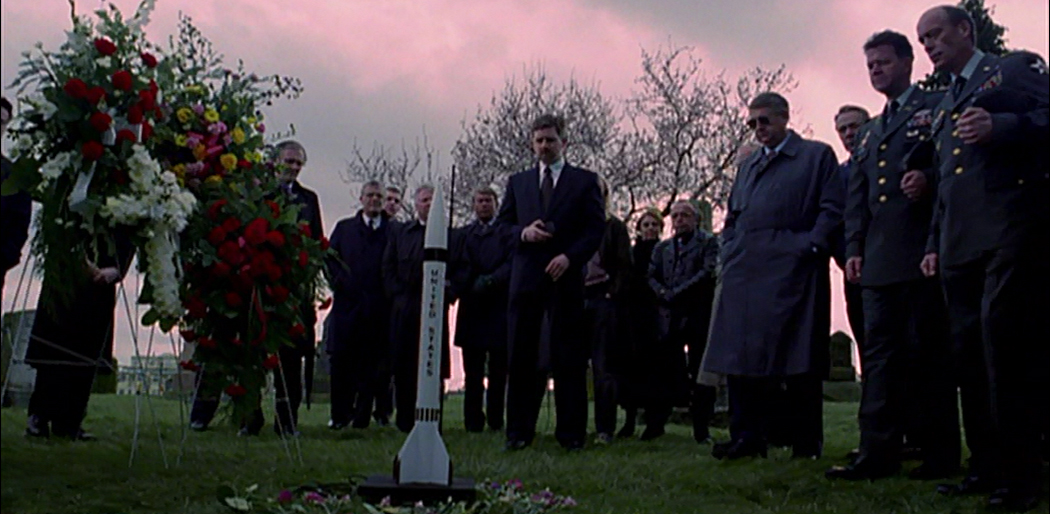
Rocket man.

Rocket man.

However, the fact that the first episode of The Lone Gunmen is called The Pilot is also a rather wry punchline. It is a self-aware reminder that the show takes itself considerably less seriously than Millennium or Harsh Realm. After all, even if this weren’t the very first episode of a new television show, it might be called The Pilot. Based purely on the plot, the episode might have been called The Pilot. It is an episode about a sinister plot to hijack planes using advanced technology. So calling the episode The Pilot is a cheesy and goofy bit of wordplay.

Of course, there is very little funny about it in hindsight.

Don't leave us hanging...

Don’t leave us hanging…

Continue reading

The X-Files – Per Manum (Review)

This October/November, we’re taking a trip back in time to review the eighth season of The X-Files and the first (and only) season of The Lone Gunmen.

Per Manum marks a very serious shift in the eighth season of The X-Files.

It marks the point at which the show becomes more serialised and more tightly interwoven on an episode-to-episode basis than it had been at any point in the past. There are several “monster of the week” stories populating the final third of the eighth season (most obviously Vienen, Empedocles and Alone), but the last eight episodes of the season are more tightly interlocked than any other eight episodes of the show. Perhaps the closest comparison is to the opening nine episodes of the second season, but even the majority of those were stand-alones in a new status quo.

Things past...

Things past…

With Per Manum, the show reengages with the two big central mysteries driving the mythology of the eighth season. The closing moments of Requiem featured the disappearance of Mulder and the revelation of Scully’s pregnancy, establishing them as a driving force for the future of the show. Of course, nobody knew what form that future would take when Requiem was written and filmed. However, it is interesting how little forward momentum the eighth season has on these plot points. Two-thirds of the way through the season, neither is closer to resolution.

Of course, that is not to suggest that the production team have forgotten about Scully’s pregnancy or Mulder’s disappearance. One of the stronger aspects of the eighth season is the way that these details are woven into the plots of episodes where they are not even explicitly acknowledged. Mulder’s disappearance informs Scully’s unspoken reluctance to trust Doggett in Roadrunners; Scully’s pregnancy explains her decision not to go into the subway tunnels with Doggett in Medusa. Still, there is no linear sense of progress by this point of the year.

Hold it there...

Hold it there…

This is probably because these two plot threads cannot necessarily be explored in increments. Within and Without suggested that Mulder was being experimented upon from the comfort a spaceship; short of Scully and Doggett hijacking a space-shuttle, there is little they can do to affect his return but wait. Similarly, Scully’s pregnancy has a natural time limit imposed upon it; short of inducing labour, there is little she can do to affect the outcome but wait. As such, these are not the most dynamic plot points, but they work quite well in the context of the eighth season.

The first two thirds of the eighth season are spent waiting and anticipating, reflecting on strange absences and unexpected presences. The final third is spent rushing towards the finish line. Per Manum marks the transition point.

Don't turn this into a competition, Doggett...

Don’t turn this into a competition, Doggett…

Continue reading

The X-Files – En Ami (Review)

This September, we’re taking a trip back in time to review the seventh season of The X-Files and the first (and only) season of Harsh Realm.

The seventh season mythology has a weird hazy feeling to it. It feels almost like a postscript.

It is hard to explain what is happening with the mythology at this point. Two Fathers and One Son had promised an end to the over-arching conspiracy narrative, but it felt like something of a half-measure. The First Elder and the Second Elder were killed off, but most of the other major players remained. Although Scully congratulated Mulder on toppling the conspiracy in Biogenesis, the same episode seemed to off-handedly suggest that the Cigarette-Smoking Man was still working on it. He was still talking hybrids in The Sixth Extinction II: Amor Fati.

I'll drink to that...

I’ll drink to that…

At the same time, Two Fathers and One Son marked the end of the mythology as an on-going concern. The particulars of colonisation and the nature of the Cigarette-Smoking Man’s work were confined to limbo, some sort of bizarre twilight realm where they might exist or they might not; they simply drift around the show like ghosts. Whether or not Two Fathers and One Son actually resolved any aspect of the show’s overarching plot is open to debate; however, they very clearly suggested that the mythology was not the show’s central story going forward.

In the seventh season, it frequently feels like the mythology is a hazy backdrop against which character-driven stories might unfold. In The Sixth Extinction, an alien ship becomes a gateway to meditations on the nature of human existence while Krycek blackmails Skinner and Fowley still works with the Cigarette-Smoking Man. In The Sixth Extinction II: Amor Fati, the Cigarette-Smoking Man is making hybrids and murders Fowley, but the heart of the story is Mulder’s flirtation with temptation. Sein und Ziet and Closure have nothing to do with colonisation.

Smokey and the bandit...

Smokey and the bandit…

To be fair, this was arguably always the case with mythology episodes. In hindsight, it can seem like the mythology episodes were less part of an on-going story and more meditations on common themes tied into a shared continuity. Colony and End Game are spectacular pieces of television, but they are hard to reconcile with later revelations. The End arguably has more in common with Biogenesis than it does with the feature film into which it is supposed to tie. However, the mythology always held the promise of revelations and twists to propel it forward.

The principal effect of Two Fathers and One Son seems to have been to take away that sense of purpose and destination. The mythology is no longer building towards something or racing forward. Instead, the mythology stories seem to take place in the wasteland; a world in ruins, with only the fractured semblance of internal logic. En Ami continues the trend of setting character-driven stories amid the hazily defined unreality. Scully and the Cigarette-Smoking Man take a road-trip together through whatever is still standing.

Peering through an open door...

Peering through an open door…

Continue reading

The X-Files – Closure (Review)

This November, we’re taking a trip back in time to review the seventh season of The X-Files and the first (and only) season of Harsh Realm.

Sein und Zeit and Closure don’t fit together at all.

There is a nice symmetry to the stories, with Sein und Zeit closing with Mulder standing amid a mass grave and Closure opening with the excavation of the same mass grave. The contrast between the two shots of the same space says a lot about the differences between Sein und Zeit and Closure. Sein und Zeit is an episode that isolates Mulder, demonstrating how alone he truly is in the world and how all his beliefs might be empty; Closure responds by cluttering up the narrative and revealing an absurdly convoluted explanation of what happened to Samantha.

A grave subject...

A grave subject…

Even the themes of the two episodes are almost unique. Both Sein und Zeit and Closure are driven by Mulder’s desire to make sense of what happened to his sister, but both adopt diametrically different approaches towards the question. Sein und Zeit proposes that the world is a random and cruel place where bad things happen to children for no reason beyond the sadistic whims of strangers, while Closure embraces the idea that there is a larger scheme in which these horrible events occur.

There is a yin-and-yang structure to Sein und Zeit and Closure, a sense that the two episodes are almost at odds with one another when it comes to the fate of Samantha Mulder. Closure offers something approaching hope. It is too much to describe Closure as a happy-ending to the character arc that ran through the first seven seasons of the series, but it does offer Samantha an ending that is not soul-destroyingly bleak. It offers Mulder resolution and understanding. In his own words, it offers him freedom.

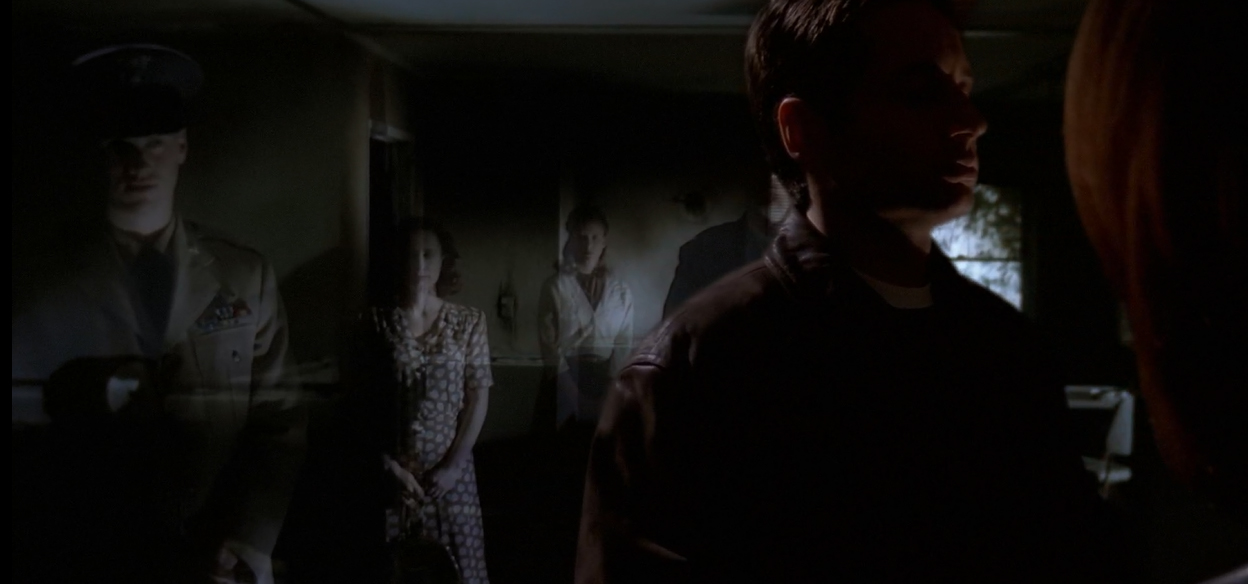
"Conscience... it's just the voices of the dead... trying to save us from our own damnation."

“Conscience… it’s just the voices of the dead… trying to save us from our own damnation.”

It is a very hopeful suggestion. It is a particularly hopeful suggestion coming at the middle of the show’s seventh season, as the resolution to Mulder’s character arc. The audience has spent seven years watching Mulder deal with the trauma of the loss of his sister, wrestling with the fear that he might never find an answer; or that he might find an answer that fails to make sense of it all. What if he found an answer that made sense of everything? What if Samantha’s disappearance wasn’t just part of a government conspiracy? What if it was part of something bigger?

What if the disappearance of Samantha Mulder meant everything?

A man alone.

A man alone.

Continue reading