• Following Us

  • Categories

  • Check out the Archives


  • Awards & Nominations

The X-Files – Travelers (Review)

This May and June, we’re taking a trip back in time to review the fifth season of The X-Files and the second season of Millennium.

For all that the fifth season of The X-Files is building towards a major summer movie release, the production team seem surprisingly relaxed about it.

The fifth season is as experimental and as loose as the show ever got. Patient X and The Red and the Black suggested that Chris Carter didn’t even feel beholden to the continuity of The X-Files: Fight the Future, introducing new characters and concepts to the mythology that could not possibly be inserted into the film at this late stage. Similarly, the show was willing to play around with special guest writers like Stephen King and William Gibson, film an entire episode in black and white, focus on relatively minor characters, and reveal two separate secret histories of the X-files.

What do you call a baby Fox?

What do you call a baby Fox?

Of course, some of these innovations were driven by necessity or large goals. Patient X and The Red and the Black represent the beginning of the end for this stage of the mythology. Stories like Unusual Suspects and Travelers focus on characters other than Mulder or Scully because David Duchovny and Gillian Anderson were otherwise engaged. Nevertheless, there is a very relaxed vibe to the fifth season, as if the show is taking an extended moment to enjoy the peak of its popularity. As well it should.

Travelers is an episode that is far from essential in many respects. It is clunky in places, indulgent in others. It feels like the production teams are just happy to root through the old costuming wardrobe and prop departments, delighted to compose over-written monologues and stock characters. Travelers is light and fun, with its indulgence and its relative lack of substance making it more enjoyable than it would otherwise be.

He'll (Garret Dilla)hunt you down...

He’ll (Garret Dilla)hunt you down…

Continue reading

The X-Files – Unusual Suspects (Review)

This May and June, we’re taking a trip back in time to review the fifth season of The X-Files and the second season of Millennium.

On the surface, Unusual Suspects looks like quite a clean little episode.

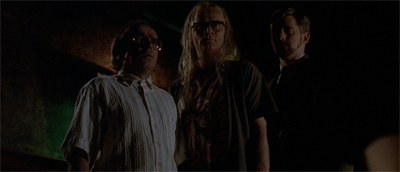
It is an obvious production save – a story thrown together when it became clear that David Duchnovny and Gillian Anderson’s commitments to The X-Files: Fight the Future meant that they would not be available to film even the shortened order of twenty episodes in the fifth season. Although Unusual Suspects aired as the third episode of the season, it was actually the first produced. With limited availability to David Duchovny, Unusual Suspects was constructed as an episode that could be built around a member (or members) of the supporting cast.

Hero shot!

Hero shot!

Five seasons in, this is not a radical concept. While Mulder and Scully are still very much the heart of the show, the supporting cast has been developed to the point where the show can turn over an episode to somebody who isn’t Mulder or Scully. The fourth season offered a glimpse of the (possible) secret history of the Cigarette-Smoking Man in Musings of a Cigarette-Smoking Man and allowed Walter Skinner to act out his own morality play in Zero Sum. After these two characters, the Lone Gunmen were likely candidates for their own episode.

As such, Unusual Suspects also works quite well as “ground zero” for the eventual development of The Lone Gunmen during the eighth season of The X-Files. It is the episode that demonstrated that the trio could carry their own story with their eccentric little dynamic, while still being engaging and exciting. Given how The Lone Gunmen turned out, a particularly cynical commentator might suggest that Unusual Suspects very much over-sold the appeal. Nevertheless, Unusual Suspects is a logical and clear step forward in the evolution of the Lone Gunman.

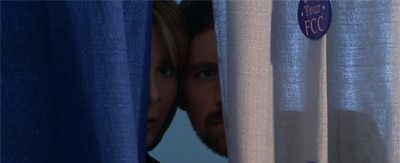
Peering through the curtain...

Peering through the curtain…

And yet, for all that these are the aspects of Unusual Suspects that generate discussion and debate, they are not the heart of the episode. What is most interesting about Unusual Suspects is the way that it allows writer Vince Gilligan to brush up against the show’s central mythology, albeit only fleetingly. Gilligan is fond of arguing that Memento Mori was his only credit on a mythology episode, but that sells Unusual Suspects rather short. Although it does not dabble directly with “black oil” or “alien bounty hunters”, it does allow Gilligan to play with the show’s big central story thread.

Unusual Suspects is not just positioned by Gilligan as the “secret origin” of the Lone Gunmen. The episode is decidedly more ambitious than all that. Without directly acknowledging it, and without explicitly coming out and saying it, Unusual Suspects presents itself as the roots of the show itself. Although nowhere near as boldly and triumphantly subversive as Jose Chung’s “From Outer Space” or Musings of a Cigarette-Smoking Man, the episode allows Gilligan to offer his own sly (and slightly stinging) commentary on the show’s central mythology.

Tonight we're gonna party like it's 1989.

Tonight we’re gonna party like it’s 1989.

Continue reading

Millennium – Sense and Antisense (Review)

This May and June, we’re taking a trip back in time to review the fifth season of The X-Files and the second season of Millennium.

Sense and Antisense is a misfire.

It is an episode with far too much going on, and no time to unpack it all. Sense and Antisense moves like a rocket ship, jumping from one crazy idea to the next crazy idea. It opens with the threat of a viral contagion, but quickly escalates into the realm of conspiracy theories and mind control. It is an episode that is almost impossible to summarise without sounding as crazy as some of the characters populating the narrative. It is unsatisfying and disjointed, but not in a way that makes those sentiments seem part of the plan.

The pupil has become the master...

The pupil has become the master…

At the same time, it is an incredibly ambitious misfire. The biggest problem with Sense and Antisense is that it tries to cram too much in there. It is constructed almost writer Chip Johannessen tried to condense down contemporary conspiracy theory into a single forty-five minute story that winds up connecting the Department of Energy to the Rwandan Genocide. There is a breathless enthusiasm to all this that would make Fox Mulder blush. As much as Sense and Antisense doesn’t work, it is hard not to admire it’s sheer gumption.

The second season of Millennium might not be the most consistent season in the history of the medium, but even its failures are bold and energetic. Sense and Antisense is not The Curse of Frank Black, Jose Chung’s “Doomsday Defense” or Luminary, but it is a far cry from something like Unrequited, Synchrony or Schizogeny.

A stain on the record...

A stain on the record…

Continue reading

The X-Files – Musings of a Cigarette-Smoking Man (Review)

This February and March, we’re taking a trip back in time to review the fourth season of The X-Files and the first season of Millennium.

“No great man lives in vain. The history of the world is but the biography of great men.”

– Thomas Carlyle, On Heroes, Hero-Worship, and the Heroic in History

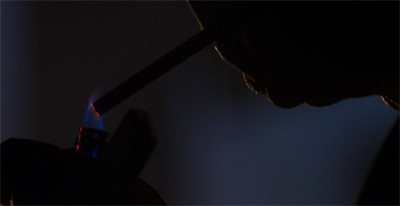
Light 'em up...

Light ’em up…

Continue reading

Non-Review Review: Red Riding – The Year of Our Lord 1974

This is the North. We do what we want.

– Craven explains how things work to Eddie

Red Riding is certainly an ambitious effort. David Peace wrote four books exploring violence and corruption in Yorkshire, centring around the morbid history of brutality in the North. Occupying a strange ethereal realm between fact and fiction, sometimes those crimes are fictionalised, but sometimes real murders and murderers intersect. The child murders of this first instalment, Red Riding: 1974, evoke the infamous Moors murders in Manchester during the sixties, while the arrest of an innocent party calls to mind the case of Stefan Kiszko. Adapting the series of four books into a trilogy of films, Red Ridingmakes for a fascinating – if gloomy – exploration of the darker pages in the region’s cultural history.

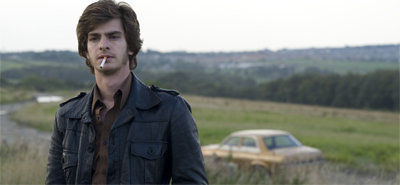
He’s gone far (Gar)field…

Continue reading

Non-Review Review: The Ghost

The Guardian once made a point that what distinguishes British writers from their American counterparts is that they simply refuse to ascribe to simplicity would could be blamed on malice:

The conspiracy theory has become an off-the-peg solution for ­writing about politics in ­Britain – to the detriment of writing, politics and Britain. If The Wire had been made here, its hero McNulty would have discovered that Baltimore’s problems were not the result of a shortsighted political culture, or the weakness of ­human ­nature, but were the fault of one property ­developer in a polo-neck.

It’s an astute observation, rendering The Ghost a very British reflection on the most turbulent legacy of a recent Prime Minister.

How will Lang keep his spirits up?

Continue reading