• Following Us

  • Categories

  • Check out the Archives


  • Awards & Nominations

420. How to Train Your Dragon – Ani-May 2025 (#198)

Hosted by Andrew Quinn and Darren Mooney, this week with special guests Deirdre Molumby and Graham Day, The 250 is a (mostly) weekly trip through some of the best (and worst) movies ever made, as voted for by Internet Movie Database Users. New episodes are released every second Saturday at 6pm GMT, with the occasional bonus episode between them.

This week, Chris Sanders’ and Dean DeBlois’ How to Train Your Dragon.

On the island of Berk, the Viking settlers have found themselves engaged in a war against dragons spanning literal generations. Hiccup, the son of the town chieftain, struggles to find his place in a community that doesn’t value his unique strengths and attributes – he wonders whether he will even be manly enough to hunt and kill dragons. However, a chance encounter with a fallen dragon named Toothless leads Hiccup to question everything that he thinks he knows about dragons.

At time of recording, it was ranked 198th on the list of the best movies of all time on the Internet Movie Database.

Continue reading

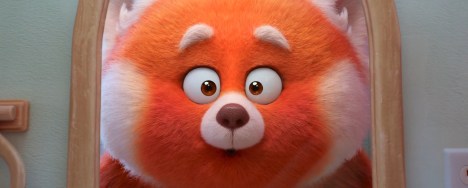
New Escapist Column! On “Turning Red”, and Cinema as an Empathy Machine…

I published a new piece at The Escapist this evening. One of the big controversies this past week has concerned the critical reception to Turning Red.

The response to the film has been overwhelmingly positive, but there was one prominent review that argued that the film was “less universal” than previous Pixar films. It is interesting to unpack that idea, to wonder what it is exactly that makes Turning Red less universal and also to interrogate the power of cinema as a medium to generate empathy. In doing so, film has the power to take something very specific and render it universal.

You can read the piece here, or click the picture below.

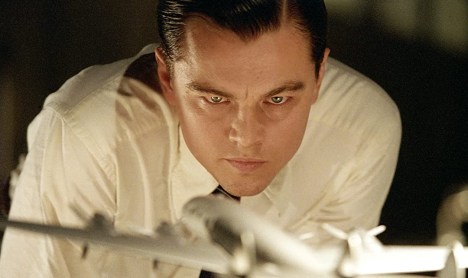
“They Are Touching Things!” The Aviator, and the Yearning for Human Contact…

I was thrilled to get back invited on The Movie Palace with Carl Sweeney to talk about Martin Scorsese’s The Aviator. It’s a film that I hadn’t watched in quite a while, and which had a much stronger impact on me than I expected. You should listen to the whole podcast conversation, but I had some thoughts I wanted to more properly articulate.

Q-U-A-R-A-N-T-I-N-E…

The Aviator is about many things.

Most obviously, it is about famous Hollywood director and aviation pioneer Howard Hughes. Hollywood had been trying for decades to bring Hughes’ life to screen. Directors like Christopher Nolan and Warren Beatty had failed to get their Hughes-related projects off the ground. Indeed, The Aviator almost feels like a work-for-hire project from Scorsese, who replaced Michael Mann as the director of this project at the behest of lead actor Leonardo DiCaprio. Having previously collaborated on Gangs of New York, The Aviator cemented Scorsese and DiCaprio’s partnership.

However, despite his late arrival on the project, The Aviator feels very much like a Martin Scorsese film. After all, the second half of the film is given over to an impassioned creator dragged out into the limelight and forced to justify a spectacular and costly failure while arguing for his exacting creative vision. This aspect of the film would undoubtedly have resonated with Scorsese, who had just come on to the project fresh from the debacle of Gangs of New York, which involving fighting with Harvey Weinstein over the cut of a movie “whose box office returns weren’t overwhelming.”

Still, there’s one aspect of The Aviator that feels much more pointed and resonant in the current context of global lockdowns and self-isolation. In a very fundamental way, The Aviator is a story about the paradox of touch. It is a story of a man who longs for human connection, but whose neuroses make that sort of connection impossible. The Aviator tells the tale of a man who locks himself away from the world, but must eventually find the strength to put himself back in it.

Continue reading