• Following Us

  • Categories

  • Check out the Archives


  • Awards & Nominations

The X-Files – Tunguska (Review)

This February and March, we’re taking a trip back in time to review the fourth season of The X-Files and the first season of Millennium.

The show’s conspiracy plot line is rapidly approaching critical mass.

It is quite clear at this point that while colonisation might have a schedule, Fox had just thrown Chris Carter’s out the window. The X-Files: Fight the Future looms large on the horizon. Indeed, Tunguska is credited to Chris Carter and Frank Spotnitz, who would end up writing the screenplay for the feature film over the Christmas break. However, while Carter had originally conceived the movie to put a cap on the television series, Fox wanted it to tie more aggressively into the series. It would not be the end of the journey, but a middle chapter.
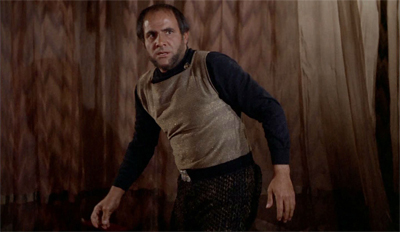
Flagging the danger...

Flagging the danger…

As such, the larger conspiracy plotline that had been gathering momentum since the end of the second season spends two years largely spinning its wheels to keep the feature film relevant. The film was written midway through the fourth season and shot in the gap between the fourth and fifth seasons. So, there is a lot of stalling required. To use the “cancer” metaphor that is cleverly (and almost subconsciously) woven through the fourth season, the central conspiracy plotline seems to go into remission for a while.

This isn’t inherently a bad thing. Indeed, the stalling allows the show to take stock and to devote space in the mythology to more personal stories like Tempus Fugit and Max or Christmas Carol and Emily. However, it also means that episodes like Herrenvolk, Tunguska, Terma and The End felt like attempts to buy time – offering the illusion of dynamism and change while only inching the plot along.
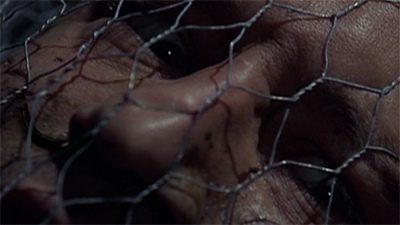
Wired up...

Wired up…

Continue reading

Star Trek: Enterprise – Civilisation (Review)

Next year, Star Trek is fifty years old. We have some special stuff planned for that, but – in the meantime – we’re reviewing all of Star Trek: Enterprise this year as something of a prequel to that anniversary. This January, we’re doing the first season. Check back daily for the latest review.

After Breaking the Ice hinted at what Star Trek: Enterprise might become, Civilisation is an episode that nudges the show right back into its comfort zone. It’s an episode of Star Trek that feels like it could have been produced for Star Trek: The Next Generation or Star Trek: Voyager, with only a minimum amount of change to the script. However, what is strangest about Civilisation is the way that it feels like a rather direct throwback to the very classic Star Trek show, serving as a tale about our hot-blooded captain fighting evil imperialist adversaries and seducing sexy alien space babes.

Of course, there’s a sense that this sense of regression is exactly what the show is aspiring towards. After all, Archer was advertised as “Captain Kirk’s childhood hero”, and it makes sense for the show to play with the classic Star Trek tropes that are regarded so affectionately by popular culture. Unfortunately, Civilisation lacks the spark and wit necessary to make such a pulpy homage work, instead feeling too much like a dull retread.

David Ickes was right!

David Icke was right!

Continue reading

Star Trek – The Omega Glory (Review)

The first Star Trek pilot, The Cage, was produced in 1964. To celebrate its fiftieth anniversary, this December we are reviewing the second season of the original Star Trek show. You can check out our first season reviews here. Check back daily for the latest review.

Gene Roddenberry is a controversial figure who casts a fairly large shadow. It is very hard to talk about Star Trek – particularly the classic Star Trek – without talking about Roddenberry’s influence and vision. Roddenberry was fond of myth-making when he was alive, of playing up his own contributions to Star Trek while marginalising or dismissing the other people who shaped or defined the franchise.

Roddenberry is a polarising figure among fans and critics, insiders and outsiders. To some, Roddenberry was the man who created Star Trek. While this doesn’t immunise him against criticism, it does provide a sense of context – whatever sins he may have committed and whatever faults he may have had must be offset against that. To others, Roddenberry was prone to exaggerate his accomplishments at the expense of people like David Gerrold or Gene L. Coon who shaped the franchise just as much as (if not more than) he did.

Flagging trouble ahead...

Flagging trouble ahead…

While those are two extremes, they are not the only possible views of Roddenberry. There are a broad range of opinions that might be offered, and not all of them are mutually exclusive. Ask a dozen people who know their Star Trek about Roddenberry, and are likely to come up with a dozen nuanced and defensible positions on the man and his legacy. Nobody seems entirely what to make of Roddenberry and his creative contributions to the franchise.

The Omega Glory is an interesting episode, one that invites as much debate as any of Roddenberry’s contributions to the franchise.

A strong constitution to make it through this one...

A strong constitution to make it through this one…

Continue reading

Star Trek – A Piece of the Action (Review)

The first Star Trek pilot, The Cage, was produced in 1964. To celebrate its fiftieth anniversary, this December we are reviewing the second season of the original Star Trek show. You can check out our first season reviews here. Check back daily for the latest review.

A Piece of the Action is the last script credited to Gene L. Coon.

Of course, Coon would write two episodes for (and contributed two more stories to) the show’s troubled final season under the alias Lee Cronin. However, A Piece of the Action could be seen as the last hurrah for Gene L. Coon’s vision of Star Trek. The writer and producer had helped to shape and define many of the ideas that Star Trek fans take for granted. A lot of the core Star Trek ideas that have permeated into popular culture – the Federation, the Klingons – originated with Coon.

Dey call his Boss Koik...

Dey call him Boss Koik…

While Coon is often overlooked when it comes to crediting those responsible for creating Star Trek as fans have come to know it, history has tended to gloss over his wry subversive streak. In many ways, Coon could be said to be the godfather of Star Trek: Deep Space Nine. Had he not passed away at the tragically young age of forty-nine, Coon might have been coaxed back to write a first season episode of Deep Space Nine alongside Dorothy Fontana. Coon was, after all, the first Star Trek writer to shrewdly and knowingly problematicise the Federation.

So it feels appropriate that the last Star Trek script credited to Coon should have Kirk proposes the Federation as an intergalactic racket.

Top gun...

Top gun…

Continue reading

Star Trek – The Trouble With Tribbles (Review)

The first Star Trek pilot, The Cage, was produced in 1964. To celebrate its fiftieth anniversary, this December we are reviewing the second season of the original Star Trek show. You can check out our first season reviews here. Check back daily for the latest review.

This is a classic.

The Trouble With Tribbles is an episode that can make a legitimate claim to being the best episode of Star Trek, if not the best episode of the entire franchise. It is a genuine classic in countless ways, perfectly embodying so much of what makes Star Trek classic and iconic and loved. David Gerrold’s script, polished by Gene Coon, is easily the best comedy episode that the franchise has ever produced, but never at the expense of the show’s credibility. The Trouble With Tribbles may be silly, but it is also very clever and insightful.

Nobody knows the Tribbles I've seen...

Nobody knows the Tribbles I’ve seen…

Continue reading

Star Trek – Friday’s Child (Review)

The first Star Trek pilot, The Cage, was produced in 1964. To celebrate its fiftieth anniversary, this December we are reviewing the second season of the original Star Trek show. You can check out our first season reviews here. Check back daily for the latest review.

Errand of Mercy was a highlight of the first season. A wry script from producer Gene L. Coon introduced the Klingons as an antagonist for the Federation. Made up to look like space!Mongols, the Klingon Empire was presented as an imperial force hell-bent on expanding its sphere of influence. In case the parallels were a little too subtle, they were locked in a Cold War with the Federation. As such, they were the perfect stand-ins for Communist aggressors trying to undermine American foreign policy.

Of course, Errand of Mercy was brutally cynical in its depiction of the Federation. The episode suggested quite heavily that the Federation was just as imperialist and adversarial as the Klingons. They might couch their foreign policy in friendly language and polite overtures, but their end goals are quite similar. Smaller political entities are nothing but pieces shuffled around a board in a deadly game of chess. Errand of Mercy was not flattering in its portrayal of Kirk, presenting him as little more than a warmonger.

"Damn dirty Klingon!"

“Damn dirty Klingon!”

Errand of Mercy was a massive success. It remains a fan favourite to this day. In some respects, that is due to the introduction of the Klingons, but it is also an exceptional hour of scripted science fiction. So it makes sense that the show would return to the Klingons when it was renewed for a second season. Friday’s Child was the third episode produced during the second season, and returns to quite a few themes hit on by Errand of Mercy. Those themes would recur.

Friday’s Child demonstrates the obvious risks of an episode like Errand of Mercy. It’s an episode that essentially takes the “Klingons as space!Communists” seriously.

We come in peace...

We come in peace…

Continue reading

The X-Files – Død Kälm (Review)

This August (and a little of September), we’re taking a trip back in time to review the second season of The X-Files. In November, we’ll be looking at the third season. And maybe more.

Død Kälm is probably the most explicitly “science-fiction-y” premise that we’ve had in the show’s run to date. And by “science-fiction-y”, I don’t necessarily mean “anchored in any meaningful science.” After all, the amount of sense that Død Kälm makes is questionable at best. Instead, the term “science-fiction-y” means “most likely to pop up in a pulpy science-fiction television show.”

The past few episodes have seen the show on a bit of a science-fiction kick, with clones and colonists and invisible abducted zoo animals. However “accelerated aging” is such a science-fiction staple that it feels like The X-Files is enthusiastically embracing science-fiction conventions at this point in the second season.

Old school...

Old school…

Continue reading

Star Trek: Phase II (1978) – Kitumba, Parts I & II (Review)

This January and February, we’ll be finishing up our look at the second season of Star Trek: The Next Generation and moving on to the third year of the show, both recently and lovingly remastered for high definition. Check back daily for the latest review.

We’ll be supplementing our coverage of the episodes with some additional materials – mainly novels and comics and films. This is one such entry.

Sins of the Father represented Star Trek‘s first venture to the Klingon home world, and the franchise’s first truly in-depth exploration of Klingon culture and values. Of course, there was precedent for this. John Ford’s rather wonderful novel, The Final Reflection, offered a glimpse into Klingon heritage and tradition in 1984. However, it’s interesting to think that we may have been offered an on-screen exploration of the Klingon Empire much earlier, had the planned Star Trek: Phase II ever gone to air.

Written by John Meredyth Lucas, a veteran of the classic Star Trek show, Kitumba would have aired as a two-part adventure in the first season of the aborted Star Trek: Phase II series. Not only were thirteen episodes plotted and outlined, most were also scripted – allowing a glimpse at what might have been. An early look at the workings of Klingon culture, Kitumba is obviously radically different from the version of Klingon society that developed and evolved on Star Trek: The Next Generation and Star Trek: Deep Space Nine.

However, it remains a fascinating look at what might have been.

kitumba

Continue reading

Star Trek: The Lost Era – Well of Souls by Ilsa J. Bick (Review)

This November and December, we’ll be finishing up our look at the second season of Star Trek: The Next Generation and moving on to the third year of the show, both recently and lovingly remastered for high definition. Check back daily for the latest review.

We’ll be supplementing our coverage of the episodes with some additional materials – mainly novels and comics and films. This is one such entry.

Well of Souls is a story of the Enterprise-C, the ship introduced in Yesterday’s Enterprise. One of the best-received episodes in the history of Star Trek: The Next GenerationYesterday’s Enterprise established Rachel Garrett’s ship as the troubled Enterprise, the tragic flagship, the doomed space craft. Ilsa J. Bick builds on that characterisation in Well of Souls, one small story from some point in Garrett’s command of the Federation flagship.

While Well of Souls feels like a rather unconventional Star Trek novel, it is charming in its own way. Bick connects her tale to the themes of Well of Souls, suggesting a troubled ship manned by a struggling crew. The novel returns time and again to the theme of unfortunate choices, the weight of making the best decision of the options open. Unlike Kirk or Picard, Bick seems to suggest, this version of the iconic starship doesn’t get that many lucky breaks, with her crew repeatedly forced to accept the least bad of a selection of unappetising choices.

Well of Souls is  a thoughtful, introspective piece. It doesn’t flow or pace itself as well as it might, but Bick crafts a compelling picture the never-the-less. While not quite the best of the Lost Era tie-in novels, it’s ambitious and insightful. It lacks the energy of Serpents Among the Ruins or The Art of the Impossible, but it’s still a very worthy read for anybody looking to sketch out a gap in the Star Trek mythos.

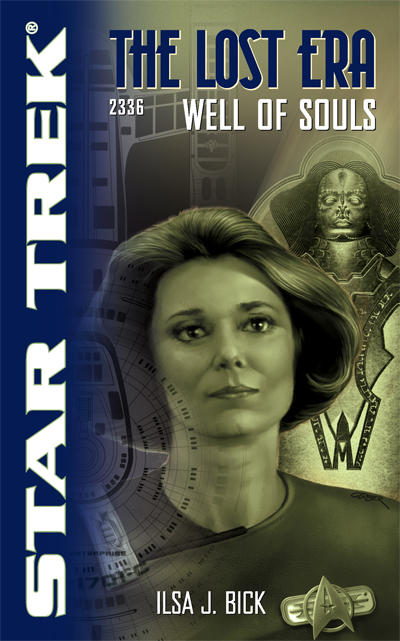
tng-wellofsouls

Continue reading

Star Trek: The Next Generation – The Hunted (Review)

This January and February, we’ll be finishing up our look at the second season of Star Trek: The Next Generation and moving on to the third year of the show, both recently and lovingly remastered for high definition. Check back daily for the latest review.

The Hunted is a piece of allegorical Star Trek. Like The Defector before it, there’s a sense that the show is a little behind the curve – that it’s really dealing with issues that aren’t at the peak of their relevance. The Cold War with the Romulans felt like a bit of a throwback in the era of glasnost, and the ghosts of Vietnam raised by The Hunted feel like echoes of a national debate that had already taken place in the mid- to late-eighties.

And yet, despite that, it works. Like The Defector, there’s a sense that The Next Generation is distant enough from the issue that it can engage objectively. The treatment of Jarok in The Defector or Roga Danar in The Hunted feels infinitely more nuanced and sophisticated than the portrayal of Finn in The High Ground, when The Next Generation was rather consciously trying to engage with a more relevant and topical issue.

Effectively The Next Generation‘s Vietnam story, The Hunted serves as a startlingly effective piece of television. It might be the best action-driven episode of the show to date.

Keep soldiering on...

Keep soldiering on…

Continue reading