• Following Us

  • Categories

  • Check out the Archives


  • Awards & Nominations

The X-Files (Topps) #13 – One Player Only (Review)

This November (and a little of December), we’re taking a trip back in time to review the third season of The X-Files and the first (and only) season of Space: Above and Beyond.

After a twelve-issue opening mega-arc of interconnected stories about conspiracies-within-conspiracies and wheels-within-wheels, author Stefan Petrucha and artist Charles Adlard step back a little bit to close out their run with a series of standalone stories. The four issues (and three stories) that make up the rest of their run on Topps’ X-Files comic stand alone. They are connected by themes and subtext, but very clearly stand apart from what came before. Indeed, they play out almost like a postscript to the main body of work, a series of smaller bite-sized chunks.

In that light, it is interesting that One Player Only feels – superficially, at least – a lot more in step with the television show. The early issues of the comic had seen Petrucha and Adlard creating their own supporting cast and their own conspiracy, so as to avoid stepping on the toes of the production company. The Cigarette-Smoking Man was largely reduced to a number of cameos, with Skinner popping up once or twice along the way.

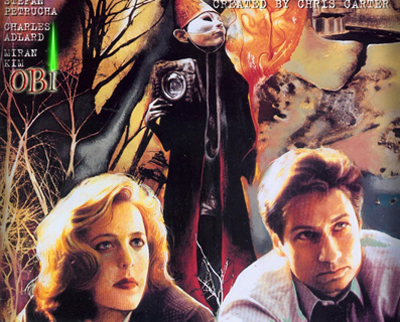
Ghosts in the machines?

Ghosts in the machines?

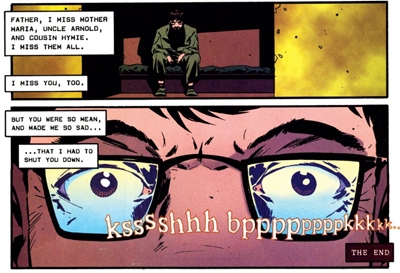
Not only does One Player Only feature a guest appearance from supporting characters like Mr. X or yhe Lone Gunmen, it also harks back to the structure and format of the first season of the show. On the most basic of levels, One Player Only feels like a more cyberpunk take on Ghost in the Machine, right down to the fact that Mulder is drawn into a murder at a tech company by an acquaintance from his days in the Violent Crimes Division. At one point, Mulder and Scully stumble on a ransacked house, for Mulder to deadpan, “Hm. Nothing new.”

However, if one peels back the layers, One Player Only is a fascinating piece that sets the tone for Petrucha and Adlard’s last three issues on the series, while infusing the comic with a host of fascinating cyberpunk stylings and body horror that seem to call forward to William Gibson’s future writing for the show.
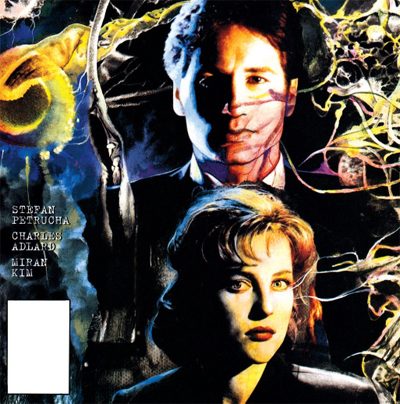
Coding out...

Coding out…

Continue reading

The X-Files (Topps) – The Pit (Review)

This November (and a little of December), we’re taking a trip back in time to review the third season of The X-Files and the first (and only) season of Space: Above and Beyond.

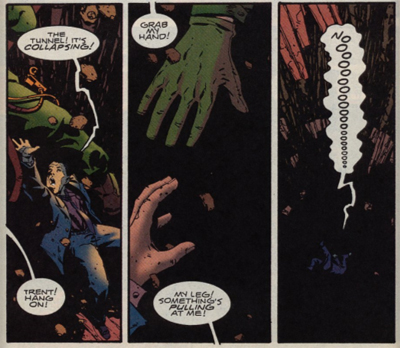
Tucked away in the Winter 1996 issue of The X-Files Magazine and republished with The Silent Sword in September 1996, The Pit is an atmospheric short story from Petrucha and Adlard, demonstrating the two work quite well together across a variety of formats. The Pit is only nine pages long, including two splash pages – and another half-page splash. There isn’t a lot of room for plot or detail. Instead, Petrucha and Adlard opt for mood and atmosphere, crafting a weird and spooky little diversion.

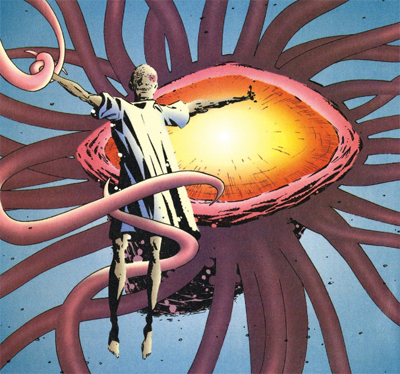
All fall down...

All fall down…

Continue reading

The X-Files (Topps) Digest #1 – Big Foot, Warm Heart (Review)

This November (and a little of December), we’re taking a trip back in time to review the third season of The X-Files and the first (and only) season of Space: Above and Beyond.

It is very odd to think that The X-Files has never done an episode about Bigfoot, perhaps America’s most recognisable and iconic mythological figure.

Perhaps there’s a reason for this. The show did a Bigfoot-type creature early in its first season, with The Jersey Devil. The fifth episode of the first season, The Jersey Devil helped to solidify the impression that The X-Files was better at abstract horrors than familiar monsters. It is not too difficult to imagine that the production team looked at The Jersey Devil and decided that Bigfoot was unlikely to be a runner.

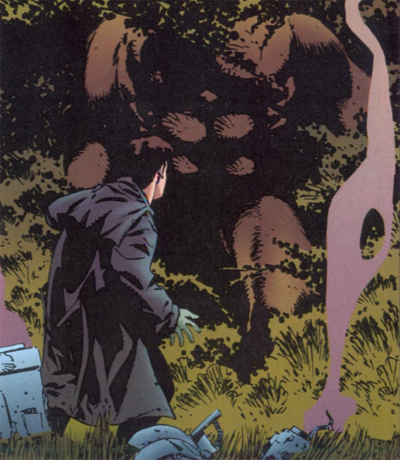
Here there be monsters...

Here there be monsters…

Still, the show has waded into cryptozoology on occasion – with somewhat mixed results. Quagmire featured the agents hunting a mysterious reptile in a rural lake. When the show had to relaunch itself during the eighth season, Scully and Doggett bonded over their pursuit of a giant bat-like creature in Patience, the first standalone episode within that new status quo. Even Bigfoot was frequently referenced and cited. Most obviously, the final montage of Jose Chung’s “From Outer Space” suggests that Mulder treats the Roger Patterson footage as an almost holy text.

Perhaps it’s appropriate, then, that Mulder and Scully would come face to face with Bigfoot in the pages of the licensed tie-in, as part of the “digest” that Topps released at the end of their first year publishing the comic.

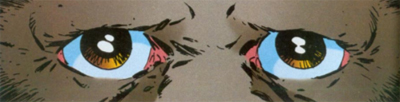
Eye see...

Eye see…

Continue reading

The X-Files (Topps) #10-12 – Feelings of Unreality (Review)

This November (and a little of December), we’re taking a trip back in time to review the third season of The X-Files and the first (and only) season of Space: Above and Beyond.

Feelings of Unreality marks the end of Stefan Petrucha and Charles Adlard’s first year on Topps’ licensed X-Files comic book.

It also marks the end of their extended arc. It became clear around six issue into their run that Petrucha and Adlard were really just telling one large and expansive story that could be broken down into small bite-sized chunks. From Not To Be Opened Until X-Mas through A Dismembrance of Things Past through Firebird and Silent Cities of the Mind, these were all separate pieces of a larger puzzle waiting to be fitted together. Feelings of Unreality marks a conclusion to this ambitious and expansive arc.

Slightly unreal...

Slightly unreal…

What has been fascinating about Petrucha and Adlard’s run on The X-Files comic book as been the way that the team has adapted the show’s format to fit within this distinct medium. Writing a tie-in like this, it would would be very tempting to do “a television episode, in comic book form!” There’s a very serious argument to be made that the comics would be pushed in that direction after Petrucha departed. However, there’s something much more compelling about a story that takes advantage of its own medium, rather than offering a flat imitation of another.

For all its flaws, Feelings of Unreality – like Petrucha and Adlard’s epic Firebird before it – feels like a comic book story. It’s pulpy, exciting, ambitious, expansive, silly. And just a little brilliant.

Lift me up...

Lift me up…

Continue reading

The X-Files (Topps) #8-9 – Silent Cities of the Mind (Review)

This November (and a little of December), we’re taking a trip back in time to review the third season of The X-Files and the first (and only) season of Space: Above and Beyond.

Silent Cities of the Mind is a very “comic book” story – it’s a story that might easily seem outlandish or ridiculous if committed to film, but which works very well within its medium. After all, the plot centres around a bunch of ancient Aztec priests who built an elaborate underground city that could project itself above ground as a mirage. Indeed, the story seems to accept this as a given, with Scully instead spending most of the adventure questioning whether memories can be transmitted via cannibalism.

It’s a concept that could easily seem ridiculous, and it’s a testament to writer Stefan Petrucha and artist Charles Adlard that it works as well as it does. Silent Cities of the Mind is a decidedly pulpy adventure, but that lends the story an undeniable charm. It’s a story packed to the brim with clever and fascinating ideas – from ancient aliens to ritual cannibalism to hidden cities to crystal skulls. All this is crammed tightly into two issues, meaning that everything moves so fast there’s no real time to stop and nitpick it all.

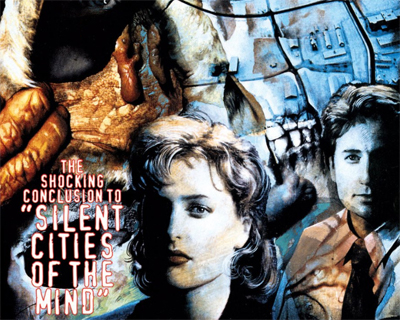
It's all in the mind...

It’s all in the mind…

Mulder is negotiating with survivalists! There are memories transferred through the act of ritual cannibalism! Mulder and Scully are shot down over Alaska! Mulder is trapped with a cannibal! There’s a hidden Aztec city buried underground! Mulder has discovered ancient Aztec mythology! There’s an army rescue team that isn’t a rescue team! There’s a macguffin that allows its wearer to commune with the gods! There’s a stand-off!

It’s all rather exhausting, but in a fun and exciting sort of way. Silent Cities of the Mind is perhaps the best example of how Petrucha and Adlard were writing The X-Files as a comic book, positioning the show’s tropes and iconography within the framework of comic book conventions.

Bonfire of the vanities...

Bonfire of the vanities…

Continue reading

The X-Files (Topps) – Circle Game (Review)

This November (and a little of December), we’re taking a trip back in time to review the third season of The X-Files and the first (and only) season of Space: Above and Beyond.

There are any number of events that suggest The X-Files was on the cusp of exploding into a phenomenon. The show was spawning conventions and merchandise. It was becoming a hot property in international markets, moving from BBC 2 up to BBC 1 and then across to Sky. It was quickly becoming compelling water-cooler television. The first season had been lucky to avoid cancellation. The second season had rocketed up the ratings. The third was going to be a pretty big deal.

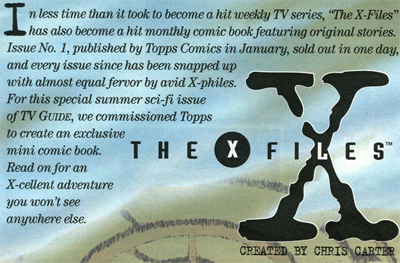
In light of all of this going on around it, a five-page comic doesn’t seem like that big a deal. Written by Stefan Petrucha and illustrated by Charles Adlard, Circle Game would almost seem as business-as-usual for Topps’ popular X-Files tie-in comic. The only significant difference was that Circle Game had been written and illustrated specifically for the July 15th issue of TV Guide. As part of their “stellar summer sci-fi issue!”, the magazine had given over five pages to Petrucha and Adlard to tell an entire X-Files story.

X marks the spot...

X marks the spot…

Even ignoring the narrative challenges posed by such an assignment, that’s a pretty big deal. Even in the age of the internet, time-shifted viewing and multi-channel television, TV Guide still has a circulation of over two million readers. To give a sense of scale, the biggest-selling contemporary comic books would have a readership of less than a tenth of that. To give it a more relevant sense of scale, the July 1995 issue of The X-Files comic book – the version on the stands at this point – sold approximately 72,000 copies.

All of this is just to stress that giving The X-Files comic book five pages of TV Guide was a pretty big deal.

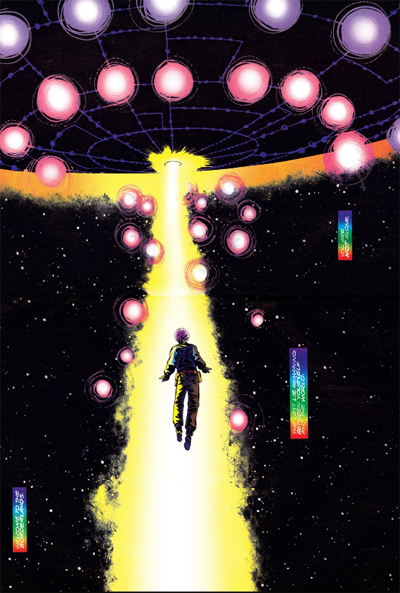
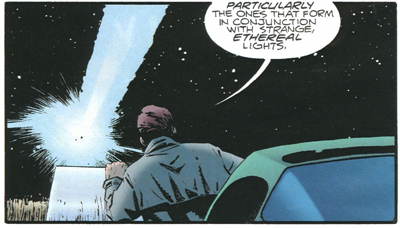
Lights in the sky...

Lights in the sky…

Continue reading

The X-Files (Topps) Annual #1 – Hallow Eve (Review)

This August (and a little of September), we’re taking a trip back in time to review the second season of The X-Files. In November, we’ll be looking at the third season. And maybe more.

No matter how you cut it, the creative team of Stefan Petruscha and Charles Adlard were prolific. The duo only worked on The X-Files comics book for seventeen months between January 1995 and May 1996, but they put out a phenomenal amount of work. On top of sixteen issues of the monthly series, there were also two digests, a number of short stories and an annual. In most cases, some of this work would be outsourced to another creative team, but Petrucha and Adlard remain the creative team for Topps’ X-Files comic.

While this undoubtedly required a great deal of creative energy from Petrucha, churning out scripts on a regular basis, it is worth pausing to praise artist Charles Adlard. These days, for a variety of reasons, it seems that major comic book artists have difficulty producing twelve twenty-odd-page issues in a year. Not only was Adlard able to meet that objective, he was able to do that while drawing a large volume of supplementary material, including this feature-length annual.

All about Eve...

All about Eve…

It’s remarkable how consistent it all is. One of the advantages of a tie-in comic book with a steady creative theme is that there’s a much clearer authorial voice. Although Chris Carter oversaw the production of The X-Files, the demand of weekly network television mean that some episodes got more attention than others, and that particular voices tend to shine through. Darin Morgan writes his own version of The X-Files, as do Glen Morgan and James Wong or Howard Gordon or Vince Gilligan. (This isn’t a bad thing, by the way.)

On a comic, with all the issues written by the same author and illustrated by the same artist, there is a bit more consistency. Even though Hallow Eve is a stand-alone one-shot story that exists quite separate to Petrucha and Adlard’s twelve-issue meta-arc, it fits quite comfortably with their themes and subtexts. It’s an episode about history and memory, and perception and reality.

Shocking...

Shocking…

Continue reading

The X-Files (Topps) #7 – Trepanning Opera (Review)

This August (and a little of September), we’re taking a trip back in time to review the second season of The X-Files. In November, we’ll be looking at the third season. And maybe more.

Trepanning Opera is something of a one-shot story, albeit the story where Stefan Petrucha begins to concede that his first year writing The X-Files tie-in comic is really one single long-form story. Initially, Trepanning Opera looks like a standard monster-of-the-week (or perhaps that should be “monster-of-the-month”) story, only to eventually reveal that the connections to the rest of Petrucha’s run are more than simply thematic in nature. “Everything is connected, Mulder,” his contact assures him. “Everything.”

Head's up...

Head’s up…

Continue reading

The X-Files (Topps) #4-6 – Firebird (Review)

This August (and a little of September), we’re taking a trip back in time to review the second season of The X-Files. In November, we’ll be looking at the third season. And maybe more.

Firebird is the first multi-part story told in the pages of The X-Files. Writer Stefan Petrucha and artist Charles Adlard don’t transition from done-in-one stories to two-part adventures, instead skipping the middle step and producing a three-issue epic. While A Little Dream of Me exposed the limitations facing a creative team working on a tie-in, Firebird demonstrates the strengths of the format. Spanning from Siberia to New Mexico, Firebird has an epic scale that would not be possible on the second season of The X-Files.

(Rather interestingly – and perhaps tellingly – Petrucha takes the comics to places that the show wants to go. The American South-West would be very difficult to replicate in Vancouver, prompting the creative team to make an ambitious effort to bring Mulder and Scully to New Mexico in Anasazi, infamously painting a quarry red to achieve the desired result. The show would wait until the fourth season before it was confident enough to take Mulder to Siberia in Tunguska and Terma.)

Something out of this world?

Something out of this world?

As with Not To Be Opened Until X-Mas, Firebird is very much a comic book story. While the show was reluctant have Mulder and Scully directly encounter aliens, the story features a monster that looks like something from the Lovecraft mythos. While the stakes on the show were generally rather personal to this point, Firebird puts the entire population of New Mexico (if not the world) at stake. While the series took its time revealing its evil conspiracy, Firebird gives us a cabal headed by a monologuing skull-holding would-be supervillain.

Perhaps surprisingly, this works. It’s clear that Petrucha and Adlard are aware that they are working in a different medium with different expectations and conventions. Firebird is very much an X-Files comic book epic, a story that couldn’t be realised on film. And there’s something very endearing about that.

Alien affairs...

Alien affairs…

Continue reading

The X-Files (Topps) – Trick of the Light (Review)

This August (and a little of September), we’re taking a trip back in time to review the second season of The X-Files. In November, we’ll be looking at the third season. And maybe more.

The X-Files tie-in comic book was a massive success for Topps. It’s interesting to note the amount of cross-promotion that went into the comic. Factoring in short stories and tie-ins and annuals and other obligations, the output from writer Stefan Petrucha and Charles Adlard was nothing short of astounding. Topps worked very hard to promote the book, an approach that paid off – the comic would frequently appear in Diamond’s top 100 and was the publisher’s most successful monthly book.

Trick of the Light was a short twelve-page comic that was published as part of the The X-Files/Hero Illustrated Special, featuring an interview with Petrucha and packaged with Hero Illustrated #22 in March 1995. It was something of a glorified advertising gimmick, but one that demonstrates the popularity of the comic in question.

Don't go into the light!

Don’t go into the light!

Continue reading