• Following Us

  • Categories

  • Check out the Archives


  • Awards & Nominations

The X-Files: Season 10 (IDW) #10 – More Musings of a Cigarette-Smoking Man

This June, we’re going to be taking a look at the current run of The X-Files, beginning with the IDW comic book revival and perhaps taking some detours along the way. Check back daily for the latest review.

More Musings of a Cigarette-Smoking Man is certainly an ambitious story.

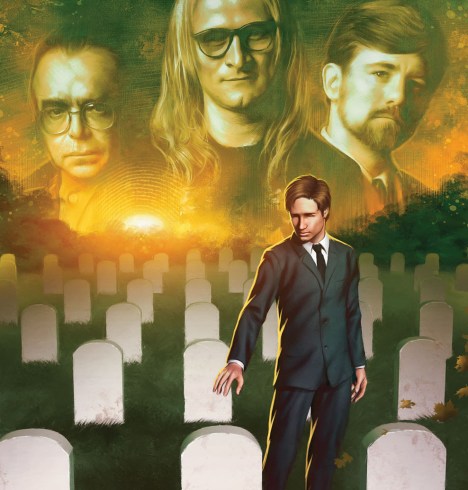
As the title suggests, writer Joe Harris and artist menton3 position this one-shot as a spiritual sequel to Musings of a Cigarette-Smoking Man, the controversial fourth season episode written by Glen Morgan and directed by James Wong. Musings of a Cigarette-Smoking Man offered a window into the past of the Cigarette-Smoking Man, a possible glimpse of who he had been and how he had come to be. It was also one of the most consciously stylised and ambiguous episodes in the entire nine-year run of the show.

Wheels within wheels.

Wheels within wheels.

Writing a spiritual sequel to that classic episode is a bold decision from the creative team. As with a lot of the big creative decisions concerning The X-Files: Season 10, More Musings of a Cigarette-Smoking Man seems too focused on the past. There is a sense that the monthly series is a little too beholden to what came before, too rooted in continuity, too dedicated to revisiting the iconography of the series. Writing a single-issue standalone story positioned as a sequel to on of the most unique episodes of the original run only emphasises this unease.

And, yet, in spite of these legitimate concerns, More Musings of a Cigarette-Smoking Man works reasonably well. It is indulgent and obsessive, but it is also rich and mysterious. It is disjointed and uneven, but that feels like the point. In keeping with the spirit of Musings of a Cigarette-Smoking Man, it feels like More Musings of a Cigarette-Smoking Man is a reflection on the comic book itself. This is a comic book contemplating its own identity and purpose, even as it finds itself being made redundant.
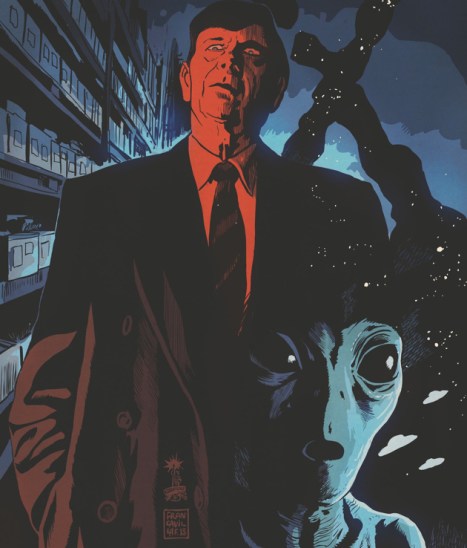
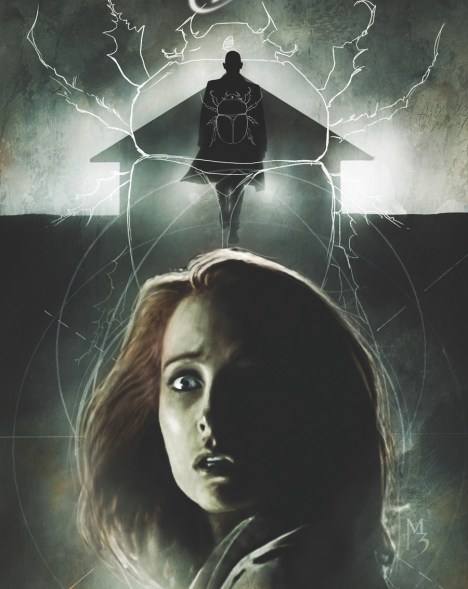
X marks the spot.

X marks the spot.

Continue reading

The X-Files: Conspiracy (IDW) (Review)

This June, we’re going to be taking a look at the current run of The X-Files, beginning with the IDW comic book revival and perhaps taking some detours along the way. Check back daily for the latest review.

IDW is quite different from Topps and Wildstorm, the two prior comic book companies to hold the license for The X-Files.

Part of that simply reflects changes in the comic book industry over time, with a greater fixation on concepts like shared universes and continuity, along with an increased emphasis on the importance of “the canon.” Part of that is simply down to the way that IDW operates as a publisher. The company is the fourth-largest comic book publisher in America, behind Marvel, DC and Image. While the company publishes a number of creator-owned properties, its success has largely been based around licensing properties.

A mutant phenomenon...

A mutant phenomenon…

In doing so, the company has adopted a model quite close to that of Marvel or DC. It tends to organise its books around these properties in the same way that Marvel or DC might organise themselves around the so-called “families.” Much like books like Detective Comics, Nightwing or Batgirl are considered part of the “Batman” family or books like Wolverine, Namor and X-Force fall under the X-Men banner, IDW tends to group its books into familiar families based around licensed properties. Transformers, G.I. Joe, Teenage Mutant Ninja Turtles.

It is not uncommon for each of those lines to support multiple books. For example, the company would publish a number of miniseries as companion pieces to their monthly Star Trek or Doctor Who comics. The same would be true of The X-Files: Season 1o, with the company publishing a number of tie-in books around that. Year Zero and Millennium are the most obvious example, providing the company with the opportunity to publish several branded X-Files books within the same month.

I bet super soldiers wish that they could do this.

I bet super soldiers wish that they could do this.

At the same time, the company engages with its properties in much the same way that Marvel or DC might. Marvel and DC tend to fall into a pattern of massive so-called “events” that serve to draw particular books away from their own internal narratives and towards a more “epic” story. Civil War focused on a fight between Captain America and Iron Man, but crossed over into over one hundred comic book issues published over seven months. There are countless other examples, from House of M to Crisis on Infinite Earths to Siege to Final Crisis.

IDW has organised several of its own blockbuster events to tie together its own licensed properties; Infestation and and Infes2ation come to mind. To celebrate the landing of the license, it was decided that the 2014 crossover would be themed around The X-Files. It is just a shame that the result was terrible.

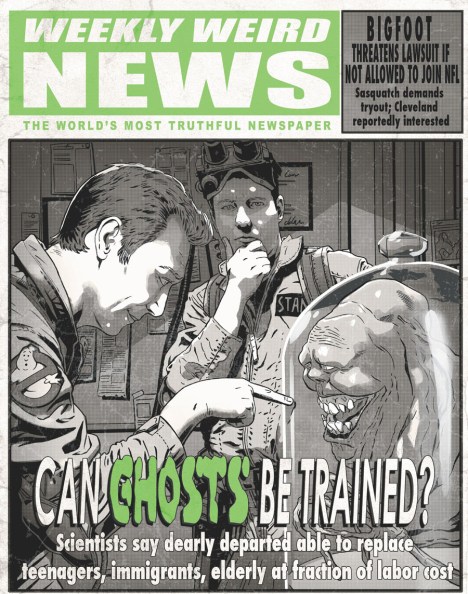
We ain't afraid of no ghosts...

We ain’t afraid of no ghosts…

Continue reading

The X-Files: Season 10 (IDW) #9 – Chitter (Review)

This June, we’re going to be taking a look at the current run of The X-Files, beginning with the IDW comic book revival and perhaps taking some detours along the way. Check back daily for the latest review.

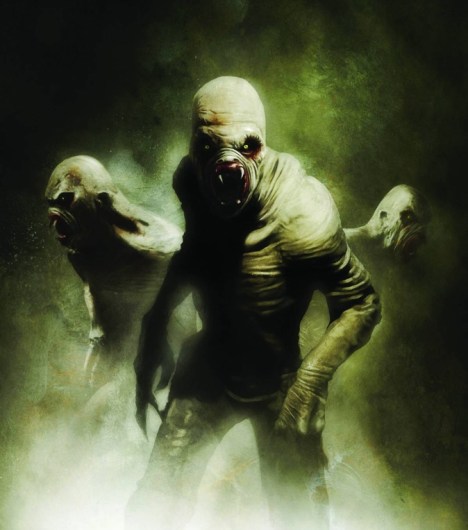
Chitter is an interesting single-issue story.

In many ways, Chitter feels very much like a throwback. It is a “monster of the week” story, the first such story to be written by Joe Harris focusing on an original creation. In fact, Harris acknowledged as much on his blog, remarking, “It’s my first, original ‘Monster of the Month’ (a term I’m taking sole credit for) story and it’s utterly disgusting, I’m sorry.” Although the plot includes a few nods towards the overarching themes of The X-Files: Season 10, the story stands almost completely alone. It would be possible to skip the issue entirely without missing much of importance.

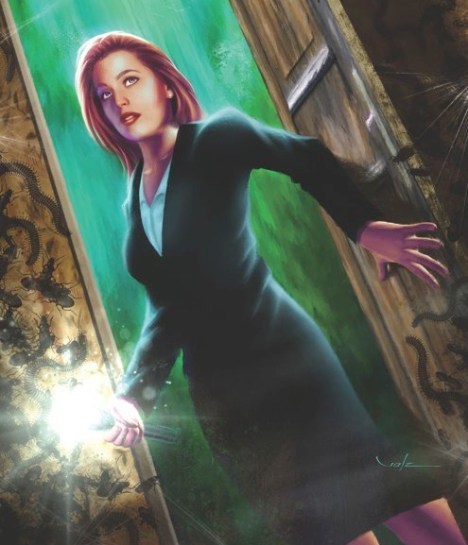
Bugging out...

Bugging out…

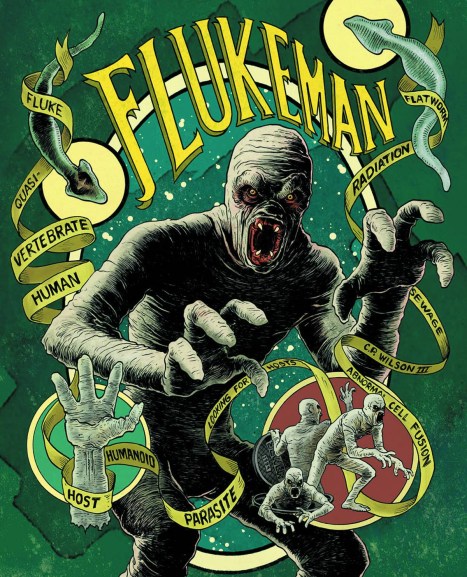
This is very much an oddity in terms of The X-Files: Season 10, a monthly comic book series that has been very focused on the mythology and continuity of The X-Files. The first eight issues of the series were given over to threads dangling from the original show, whether the continuation of the mythology in Believers or the fate of the Fluke Man in Hosts or the origin of Mister X in Being for the Benefit of Mister X. This is the first time that the comic book has told a story that feels self-contained and truly standalone.

There is something very refreshing in that, with Harris constructing a story that feels very much in keeping with the tone and mood of The X-Files without relying on specific details. In many ways, it feels more like a classic episode than any of the previous issues. More than that, it actually feels very much like one of the early X-Files comics written for Topps by writers like Stefan Petrucha or John Rozum. It is a very strong piece of work.

Crawl good...

Crawl good…

Continue reading

The X-Files: Season 10 (IDW) #8 – Being for the Benefit of Mr. X (Review)

This June, we’re going to be taking a look at the current run of The X-Files, beginning with the IDW comic book revival and perhaps taking some detours along the way. Check back daily for the latest review.

Being for the Benefit of Mr. X is effectively another origin story, following on from Hosts.

While Hosts explained exactly how the Fluke Man came to be, and even gave the character tangible motivation, Being for the Benefit of Mr. X is largely driven by flashbacks that proceed to explain and elaborate upon Mulder’s second informant. Mister X has long been one of the franchise’s most interesting and underdeveloped character, in part owing to the fact that the show fleshed out very little about him and in part due to Steven Williams’ performance. While the show revealed a lot about Deep Throat or the Cigarette-Smoking Man, Mister X remains a mystery.

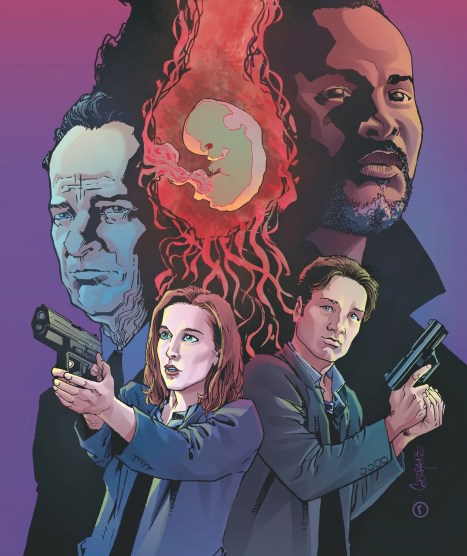
Marking the spot.

Marking the spot.

The question, of course, is what this actually adds to the story being told. It is fun to revisit the origin of Mister X, but he is very much an outdated concern at this point in the show’s life. In fact, the character’s last appearance was in flashback in Unusual Suspects at the start of the fifth season, following his death in Herrenvolk at the start of the fourth season. Unlike the Cigarette-Smoking Man, Mister X was never literally resurrected. Unlike Deep Throat, he never turned up to haunt Mulder in episodes like The Blessing Way or The Sixth Extinction II: Amor Fati.

It is not as if writer Joe Harris has constructed a particularly compelling origin story for Mister X. The story told in Being for the Benefit of Mr. X is solid and sturdy, integrating quite smoothly with the continuity of the show and the character as we understand it. However, there are no real surprises or tangents, no twists or surprises. Being for the Benefit of Mr. X is a solid “done in one” story. It just feels a tad unnecessary.

In too Deep (Throat)...

In too Deep (Throat)…

Continue reading

The X-Files: Season 10 (IDW) #6-7 – Hosts (Review)

This June, we’re going to be taking a look at the current run of The X-Files, beginning with the IDW comic book revival and perhaps taking some detours along the way. Check back daily for the latest review.

Balance was always going to be an issue for The X-Files: Season 10, even in a purely logistical sense.

At its peak, The X-Files was churning out twenty-six episodes in a season. Of those, maybe a third would be mythology episodes and the rest would be standalone monster of the week stories. As a result, the show could find the time to balance earth-shaking mythology episodes like Paper Clip, Nisei, 731 and Talitha Cumi with brilliant episodic television like Clyde Bruckman’s Final ReposeOublietteGrotesquePusher and Jose Chung’s “From Outer Space.” Part of the appeal of The X-Files was always striking that balance.

No Fluke.

No Fluke.

That is not really possible with a conventional comic book release schedule. Comic books are released once a month, limiting the creative team to twelve issues in a given year. They might also get an annual, if the comic is popular. Given modern comic book narrative conventions and the lower page counts of modern comics, “done-in-one” standalone stories are increasingly uncommon. At best, it seems like a creative team might get away with seven stories in a year, six two-parters and an annual.

This causes issues in structuring a comic book season of The X-Files. Quite cleverly, The X-Files: Season 10 runs for twenty-five issues, evoking the length of a classic television season. However, it tells far fewer stories, with the run dominated by epic sprawling mythology stories like the five-part Believers, the five-part Pilgrims and the five-part Elders. That is three-fifths of the “season” given over to three mythology stories. It is no wonder that the rest of the run feels so compressed.

Worming his way back to you...

Worming his way back to you…

Continue reading

The X-Files: Season 10 (IDW) #1-5 – Believers (Review)

This June, we’re going to be taking a look at the current run of The X-Files, beginning with the IDW comic book revival and perhaps taking some detours along the way. Check back daily for the latest review.

Five years can be a long time.

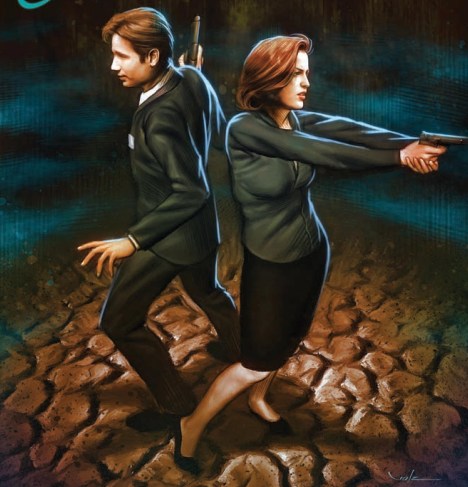
To be fair, there was a six-year gap between the broadcast of The Truth and the release of The X-Files: I Want to Believe, so the gap was not unprecedented. Nevertheless, the fact is that Mulder and Scully had been retired for five years since their last film and eleven years since their last television episodes. Even the most hardcore fans of The X-Files had begun to doubt that the show would ever return in any tangible form. However, the show was entering its twentieth anniversary year, and forces were stirring in the background.

X-appeal.

X-appeal.

Occasionally interviews would surface with David Duchovny or Gillian Anderson mooting the possibility of doing a third feature film. After all, despite the promise made in the opening of The Truth, 2012 had come and gone without an alien invasion or a global apocalypse. The franchise had set its own alarm clock and slept through it. There were still fitful stirrings, suggestions of possible future developments. As the franchise passed what many regarded as its “best before” date, Frank Spotnitz even speculated that fans might be treated to a reboot.

In many ways, the revival of The X-Files began somewhat innocuously. In January 2013, comics publisher IDW announced that they would be publishing a monthly series focusing on the continuing adventures of Mulder and Scully. This was not necessarily news of itself. IDW had a long history of managing licensed properties, such as the JJ Abrams Star Trek reboot and the Russell T. Davies Doctor Who relaunch. That was very much their market niche in the comic book industry, especially with nostalgic titles like Ghostbusters or Teenage Mutant Ninja Turtles.

How the years 'shroom by...

How the years ‘shroom by…

While the launch of the title did suggest that there was an audience for stories featuring Mulder and Scully, it did not necessarily lead to the promise of greater things. Indeed, the announcement that IDW would be publishing The X-Files: Season 10 consciously and clearly evoked the approach that the publisher Dark Horse had adopted towards Buffy: The Vampire Slayer and Angel, running entire seasons of comic book stories that served as the new “canon” for the characters. But nobody was expecting Sarah Michelle Gellar to reprise the role of Buffy Summers.

However, the IDW comic book launch served to bring Chris Carter out of semi-retirement and back into the media spotlight. Joss Whedon had consulted with Dark Horse on Buffy: Season Eight, the prolific television writer and producer was also working on his own concurrent projects that included directing episodes of The Office and preparing Doctor Horrible’s Sing-Along Blog. In contrast, Chris Carter had been largely silent since the release of I Want to Believe. The launch of the comic book brought him back.

Where there's smoke...

Where there’s smoke…

Continue reading

The X-Files Polls Results

A quick thanks to all who voted in our big X-Files poll to wrap up our coverage of the classic era of the show – from The Pilot up through The X-Files: I Want to Believe. I was very pleased with the response the poll got, with over 100 votes cast. (101, in total.) The results are below, but first two quick housekeeping announcements:

a.) we’ll be covering the modern era of the show (the IDW comics and the six episodes) sometime later in the year, probably around the DVD/blu ray release when things in my personal life are less hectic; part of that hecticness is because…

b.) I’ve written an unauthorised and unofficial critical history of The X-Files that is going to print at the end of the month; I’ll publish more details closer to publication, but it’s very much a refinement of everything that’s been put on the blog, with better research, more detail and a clearer narrative throughline; there is one really cool detail: the introduction is very kindly being written by the wonderful Kumail Nanjiani.

Anyway, enough housekeeping. Let’s get to the results!

xfilespoll15

Continue reading

The X-Files/30 Days of Night (Review)

This January, to prepare for the release of the new six-part season of The X-Files, we’re wrapping up our coverage of the show, particularly handling the various odds and ends between the show’s last episode and the launch of the revival.

The X-Files/30 Days of Night is the most satisfying X-Files story of the interregnum between The Truth and My Struggle I.

The comic book miniseries is notable for a number of reasons. It is the simultaneously the last X-Files comic to be published by Wildstorm and the first X-Files comic to be published by IDW. It is the first comic book crossover between X-Files characters and another established comic book franchise, and it crosses over directly through Mulder and Scully rather than using the Lone Gunmen to insulate the franchise. It is also the first X-Files comic to be illustrated by Tom Mandrake, who would later work with Joe Harris.

Darkness falls...

Darkness falls…

There are other reasons that The X-Files/30 Days of Night stands out. The comic is the work of a creative team (much) more strongly associated with 30 Days of Night than The X-Files, and there is a sense the comic services that franchise more than The X-Files. Barring the first twelve-issues of Stefan Petrucha and Charles Adlard’s Topps run, which was really more of a series of shorter interlocking stories, The X-Files/30 Days of Night is also the longest single X-Files comic book story published to this point in the franchise’s history.

It is also just really good.

Due North...

Due North…

Continue reading

The X-Files (Wildstorm) #5-6 – Dante’s Muse (Review)

This January, to prepare for the release of the new six-part season of The X-Files, we’re wrapping up our coverage of the show, particularly handling the various odds and ends between the show’s last episode and the launch of the revival.

And Wildstorm’s X-Files comic dies a quiet death.

The seven-issue (six monthly issues and a special “zero” comic) miniseries is an oddity. These seven comics tell four self-contained mysteries that stand quite separate from another, even as they echo the show’s creative peak. These four self-contained stories are credited to three different writers; the first two stories are written by producer and writer of the classic show, while each of the final two stories is credited to an established industry veteran with a long history working at DC comics.

THE TRUTH IS OUT THERE

THE TRUTH IS OUT THERE

Still, the miniseries feels like something of a damn squib. Barring that X-Files/30 Days of Night crossover, these seven issues represent everything that Wildstorm chose to do with the license. It certainly pales in comparison to the more comprehensive and thorough exploitation of the property by previous owner Topps and future owner IDW. While part of that is likely down to the simple fact that Wildstorm was in its extended death throes, perhaps it also speaks to where The X-Files was at that point in time.

Perhaps there simply was not that big a market for The X-Files in late 2008 and into 2009. Perhaps the memory of the show’s final season lingered too strongly in the cultural memory, or perhaps the cultural remembrance of show had faded entirely. The spark of nostalgia that would resurrect the show half a decade later had yet to be kindled. For whatever reason, it seemed like The X-Files was not quite ready to return to the popular consciousness.

EVERYTHING DIES

EVERYTHING DIES

Continue reading

The X-Files (Wildstorm) #3-4 (Review)

This January, to prepare for the release of the new six-part season of The X-Files, we’re wrapping up our coverage of the show, particularly handling the various odds and ends between the show’s last episode and the launch of the revival.

Frank Spotnitz could not stick around forever.

The veteran X-Files writer and producer could not stick around for even half a year. These days, it is customary for “big name” authors to commit to a very short run of comic book issues before jumping off; while comic book veterans like Marv Wolfman or Chuck Dixon or Chris Claremont would have committed to years on a particular title during the seventies and eighties, it became increasingly common for higher profile writers to enjoy shorter stints. While this is the case for high-profile industry veterans like Warren Ellis, it is particularly true of celebrity authors.

THE TRUTH IS OUT THERE

THE TRUTH IS OUT THERE

Brad Meltzer wrote thirteen issues of Justice League of America. Kevin Smith wrote eight (and a bit) issues of Daredevil and fifteen issues of Green Arrow. Richard Donner wrote seven issues of Action Comics, and contributed a short story to the anniversary special. Sam Hamm wrote three issues of Detective Comics. While these creators might have had great stories to tell with these characters, they were also not necessarily comfortable with committing to a month schedule indefinitely. (They also had careers outside the medium, to be fair.)

Still, there is something quite jarring about Frank Spotnitz’s departure from Wildstorm’s X-Files comic book after only three issues. Spotnitz barely had time to define what the comic was supposed to be, beyond a glimpse into a weird alternate universe where Mulder and Scully are trapped in a perpetual 1998. It is debatable whether a licensed tie-in really needs anything more than that, given the tendency to treat such tie-ins as little more than a supplement to a more mainstream iteration of the same basic product.

DECEIVE INVEIGLE OBFUSCATE

DECEIVE INVEIGLE OBFUSCATE

At the same time, it feels like Spotnitz’s departure leaves an already confused monthly series with no strong identity of its own. Quite pointedly, Spotnitz’s name still appears on the full cover to the first issue written by Marv Wolfman; whether this suggests that Spotnitz was intended to write the issue or simply the result of a rush to press is unclear. As a result, Wildstorm ended up passing its X-Files monthly series from one writer to another, with industry (and DC comics) veterans Marv Wolfman and Doug Moench each handling a two-part story.

The results are intriguing, if not particularly compelling. Wildstorm’s X-Files comics are most remarkable for its sense of detachment from anything and everything. It is “unstuck” in a way that none of the franchise’s other flirtations with comic book storytelling are not. In its own way, this feels entirely appropriate; this is The X-Files as published by one of the two most largest and most iconic comic book publishers. Continue reading