• Following Us

  • Categories

  • Check out the Archives


  • Awards & Nominations

Star Trek: Voyager – Virtuoso (Review)

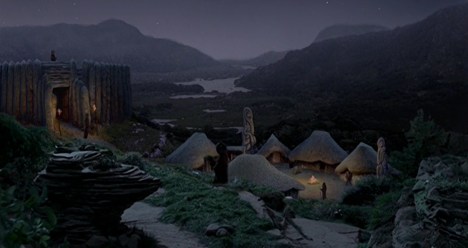
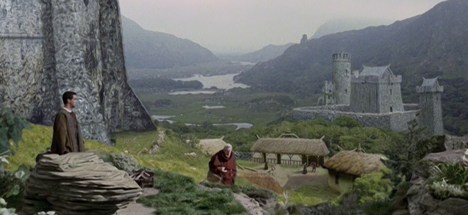
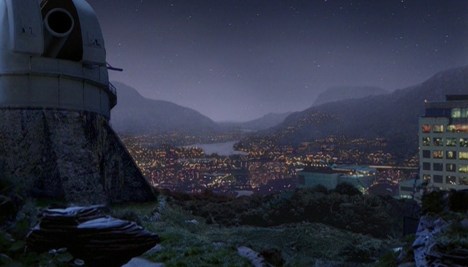
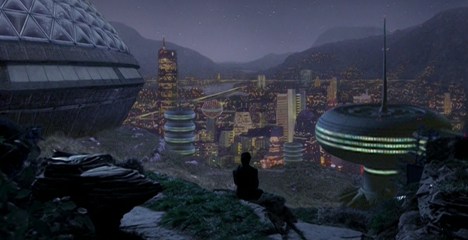
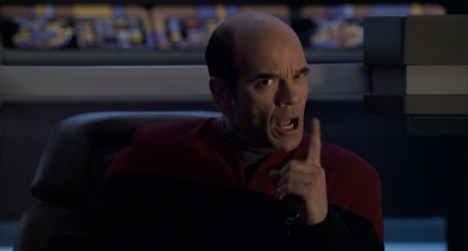
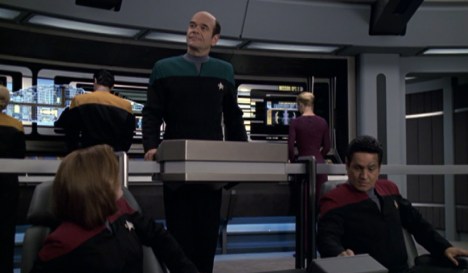
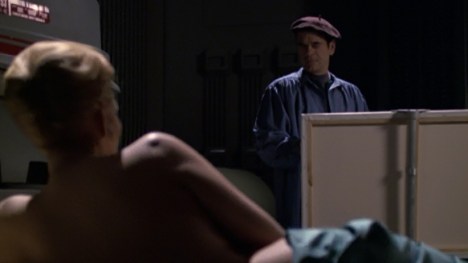
Virtuoso is an interesting companion piece to Blink of an Eye.

Blink of an Eye was in many ways an exploration and reflection of Star Trek as a multimedia franchise, looking at the way in which the franchise has touched and shaped contemporary culture in the thirty-odd years since its inception. As part of this, the episode touched on fandom in a variety of ways, whether the abstract fandom of those individuals inspired by the series to accomplish great things or the more specific fandom including merchandise. Blink of an Eye was very much an episode about loving Star Trek.

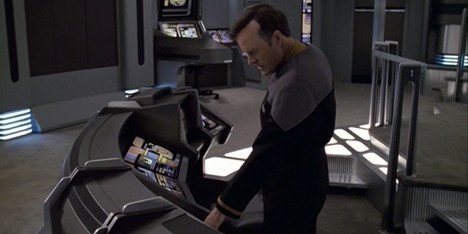
Music to our ears.

As a result, Virtuoso feels like a very strange choice to directly follow Blink of an Eye. The two episodes are not connected by plot, outside of the basic idea that the EMH might spend an extended period of time on an alien planet without access to Voyager. After all, Star Trek: Voyager had committed itself to producing standalone episodic storytelling. However, Virtuoso is also something of a metaphor for Star Trek fandom, a look at what it is to love a piece of popular entertainment and to eagerly embrace it.

Unfortunately, the proximity to Blink of an Eye does no favours for Virtuoso, emphasising the script’s weaknesses and tone-deafness. Virtuoso is an episode that feels very pointed and cynical in its portrayal of fandom, very broad and very unpleasant. It is a clumsy and muddled piece of television, on that struggles to hit the right notes.

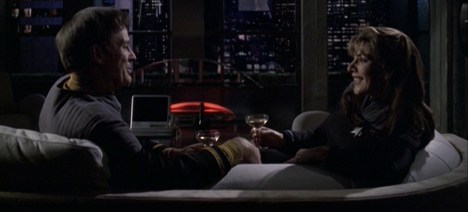
Small pleasures.

Continue reading

Star Trek: Voyager – Blink of an Eye (Review)

Blink of an Eye is perhaps the last truly great episode of Star Trek: Voyager.

There are good episodes that follow Blink of an Eye. There are solid comedy episodes like Renaissance Man. There are effective homage episodes like Author, Author. There are even well-constructed archetypal narratives that fit within the thematic framework of both the series and the franchise like Memorial. However, there isn’t a single episode as elegant as Blink of an Eye, a story which demonstrates the raw potential of Voyager as a narrative engine for telling these big and broad science-fiction narratives.

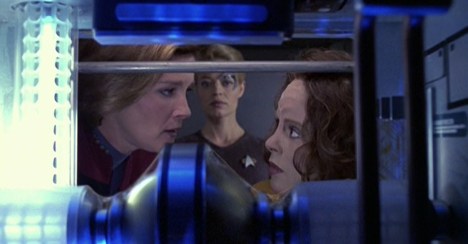
From the mountains of faith…

Indeed, it might even be possible to argue that Blink of an Eye is the last truly great episode of Berman era Star Trek.

There is a tendency to overlook Star Trek: Enterprise in discussions of the franchise’s history and legacy, no matter how quietly influential the prequel series has become in terms of Star Trek Beyond or Star Trek: Discovery. This does a disservice to the last series of the Berman era, particularly the final two seasons that grappled with the question of what it means to be Star Trek in the aftermath of 9/11. Nevertheless, the trauma of 9/11 exerted such a gravity that even the best episodes of Enterprise seemed to exist in its shadow; Judgment, Cogenitor, The Forgotten, Babel One, United.

… through the valley of fear…

Even outside of hyperbole, Blink of an Eye is a beautifully constructed piece of television that speaks to the appeal and the potential of Star Trek. It is a lyrical allegory, a very simple and straightforward idea that is constructed in such a way as to invite the audience to ask profound and meaningful questions about the nature of human existence. What is it like to watch a civilisation rise up? What ideals drive it? Towards what values and ideals might it strive? More than that, what is it like to sit outside of time and watch those beholden to time? These are fascinating and enlightening ideas.

Blink of an Eye was developed from a story by Voyager writer Michael Taylor, one of the most ambitious writers to ever work on the series. Taylor had contributed the stories that would develop into The Visitor and In the Pale Moonlight, demonstrating a willingness to think outside the box. On Voyager, Taylor’s ambitions were frequently tempered and his scripts often compromised. Both Once Upon a Time and The Fight were much more generic and mediocre pieces of television than the original premise. Blink of an Eye is a rare Taylor concept that doesn’t feel watered down.

…. But the river is wide
And it’s too hard to cross…

It helps that the teleplay for Blink of an Eye was written by Star Trek veteran Joe Menosky. Menosky had a long association with the franchise and a deep understanding of how it worked, having cut his teeth on Star Trek: The Next Generation and Star Trek: Deep Space Nine. More than any other writer, Menosky understood the idea of Star Trek as a mythic framework, an avenue for exploring stories and what they mean. This theme plays through Menosky’s work on the franchise; Darmok, Masks, Dramatis Personae, Muse.

Blink of an Eye feels like an episode perfectly callibrated to the strengths of Taylor and Menosky, a high-concept episode that is fundamentally about the Star Trek mythos.

We all end in the ocean
We all start in the streams
We’re all carried along
By the river of dreams.

Continue reading

Star Trek: Voyager – Fair Haven (Review)

Well, at least it’s better than Up the Long Ladder.

We’ll take what we can get.

Continue reading

Star Trek: Voyager – Pathfinder (Review)

Star Trek: Voyager has always had an awkward relationship with Star Trek: The Next Generation.

Star Trek: Deep Space Nine was always the rebellious middle-child, prone to make bold and defiant gestures like blowing up a surrogate of the Enterprise in The Jem’Hadar, bringing Jonathan Frakes back to play Riker’s evil transporter duplicate in Defiant, and have former Enterprise crew member Chief Miles Edward O’Brien praise Sisko as the best captain in the fleet in The Adversary. It was a television series that was dedicated to defining its own unique identity, and at least some of that identity was defined in opposition to its direct predecessor.

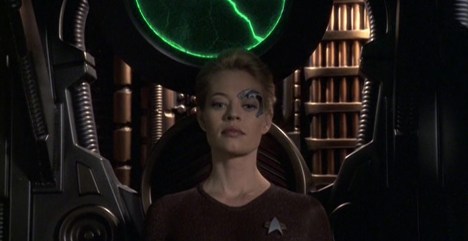
Taking his Neelix.

In contrast, Voyager always felt a little more desperate, a little too eager to assert its connection to The Next Generation and to insist upon itself as a spiritual successor to that beloved (and incredibly successful) series. Despite the fact that Voyager was set primarily in the Delta Quadrant, the series never missed an opportunity to crossover with The Next Generation. Barclay appeared as a hologram in Projections, Riker was summoned across the universe in Death Wish, LaForge was rendered a captain in the future presented in Timeless.

This is to say nothing of the minor crossovers taken at every available opportunity; the use of Q and the Borg Queen among the relatively small number of recurring guest stars, the original plan to build 11:59 around Guinan, the decision to produce the dire False Profits as a sequel to the dire The Price. Repeatedly over the show’s run, Voyager feels very much like a young child digging through its elder sibling’s wardrobe for something that might possible be claimed as a hand-me-down. It is depressing, particularly considering the raw potential that was baked into the premise of Voyager.

Course correction.

Pathfinder is perhaps the apex of this approach. It is effectively a stealth episode of The Next Generation, packaged and released under the Voyager brand. The primary plot of Pathfinder focuses on two characters from The Next Generation sitting around and talking about how great Voyager is, with one of those characters even escaping into a holographic fantasy of life on board the ship to help him think. In many ways, Pathfinder could be seen to prefigure These Are the Voyages…, the catastrophic finale to Star Trek: Enterprise that borrowed the same template and somehow pushed it even further.

There is a smell of desperation about Pathfinder. Whatever the plot of the episode might suggest, Voyager feels more lost than ever.

The Last Generation.

Continue reading

Star Trek: Voyager – The Voyager Conspiracy (Review)

The Voyager Conspiracy builds off the nostalgia of One Small Step, paving the way for the nostalgia of Pathfinder.

One of the more interesting aspects of the final two seasons of Star Trek: Voyager is the way in which the show embraces a weird nostalgia, both for the utopian future of the larger Star Trek franchise and also for its own earlier seasons. To be fair, the seeds for this nostalgia were arguably sown during the fifth season, with an increased emphasis on the events of Caretaker in episodes like Night, Relativity and Equinox, Part I, as well as elements like Janeway’s exploration of her family history in 11:59, the fake Earth in In the Flesh, and the return to the Maquis in Extreme Risk.

“What’s all this buzz about?”

Nevertheless, the sixth and seventh seasons of Voyager embrace the nostalgia that has been woven into the series from the outset, the journey toward the “familiar” and the “recognisable.” After all, Voyager has always been a show about the desire to return, but it is particularly interesting to see that urge to go backwards including metaphorical journeys into the history of both the Star Trek franchise and Voyager itself. The final seasons of Voyager apply the idea of returning home reflexively, it often feeling like a desire to slip backwards in time as much as space.

It is interesting to wonder what drives this nostalgia for the early years of Voyager in these final two seasons. Perhaps this wistful yearning is driven by the fact that the show is approaching its end, and is reflecting upon its own nostalgia. Perhaps the series is anxious at being the only Star Trek show on the air for the first time in its run, hoping to return to the safety and security of those early years. Perhaps it ties into a broader cultural anxiety about the millennium, a reflection of the same “end of history” anxiety that informed stories like Future’s End, Part I, Future’s End, Part II and Living Witness.

Getting into her head.

Whatever the reason, The Voyager Conspiracy feels like an exploration of the Voyager‘s continuity. The plot of the episode finds Seven of Nine effectively binge-watching the first few seasons of the show and trying to structure them into something resembling a cohesive story arc. In doing so, The Voyager Conspiracy includes an uncharacteristic selections of nods and references to earlier episodes; Caretaker, Cold FireManoeuvres, The Gift, Message in a Bottle, The Killing Game, Part I, The Killing Game, Part IIDark Frontier, Part IDark Frontier, Part II.

As such, it is an oddity in the larger context of Voyager, a television series largely defined by the absence of episode-to-episode continuity. Indeed, it is quite telling that The Voyager Conspiracy treats such continuity as inherently dangerous and destabilising influence on Voyager.

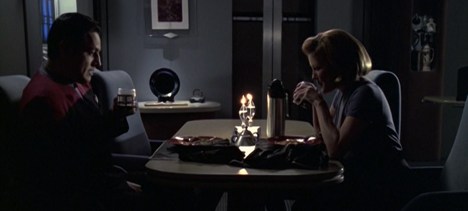
Dinner table conversation.

Continue reading

Star Trek: Voyager – One Small Step (Review)

Star Trek: Voyager marks the end of the future.

Many fans would point to Star Trek: Enterprise as the moment that the larger Star Trek franchise turned its gaze backwards and embraced a sense of broad nostalgia for a future that was already behind that explored in the original series. After all, the last television series of the Berman era took the franchise back to its roots and paved the way for both J.J. Abrams’ pseudo-reboot in Star Trek and for Bryan Fuller and Alex Kurtzman’s prequel in Star Trek: Discovery.

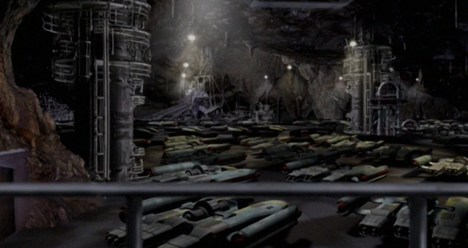
First (and Last) Flight.

However, this overlooks the importance of Voyager in signposting this shift. In some ways, Voyager represents the end of the final frontier. Chronologically speaking, Endgame is the last episode of the larger Star Trek franchise, the future beyond the finale explored only in Star Trek: Nemesis and as part of the back story to the rebooted Star Trek. Chronologically speaking, Voyager represents the last television series within the Star Trek universe. However, Voyager very carefully and very consciously seeds the nostalgia that would later envelope the franchise.

This is obvious in any number of ways. Voyager is a show that is literally about the desire to return home rather than to push forward. Caretaker established the show as an extended homage to fifties pulp storytelling. The politics of the series – reflected in episodes as diverse as Real Life, Displaced and Day of Honour – were decidedly conservative. Even the genre trappings of the series were often framed in terms of mid-twentieth century pulp fiction; the space lift in Rise, the broad allegory in Innocence, the atomic horror of Jetrel.

We come not to praise Voyager, but to bury it.

However, all of this is rooted in a very conscious yearning on the part of Voyager to connect to its roots. Numerous small scenes across the seven-season run of the show hint at this sentiment; Janeway discussing the romantic past in Flashback, the literal journey home in Future’s End, Part I and Future’s End, Part II, the retrofuturism of Tom Paris’ various holoprogrammes, Janeway’s fascination with her long-lost ancestor in 11:59. There was a sense that Voyager was a series as intent on journeying backwards in time as much as space, even outside of its time travel obsession.

One Small Step stands out as one of the most obvious and blatant examples of this nostalgia within Voyager, in many ways feeling (like Friendship One in the subsequent season) like an attempt to seed the literal prequel that would materialise in Enterprise.

It turns out that John Kelly crossed over into a subspace anomaly drawn by Jack Kirby.

Continue reading

Star Trek: Voyager – Dragon’s Teeth (Review)

In many ways Dragon’s Teeth demonstrates the chaos that marked the start of the sixth season.

On paper, Dragon’s Teeth looks to be a big blockbuster episode of Star Trek: Voyager. It has top-notch production, a large guest cast, an impressive special effects set-up, a new alien menace, and an emphasis on momentum ahead of character or theme. Just looking at Dragon’s Teeth, it has the look and feel of an “event” story. It seems like an episode with a bold statement of purpose, from the opening teaser that suggests an epic scope by unfolding in the distant past of an alien world through to the ominous closing line that promises that Dragon’s Teeth is just the beginning.

Let sleeping dragons lie…

It seems like the sixth season’s answer to earlier mid-season two-parters like Future’s End, Part I and Future’s End, Part II, Year of Hell, Part I and Year of Hell, Part II, The Killing Game, Part I and The Killing Game, Part II, or Dark Frontier, Part I and Dark Frontier, Part II. It even broadcasts in roughly the same stretch of the season as Future’s End, Part I and Future’s End, Part II, Year of Hell, Part I and Year of Hell, Part II or Timeless. It is an early November episode, intended to help boost ratings during Sweeps.

However, what is most striking about Dragon’s Teeth is how much it feels like a non-event. The episode has all the markers of a big event story, from the promise of a shortcut home to the sight of the ship landing on a planet surface, but the story is actually incredibly generic. Dragon’s Teeth is not necessarily bad, it is simply competent. There is a strange sense watching Dragon’s Teeth that a phenomenal amount of effort has gone into ensuring that the episode works, rather than trying to make it excel.

Sweet dreams.

Of course, this makes a certain amount of sense. Dragon’s Teeth aired almost a third of the way through the season, but it was produced earlier. In terms of broadcast, it fell between Riddles and One Small Step. In terms of production, it came between Tinker, Tenor, Doctor, Spy and Alice. As such, it was produced in the midst of the chaos following the sudden departure of Ronald D. Moore and the reinstatement of Kenneth Biller. More than that, it was the first episode of the season to be written by Brannon Braga since that behind the scenes shake-up. As a result, it makes sense it should feel “off.”

Dragon’s Teeth is an episode that spends so much of its energy trying to remain upright that it never manages to take flight.

Oh, mummy.

Continue reading

Star Trek: Voyager – Riddles (Review)

Riddles is very much a stock episode of Star Trek: Voyager.

Like Barge of the Dead and Alice before it, Riddles is a character-focused episode of the sixth season that largely retreads character dynamics that feel thorough explored by this point in the show’s run. One of the big issues with Voyager is that it never got past more than a single line of biography for many of its lead characters; Torres is angry, Paris is a restless rebel, Tuvok is logical, Kim is inexperienced. Indeed, in the case of Chakotay, the series even dropped that one-line character synopsis after Michael Piller departed and never bothered to draft a new one.

Stopping to smell the roses.

Riddles is a Tuvok-centric episode that brushes up against the fact that Voyager doesn’t really know (or care) that much about Tuvok beyond the existence of his pointy ears. Tuvok is a Vulcan, and so his stories tend to be about logic and the challenges that it presents. This is not a bad thing, with Tuvok’s repression and logic providing the basis for Meld and Gravity, two of the best episodes of Voyager ever produced. However, Riddles is somewhat underwhelming. It feels like the story has been done before. More than that, this feels like a particularly stock iteration of that story.

Riddles is not a bad episode of Voyager by any measure. It is also not an especially good episode of Voyager either. Instead, Riddles is a perfectly familiar episode of Voyager.

Putting the pieces together.

Continue reading

Star Trek: Voyager – Alice (Review)

Alice is a misfire.

To be fair, the episode seemed doomed from its original set of premises. Star Trek: Voyager has never been particularly good at capturing the sense of Tom Paris as a restless unreliable rebel. The episodes of Voyager focusing on the character’s rebellious tendencies tend to be spectacular misfires; Ex Post Facto, Investigations, Vis à Vis, Thirty Days. These stories do not play to the strengths of either the writing staff or Robert Duncan McNeill, feeling largely incompatible with the character of Tom Paris as he developed in the wake of Caretaker.

I’ll never get used to not living inside of Alice.

However, Alice literally weds this familiar and unsuccessful premise to another recurring Voyager trope with a less-than-impressive rate of success. It is not enough for Alice to be another story about Tom Paris proving that he has a rebellious streak, that premise has to be woven into a broad science-fiction gothic horror in the style of Threshold or Macrocosm. Indeed, Alice is explicitly a psycho-sexual horror in the mode of Blood Fever or Darkling, inevitably butting up against the difficulties of constructing an episode that is about sex but can never discuss sex.

Alice is flawed from the ground-up, but those flaws are only further revealed in the clumsy execution and the disappointing storytelling. Alice is a very bad piece of television.

A deep-space dust-up.

Continue reading

Star Trek: Voyager – Tinker, Tenor, Doctor, Spy (Review)

With Tinker, Tenor, Doctor, Spy, Star Trek: Voyager is back to business as usual.

The first episode produced after the departure of Ronald D. Moore, Tinker, Tenor, Doctor, Spy is in many ways an archetypal Voyager story. Equinox, Part II was the second part of a season-bridging two-parter; Survival Instinct was a dark fable about consequences and trauma that was the last script credited to on the franchise’s most beloved writers; Barge of the Dead was a surreal and ambiguous adventure into the Klingon afterlife. As such, it is strange that an episode that opens with a playful operatic number about Tuvok’s pon farr should mark a return to normality.

“My Delta Quadrant TripAdvisor review is going to be scathing!”

Nevertheless, Tinker, Tenor, Doctor, Spy is a very neat standalone episode with a clear beginning, middle and end. It is built around the character of the EMH, leaning into actor Robert Picardo’s comedic chops. It is very much in keeping with Voyager‘s recurring fascination with the notion of fractured reality as expressed in Projections or Deadlock or Retrospect, and also in using a technologically-derived character to literalise the process of a psychological breakdown as in Darkling, Infinite Regress or Latent Image.

Tinker, Tenor, Doctor, Spy story has its own themes and ideas, and everything is neatly resolved by the closing credits. It is a reminder that the serialisation that defined Star Trek: Deep Space Nine would remain the exception, rather than the rule, that it would not be inherited by its surviving sibling. Tinker, Tenor, Doctor, Spy could almost be watched at any point in the show’s run, although the involvement of Seven of Nine would suggest the final four seasons. Nevertheless, the episode never feels particularly tethered to this moment or this season.

Fantasy figure.

However, Tinker, Tenor, Doctor, Spy is also an example of how this approach can work. Voyager received (and deserves) a lot of criticism for failing to evolve with the times, for allowing the Star Trek franchise to fall behind the curve of contemporary television science fiction. However, the series was occasionally capable of demonstrating the merits of standalone episodes, the appeal of being able to transition from one self-contained story to another twenty-six times in the course of a season.

Of course, the issue was that a lot of Voyager episodes were bland and forgettable. However, every once in a while the series would produce a self-contained episode that demonstrated the appeal of this narrative model; Remember, Distant Origin, Concerning Flight, Living WitnessSomeone to Watch Over Me. Appropriately enough, coming after another turbulent period in the history of the show, Tinker, Tenor, Doctor, Spy is another fine example of this capacity to construct satisfying and engaging stand-alone narratives.

Painting a pretty picture.

Continue reading