• Following Us

  • Categories

  • Check out the Archives


  • Awards & Nominations

Star Trek: Deep Space Nine – The Maquis, Part I (Review)

Star Trek: Deep Space Nine is twenty years old this year. To celebrate, I’m taking a look at the first season. Check back daily for the latest review or retrospective.

The Maquis is an interesting episode, because it really illustrates the weird place that Star Trek: Deep Space Nine holds in the pantheon. It’s the middle act of an arc designed to play out across the final season of Star Trek: The Next Generation, the second season of Deep Space Nine and into the first year of Star Trek: Voyager. This was all part of gigantic lead-up to Voyager, a way for the producers to generate friction between the regular cast of the show.

However, with The Next Generation ending and Voyager being set on the other side of the galaxy, Deep Space Nine wound up stuck with this plot thread. As Michael Piller concedes in The Deep Space Log Book: A Second Season Companion, “DS9 is the true inheritor of the Maquis since there is no long term benefit to Voyager.” And so – despite the fact the Maquis were never intended for the show – they wind up become a perfect vehicle to explore the show’s world view.
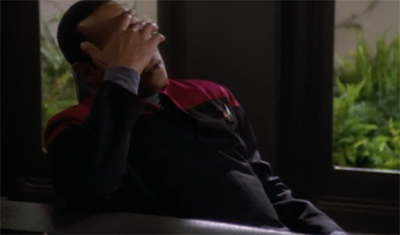
Picard's not the only one who can get a good face palm going on...

Picard’s not the only one who can get a good face palm going on…

Continue reading

Star Trek: Deep Space Nine – Blood Oath (Review)

Star Trek: Deep Space Nine is twenty years old this year. To celebrate, I’m taking a look at the first season. Check back daily for the latest review or retrospective.

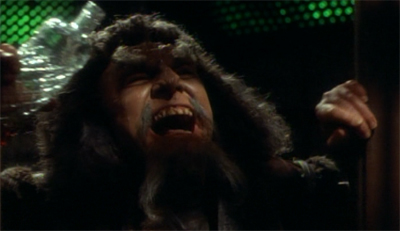
Blood Oath is a pretty fantastic piece of Star Trek: Deep Space Nine, and kicks the second season back into gear after a few mediocre (although not embarrassing) episodes. While it’s hardly the best episode of the year, and comes with its share of problems and baggage, it’s a tight and well-constructed piece of space opera. It’s a pulpy Klingon adventure, with the show’s best exploration to date of the existential problems of being Dax and a relatively simple (but potent) moral dilemma. It’s also just great fun.

Here's Kor!

Here’s Kor!

Continue reading

Star Trek: Deep Space Nine – Profit and Loss (Review)

Star Trek: Deep Space Nine is twenty years old this year. To celebrate, I’m taking a look at the first and second seasons. Check back daily for the latest review or retrospective.

It seems we’ve reached the point where Star Trek: Deep Space Nine has figured out a base level of quality, an “average” zone that it can pitch to without too much effort or breaking a sweat. We’ve had three episodes in a row now that haven’t been brilliant, but have been far from terrible. Solid, watchable stuff. That might sound like damning with faint praise, but it took Star Trek: The Next Generation longer to find that base level of quality, while Star Trek: Voyager settled into a zone where that “average” was a lot lower.

Profit and Loss is unlikely to be anybody’s favourite episode, but it remains thoroughly unobjectionable. It features the cast playing their roles reasonably well, some hints at world-building and even a guest spot for Garak. Nobody will really remember Profit and Loss as a brilliant piece of television after completing a lengthy Deep Space Nine rewatch, but they also won’t curse its name. It’ll simply be an episode in the middle-to-end section of the second season that wasn’t too bad and wasn’t too great.

Love him and leave him...

Love him and leave him…

Continue reading

Star Trek: Deep Space Nine – Playing God (Review)

Star Trek: Deep Space Nine is twenty years old this year. To celebrate, I’m taking a look at the first and second seasons. Check back daily for the latest review or retrospective.

Playing God is – structurally – quite similar to Shadowplay. The episode follows the same basic format. We have three plots running concurrently. One of these plots is a science-fiction plot while the other two are centred around character development. What’s interesting about Playing God is that the script essentially changes the priority of these plot threads. In Shadowplay, the central plot concerned the science-fiction mystery in the Gamma Quadrant, while here the ethical quandary is pushed firmly to the background. (Much to the chagrin of writer Jim Trombetta.)

Instead, Playing God brings the character plotline to the front, giving us the first Dax-centric episode firmly based around Jadzia rather than the symbiote inside of her.

Quark smells a rat... er... I mean vole...

Quark smells a rat… er… I mean vole…

Continue reading

Star Trek: Deep Space Nine – Shadowplay (Review)

Star Trek: Deep Space Nine is twenty years old this year. To celebrate, I’m taking a look at the first and second seasons. Check back daily for the latest review or retrospective.

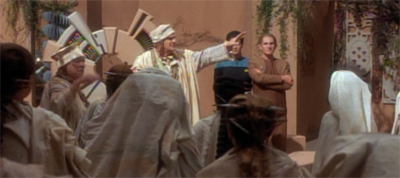
Shadowplay is a great example of the kinds of things that Star Trek: Deep Space Nine is beginning to do very well. While the main plot works very well (so well, in fact that Star Trek: Enterprise would borrow it – and Rene Auberjones – for their first season episode Oasis), it’s remarkable how much of Shadowplay is given over to the two character-development subplots unfolding back on the station. Indeed, Dax and Odo have effectively solved the mystery of the missing villagers by about two-thirds of the way into the episode.

The character-development stuff in Shadowplay is interesting because the two subplots are not written with resolutions in mind. Indeed, they don’t even kick off the respective character arcs. Kira and Bariel have been waiting to become a couple since The Siege at the latest. The last episode, Paradise hinted that Jake might not be cut out to be a Starfleet officer.

In short, what is interesting about Shadowplay is the fact that it’s really just demonstrating that the show has reached the point where it is doing the things that it does relatively well. Deep Space Nine has found its groove, that point in a show’s history when it seems like it’s relatively easy to produce an hour of television of reasonable quality.

A holo crowd...

A holo crowd…

Continue reading

Star Trek: Deep Space Nine – Paradise (Review)

Star Trek: Deep Space Nine is twenty years old this year. To celebrate, I’m taking a look at the first and second seasons. Check back daily for the latest review or retrospective.

In a really weird way, this second half of the second season of Star Trek: Deep Space Nine really has its finger on the pulse of the nineties. Whispers tapped into pre-millennial anxiety, the sort of paranoia that fed into shows like The X-Files and would play itself out through the show’s admittedly underdeveloped “Changeling” arc. In a few episodes, The Maquis will play with the old “freedom fighter/terrorist” debate in a way that was only really possible in an America completely at peace, post-Cold War but pre-9/11.

Paradise taps into some other anxieties. According to The Star Trek: Deep Space Nine Companion, writer Jim Trombetta was heavily influenced by the anti-technology philosophy of the Khmer Rouge, the infamous regime where even the stereotypical signs of learning and education (for example, wearing glasses) were justification for execution. However, whatever the inspiration, Paradise seems to tap into something decidedly more contemporary.

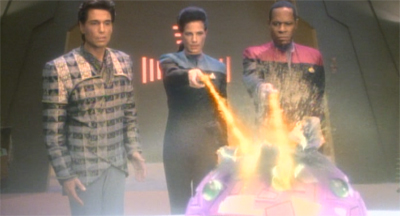
"This is my boom stick!"

“This is my boom stick!”

Continue reading

Star Trek: Deep Space Nine – Whispers (Review)

Star Trek: Deep Space Nine is twenty years old this year. To celebrate, I’m taking a look at the first and second seasons. Check back daily for the latest review or retrospective.

You could make a credible argument that each of the first three Star Trek shows beautifully encapsulated their time and place. The original show was the very embodiment of the sixties zeitgeist, providing a channel for commentary and insight into counter-culture and the Vietnam War, and an outlet for various fixations and phobias. Star Trek: The Next Generation was a show that spoke to a version of America which was emerging from the Cold War, a clean and sterile morning for a new America.

Star Trek: Deep Space Nine was positioned somewhat strangely, as the idealism and enthusiasm of the early nineties gave way to paranoia and insecurity. If the hyperreal technicolour production values of the original Star Trek spoke to the energy and enthusiasm sixties, then the drab grey Orwellian design of Deep Space Nine was a reflection of the late nineties.

Whispers is really the first time that the show has pushed its sense of paranoia to the fore, and it confirms that Deep Space Nine will be a show of its time, anchored in the nineties.

It's all a bit askew...

It’s all a bit askew…

Continue reading

Star Trek: Deep Space Nine – Armageddon Game (Review)

Star Trek: Deep Space Nine is twenty years old this year. To celebrate, I’m taking a look at the first and second seasons. Check back daily for the latest review or retrospective.

It’s been a while since we’ve had a fairly generic “could have happened on any Star Trek episode of Deep Space Nine. So it’s a lot easier to forgive Armageddon Game its simplicity and lack of nuance. This isn’t a story specific to Deep Space Nine. The basic concept could – rather easily – have been tailored to fit Star Trek: The Next Generation or even Star Trek: Voyager, with two crew members on the run for their lives on an alien world.

Armageddon Game is another story idea from Morgan Grendel, a writer who tends towards extremes. The Inner Light remains one of the best episodes of Star Trek ever produced. The Passenger ranks among the worst episodes of Deep Space Nine ever to make it to the screen. Armageddon Game sits somewhere in the middle.

Talk about chemistry...

Talk about chemistry…

Continue reading

Star Trek: Deep Space Nine – The Alternate (Review)

Star Trek: Deep Space Nine is twenty years old this year. To celebrate, I’m taking a look at the first and second seasons. Check back daily for the latest review or retrospective.

Well, at least the second season of Star Trek: Deep Space Nine is experimental. It might not always pay-off, but there’s a clear sense that the show is trying new things, bending various genres to make them fit within the broad outline of a Star Trek show. Necessary Evil was a fascinating attempt to construct a noir episode, while Rivals was a less-than-successful sit-com in space. The Alternate is very much doing “Star Trek as monster movie”, which is surprisingly fun.

To be fair, it’s not a subgenre new to the franchise. Indeed, the first episode of the original show to air, The Man Trap, was essentially a monster horror in space. Still, The Alternate feels a bit more sinister and dark than  anything that Star Trek: The Next Generation might attempt. (Schisms probably comes closest, but – even then – there’s no sense that the monsters are stalking the starship. They have to abduct their victims to experiment on them.)

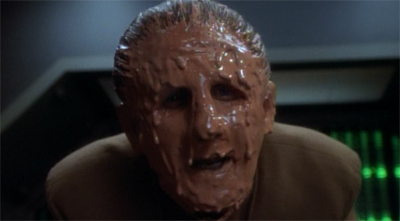
More than that, though, The Alternate is also a fascinating exploration of Odo as a character, looking at the relationship that Odo has with his co-workers and how that is rooted in his relationship with the man who claims to be his “father.”

Melting! Melting! Oh what a world!

Melting! Melting! Oh what a world!

Continue reading

Star Trek: Deep Space Nine – Rivals (Review)

Star Trek: Deep Space Nine is twenty years old this year. To celebrate, I’m taking a look at the first and second seasons. Check back daily for the latest review or retrospective.

Rivals doesn’t work. However, while the second season has produced a string of noble failures, Rivals fails for a very simple reason. It’s a comedy episode without any comedy. It’s a guest-star focused episode which centres on a hopelessly miscast Chris Sarandon. Sarandon is an Oscar-nominated actor, and he should be something of a casting coup for the show. This second season has already featured Louise Fletcher, Frank Langella and John Glover – so it seems fair to acknowledge that the casting people were on a bit of a roll.

However, due to a reheated script and Sarandon’s lack of interest or engagement, Rivals winds up feeling stale. There is potential here, but it’s squandered as the writers forget the first rule of a good comedy episode. They forgot to bring the laughs.

I feel a similar way...

I feel a similar way…

Continue reading