• Following Us

  • Categories

  • Check out the Archives


  • Awards & Nominations

Star Trek: Enterprise – Cease Fire (Review)

Next year, Star Trek is fifty years old. We have some special stuff planned for that, but – in the meantime – we’re reviewing all of Star Trek: Enterprise this year as something of a prequel to that anniversary. This April, we’re doing the second season. Check back daily for the latest review.

It is weird to think that Star Trek was dying in early years of the twenty-first century.

After all, the original series had greatly increased its cultural cachet at the height of the Cold War. The adventures of James Tiberius Kirk offered an optimistic alternative to total nuclear annihilation and a doomsday clock that was rapidly approaching midnight. Logic would suggest that utopian fantasy was all the more essential when contrasted against harsh reality. In fact, it seemed like cynicism and pessimism thrived in the (relatively) peaceful and prosperous decade following the collapse of the Cold War. The X-Files and Star Trek: Deep Space Nine were inescapably products of the nineties.
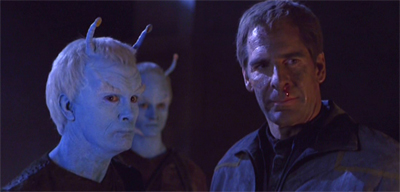
I'm blue dabba dee dabba dii...

I’m blue dabba dee dabba dii…

So one imagines that the dread and fear that took root in the wake of 9/11 might somehow make the optimism and hope of Star Trek all the more essential. After all, pundits and commentators wasted no time in suggesting that irony and cynicism were passé. Stephen Thompson, editor of The Onion, suggested that the age of irony had ended only a week after the attacks.  Graydon Carter, editor of Variety, observed, “I think it’s the end of the age of irony. Things that were considered fringe and frivolous are going to disappear.” In a highly publicised Time article, Roger Rosenblatt rejoiced.

Of course, irony was far from dead, as films like Team America: World Police demonstrated. The Colbert Report became a cultural phenomenon. The Onion is still in business. However, the speed with which these commentators latched on to the idea of the death of irony suggested that the mood had changed perceptibly. Maybe not definitively, maybe not completely, but there was a change in the air. If ever there was a time for the optimism and the utopianism of Star Trek, it would be this particular moment.
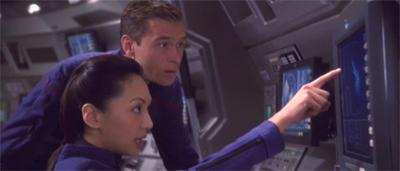
"This is the point where everything changed..."

“This is the point where everything changed…”

However, it seemed like 9/11 eroded the franchise’s faith in utopia. Understandably – and perhaps inevitably – Star Trek: Enterprise found itself warped by images and iconography associated with the attacks. The tradition idyllic alien worlds associated with the franchise – visible in early episodes like Strange New World and Civilisation were quickly replaced by landscapes evoking the popular mood – apocalyptic cityscapes of Shadows of P’Jem and Shockwave, Part II, the deserts of Desert Crossing, the militaristic settings of Detained and The Communicator, or even the darkness of Rogue Planet.

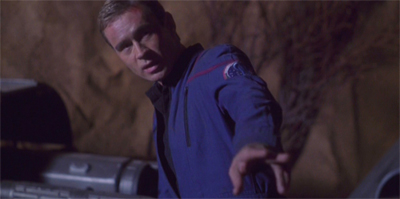
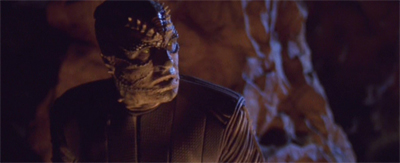
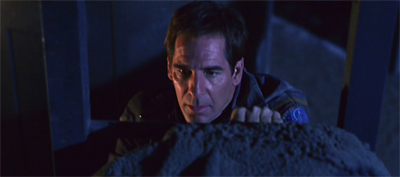
It was as if 9/11 had warped the psychological landscape of the Star Trek universe, throwing everything into doubt. Far from responding to that real-world tragedy with optimism and hope, it seemed that Enterprise only lost certainty in itself. Cease Fire is an episode that feels plagued by self-doubt and insecurity, even as it tries to find its way back to the franchise’s trademark idealism. It may not quite find its way back to the path, but it makes a reasonable effort.
It's all in ruins...

It’s all in ruins…

Continue reading

Star Trek: Enterprise – Stigma (Review)

Next year, Star Trek is fifty years old. We have some special stuff planned for that, but – in the meantime – we’re reviewing all of Star Trek: Enterprise this year as something of a prequel to that anniversary. This April, we’re doing the second season. Check back daily for the latest review.

It’s been a long road.

Continuing the effort in Dawn to refocus Star Trek: Enterprise on franchise core values, Stigma offers a good old-fashioned allegory episode. It is a script clearly designed to stand alongside earlier iconic Star Trek shows like A Taste of ArmageddonErrand of MercyLet That Be Your Last BattlefieldToo Short a SeasonThe High GroundHalf a LifeEthics, The Outcast, Rejoined and Distant Origin. This is a big and important episode, dealing with big and important themes. In this case, the stigma associated with HIV/AIDS and (whisper it) homosexuality.

It's just not in the show's DNA at this point...

It’s just not in the show’s DNA at this point…

Of course, it arrives well over a decade too late. Writer David Gerrold had pitched his own allegory about HIV/AIDS and homosexuality with Blood and Fire during the first season of Star Trek: The Next Generation. The script was a little clunky, but – rather than rework it – the producers decided to shut it down completely. During that show’s third season, David Livingston was on hand to stop the show from providing the franchise’s first glimpse of a homosexual couple in The Offspring. What queer content made it into Star Trek seemed somewhat haphazard.

The decision to allow Lal to chose her own gender in The Offspring is remarkable, because it goes almost unremarked. Dax’s deduction that Pel has a crush on Quark in Rules of Acquisition comes before Pel reveals that she is a female passing herself off as male. The sincerity of The Outcast was somewhat undermined by the decision to cast a female performer in the role of genderless alien who is attracted to Riker. The good work of Rejoined is undercut by the crassness of Profit and Lace and The Emperor’s New Cloak.

Meditating on a contemporary issue...

Meditating on a contemporary issue…

There was a time when an episode like Stigma would have seemed cutting edge and provocative. Broadcast during the first (or even the second) season of The Next Generation, the episode would have challenged a number of the underlying public assumptions about the spread of HIV/AIDS and attacked a very real (and very frank) homophobic policy from the government. The biggest problem with Stigma is that it features Captain Jonathan Archer instead of Captain Jean-Luc Picard.

Of course, this suggests a very tangible issue with Enterprise at this stage of its life-cycle. It still feels like a show stuck in the past. This is still Star Trek as it was being produced in 1989, despite the fact that it is now 2003. It is a problem that has haunted Enterprise since the broadcast of Fight or Flight, but one which is really emphasised not only by the plotting of Stigma, but also in its political targets.

"You know, given how often I seem to risk removal from the ship, I should probably just keep this packed..."

“You know, given how often I seem to risk removal from the ship, I should probably just keep this packed…”

Continue reading

Star Trek: Enterprise – Dawn (Review)

Next year, Star Trek is fifty years old. We have some special stuff planned for that, but – in the meantime – we’re reviewing all of Star Trek: Enterprise this year as something of a prequel to that anniversary. This April, we’re doing the second season. Check back daily for the latest review.

Dawn arrives at a very delicate moment in Star Trek history.

Star Trek: Nemesis had hit cinemas the weekend before The Catwalk aired. It had been an immediate and humiliating disaster for Paramount. It arrived in a stuffed Christmas season, amid a relentless onslaught of big budget blockbuster fare – competing for space against Harry Potter and the Chamber of Secrets, Die Another Day and Lord of the Rings: The Two Towers. It was the first Star Trek film not to open at the top of the United States box office, landing second to Maid in Manhattan.

Engineering a solution...

Engineering a solution…

The prognosis for Star Trek as a franchise had not been particularly optimistic for quite some time. The ratings had been in decline since Star Trek: The Next Generation went off the air. Star Trek: Enterprise was airing on a dying network. Changing management at UPN was less friendly to the franchise than it had been. However, the spectacular failure of Star Trek: Nemesis was perhaps the most public blow the franchise had taken. The critics now had ammunition; the vultures were circling; the franchise was on the ropes for the world to see.

The Catwalk had aired a few days after Nemesis crash-landed, when the franchise was still reeling. The first episode of Star Trek to air in 2003, Dawn was broadcast after the franchise and the public had time to properly process the disaster. It goes without saying that there was a lot of pressure on the episode.

Alien nation...

Alien nation…

Continue reading

Star Trek: Enterprise – The Catwalk (Review)

Next year, Star Trek is fifty years old. We have some special stuff planned for that, but – in the meantime – we’re reviewing all of Star Trek: Enterprise this year as something of a prequel to that anniversary. This April, we’re doing the second season. Check back daily for the latest review.

The Catwalk is a solid, if unexceptional, piece of Star Trek.

Given the problems that the second season of Star Trek: Enterprise has been having to date, it feels like a breath of fresh air. As with a lot of the episodes around it, The Catwalk feels a little familiar. There are refugees with a secret; an alien take-over of the ship; a clever bluff to reclaim the ship from a position of weakness. If we are looking at The Catwalk in the “… by way of …” formula that seems to apply to most of this stretch of the second season, The Catwalk is “Starship Mine by way of Basics.”

"Right, right! Goddammit, Trip, now we'll never get the high score!"

“Right, right! Goddammit, Trip, now we’ll never get the high score!”

However, The Catwalk feels a lot more functional than many of the earlier episodes in the season. A large part of that is down to the way that writers Mike Sussman and Phylis Strong play to their strengths. The inevitable alien hijacking and threat is relegated to the background; The Catwalk is almost half over by the time that anything actually happens. While the episode’s pacing is a little uneven, it does allow Sussman and Strong a bit of room to explore the characters, building up the sense that the crew is something of a family unit.

While The Catwalk isn’t innovative or particularly adventurous, it works quite well. The idea of pushing the whole crew into a confined space and having them weather the storm together feels like it captures a lot of the pioneering sense of adventure that the show has allowed to fade over the second season.

Don't forget to turn out the light...

Don’t forget to turn out the light…

Continue reading

Star Trek: Enterprise – Precious Cargo (Review)

Next year, Star Trek is fifty years old. We have some special stuff planned for that, but – in the meantime – we’re reviewing all of Star Trek: Enterprise this year as something of a prequel to that anniversary. This April, we’re doing the second season. Check back daily for the latest review.

Precious Cargo is a disaster. It is a spectacularly terrible piece of television. It is the kind of episode that fans point towards when they want to belittle or diminish Star Trek: Enterprise.

To be fair, it isn’t as if the show has the monopoly on bad episodes of the franchise. After all, the original Star Trek gave us And The Children Shall Lead, The Way to Eden and The Apple. Star Trek: The Next Generation gave us Code of Honour, Angel One, The Child and Up the Long Ladder. Star Trek: Deep Space Nine produced Let He Who Is Without Sin, Profit and Lace and The Emperor’s New Cloak. Star Trek: Voyager is responsible for Fair Haven and Spirit Folk. When you produce twenty-something episodes of television a year, terrible episodes happen.

We are Trip, of Bored...

We are Trip, of Bored…

Indeed, they will keep happening. Precious Cargo cannot even make an indisputable claim to being the weakest story of the troubled second season. There are fans who will argue that A Night in Sickbay or Bounty deserve that accolade. Nevertheless, it seems like everyone is agreed that Precious Cargo is a disaster from start to finish. It is a collection of pulpy science-fiction clichés that feels overly familiar, a lazy comedy without any solid jokes and a complete lack of chemistry between the two leads.

Precious Cargo is a spectacular misfire, an ill-judged and poorly-constructed addition to the franchise.

"Wait, another Trip comedy episode?"

“Wait, another Trip comedy episode?”

Continue reading

Star Trek: Enterprise – Vanishing Point (Review)

Next year, Star Trek is fifty years old. We have some special stuff planned for that, but – in the meantime – we’re reviewing all of Star Trek: Enterprise this year as something of a prequel to that anniversary. This April, we’re doing the second season. Check back daily for the latest review.

Vanishing Point continues the “remix” formula that we’ve come to expect from the second season of Star Trek: Enterprise. In particular, Vanishing Point is a rather heady Star Trek: The Next Generation cocktail. It has shades of Remember Me, Realm of Fear, The Next Phase and even The Inner Light – with a healthy dose of Brannon Braga’s questions about the nature of reality. All of these elements blend together to form Vanishing Point, an episode that feels overly familiar and rote despite an intriguing set-up.

It is a shame that it doesn’t work better. Vanishing Point brings us back to the idea that Archer and his crew are pioneers in space exploration. The teaser reminds us that the crew of the Enterprise still don’t take the transporter for granted – that it is still something of a mystery to them, despite the audience’s familiarity with the device. Vanishing Point feels like the first time that Enterprise has emphasised this sense of novelty and inexperience since the first season.

Reflections...

Reflections…

However, the episode feels like something of a disappointment. The entire story turns out to be a gimmick and a twist. There is nothing wrong with this sort of storytelling. After all, the franchise has played these sorts of games before. Indeed, some of Braga’s best scripts – Frame of Mind and Projections come to mind – touch on similar ideas with similar twists. The problem with Vanishing Point is that these twists seem a bit too loose or too disconnected to properly resonate.

Vanishing Point feels like the rough sketch of a good episode doodled quickly on the back of a napkin, a collection of connective clauses all designed to keep the story ticking for forty-five minutes before ending on a fairly stock twist. There is a great deal of potential here, but Vanishing Point never quite delivers on it.

Trip Tucker: Space Tourist...

Trip Tucker: Space Tourist…

Continue reading

Star Trek: Enterprise – Singularity (Review)

Next year, Star Trek is fifty years old. We have some special stuff planned for that, but – in the meantime – we’re reviewing all of Star Trek: Enterprise this year as something of a prequel to that anniversary. This April, we’re doing the second season. Check back daily for the latest review.

Star Trek: The Next Generation casts a pretty long shadow.

Singularity aired over eight years after All Good Things… and it still feels like an attempt to re-capture the mood and atmosphere of that second-generation Star Trek spin-off. Singularity feels like it might have made for a passable seventh-season instalment of The Next Generation, airing somewhere between Phantasms, Masks and Genesis. You would probably only have to tweak Singularity ever-so-slightly for that earlier cast.

"Hai!"

“Hai!”

Of course, this fixation on The Next Generation is not unique to the second season of Star Trek: Enterprise. After all, Star Trek: Voyager spent a significant portion of its run trying to re-capture the magic associated with The Next Generation. There were lots of generic aliens- and anomalies-of-the week. The second season of Enterprise is just interesting in this regard because it is really the last gasp of this sort of nostalgic storytelling on so wide a scale.

It would not be easy. It would take the box office failure of Star Trek: Nemesis, a change of management at UPN, falling ratings and the threat of cancellation. Nevertheless, Enterprise would eventually manage to exorcise the ghost of The Next Generation. In the meantime, Singularity offers a reminder of just how closely Enterprise was hewing to The Next Generation.

"Are you sitting comfortably? Then we'll begin."

“Are you sitting comfortably? Then we’ll begin.”

Continue reading

Star Trek: Enterprise – The Communicator (Review)

Next year, Star Trek is fifty years old. We have some special stuff planned for that, but – in the meantime – we’re reviewing all of Star Trek: Enterprise this year as something of a prequel to that anniversary. This April, we’re doing the second season. Check back daily for the latest review.

One of the biggest problems with positioning Star Trek: Enterprise as a prequel is that the original Star Trek was very much a product of its time. It is very difficult to line-up a television show broadcast in the early years of the twenty-first century with a series that was produced towards the end of the sixties. It is a completely different world, and so the show itself must inevitably be completely different.

This reflects itself in the production design of Enterprise. One of the more frequent fan complaints about the series concerns the design of the new ship. After all, it doesn’t look like anything Matt Jefferies would design. If anything, it looks like the missing link between a modern submarine and the Defiant from Star Trek: Deep Space Nine. All the pastels and mood lighting have been replaced with functional grey and buttresses. Kirk’s Enterprise and Archer’s Enterprise speak to two different aesthetics.

"What we've got here is failure to communicate..."

“What we’ve got here is failure to communicate…”

Of course, it is possible to land a little closer to the classic design as Scott Chambliss demonstrated with his work on JJ Abrams’ reboot. Then again, this only reinforces the point. The general mood and tone of design when Star Trek hit cinema screens in 2009 was markedly different from the mood and tone of design when Broken Bow first aired in 2001. It just so happened that one was more compatible with Jefferies’ original vision than the other. (And even then, Chambliss’ update is markedly different.)

However, while the design of the ship itself is a handy indicator of just how difficult it is to line up a show produced in the first decade of a new millennium to a show produced before man walked on the moon, there are more substantial cultural and social differences at play. The Communicator is another second season Star Trek mash-up, this time taking the ending of A Piece of the Action and offering a perfect example of how Enterprise could never be an entirely comfortable companion to classic Star Trek.

"Westmore's not gonna like this..."

“Westmore’s not gonna like this…”

Continue reading

Star Trek: Enterprise – The Seventh (Review)

Next year, Star Trek is fifty years old. We have some special stuff planned for that, but – in the meantime – we’re reviewing all of Star Trek: Enterprise this year as something of a prequel to that anniversary. This April, we’re doing the second season. Check back daily for the latest review.

The Seventh broadcast in early November 2002.

However, production had wrapped on the episode on the 11th of September, the anniversary of the 9/11 attacks. After the crew finished working on the shoot, they paused to observe a moment of silence in honour of all the lives lost in that attack. That same evening, President George W. Bush would speak about those tragic events in the shadow of the Statue of Liberty. It was a very tense and very delicate political and social climate. There was no distance from the atrocity yet.

Public enemy number one...

Public enemy number one…

In January 2002, the United States public still supported intervention in Afghanistan by an overwhelming majority. In October 2002, a survey by the Pew Research Centre would reveal that most Americans supported the idea of war with Iraq, a war that would launch in March 2003. Patriotism surged. In October 2001, the Patriot Act was enacted. In February 2002, the International Olympic Committee asked the Salt Lake Organising Committee to tone down the patriotism at the opening of the winter games.

This was the climate in which The Seventh was produced, an episode about a rogue Vulcan operative who must be tracked down and apprehended for the greater good.

Snow down!

Snow down!

Continue reading

Star Trek: Enterprise – Marauders (Review)

Next year, Star Trek is fifty years old. We have some special stuff planned for that, but – in the meantime – we’re reviewing all of Star Trek: Enterprise this year as something of a prequel to that anniversary. This April, we’re doing the second season. Check back daily for the latest review.

Well, it looks like Star Trek: Enterprise used up most (if not all) of its ambition for the second season.

The second season of Enterprise got off to a fairly decent start, Shockwave, Part II notwithstanding. Minefield and Dead Stop weren’t perfect, but they were taking the show in a direction that seemed promising. A Night in Sickbay may have been a pretty serious misfire, but it was still a very ambitious instalment of the series. However, it seemed like that ambition was not to last. The second season of Enterprise becomes fairly conventional from this point out – fairly relaxed and fairly generic.

"We don't like your kind around here..."

“We don’t like your kind around here…”

This is the type of approach that producers will frequently describe as “back to basics.” More cynical commentators might use the phrase “back to the well.” The goal seems to be to offer the audience more of what they’ve had before, to repeat what had worked in earlier episodes in earlier seasons in earlier shows. There’s a creeping sense of familiarity to the whole exercise, as if the writing staff are merely filing the numbers (and character names) off old scripts so that they can be recycled. It is very environmentally friendly.

Marauders starts the trend, offering viewers what amounts to The Magnificent Seven… in space, with Klingons!” It works quite well as a diversion or change of pace. It is significantly less satisfying as a direction for the rest of the season.

"Settlement this!"

“Settlement this!”

Continue reading