• Following Us

  • Categories

  • Check out the Archives


  • Awards & Nominations

Deep Space Nine at 25 – The Most Humanist of (Star) Treks

On Earth, there is no poverty, no crime, no war. You look out the window of Starfleet Headquarters and you see paradise. Well, it’s easy to be a saint in paradise. but the Maquis do not live in paradise. Out there in the Demilitarized Zone, all the problems haven’t been solved yet. Out there, there are no saints — just people.

– Benjamin Sisko, The Maquis, Part II

Star Trek: Deep Space Nine is contentious.

Writer Ronald D. Moore has talked about the franchise as the bastard stepchild of the Star Trek franchise. Star Trek: The Next Generation actor Marina Sirtis has described it as little more than a hotel in space and not worthy of the franchise name. While the show was still on the air, Majel Barrett Roddenberry took the time to write a public letter denounced the show and its perceived connection to her husband’s legacy. This argument rages on-line even today, as fans argue about the series’ legacy and its place in the broader canon.

The charges against Deep Space Nine are clear. It is generally regarded as the most cynical of Star Trek spin-off shows, the series most likely to question and interrogate the underlying assumptions of the Star Trek universe. Deep Space Nine was the series that introduced and developed the Maquis, terrorists who splintered off from Starfleet. Deep Space Nine introduced the concept of Section 31, and the idea that Starfleet might be dangerous if left to its own devices. Deep Space Nine devoted its final two seasons to a war arc, a rejection of Roddenberry’s utopia.

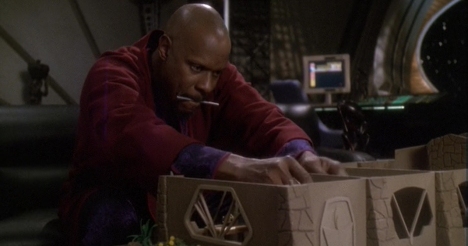
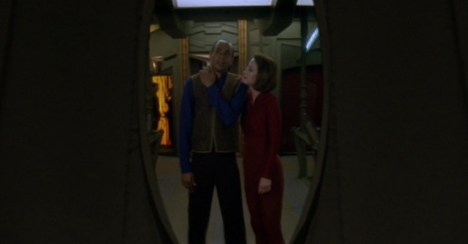
However, these arguments are all based upon awkward presuppositions that reveal a lot about the assumptions of Star Trek fandom, and which tend to miss the forest for the trees. Deep Space Nine is a deeply humanist and optimistic piece of television, one has a great deal of faith in its cast and in people. As wary as Deep Space Nine might be about institutions and authority, Deep Space Nine fundamentally believes that people are good and that it is possible to peacefully coexist. The show simply acknowledges that this takes work, but believes it can happen.
Continue reading

Black Mirror – Black Museum (Review)

One of the more interesting aspects of Black Mirror‘s migration from Channel 4 to Netflix has been the subtle shift from British science-fiction horror towards American science-fiction horror.

The two episodes bookending the fourth season – USS Callister and Black Museum – exemplify this trend, episodes that would seemed very out of place when Black Mirror was “just” a quirky British anthology. USS Callister is obviously steeped in the iconography of a very American science-fiction institution, and while its male entitlement is not a uniquely American experience, that attitude has been more firmly tied into modern American politics than to  contemporary British politics.

Black Museum is even more overtly American, to the point that even the lead character’s British accent is revealed as a sham. The episode opens with a montage that practically screams “Americana!”, a big American car driving through a big American desert, a long stretch of road dwarfed by a seemingly infinite stretch of nothing, where even the jutting mountains provide a sense of impressive scale. Black Museum is set in the mythological America, a country so large that it occasionally seems to be nothing but nooks and crannies, populated with curiousities and eccentricities.

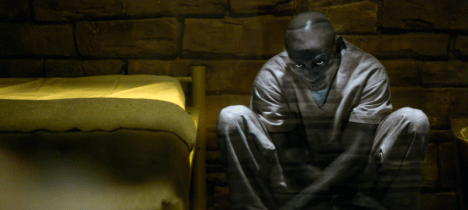
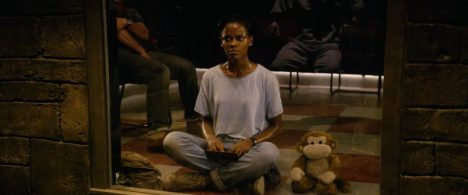
Black Museum unfolds within one such curiousity, a macabre collection of the grotesque and the ghoulish, a twenty-first century freak show run by a twenty-first century P.T. Barnum. However, over the course of the hour, the shape of Black Museum comes into focus. This is not merely a story embracing American trappings, it is also engaging with a distinctly American horror. Slowly, over the course of seventy minutes, Black Museum reveals itself as a science-fiction allegory about the exploitation of African American bodies and African American suffering; one of America’s original sins.

Continue reading

New Podcast! Primitive Culture #19 – Star Trek: Voyager, History and Nostalgia

Over the Christmas Break, I had the pleasure of sitting down with the wonderful Duncan Barrett and talking about Star Trek: Voyager. Duncan is a historian, and I’ve had the pleasure of quoting some of his work on the blog in the past. He hosts Primitive Culture, with Tony Black and Clara Cook, a show wherein the hosts discuss certain historical-related items of interest in the Star Trek canon.

Duncan was in Ireland for part of the break, and so we took the opportunity to have a sit down to talk about the unique approach that Voyager had to the ideas of history and nostalgia within the Star Trek canon, how it viewed both the past and the future. We particularly focused on episodes like Distant Origin and Living Witness, along with a broad discussion of particular themes. It was a fun discussion, and you can listen to it below or directly via Primitive Culture‘s homepage on trek.fm.

New Podcast! On “Filibuster #63” Talking “Opening the X-Files” with Lee Hutchinson

I had the pleasure making a guest appearance on Filibuster with the great Lee Hutchinson, who very kindly invited me on to talk about my book, Opening the X-Files. Always a pleasure to talk about the X-Files, especially with Lee. I also talk a little bit about the origin of the book, the processes that I used when writing it, and the differences between doing a blog project over several years as opposed to filtering that down for a book.

You can listen to the podcast directly at the Filibuster website, but you can also listen to it directly below.

Deep Space Nine at 25 – The Most Multicultural of (Star) Treks

Star Trek: Deep Space Nine is the first (and perhaps only) multicultural Star Trek.

Ironically, Deep Space Nine is often derided by traditionalist fans for eschewing core Star Trek principles. Deep Space Nine was the first (and only) Star Trek series to unfold on a space station rather than a space ship, boldly sitting rather than boldly going. More than that, Deep Space Nine was the first Star Trek series to embroil the Federation in an active war, notwithstanding the Klingon or Romulan Cold Wars nor the Cardassian Wars that retroactively took place during the early seasons of Star Trek: The Next Generation.

However, in a very real and substantial way, Deep Space Nine was also the Star Trek series that hewed most closely to the humanist principles of Gene Roddenberry’s Star Trek. It could reasonably be argued that Deep Space Nine simply made an effort to interrogate and to explore premises that Roddenberry never properly considered. At its core, Star Trek had always been about embracing the unknown with open arms and about learning that what was different was not always scary or monstrous. Deep Space Nine embraced that.

Deep Space Nine was not a series about a bunch of explorers looking “to boldly go” in any literal sense, but about a bunch of characters struggling to fundamentally understand “new life forms and new civilisations.” More than the other Star Trek series, Deep Space Nine was about embracing other cultures and values, about recognising that differences could enrich as much as divide, and that there was no single “right” way build a better world. Deep Space Nine is an ode to humanism and compassion, embodying many of the virtues other Star Trek shows nod towards.

Continue reading

Deep Space Nine at 25 – The Most Timeless of (Star) Treks

This may be the last time we’re all together. But no matter what the future holds, no matter how far we travel, a part of us – a very important part – will always remain here, on Deep Space Nine.

– Benjamin Sisko, What You Leave Behind

Star Trek: Deep Space Nine turned twenty-five this week.

Deep Space Nine is an important addition to the Star Trek canon in a number of respects. It was the only Star Trek series to air as a secondary series, its entire seven-season run coinciding with the broadcast of other weekly Star Trek series; its first two seasons overlapping with the final two seasons of Star Trek: The Next Generation and Star Trek: Voyager. It was also the last Star Trek series to air in syndication. It was arguably marked the point at which the viewing public lost interest in Star Trek during the nineties, the first Star Trek spin-off to lose its audience over its run.

However, Deep Space Nine was also memorable in other respects. It was the first Star Trek series not to take place on a ship named “Enterprise”, and the first not to take place on a ship at all. It was the first Star Trek series to embrace the possibilities of serialisation. It was the Star Trek cast with both the most diverse core cast and the widest ensemble, with an impressive collection of recurring actors and characters fleshing out the world. It was also arguably the only Star Trek series to truly embrace multiculturalism, with several episodes focusing exclusively on Klingon or Ferengi characters.

Still, the most enduring aspect of Deep Space Nine is how enduring it feels. At twenty-five years old, Deep Space Nine still feels fresh and relevant. It is a series that has a lot to say about the current moment, but it also had a lot to say about the moment before that. Deep Space Nine was undoubtedly a product of its time, but never feels as consciously wedded to its cultural context as the other Star Trek series. Ironically for the only Star Trek series to really engage with the idea of time, and the importance of forward movement through time for its character, Deep Space Nine is strangely timeless.

Continue reading

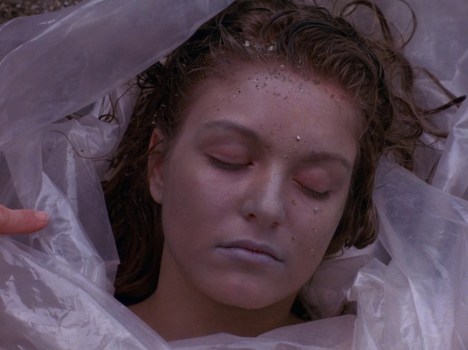
Twin Peaks – Northwest Passage (Review)

This is Special Agent Dale Cooper.

Gary Cooper?

Agent Cooper. Agent.

Twin Peaks remains something of a pop cultural oddity.

Despite its trappings and its pedigree, Twin Peaks was not a niche phenomenon. It was an event. The pilot was the most-watched television movie of 1990, and set about a wave of speculation and engagement. The series inspired a whole generation of television copycats, from Picket Fences to The X-Files. It redefined what was possible on television. It was a water-cooler show. This fact is somewhat obscured by the underwhelming ratings of the recent relaunch and even the sharply declining ratings of the original run.

And yet, in spite of all of that, Twin Peaks is undoubtedly the product of David Lynch. Of course, Lynch was working with writer Mark Frost, who deserves a great deal of credit for fashioning Lynch’s surrealist tendencies into something as coherent and accessible as Twin Peaks. Nevertheless, Twin Peaks is very much “of a piece” with the rest of the director’s work. Even beyond its use of familiar faces and its unmistakable tone, there is a clear sense that Twin Peaks belongs alongside Lynch’s films like Blue Velvet, Mulholland Drive and Inland Empire.

However, the beauty of the original Twin Peaks is the way in which so skillfully distills that illusive and ethereal Lynchian quality into something that is much more conventional than a lot of his cinematic output; something that has the same depth and uncanniness that defines so much of Lynch’s work, while also seeming very much in tune with the popular consciousness. It is a rare quality, a piece of art both universal and specific.

Continue reading

New Podcast! The X-Cast X-Files Podwatch – Episode #102 (Sunshine Days/The Truth)

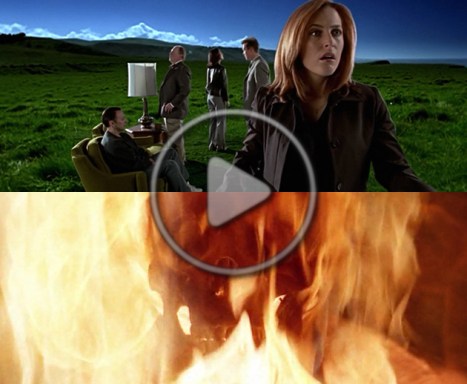
I’m thrilled to be a part of The X-Cast X-Files Podwatch, a daily snippet podcast rewatching the entirety of The X-Files between now and the launch of the new season. It is something of a spin-off of The X-Cast, a great X-Files podcast run by the charming Tony Black. Tony has assembled a fantastic array of guests and hosts to go through The X-Files episode-by-episodes. With the new season announced to be starting in early January, Tony’s doing two episodes of the podcast per day, so buckle up. And we’re at the end of the final season of the original series.

This is my last appearance on the podwatch, although hopefully I’ll be back before long on another X-Cast activity. It’s a pleasure to be joining Tony to discuss the last two episodes of the final season of the original run, Sunshine Days and The Truth. The X-Cast will be continuing beyond this to look at The X-Files: I Want to Believe and the revival, but this is the end of the line for me, at least for the moment.

Continue reading

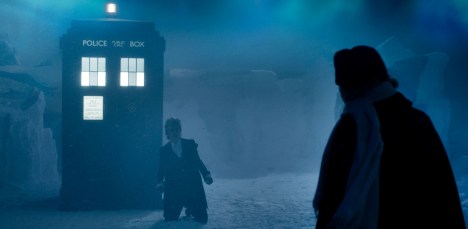
Doctor Who: Twice Upon a Time (Review)

“What was that?”

“To be fair, they cut out all the jokes.”

– the First Doctor and the Twelfth Doctor discuss the power of editting

Snow escape.

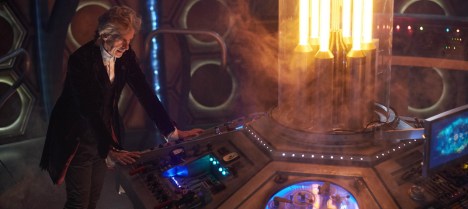
Twice Upon a Time bids farewell to Peter Capaldi, perhaps to Murray Gold, and to Steven Moffat.

It does all of this within the context of a holiday special, much like The End of Time, Part I and The End of Time, Part II bid farewell to David Tennant and Russell T. Davies with a two-part bonanza split across Christmas and New Year’s. In a way, this makes sense. Christmas is a time for indulgence, and these sorts of grand farewells lend themselves to a certain sense of self-congratulations and celebration. Davies went bigger and bolder for The End of Time, Part I and The End of Time, Part II, opting for a cameo-stuffed blockbuster affair, his style turned to eleven.

Cooler heads prevail.

Twice Upon a Time does something similar, albeit in the style of Steven Moffat. Davies tended to jump from set piece to set piece with his bombastic Christmas specials like The Runaway Bride and Voyage of the Damned, with only the thinnest of plots holding them together. Moffat’s Christmas specials like A Christmas Carol or The Husbands of River Song have set pieces, but they often feel incidental to the characters and dialogue. Twice Upon a Time is a collection of witty banter and wry observations held together by a plot that even the Doctor has to admit does not exist.

In some ways, this feels like an appropriate way to bid farewell to Steven Moffat’s tenure as showrunner on Doctor Who, to draw down the curtain on an impressive and momentous six seasons (and almost eight years) that radically redefined what the programme could (and even should) be. Twice Upon a Time is a Christmas indulgence, but one that feels earned. It is an adventure that doesn’t really need to exist, and one which accepts that premise as its starting point. It is an episode dancing around the inevitable. It is not especially graceful, but is charming nevertheless.

The Twelfth Day of Christmas.

Continue reading

New Podcast! The X-Cast X-Files Podwatch – Episode #98 (Providence/Audrey Pauley)

I’m thrilled to be a part of The X-Cast X-Files Podwatch, a daily snippet podcast rewatching the entirety of The X-Files between now and the launch of the new season. It is something of a spin-off of The X-Cast, a great X-Files podcast run by the charming Tony Black. Tony has assembled a fantastic array of guests and hosts to go through The X-Files episode-by-episodes. With the new season announced to be starting in early January, Tony’s doing two episodes of the podcast per day, so buckle up. And we’re in the final season of the original series.

And now it’s time to bid farewell to the dynamic duo of myself and the great Clara Cook, with the two of us discussing Providence and Audrey Pauley.

Continue reading