• Following Us

  • Categories

  • Check out the Archives


  • Awards & Nominations

Star Trek (IDW, 2009) #13 – The Red Shirt’s Tale (Review)

The first Star Trek pilot, The Cage, was produced in 1964. To celebrate its fiftieth anniversary, this December we are reviewing the second season of the original Star Trek show. You can check out our first season reviews here. Check back daily for the latest review.

The IDW monthly comic series that launched after the release of Star Trek is an interesting beast.

Writer Mike Johnson has been on board since the title launched in September 2011, lending the comic a sense of creative consistency. Much has been made of the involvement of Roberto Orci as “creative consultant” on the title, as if to imply that the comic might somehow be legitimised in relation to the blockbuster franchise that spawned it. Certainly, the series does not enjoy the same loose attitude towards contemporary continuity that characterised the DC comics series published during the mid-eighties.
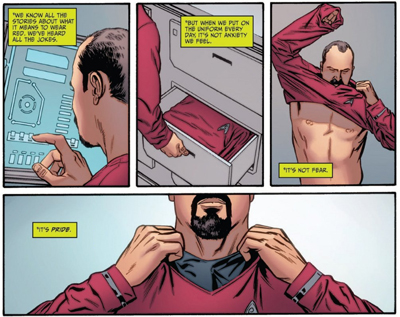
Suit up!

Suit up!

At the same time, it is not as if IDW’s on-going Star Trek comic series can claim a closer relation to canon. After all, the events of the comic’s first arc were rendered explicitly non-canonical by a casual conversation between Pike and Kirk in the first twenty minutes of Star Trek Into Darkness. This is not a problem of course – any more than continuity issues were a problem for the mid-eighties DC series – but they do suggest that the series’ fixation on continuity is perhaps misplaced.

This weird fetishisation of “continuity” defined the first year or so of the title’s existence, with issues dedicated to essentially re-telling classic Star Trek stories using the new cast and crew. (Indeed, only one story from that year – Vulcan’s Vengeance – was not based on a classic episode.) The Red Shirt’s Tale serves as something of a half-way marker as the comic began to transition away from these sorts of continuity-heavy retellings, focusing a bit more on the new characters and the new world. The issue is a retelling of The Apple, but in a way that is more thoughtful and playful than a lot of what came before.
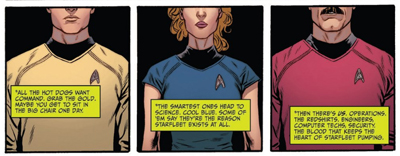
Colour-coded...

Colour-coded…

Continue reading

Star Trek – The Apple (Review)

The first Star Trek pilot, The Cage, was produced in 1964. To celebrate its fiftieth anniversary, this December we are reviewing the second season of the original Star Trek show. You can check out our first season reviews here. Check back daily for the latest review.

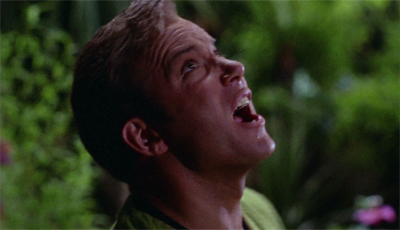
It’s amazing how iconic Star Trek could be, even when it was terrible. There’s something quite ironic about how much of the franchise’s truly memorable iconography is rooted in some of the show’s weakest episodes. The Apple is one of the most iconic and memorable Star Trek episodes, featuring a giant evil dragon head sculpture, David Soul in orange body paint, lots of speechifying from Kirk, and a strong atheistic message with Kirk casting himself as Satan in the Garden of Eden.

It is also just terrible.

"VAAAAAAAL!!!"

“VAAAAAAAL!!!”

Continue reading

Space: Above and Beyond (Review)

This November (and a little of December), we’re taking a trip back in time to review the third season of The X-Files and the first (and only) season of Space: Above and Beyond.

It is very hard to judge a series based on the first season alone. After all, many long-running series evolve quickly and radically from their debut year. In many cases, the first season is about desperately trying to find a footing as everybody gets used to the realities of producing a television show. Assessing a first season is often an exercising in gauging potential, which makes it a risky proposition when trying to evaluate the first and only season of a cancelled television show.

Space: Above and Beyond contains its fair share of clunkers, as does any first season with twenty-odd episodes. There are episodes that seem at odds with the premise and mood of the show, being written by staff writers before the show went to air or simply trying to do something with which the show isn’t comfortable. There are episodes that have interesting ideas, but don’t place emphasis on the show’s strengths.

spaceaboveandbeyond-pilot32

However, this is all but expected for a first season. A first season is a learning experience for all involved. After all, the first season of The X-Files was packed with episodes like Shadows, Fire, Lazarus, Young at Heart and Born Again. It is very rare for the first season of any show – particularly a genre show – to be the strongest. There are rules to be learned, beats to be established, foundations to be laid. If shows are lucky, that work gets to pay off in later seasons, as everybody gets more comfortable.

Space: Above and Beyond never got that chance, which is a shame. Because there is a phenomenal amount of potential on display here.

spaceaboveandbeyond-thefarthestmanfromhome24

Continue reading

Star Trek (DC Comics, 1984) #43-45 – The Return of the Serpent! (Review)

The first Star Trek pilot, The Cage, was produced in 1964. To celebrate its fiftieth anniversary, this December we are reviewing the second season of the original Star Trek show. You can check out our first season reviews here. Check back daily for the latest review.

One of the benefits of a franchise as old and as diverse as Star Trek is the opportunity it provides for introspection and reflection. Star Trek has existed for almost fifty years. In those fifty years, the franchise has been written by a lot of different people at a lot of different points in time. As such, it makes sense that viewpoints shift and core principles are questioned. One of the more intriguing aspects of watching Star Trek grow older is watching the franchise question some of its earlier decisions and opinions.

The Return of the Serpent plays very much as a criticism of The Apple, a three-issue storyline dedicated to exploring just how wrong Kirk was to impose his own attitudes and beliefs upon the people of Gamma Trianguli VI. In some ways it can be see as both a spiritual successor to Star Trek II: The Wrath of Khan and a precursor to the Star Trek: Deep Space Nine episode Crossover, in that it is a story based significantly around critiquing a moral judgement made by James Tiberius Kirk and endorsed by the show.

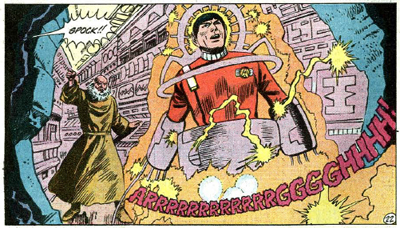
Shocking twists!

Shocking twists!

The Return of the Serpent is an interesting story, because it consciously problematicises a story from the original Star Trek television show. It is essentially a story about how Kirk made a terrible decision that cost countless lives. This criticism is voiced more explicitly that the criticism of Kirk in The Wrath of Khan and half-a-decade before Crossover would make it to air. This is a very bold and brave tie-in from DC comics. It is hard to imagine a story like The Return of the Serpent being published during Richard Arnold’s tenure overseeing Star Trek tie-ins.

That said, Mike Carlin’s script is not without its own problems. For all that it challenges a decision that Kirk made during the original run of the series, the ending rather consciously avoids the implications of that decision. The Return of the Serpent seems to assume that Kirk can just reverse the damage he has caused by flicking a switch – by going back and repairing the original mistake. For all that The Return of the Serpent cleverly interrogates Kirk’s decisions and motivations, it is undermined by a rather clean and convenient resolution.

Into the belly of the beast...

Into the belly of the beast…

Continue reading

Space: Above and Beyond – … Tell Our Moms We Done Our Best (Review)

This November (and a little of December), we’re taking a trip back in time to review the third season of The X-Files and the first (and only) season of Space: Above and Beyond.

Fox has a very weird (and perhaps even paradoxical) reputation when it comes to cancelling television shows. On the one hand, there is the tendency to run successful shows into the ground, missing the window of opportunity to transition them into big screen franchises. The X-Files and 24 are perhaps the most obvious example of this tendency. Of course, this isn’t unusual in American television. If a show is making money, it makes sense to keep on the air for as long as possible.

On the other hand, the network is notoriously ruthless when it comes to cancelling young shows. Although popularised by the cancellation (and subsequent revival) of shows like Firefly and Family Guy in the early years of the twenty-first century, the network had already demonstrated that it had little time for dead weight in the schedule. In hindsight, it seems like a wonder that The X-Files survived its first season, and was allowed to grow and develop into a massive cultural phenomenon.

We have met the enemy...

We have met the enemy…

Indeed, considering the abbreviated runs of shows like Profit or The Tick or The Ben Stiller Show or Harsh Realm or The Lone Gunmen, Space: Above and Beyond was lucky to get a full twenty-two-episodes-and-a-pilot run on Fox, even if it couldn’t count on the network to air the episodes at a consistent time on a consistent day. Space: Above and Beyond was undoubtedly treated shabbily by the network, but it could have been a lot worse.

That’s not the best eulogy you could write for a television show, but it is worth treasuring what we got.

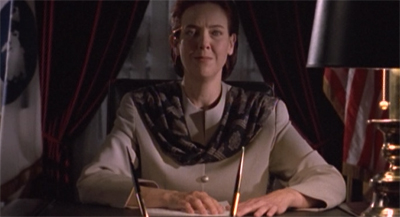
President of the World...

President of the World…

Continue reading

Star Trek – The Changeling (Review)

The first Star Trek pilot, The Cage, was produced in 1964. To celebrate its fiftieth anniversary, this December we are reviewing the second season of the original Star Trek show. You can check out our first season reviews here. Check back daily for the latest review.

The Changeling, an episode so good that they made it twice.

Sarcasm aside, The Changeling is mostly interesting for reasons outside the episode itself. It is the first contribution from John Meredyth Lucas, who would become the show’s producer towards the end of the season. Lucas took over from Gene L. Coon and is notable for being the first production staff member on Star Trek to direct an episode from his own script, with Elaan of Troyius in the show’s troubled third season. The Changeling arguably had an even bigger influence on the franchise, serving as a template for the first feature film.

Probing problems...

Probing problems…

Okay, “template” may be a slight exaggeration. However, you can definitely feel the influence of The Changeling on Star Trek: The Motion Picture. However, that may simply be because the script to The Changeling hits quite heavily on some of Gene Roddenberry’s pet themes. It has a villainous robot outwitted by emotional humans, Kirk besting a god-like entity, and larger philosophical questions about religion and theology.

Even outside of the themes that resonate specifically with Roddenberry, The Changeling hits on a variety of other classic Star Trek tropes – from a threat leaving nothing but dead star systems in its wake through to an abundance of dead red shirts. There’s an argument to be made that The Changeling is one of the most archetypal Star Trek episode. If you were to bake a Star Trek episode from a stock list of ingredients, it would look a lot like this. For better or worse.

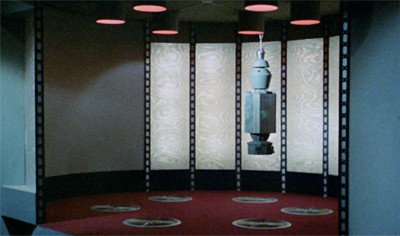
Melding metal...

Melding metal…

Continue reading

Space: Above and Beyond – And If They Lay Us Down to Rest… (Review)

This November (and a little of December), we’re taking a trip back in time to review the third season of The X-Files and the first (and only) season of Space: Above and Beyond.

The last stretch of episodes of Space: Above and Beyond are quite mournful and introspective.

It is very difficult to tell a war story. There are a host of tightropes that any writer has to navigate. After all, it is very easy for a story about the bonds of warfare and humanity in wartime to be interpreted as militaristic or fascistic. At the same time, it is very easy for an anti-war parable to seem critical of the soldiers fighting the war, to dismiss the bravery and courage on display in that most horrific of environments.

Seeing eye-to-eye...

Seeing eye-to-eye…

With its futuristic tech and gigantic guns, as well as its fascination with the military apparatus, it is easy to read Space: Above and Beyond as a pro-military piece. Given how much pride it takes in the way that it presents military life, or how much it wallows in the military setting, a casual viewer might be forgiven for assuming the it glorifies warfare. However, this is the most superficial of readings. It ignores a lot of what the show actually has to say about combat and warfare.

Space: Above and Beyond is by turns cynical and romantic in its portrayal of this futuristic conflict – it clearly respects and appreciates the sacrifices made by those in service of mankind, but is also wary about the motivations of those ordering the sacrifices. It is a very delicate balance to maintain. However, And If They Lay Us Down to Rest… and … Tell Our Moms We Done Our Best seem to lay the cards out on the table, once and for all. This is as anti-war as the show ever gets.

Face of the enemy...

Face of the enemy…

Continue reading

The X-Files – Season 3 (Review)

This November (and a little of December), we’re taking a trip back in time to review the third season of The X-Files and the first (and only) season of Space: Above and Beyond.

The second season of The X-Files was quite experimental in nature. Not all of that experimentation was intentional or planned, but the second season worked quite hard to demonstrate what the show could do. Gillian Anderson’s pregnancy forced the show to plot a relatively long-form arc, with Scully getting abducted and the X-files remaining closed for the first six episodes of the season. In essence, Anderson’s absence forced the show to embrace serialisation.

Other second-season experiments seemed more relaxed. The show discovered that big two-part mythology episodes did well during sweeps. Die Hand Die Verletzt and Humbug proved that the series could do comedy. David Nutter, Rob Bowman and Kim Manners became the show’s go-to directors. The show’s alien conspiracy arc became a recurring thread rather than a subset of the monsters of the week. There was a lot learnt during that second season.

xfiles-paperclip26

The third season of The X-Files feels a lot more relaxed, and a lot more comfortable. The third season seems to be largely about reinforcing the lessons learned during the second season. The third season gives more work to writers, directors and actors who made an impression during the second season. It works hard to solidify the concept of The X-Files. It seems like Chris Carter and his collaborators have finally figured out exactly what The X-Files should be, and are delivering it consistently.

The result is one of the most impressive seasons of television produced in the nineties, beginning a hot streak for the show. Chris Carter and Ten Thirteen would manage to produce three consistently fantastic seasons of television between September 1995 and May 1998. The third season of The X-Files really gets that ball rolling in a very profound and meaningful sense.

xfiles-josechungsfromouterspace5 Continue reading

Star Trek – Wolf in the Fold (Review)

The first Star Trek pilot, The Cage, was produced in 1964. To celebrate its fiftieth anniversary, this December we are reviewing the second season of the original Star Trek show. You can check out our first season reviews here. Check back daily for the latest review.

Wolf in the Fold is Robert Bloch’s third and final contribution to Star Trek.

In keeping with What Are Little Girls Made Of? and Catspaw, the result is intriguing, bizarre and more than a little bit dysfunctional. More than any of the other writers drafted in to write for the science fiction show, Bloch’s fingerprints remain all over his script. Writers like Gene L. Coon and D.C. Fontana generally do a good job reconciling the work of science-fiction writers like Ray Bradbury, Theodore Sturgeon, Norman Spinrad or Harlan Ellison to make their stories fit within the frame work of Star Trek. However, even after re-writes, Bloch’s voice remains his own.

Knife to see you...

Knife to see you…

Of course, it’s quite clear that Wolf in the Fold has been through the standard re-write process. The script is a mess, struggling to tie together two basic plots (Scotty is accused of murder; the Enterprise is possessed by Jack the Ripper) in ways that don’t always work. There’s a really long and awkward expositional scene in the middle of the episode that consists primarily of Majel Barrett reading off weird-sounding words in order to assure viewers that Jack the Ripper really could be an immortal hate-fueled killing machine, given the rules of the Star Trek universe.

The are very serious problems with Wolf in the Fold. On a storytelling level, the pacing is a mess and the tone is all over the place. Bloch’s scripts continue to be even more problematic than usual when it comes to issue of gender – “Star Trek does slasher horror” is as borderline misogynistic as you might fear. However, there is something endearingly bizarre about the whole thing, as Bloch once again forces Kirk and his crew to confront an irrational universe that doesn’t necessarily conform to their understanding of it.

Flame on...

Flame on…

Continue reading

The X-Files – Talitha Cumi (Review)

This November (and a little of December), we’re taking a trip back in time to review the third season of The X-Files and the first (and only) season of Space: Above and Beyond.

Talitha Cumi is a staggeringly confident piece of television, the kind of episode casually produced by a show at (or approaching) the top of its game.

It is interesting just how much this season finalé seems to promise business as usual. It is perhaps the least radical of the show’s season-ending cliffhangers, with the third season closing on an immediate rather than a conceptual threat to our leads and to The X-Files as a show. The Erlenmeyer Flask ended with the death of Deep Throat and the closing of the X-files. Anasazi ended with Mulder being burnt alive in a boxcar filled with alien bodies. Gethsemane ups the ante further.

A stab in the dark...

A stab in the dark…

In contrast, Talitha Cumi ends with the Alien Bounty Hunter walking towards Mulder and Scully in a rather menacing fashion. It is very effective television – and a solidly suspenseful cliffhanger – but it also feels rather low-key when compared to other season-ending episodes. Talitha Cumi feels like a pretty effective hook, rather than a game-changer. There’s an immediacy to the cliffhanger, but nothing that threatens to upend the show as a whole.

Then again, one suspects that is entirely the point. The third season has been largely about consolidation of The X-Files. It makes sense that it wouldn’t throw everything up into the air at the end of the season.

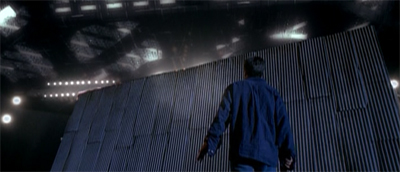
It's been a long year...

It’s been a long year…

Continue reading