• Following Us

  • Categories

  • Check out the Archives


  • Awards & Nominations

Non-Review Review: The Girl on the Train

What would you get if you tried to produce Gone Girl without David Fincher?

It is a tough question to answer, given Fincher’s style is an integral part of the film. It is impossible to divorce Gone Girl from Fincher’s steady cam shots and clinical framing. However, The Girl on the Train still makes a valiant attempt to answer. Whatever about the source material, the adaptation of The Girl on the Train is monomaniacally fixated upon that pulpy breakout psychological thriller, constructing another gaslighting murder investigation in desaturated terms to an electronic score that cannot help but evoke the work of Trent Reznor and Atticus Ross.

A pale reflection.

A pale reflection.

However, director Tate Taylor is no David Fincher. Fincher keenly understood the pulpy absurdity of his source material, playing into the ridiculousness of layered twists and double-bluffs that reimagined marriage as some sort of long-form psychological warfare. Taylor fundamentally misunderstands the tone of his film, pitching the forced coincidences and crazy revelations of The Girl on the Train as something to be taken entirely seriously. Gone is the irony that made Gone Girl so effective, replaced with an ill-advised earnestness that refuses to blink.

The problem is not that The Girl on the Train comes off the rails as the overly elaborate details of its storytelling world come into focus. The problem is that it doesn’t nearly enough momentum to reach its destination.

A trained observer.

A trained observer.

Continue reading

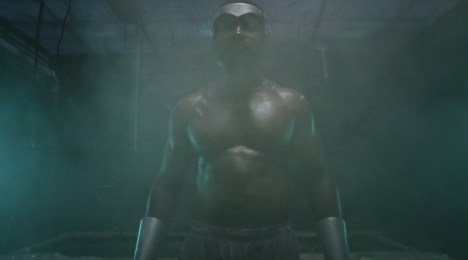
Luke Cage – Step in the Arena (Review)

My name is Luke Cage.

Step in the Arena is the obligatory origin episode. It is also the strongest episode of the season.

One of the most striking aspects of Luke Cage is the thrill that the show takes in being a superhero story. It isn’t simply that showrunner takes an established set of plot and character beats and stretches them over thirteen episodes, much like the first season of Daredevil seemed to do with the structure of Batman Begins. After all, Luke Cage messes with the superhero story structure in a few interesting ways, particularly with regards to the character of Cornell Stokes.

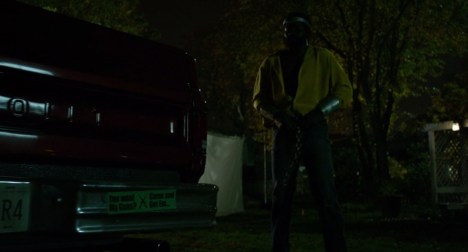
lukecage-stepinthearena29a

Luke Cage adores the trappings of superhero storytelling. It thrives on comic book iconography. It revels in the familiar tropes. It embraces the goofy concepts. It latches on to the absurd coincidences. Step in the Arena is a very familiar superhero origin story, populated with familiar beats like the suspect human experimentation or the dead best friend or the fugitive status. However, the film executes those story beats with an incredible and infectious energy. There is no hesitation here, no deconstruction, no undermining.

However, the beauty of Step in the Arena lies in how it subtly shifts the emphasis of these familiar storytelling beats in a way that emphasises its status as a black superhero origin story. A lot of the charm of Luke Cage lies in realising that the writers do not have to choose between telling a story that speaks to the black experience in contemporary America or offering an archetypal superhero television series. Luke Cage never has to compromise, using broth threads to illuminate and inform one another.

lukecage-stepinthearena33a

Continue reading

Non-Review Review: Miss Peregrine’s Home for Peculiar Children

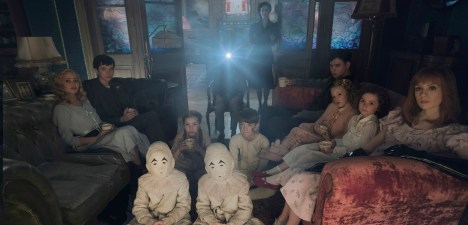
Miss Peregrine’s Home for Peculiar Children works best when it serves as a vehicle for Tim Burton’s imagination, exploring a world where tall tales seem to be real and monsters manifest themselves literally, where trauma and loss are explained through escape into fantasy, and where shadows distort and bend into uncanny shapes as if to suggest that there is so much more to this world than it might first appear. This is all stock Burton imagery, but the director approaches it with an endearing energy.

Unfortunately, there is more to Miss Peregrine’s Home for Peculiar Children. The film is not content to play as broad Burton fantasy of childhood mythmaking and coming of age. Despite an opening act that hints at something of a young adult follow-up to Big Fish, Miss Peregrine’s Home for Peculiar Children inevitably gets bogged down in the finer trappings of its young adult source material. Exposition is ladled on, rival orders are established, sequels are set up, familiar plot beats are not so much hit as hammered.

Movie night.

Movie night.

Continue reading

Non-Review Review: Free State of Jones

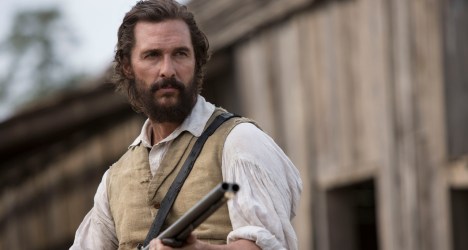
Free State of Jones does a decent job approximating the feel of a prestige picture.

Free State of Jones feels almost like writer and director Gary Ross is running through a checklist of all the elements expected from a successful prestige picture. It deals with heavy subject matter, unfolding primarily during the Civil War and touching upon Reconstruction. It is paced indulgently, never rising to more the a sitting trot. It is anchored in performance by a critically-acclaimed Oscar-winning actor who dominates the film. Its cinematography is uncomplicated and stately. It is laboured with a framing device that offers the illusion of depth.

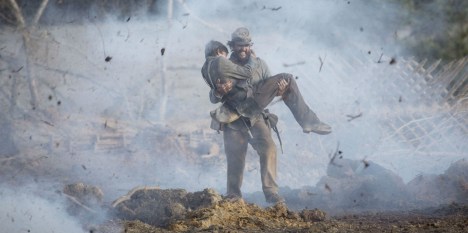
When the dust settles...

When the dust settles…

Free State of Jones plays as an imitation of a much bolder and provocative film. There are points at which the film brushes up against potentially brilliant ideas, only to back away. For a film about slavery, Free State of Jones finds itself unable to look beyond its white leading character. The framing and scene composition is clearly intended to seem dignified, but instead feels lifeless. The film’s perspective is limited, in both a literal and figurative sense. There are a lot of interesting ideas inside Free State of Jones, but none of them are allowed to grow.

There is a heavy earnestness to Free State of Jones, but it suffocates the story.

Riding shotgun on secession.

Riding shotgun on secession.

Continue reading

Sympathy for the Other: The Science-Fiction Horror Film in the Brexit/Trump Era

It’s not over. It’s just not yours any more.

– Melanie, The Girl With All the Gifts

exmachina

Note: This post contains minor spoilers for the reboot of Westworld and major spoilers for the endings of The Girl With All the Gifts and Ex Machina. Consider yourself warned. Continue reading

Non-Review Review: The Girl With All the Gifts

The Girl With All the Gifts is brilliant and uncompromising.

Elevated by a smart script drawing from a clever book, and fantastically tense direction from Colm McCarthy, The Girl With All the Gifts is at once a brilliant example of the classic zombie movie tropes and a sly subversion of them. The Girl With All the Gifts was originally published in 2014, but it feels strangely of this cultural moment. It is very much a young adult science-fiction commentary on the world as it exists today, perfectly capturing the anxiety simmering beneath Brexit and Trumpism.

Gifted.

Gifted.

The Girl With All the Gifts in an exception piece of work, Carey’s script understanding the myriad of genre conventions that it is navigating while McCarthy pushes the material just a little bit further. It is unsettling and palpable in the ways that a post-apocalyptic zombie film needs to be, but it also goes that bit further. The strongest aspect of The Girl With All the Gifts is a willingness to follow its strands through to their logical conclusion, as unrelenting and confrontational as they might be.

The Girl With All the Gifts reimagines the zombie movie for a new generation.

Putting her neck on the line.

Putting her neck on the line.

Continue reading

Non-Review Review: The Magnificent Seven

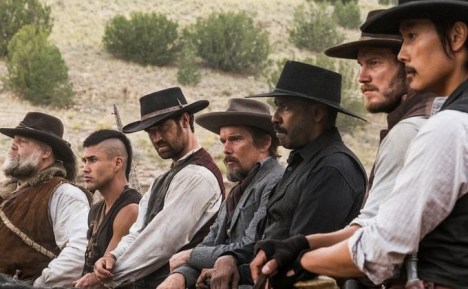
The Magnificent Seven is a western, pure and simple.

It is not a deconstruction. It is not a reconstruction. It is not filtered through the lense of postmodernism or through the prism of postcolonialism. It does not interrogate the underlying assumptions of the western, nor does it explore the relationship between the myth of the frontier and the brutal reality. From beginning to end, through and through, The Magnificent Seven is very much a straightforward execution of the familiar western tropes delivered with a minimum of irony or reflection.

"Ain't we magnificent?"

“Ain’t we magnificent?”

There is a certain charm to this. Director Antoine Fuqua takes great pleasure in running through the standard western tropes, particularly those epic tracking steadicam shots of riders galloping through acres of beautiful countryside as the theme music builds. There is a certain pleasure to be had in The Magnificent Seven as a film resistant to modernisation, a film content in the assumption that the language and iconography of the genre does not need to be tweaked or updated beyond the application of some computer-generated imagery and a modern cast.

There is also something deeply frustrating in all of this, something that reduces The Magnificent Seven to a rather lifeless collection of western imagery tied together in a fairly unimaginative way without anything particularly bold or exciting to say.

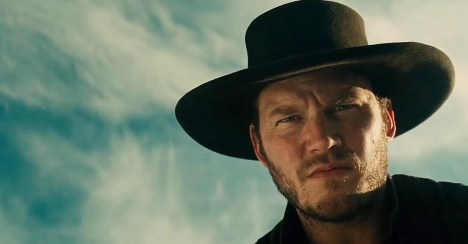
The sky's the limit.

The sky’s the limit.

Continue reading

Non-Review Review: Blair Witch

Blair Witch is more clever than scary, which is at once the best and worst thing about it.

Reteaming veteran collaborators director Adam Wingard and writer Simon Barrett, the film is nominally a long-delayed sequel to the classic 1999 found footage horror. The Blair Witch Project was something of a game-changer when it arrived. At a point in time when movies like The Matrix and The Truman Show (not to mention eXistenz and The Thirteenth Floor) teased out the idea of characters trapped in unreal surroundings, The Blair Witch Project applied that aesthetic to a horror movie in the style of Cannibal Holocaust.

Any witch way but loose...

Any witch way but loose…

The Blair Witch Project kickstarted an entire genre of contemporary horror framed as documentary footage of horrible happenings; Cloverfield, [rec], Diary of the Dead, The Last Exorcism, Paranormal Activity. Such films appealed to studios because they were cheap to make, relying on no-name casts and minimal special effects as part of the premise. They also resonated with audiences, perhaps because they spoke to the postmodern anxieties at the cusp of the twenty-first century, perhaps because they mirrored the use of amateur footage in news and online.

Blair Witch marks a return to that premise, perhaps a fond farewell to a genre that has been in decline for the past few years. At their best, Wingard and Barrett push the premise of found footage horror to its limit. This is a film that wallows in its self-awareness and referential integrity, one that feels postmodern and cheeky, one that draws attention to its own status as a sequel by pointedly trapping its characters within a sequel. It is all very clever, and Blair Witch works best when it plays with these ideas. Unfortunately, its scares are nowhere near as clever.

Branching out.

Branching out.

Continue reading

Non-Review Review: Ben Hur (2016)

What does a biblical blockbuster look like in the twenty-first century?

Hollywood has wrestled with the question of how best to resurrect old genres. The past couple of years have seen a resurgence in revisionist westerns like The Hateful Eight or Bone Tomahawk or The Revenant. There have even been a smaller number of contemporary swords-and-sandals epics like The Eagle or Centurion or Pompeii. These genre were once a staple of Hollywood production, but they fell by the wayside in the intervening years. Barring an occasional breakout success, they are considered dead genres.

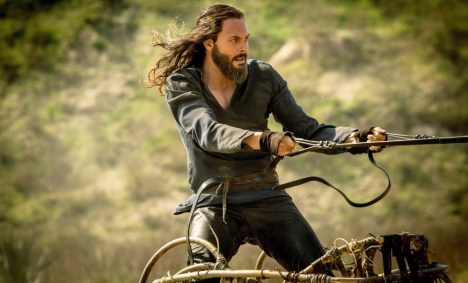
Chariots of fire!

Chariots of fire!

Biblical epics are very much an example of such a genre, to the point that Hail, Caesar! focused on the production of such a film as a celebration of the Golden Age of Hollywood. More people can probably point to the iconic version of Ben-Hur starring Charleton Heston as the eponymous chariot rider than can name Lew Wallace as the author of the book upon which it was based. When Hollywood attempted a blockbuster adaptation of C.S. Lewis’ Narnia books, they did so by stripping out a lot of the more overt Christian themes.

Ben-Hur is part of a mini modern revival of these classic biblical epics for a new age, alongside films like Exodus: Gods and Kings or Noah or Risen. It is a film which struggles with the question of what a biblical epic needs to look like in this day and age, but is primarily useful as a counter-example. Whatever a successful modern biblical epic might look like, it is not this.

"Is Game of Thrones hiring, by any chance?"

“Is Game of Thrones hiring, by any chance?”

Continue reading

Non-Review Review: Hell or High Water

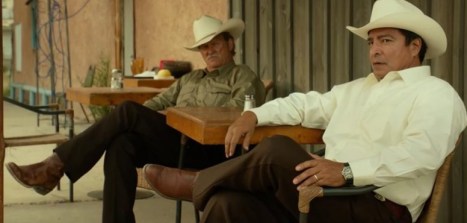
Hell or High Water is a modern western, a tale of the land and the people shaped by it.

Hell or High Water revels in the old cowboy tropes. Repeatedly over the course of the film’s runtime, eye witnesses liken the outlaw pair at the centre of the story to “cowboys” or “cowpokes.” Set in West Texas, the film unfolds in a world of cowboy hats and rattlesnakes. This is a story about lonely men in the desert, land and self-determination. At one point, a half-Native American half-Mexican character pauses to reflect upon the idea that this is essentially the foundational myth of the frontier playing out again. The actors might change, but the roles remain the same.

No Country for Young Men.

No Country for Young Men.

Hell or High Water is bitter and cynical reflection on the concept of land and ownership, and the importance that it plays to the American identity. Towards the end of the film, bank robber Toby Howard justifies his actions by reference to generations of struggle; the generations that came before and the generations that will follow, and the land that has either condemned or sustained them. Toby is quite literally building his own future out there on the frontier, his bank robberies motivated by the urge to wrest back his family’s land so he might wrest a profit from it.

Like its lead characters, and like the land that drives them to this desperate course of action, Taylor Sheridan’s script is reserved and restrained. There is an economy to it, a sparseness and a leanness that suits this tale and the people inhabiting it. However, Sheridan’s script implicitly trusts director David Mackenzie, who manages to find a striking beauty and a stunning brutality in this rugged landscape inhabited by these rugged men.

At home on the Ranger...

At home on the Ranger…

Continue reading