• Following Us

  • Categories

  • Check out the Archives


  • Awards & Nominations

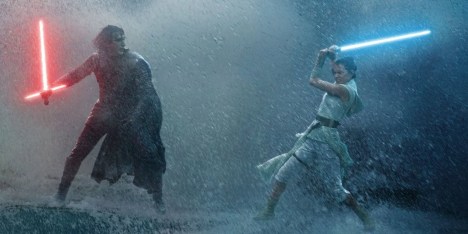
New Escapist Column! On the Need of “Star Wars” to “Grow Beyond” the Skywalkers…

I published a new In the Frame piece at Escapist Magazine last night, looking at the future of the Star Wars brand.

While there is still some ambiguity about where Disney will take the cinematic franchise following the release of Star Wars: Episode IX – The Rise of Skywalker, a clean break might be the best course of action. Modern franchises are too beholden to fan service and familiarity, to retreading old ground in order to avoid offending or challenging existing fans. This prevents franchises from growing and embracing new ideas and new possibilities. It leaves them stagnant, and ultimately does little to appease fandoms with very strong ideas of how characters or ideas should be portrayed.

You can read the piece here, or click the picture below.

“So, Your Son is a Nazi”: Modern Hollywood’s Weird Fixation on Feel-Good Stories About Fascists…

JoJo Rabbit is supposed to be an “anti-hate satire”, but what exactly is it satirising?

To be fair to director Taika Waititi, JoJo Rabbit is a well-made and charming crowd-pleaser. It manages something genuinely impressive, offering a feel-good coming of age comedy set against the backdrop of Germany in the dying days of the Second World War. It belongs the awkward, saccharine genre that produced films like Jakob the Liar or Life is Beautiful or The Day the Clown Cried. It is impossible to overstate how thin a razor blade Waititi is dancing, and how remarkable it is that he maintains his balance. The film never feels too sombre or too dark, but never as tasteless as something like The Book Thief.

Of course, Waititi largely manages this through cinematic sleight of hand. He avoids dwelling too heavily or for too long on the victims of fascist oppression in Nazi Germany. JoJo Beltzer finds a young Jewish girl hiding in his attic, but the film never details the horrors of the Final Solution. The characters are repeatedly confronted with the sight of bodies hanging in the public square, but the camera never really lingers on them. Instead, it focuses on JoJo’s reaction to them. The audience’s gaze is fixated on his gaze. The question isn’t how the audience feels about the horror, but how they feel about how JoJo feels.

This raises an interesting and slightly unsettling question about the recent wave of Hollywood films exploring the emergence of the modern extreme right and the resurgence of fascist ideology. Who exactly are these films for? What is the intended audience of JoJo Rabbit, and what exactly is it saying to them?

Continue reading

Of Death Stars, Sarlaccs and Sexting: The Curious Sexual Energy of “Star Wars”…

At its core, Star Wars is a Jungian, Campbellian and Freudian story about what it’s like to grow up.

This is perhaps most obvious within the original trilogy. Star Wars: Episode V – The Empire Strikes Back is ultimately about the realisation that your parents will eventually and inevitably fail you. Star Wars: Episode VI – The Return of the Jedi is about growing up and learning to make peace with them anyway. Of course, the individual films frame these core themes through their own lenses. Star Wars: Episode VII – The Force Awakens reframes that adventure so it centres on people who have rarely had the opportunity to anchor such a story. Star Wars: Episode VIII – The Last Jedi asked what that meant in 2017.

Naturally, this coming of age story is framed in terms of adventure – young characters discovering that they are part of an epic mythology that guides them towards confrontations with ancient and incredible evils, often learning hidden truths about themselves and their destiny. There’s a reason that the Star Wars franchise has come to be associated with the “monomyth”, distilling the hero’s journey into something with a story with universal resonance. It is a story about what it feels like to grow up.

It is also, inevitably, very much about sex. And in some very interesting (and quite eccentric) ways.

Continue reading

“The Price You Pay for Being Successful”: How “The Empire Strikes Back” Was One of the First Blockbusters of the Eighties…

Star Wars is often discussed in the context of the late seventies, whether the political context of the Vietnam War or George Lucas’ status as an up and coming director alongside the likes of Francis Ford Coppola or Steven Spielberg or even just the way in which it shifted movie-making away from the new Hollywood model towards the blockbuster template.

Despite all of this, it is often overlooked just how firmly Star Wars: Episode V – The Empire Strikes Back is rooted in the context of the early eighties. There are obviously any number of reasons for this. Most obviously, Star Wars: Episode VI – Return of the Jedi consciously retreated back to the late seventies trappings of the original film, right down to its decision to restage the Vietnam War with adorable toyetic teddy bears in the place of the Viet Cong. There’s also a sense in which the cultural markers of The Empire Strikes Back are more subtle than those of Star Wars.

Sabre-rattling.

Watched from a modern perspective, The Empire Strikes Back seems to herald the arrival of the new decade. Like all great sequels, it broadens both the scale and scope of Star Wars, but it also pushes the franchise forward. Even beyond the now iconic revelations about family lineage and power dynamics, The Empire Strikes Back radically redefines what it means to be a Star Wars film. It is no longer about navigating the moral ambiguity of an uncertain time, wrestling with the spectre of American might. It is instead about exploring social power structures, of finding one’s place in system.

The Empire Strikes Back might just be the first truly great eighties movie.

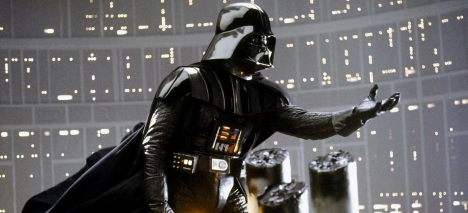
A little father-son outreach.

Continue reading

“Can You Help Him?” The Millennial Malaise of “The Phantom Menace”…

It is almost a cliché to say it, but 1999 was an amazing year for movies.
No, really.

Of course, everything is subjective and different people have very different tastes, but there was something special about that year. There were traditional crowd-pleasers like The Green Mile and The Cider House Rules. There were young poppy disruptors like Go! or Run Lola Run. There were formative films from era-defining directors like The Sixth Sense, Magnolia or Election. There were epoch-defining hits like The Matrix or Fight Club. There was a wave of teen movies serving an underserved audience like Cruel Intentions, 10 Things I Hate About You or The Virgin Suicides.

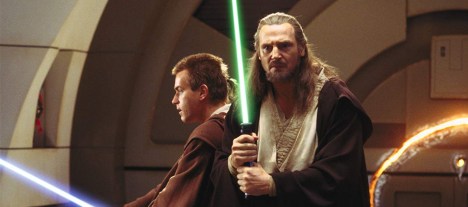
And there was Star Wars: Episode I – The Phantom Menace. It was comfortably the most anticipated movie of the year, to the point that its teaser trailer became a cinematic event that arguably inflated the box office of Meet Joe Black. It seemed perfectly timed. The generation of fans who had grown up with Star Wars were now old enough to have their own families, with which they might share the experience. The public’s appetite had been whetted by theatrical re-releases of the original films to prove that there was still a hunger out there for the franchise.
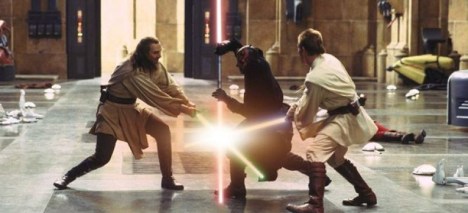
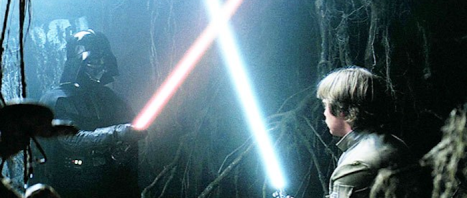
Not quite a duel in the franchise crown.

However, The Phantom Menace is very rarely discussed in the context of the cinematic marvel of 1999, despite being crowned the year’s box office champion. There are plenty of reasons for that, of course. Most obviously, it wasn’t very good. Perhaps more importantly, it aggressively upset the established fanbase who promptly made very silly statements about how George Lucas had “raped their childhood” by continuing to make films that weren’t to their specifications. As such, The Phantom Menace is primarily notably as a failure and disappointment, which it undoubtedly is.

That said, there is something very interesting happening beneath the surface of The Phantom Menace, and something that perhaps merits discussion in the specific context of its original release. The Phantom Menace was the only Star Wars film to be released in the nineties, serving as both the cornerstone and the capstone of what Star Wars looked like during the decade. The films that would follow were shaped by the concerns of their own era, warped and informed by the War on Terror. However, in hindsight, The Phantom Menace is very much a 1999 movie, through and through.

Anakin, not Anakin’t.

Continue reading

New Escapist Column! The Incredible Expansiveness of “Star Wars”…

I published a new In the Frame piece at Escapist Magazine this evening, getting ready for the release of Star Wars: Episode IX – The Rise of Skywalker.

One of the most interesting and compelling aspects of the larger Star Wars mythos has always been its expansive nature, the extremely detailed world that George Lucas created to tell a very simple story. That complexity allows for imagination to run wild, for fans to populate that world with their own readings and speculation. However, there’s also an underlying tension at play; in that it exists as part of a marketing machine, it leads to the clutter of the prequels, and it occasionally leads fans to get over-invested with their version of these characters.

You can read the piece here, or click the picture below.

New Escapist Column! “Charlie’s Angels” and the Franchise-ification of Everything…

I published a new In the Frame piece at Escapist Magazine a little while back, looking at the recent Charlie’s Angels film.

Elizabeth Banks’ Charlie’s Angels is a mess of a film, one that struggles with a variety of problems. Its biggest problems are tonal, with the movie unsure of exactly how it wants to pitch itself: is it a gritty reboot or a campy adventure? There’s a tension at the heart of the film, one which traps it between past and future. Banks clearly wants to reinvent Charlie’s Angels, but she’s also unable to escape the franchise’s history. This is an interesting push-and-pull, one that arguably illustrates the tension of modern franchise film-making.

Most obviously, is it really necessary for a campy seventies sexy spy series to have a “canon”, and is it really necessary for a cinematic adaptation to be beholden to that “canon”? You can read the piece here, or click the picture below.

Can’t Let It Go: “Frozen II” and Grappling With the Past…

As far as animated sequels go, Frozen II works well. For better or for worse, it goes bigger and grander, sacrificing a little focus for a larger story.

However, the most striking aspect of Frozen II is the way in which it seems to grapple with one of the big existential anxieties of the modern era. Frozen II spends a lot of time and energy delving into the histories of Anna and Elsa, opening with a mythology-building flashback and offering a few tantalising hints about the source of Elsa’s power. However, this is part of a larger conversation that unfolds across the film’s runtime. Frozen II isn’t just about grappling with Anna and Elsa’s personal history, it is asking more ambitious questions about how the past shapes the present.

Of course, Frozen II is the story of two sisters embarking on an epic quest with an adorable snowman. However, it is also a story about the legacy of colonial exploitation of indigenous populations by nominally more advanced societies, and about coming to terms with the consequences of those historical injustices in the modern era. It isn’t always elegant or perfect. Indeed, Frozen II occasionally seems quite candid that it doesn’t know the answers to the questions that it is broaching.

Nevertheless, it’s fascinating to see these topics permeating popular culture, with shows like Watchmen and films like Thor: Ragnarok grappling with questions of what it means to live in a society built on historical injustice.

Note: This piece contains spoilers for Frozen II.

Continue reading

New Escapist Column! Rorschach, White Supremacy and “Watchmen”…

I published a new In the Frame piece at Escapist Magazine last Friday. One of the more interesting aspects of Watchmen has been the controversy that the series has demonstrated by looking at white supremacy head-on.

In particular, the show’s treatment of the legacy of Rorschach has been controversial to some fans, who have objected to the idea that his iconography would be adopted by a white supremacy group like the Seventh Kavalry. However, these concerns suggest a misreading of the graphic novel, which offers a very start view of Rorschach’s politics. Indeed, any close reading of Watchmen suggests it is almost inevitable that Rorschach would become a beacon for the sort of reactionary views that power the modern alt-right.

You can read the piece here, or click the picture below.

New Escapist Column! “The Shining” and the Perfect Haunted House…

I published a new In the Frame piece at Escapist Magazine last Friday. Because it was Halloween and because of the release of Doctor Sleep, it seemed like the perfect opportunity to take a look about at The Shining.

The Shining is my favourite horror movie ever. It is one of my favourite films ever. It is the rare piece of work that offers something new every single time I sit down to watch it. As I’ve thought more and more about it over the years, I’ve been drawn to the way in which the power of the Overlook is one of scale. It is big enough that it can serve as a fun house mirror to the anxieties of America itself, but also intimate enough that the familial anxieties of the Torrance family can play out within it. It is both large enough and small enough to work as the perfect haunted house.

You can read the piece here, or click the picture below.

Amazing.