• Following Us

  • Categories

  • Check out the Archives


  • Awards & Nominations

Non-Review Review: Kung-Fu Panda III

This film was seen as part of the Audi Dublin International Film Festival 2016.

Kung-Fu Panda III retains the energy and style that distinguished the prior instalments of the series, even if the emotional beats feel further and further removed from what made the original such a beloved animated classic.

The original Kung-Fu Panda offered a compelling genre mash-up, slotting anthropomorphised animals into a kung-fu action adventure. However, despite the pulpier elements of the plot, Kung-Fu Panda carried a surprising emotional weight. Featuring one of Jack Black’s strongest performances and mining the incongruity of a Panda martial artist for all its worth, Kung-Fu Panda fleshed out and developed its world and its characters with a surprising amount of depth.

kungfupanda3

However, that emotional depth faded over the course of the sequels. Kung-Fu Panda II touched on issues related to identity and adoption amid a more generic action adventure, fleshing out Po’s backstory and exploring how he came to be raised by a mongoose. Picking up on the cliffhanger teased in the closing scene of Kung-Fu Panda II, Kung-Fu Panda III finds Po reconnecting with his long-lost father and trying to make sense of his place in the world. However, a lot of its emotional beats feel overly familiar and routine.

Still, Kung-Fu Panda III retains the energy and dynamism of the prior two installments, with a kinetic visual style and a number of visually impressive set pieces. It just feels a bit more hollow than the previous films in the series.

kungfupanda3a

Continue reading

Non-Review Review: Hail, Caesar!

This film was seen as part of the Audi Dublin International Film Festival 2016.

Hail, Caesar! is little more than an excuse for the Coen Brothers to adventure through classic Hollywood; a series of fantastic scenes and sequences tied together more by central theme than by a linear plot. It is telling how many performers essentially find themselves relegated to only a single scene or two, with performers like Scarlett Johannessen, Jonah Hill, Tilda Swinton, Frances McDormand, Alison Pill, Ralph Fiennes and Channing Tatum effectively (and occasionally literally) dancing around the film than weaving through it.

In many respects, this simply shouldn’t work. On paper – and perhaps on reflection – Hail, Caesar! plays like an anthology of great little scenes; a collection of short films all linked by the classic Hollywood aesthetic more than a single unifying narrative. The actual substance of the film is quite removed from the story promised by the trailers, which seem to tease “an old-timey movie Ocean’s Eleven with actors teaming up to rescue a kidnapped George Clooney.” It spoils nothing to reveal that the movie is most definitely not about that.

hailcaesar4

Although the kidnapping of Baird Whitlock is a central thread, Hail, Caesar! plays more like a day in the life of Hollywood studio fixer Eddie Mannix. Mannix is (very) loosely based on the real studio executive (and notorious “fixer”) of the same name, although it seems quite unlikely that he ever had a day quite as bizarre as that presented here. The Coen Brothers have a great deal of fun incorporating classic Hollywood iconography into their film, both as movies within the movie and then in a more meta-fictional manner towards the climax.

However, Hail, Caesar! is tied together through its recurring humanism. The movie opens with Mannix taking confession for his sins, part of a daily ritual. One of the films featured is an old-school biblical epic. Complex economic theories are woven through the narrative, and the film repeatedly touches upon the awkward relationship that exists between Capitol Pictures and its performers. Although Hail, Caesar! is too shrewd to propose easy answers to its complex web of character interactions, it does tease some insightful questions. And features some great set pieces.

hailcaesar5

Continue reading

Non-Review Review: Truth

This film was seen as part of the Audi Dublin International Film Festival 2016.

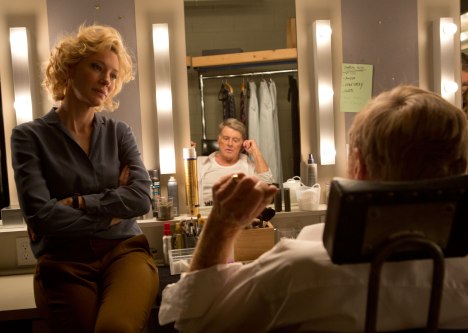
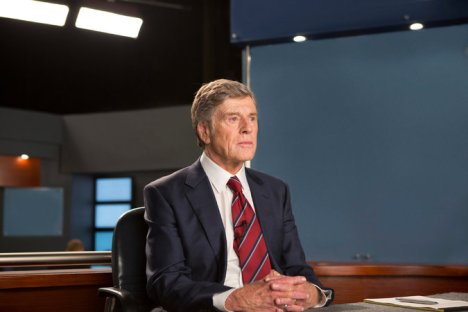
Truth is a truly repugnant piece of work.

It is quite plain to see what Truth aspires towards. It wants to be a prestige picture about the erosion of journalistic freedom in twenty-first century America; it positions itself alongside films like Spotlight and All the President’s Men (and even television series like the fifth season of The Wire) in contending that a free press is an essential organ of a functioning democracy. It is entirely correct in this respect. Truth is bookended by reminders of how the press exposed scandals like Abu Ghraib and held those in authority to account.

truth

However, Truth is spectacularly ill-judged. The film clearly wants to tell a story about journalists who find themselves under intense scrutiny for reporting something that those in power would not want exposed. There are very candid stories to be told about the failure of the American press in this role during the early years of the twenty-first century; the role of the media in the march towards the Iraq war, the death of newspaper journalism and the rise of messier (and uglier) system in its place.

Unfortunately, Truth chooses the worst possible story upon which to make this stand. What clearly aspires to be a drama about journalistic integrity becomes a tone-deaf testament to journalistic incompetence. Then again, perhaps Truth picked its subject matter perfectly.

truth4

Continue reading

Non-Review Review: Sing Street

This film was seen as part of the Audi Dublin International Film Festival 2016.

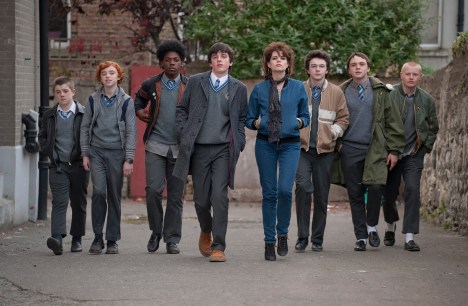
Sing Street is a joyous musical coming of age story.

As with Once and Begin Again, director John Carney demonstrates an innate (and romantic) appreciation for the role of music in interpersonal interactions. As in both Once and Begin Again, Carney employs music as an emotional shorthand; both in how the characters relate to one another and how the audience relates to the film. As with his two prior films, Carney treats music as a language of love and attraction, offering his characters the chance to communicate ideas or feeling that can only be hinted at through conversation, no matter how intimate.

However, Sing Street more firmly ties its musical elements to a sense of memory or nostalgia, with a soundtrack that evokes the film’s secondary school setting as effectively as costumes or set dressings. Sing Street is an ode to the joys and adventures of youth, set to a catchy synthesiser beat.

singstreet1

Continue reading

Non-Review Review: How to be Single

How to be Single is nowhere near as radical as its title would suggest.

As with Deadpool, there is a sense that film is more interested in acknowledging the tropes and conventions of the genre than it is in actively subverting them. How to be Single talks a good game, particularly through its central character. Dakota Johnson is well cast as the movie’s lead, anchoring an impressive ensemble of comedic actors. While How to be Single nods towards and acknowledges the expectations of the romantic comedy genre, it is more interested in gently bending and flexing the rules than actively breaking them.

According to formula...

According to formula…

Not that there is anything wrong with this approach. Indeed, How to be Single is a fairly solid example of the genre, with a witty script and a great cast providing just about everything that the audience could expect from a romantic comedy. How to be Single is perhaps a little too long for its own good, particularly in its final act. There are points at which the film hews a little bit too close to the romantic clichés for its own good, particularly in plot threads focusing on Leslie Mann and Alison Brie. However, the movie is charming enough that these are not fatal flaws.

How to be Single could easily have been a little more transgressive or a little more provocative, but the end result is a well-made and well-acted romantic comedy that has just enough self-awareness to understand the audience’s expectations; just not enough to really surpass them.

By the book...

By the book…

Continue reading

Non-Review Review: Triple 9

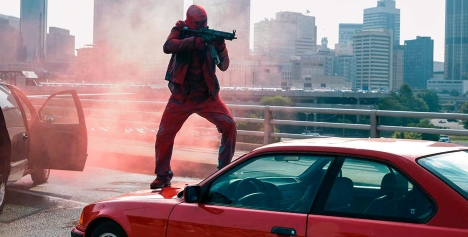
Triple 9 looks great.

Although it set in modern day Atlanta, director John Hillcoat seems to frame Triple 9 as a grim companion piece to The Road. Hillcoat captures the horrors of urban decay, creating a world that seems to teeter on the edge of the abyss. The camera pans through abandoned tenement buildings and lingers on graffiti; bodies are found in shopping trolleys while tinted windows serve to conceal immediate dangers. As filmed by Hillcoat and filtered through the lens of cinematographer Nicolas Karakatsanis, Atlanta seems to be composed of slums and overpasses.

Traffic stop...

Traffic stop…

From the impressive opening heist set piece, Hillcoat saturates the film with red, as if our heroes are only glimpsed through the light of hellfire. That red comes from multiple sources; a red dye pack that explodes at the worst possible moment, the boots worn by one of the characters, the lights from a police car, the fire from a distant (and somewhat anticlimactic) explosion. Triple 9 is oppressive and grim, with Hillcoat threatening to bring the world collapsing down upon his protagonists.

The problem with Triple 9 has nothing to do with Hillcoat’s aesthetic. Instead, the film suffers from a generic and unfocused script populated by characters who lack agency and identity. The main figures in Triple 9 often feel like pieces of paper caught in a breeze, moving in any given direction at the whim of the plot rather than through any essential quality of their own. Things happen not because they are organic (or even inevitable), but because they are convenient. There are points at which it seems like maybe the characters are not in hell; maybe the audience are.

Married to the mob...

Married to the mob…

Continue reading

Non-Review Review: Deadpool

Deadpool is an incredibly juvenile self-aware R-rated superhero action comedy.

And there is nothing wrong with that.

Drawing on the character's rich history...

Drawing on the character’s rich history…

Continue reading

Non-Review Review: Zoolander II (aka 2oolander)

Zoolander II arrives a decade and half after Ben Stiller’s original male model comedy, perhaps tapping into the same rich vein of nostalgia that led to the release of Jurassic World and the relaunched X-Files.

Zoolander is a fascinating (and beloved) film. It is (along with Anchorman) one of the defining comedies of the early twenty-first century, to the point that it (allegedly) counts among Terrence Malick’s favourite films. The film offers one of Ben Stiller’s most iconic performances and is filled with memetic lines and catchphrases. Tellingly, the teaser trailer to Zoolander II offered hints to its identity through visual shout-outs to some of the gags that had soaked into the popular imagination. It is a surprise that the sequel took this long to produce.

Model investigators...

Model investigators…

Zoolander sits awkwardly between the end of the twentieth century and the start of the twenty-first. It was among the more high-profile films to digitally erase the World Trade Centre following the 9/11 attacks. Roger Ebert famously argued that Zoolander was one reason “why the United States is so hated in some parts of the world.” Mirroring its protagonist, the disconnect between the world in which the film was produced and the world in which is was released suggested an engaging innocence.

It is perhaps too much to expect Zoolander II to measure up to the original film, to offer that same surprising (and perhaps unintentional) innocence. Zoolander II is reasonably diverting, if solidly unspectacular. The film lacks the same sparkle that made the original such a hit, falling back a little bit too far on in-jokes and familiar characters without offering much new or exciting of its own.

A familiar ring to it...

A familiar ring to it…

Continue reading

Non-Review Review: Trumbo

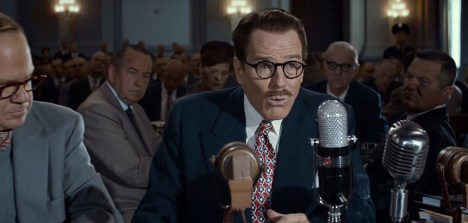
Trumbo is a solid (and fairly formulaic) Hollywood biopic elevated by a powerful central performance from Bryan Cranston.

In many respects, Trumbo is a very familiar story. It is a film produced by Hollywood about Hollywood, which offers a broadly positive portrayal of the industry and a vital chapter of its social history. As the title implies, Trumbo focuses upon the life and times of Dalton Trumbo; Trumbo was a famous writer branded a communist as part of the “Hollywood Ten”, sent to prison and excommunicated from the industry. It is a tragic and shameful chapter in the history of Hollywood, one that leaves scars still felt today.

Testify!

Testify!

The plot beats of Trumbo are familiar enough to anybody with an appreciation of the biopic formula. Trumbo is an eccentric idealist who endures terrible hardships (and yet imposes them upon his family) in pursuit of a laudable goal. There are a few nods to the idea that Dalton Trumbo is manipulative and self-serving, but the film never makes a particularly compelling case for its central character as anything more than careless. Trumbo runs through all the scenes and elements one expects from a story like this; from the quirky details to the domestic drama.

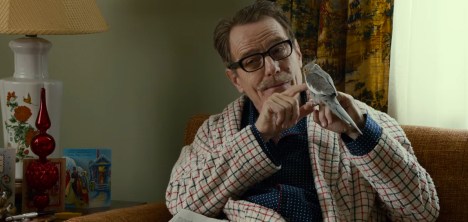
There is something very rote and familiar about all this; a movie about a screenwriting genius that lacks any of the energy or verve that its central character brought to his own work. However, while the film doesn’t necessarily work in a “big picture” sense, it is held together by the finer details. Cranston offers a wonderful central performance that towers over the rest of the film, and the movie offsets some of its more formulaic plotting with a tendency towards witty banter and wry one-liners. Trumbo doesn’t have the right stuff, but it has almost enough of the write stuff.

A little bird told me...

A little bird told me…

Continue reading

Non-Review Review: The X-Files – I Want to Believe

This January, to prepare for the release of the new six-part season of The X-Files, we’re wrapping up our coverage of the show, particularly handling the various odds and ends between the show’s last episode and the launch of the revival.

The plan was always to transition The X-Files from television to film, but fans change.

Following the success of The X-Files: Fight the Future, there had been some mumblings about the possibility of releasing a film in the summer of 2000. Given that The X-Files was a cultural property rooted in the nineties, it seemed like a big screen adventure would have been the perfect way to bring Mulder and Scully into the twenty-first century. After all, the original plan was that the show would retire in its seventh season. (The network even had a bespoke successor selected in Chris Carter’s Harsh Realm.)

Gotta have faith...

Gotta have faith…

However, this was not to be. It turned out that Fight the Future represented the cultural peak of The X-Files, the moment of maximum pop culture saturation. Almost immediately upon the production team’s move to California at the start of the sixth season, the show’s rating began their slow (and then not so slow) decline. The seventh season was itself hampered by behind-the-scenes drama, with David Duchovny suing Chris Carter and Fox over syndication. At the same time, Fox’s “worst season ever” meant that the broadcast could not afford to cancel The X-Files.

So, understandably, the sequel to Fight the Future was postponed and put on the long-finger. As the show came to an end in its ninth season, the subject of a second X-Files feature film arose again. Still, there was a debate to be had about whether the world really wanted a second X-Files film. While the sixth and seventh seasons had slowly eroded the show’s popularity and appeal, the ninth completely collapsed it; through the combination of bad storytelling decisions and the broader shift in the political mood, The X-Files felt like a spent cultural force.

"Platonic", eh?

“Platonic”, eh?

Ultimately, that was not to be either. The production history of The X-Files: I Want to Believe often recalls the mythology at the heart of The X-Files, with the project constantly shifting and changing as outside forces intervene. I Want to Believe arrived in cinemas in July 2008, a full decade after Fight the Future and more than six years after the broadcast of The Truth. The finished product is radically different from what anybody might have imagined in the immediate aftermath of Fight the Future, its design often surreal and awkward.

If I Want to Believe would have been a strange choice for an X-Files film release in July 2000, it seemed downright perverse in July 2008.

The truth is out there. Way out there.

The truth is out there. Way out there.

Continue reading