• Following Us

  • Categories

  • Check out the Archives


  • Awards & Nominations

Non-Review Review: Zootropolis (aka Zootopia)

This film was seen as part of the Audi Dublin International Film Festival 2016.

Zootropolis is a solidly entertaining family film that strains under the weight of its core premise.

There is a great idea in here, a detective film set in an anthropomorphised world featuring a rabbit and fox who must team up to solve a number of mysterious disappearances. Along the way, writers Jared Bush and Phil Johnston fashion the story into an allegory rich with social commentary about race and class issues in American cities. It helps that the script is light on its feet and packed with enough fast gags that it breezes along without ever getting stuck in the same place for too long.

zootopia4

However, this becomes a problem in and of itself. There is a sense that Zootropolis struggles to do too much in the space afforded to it. The plot covers quite a lot of ground as our plucky heroes embark on their investigation, including extended (and overt) riffs on pop culture standards like The Godfather and Breaking Bad. There are points at which it feels like Zootropolis might be a much stronger film if it slowed down a bit, instead of hopping from one set-up to the next in the style of its rabbit protagonist.

Zootropolis largely works, but it never comes together in the way that the best Disney outings do. There are points at which Zootropolis feels more like a turducken than a chimera.

zootopia5

Continue reading

Non-Review Review: Whiskey Tango Foxtrot

This film was seen as part of the Audi Dublin International Film Festival 2016.

It can be difficult to balance tone when setting a comedy inside a warzone.

That difficulty only increases when setting that comedy in the aftermath of the United States invasion of Afghanistan. America’s military intervention in Iraq and Afghanistan remains a defining moment in twenty-first century history; although the Obama administration might have worked hard to reduce commitment to the region, the conflicts remain divisive and controversial. As such, setting a comedy drama against the backdrop of the Afghan conflict is a dicey proposition.

whiskeytangofoxtrot6

Whiskey Tango Foxtrot struggles to pitch itself at the right tone, unsure whether it is an absurdist comedy about the excesses of modern war or a character study of what it must be like to live in such an environment or whether it is a more mature reflection on life during wartime. Whiskey Tango Foxtrot tries to have the best of all possible world, which leaves the film bouncing between extremes. There are moments of irreverent irony followed by earnest sincerity. The movie alternates between bitter cynicism and saccharine optimism.

The result is a movie that feels uneven and unfocused, tonally lost and wildly variable. And not in a way that reflects the conflict unfolding in the background.

whiskeytangofoxtrot5

Continue reading

Non-Review Review: Hitchcock/Truffaut

This film was seen as part of the Audi Dublin International Film Festival 2016.

Hitchcock/Truffaut is incredibly light and fluffy.

In many respects, Kent Jones’ documentary about the eponymous piece of classic film literature plays like something of a late night infomercial populated with nerdiest film endorsements imaginable. Hitchcock/Truffaut is not so much interested in exploring and expanding its source text, instead settling for celebration. Wes Anderson boasts that his copy of the book is so well-used that it is held together by rubber bands; Kiyoshi Kurosawa explains that the only thing holding him back from blatantly stealing from the book is a promise to himself.

hitchcocktruffaut

There is not anything particularly wrong with this. There is something quite fun in watching film-makers get evangelical about their craft. All of the talking heads offer some insight into their own work when they expand upon what Alfred Hitchcock means to them. Martin Scorsese’s joy as he journeys shot-by-shot into Psycho is infectious, and it is clear that everybody involved with the project holds Hitchcock in the highest possible regard and embraces him as a cornerstone of modern movie-making.

Hitchcock/Truffaut‘s biggest issue is also its strongest virtue; this is a cheerful and superficial acknowledgement of its subject, one that decides particularly in-depth coverage of the auteur is secondary to rendering the material accessible to neophytes.

hitchcocktruffaut5

Continue reading

Non-Review Review: Miles Ahead

This film was seen as part of the Audi Dublin International Film Festival 2016.

Miles Ahead is a very strange film.

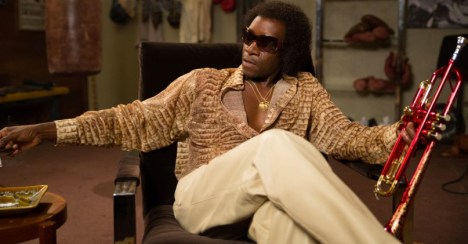
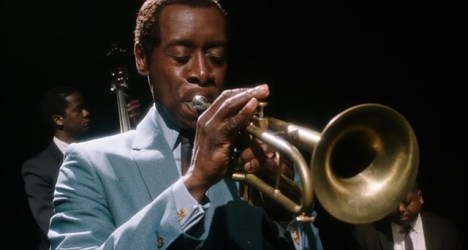
Don Cheadle stars as jazz musician Miles Davis. Not that Davis particularly cares for the descriptor. “That’s a made-up word, jazz,” he reflects during the opening credits. Asked to select a better description of his work, Davis settles on “social music.” In many ways, that awkward conversation sets the tone for the rest of the film, which weaves between a fairly conventional music biopic and a comedy musical heist adventure for no real reason beyond the fact that it really doesn’t want to be a conventional music biopic.

milesahead2

Miles Ahead feels like a passion project for Cheadle, who not only headlines the film but also directs and co-writes. Watching the movie unfold, it is clear that Cheadle cares deeply for the source material and understands the challenges the face any twenty-first century musical biography. Because Miles Ahead is adapting a life for film, it cannot avoid the familiar beats; the drug addiction, the disintegrated marriage, the wilderness years. However, Cheadle works to undercut these familiar tropes through a surreal and ambitious framing device.

Miles Ahead does not work. The film has no shortage of ambition, very clearly angling towards a free-form narrative style intended to evoke the protagonist’s unique musical sensibility. Cheadle is determined that Miles Ahead will not be lumped among the dozens of fairly nondescript musical biographies, instead tailoring something to his subject. However, Miles Ahead lacks the improvisational flourish that defines its central character, feeling more disjointed than harmonious.

milesahead3

Continue reading

Non-Review Review: Mammal

This film was seen as part of the Audi Dublin International Film Festival 2016.

Mammal is a psychosexual exploration of grief with a strong sense of direction and two strong central performances, albeit one that manages the rare feat of feeling both sensationalism and lifeless in the same instant.

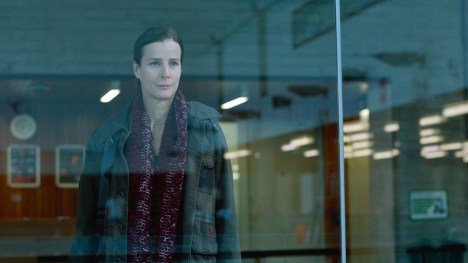
Writer and director Rebecca Daly has a strong sense of tone, creating a palpable uncertainty and anxiety that pervades the first half of the film. Daly crafts an engaging sense of ambiguity, allowing tensions and uncertainties to simmer beneath the surface of the relationship between her two central characters. The performances help a great deal, with Rachel Griffiths doing great work as the divorced and isolated Margaret and Barry Keoghan offering strong support as the mysterious Joe. Mammal is filled with awkward silences and tense foreboding.

mammal

Unfortunately, all of those tension and anxiety has to build to something, and Mammal suffers in how it decides to deliver upon and follow through on all that suspense and ambiguity. Mammal really struggles during its second act, offering twists that should be shocking but are ultimately entirely predictable. Mammal seems to try to escalate in its final act, but the film suffers quite a bit from its own efficiency at setting the mood. In its last forty minutes, the film is left nowhere to go but the most expected directions, the blows softened by the fact they’ve been awkwardly signposted.

Mammal works best when it focuses on the interiority of its characters, but struggles when it asks them to act upon one another.

mammal2

Continue reading

Non-Review Review: Green Room

This film was seen as part of the Audi Dublin International Film Festival 2016.

Green Room is a masterful artisanally-crafted suspense thriller.

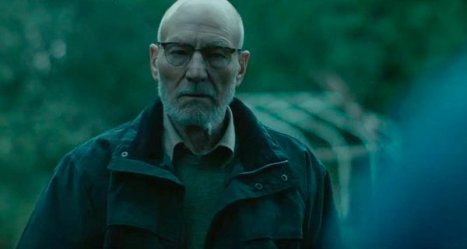
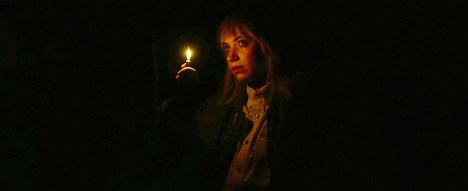
Writer and director Jeremy Saulnier crafts a loving tribute to seventies horror that feels like a truer successor to the “backwoods horror” genre than many contemporary remakes and reimaginings. Following a punk band named The Ain’t Rights that stumble into a tense stand-off with a bunch of neo-nazis in rural Oregon, Green Room is almost aggressively old-school in its horror sensibilities. It is tense and claustrophobic, paranoid and unsettling. Saulnier has a masterful understanding of the genre and its expectations, crafting a pitch perfect homage.

greenroom

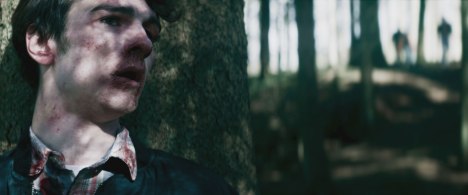
Green Room is a very canny piece of work, but never in a manner that is distracting. The film is wry without being ironic, more arch than subversive. Appropriately enough, given its punk protagonists, the movie’s hints of cynicism about its genre and set-up bely a more earnest appreciation of the form. Green Room is a classic and conventional horror film about a bunch of kids who took a wrong turn, and it is utterly unapologetic about that. Instead, it commits to providing one of the most visceral traditional horror experiences in recent memory.

Green Room is a nasty piece of work. And is all the better for it.

greenroom6

Continue reading

Non-Review Review: Demolition

This film was seen as part of the Audi Dublin International Film Festival 2016.

Demolition is saturated by quirk.

Demolition is suffocated by quirk.

Continue reading

Non-Review Review: Anomalisa

This film was (almost) seen as part of the Audi Dublin International Film Festival 2016.

Anomalisa is a heartbreaking tale of isolation and loneliness, an affecting drama about living in a world that feels illusory.

Directed by Duke Johnson and Charlie Kaufman, from Kaufman’s screenplay adapted from his own stageplay, most of the discussion of Anomalisa has focused upon its unconventional production. The movie was essentially crowdsourced, as the space allocated in the closing credits to the project’s kickstarter backers will attest. However, Anomalisa is also a stop motion production, painstakingly and meticulously filmed using life-like dolls to tell a sad story about adultery and anomie.

anomalisa1

In some respects, this fascination with form makes sense. After all, Anomalisa is a very human and grounded story. Even allowing for the difficulty that Kaufman had fundraising for the project, it would likely have been more practical to realise the story with living performers in a more conventional style. However, the distinctive technique provides a powerful emotional weight to Johnson and Kaufman’s story. The relative banality of the illusion is very much the much the point.

Anomalisa is not so much a story about fantasy as it is about a disconcerting sense of unreality.

anomalisa-098_0

Continue reading

Non-Review Review: High-Rise

This film was seen as part of the Audi Dublin International Film Festival 2016.

Ben Wheatley’s High-Rise is a beautiful ugly film.

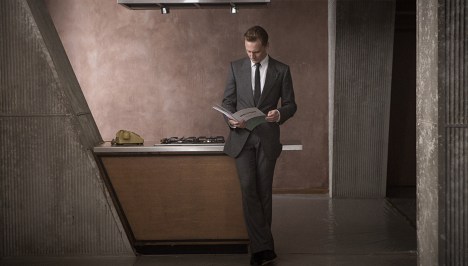
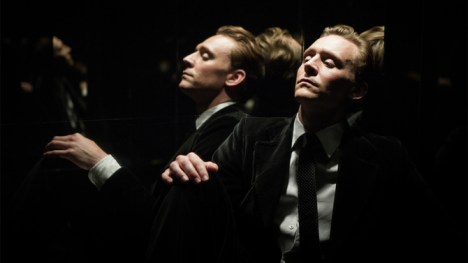
An adaptation of J. G. Ballard’s surrealist novel, High-Rise fits rather comfortably within Wheatley’s aesthetic. There is an apocalyptic paranoia running through the film, which charts the social decay of the eponymous building over a three-week period. Class warfare is rendered literal in multiple senses, as the lower classes visit violence upon the wealthier inhabitants of the tower block. Even during the most peaceful and serene sequences of the movie’s first half, there is an underlying anxiety and dread bubbling just beneath the surface.

highrise3

High-Rise is disjointed and uneven, but that would seem to be something of the point. Amy Jump’s screenplay and Ben Wheatley’s direction eschew conventional pacing, with the world collapsing more in fits and starts than in a steady decline. Wheatley and Jump also edit the film, emphasising the chaotic nature of this collapse through jumps and montages that document the erosion of social order in a manner that ebbs and flows. It is disorientating and occasionally even frustrating, but one senses that this is meant to be the point.

High-Rise is a messy piece of work. But then, as the movie seems to suggest, things get messy when life is forced into a neatly delineated box.

HR_0430_tiff.tif

Continue reading

Non-Review Review: The Truth Commissioner

This film was seen as part of the Audi Dublin International Film Festival 2016.

The Truth Commissioner began life as a pitch for a BBC television show.

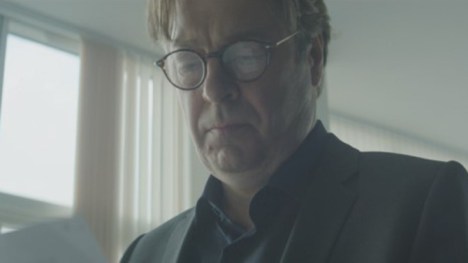
This is quite clear from the way that film is put together, both in terms of plotting and in terms of visual composition. It is not too difficult to imagine The Truth Commissioner stretched out to a prestigious six-week television drama event series, playing as a sibling series to other politically-charged thrillers like The Honourable Woman or The Night Manager; albeit with a more modest cast and location than those two recent high-profile examples of the BBC’s dramatic programming.

thetruthcommissioner1

As written by Eoin O’Callaghan, The Truth Commissioner feels rather condensed; populated by a cast of characters who seem compressed to fit the movie’s relatively modest runtime. Character relationships and dynamics are rendered in extremes; they are either left inferred or bluntly stated. There is a sense that The Truth Commissioner has been stripped down to fit this particular format, playing as a rough outline of a strong central idea rather than a fully realised political thriller.

Director Declan Recks does a great job realising this contemporary Belfast drama, layering on the paranoia as the eponymous character finds himself navigating dangerous waters. The Truth Commissioner is a stylish piece of work, albeit one that seems more like a condensed BBC drama than an exciting feature film in its own right.

thetruthcommissioner

Continue reading