• Following Us

  • Categories

  • Check out the Archives


  • Awards & Nominations

Non-Review Review: Jack Reacher – Never Go Back

It is a strange experience, to watch one’s action hero icons grow up.

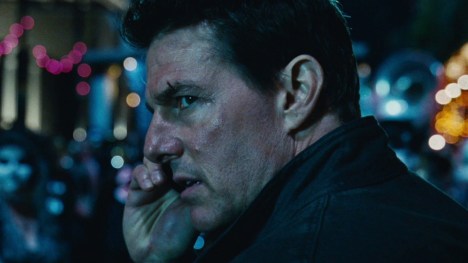
Tom Cruise is approaching fifty five years of age, although Jack Reacher: Never Go Back convincing places his character in his “mid-forties.” Watching the film, this feels entirely reasonable. Cruise is still a lean, mean, action-film-making machine with a dynamism that would put many younger stars to shame. If Tom Cruise isn’t in peak physical condition, he cannot be far off. Watching Never Go Back, it is not Cruise himself that gives the game away. The leading man is as limber as ever, energised at just the thought of another impressive stunt sequence.

You know where to Reacher me, if you have to.

You know where to Reacher me, if you have to.

It is the memory of Tom Cruise that gives the game away. Studies suggest that the peak age for cinema attendance is still somewhere between eighteen and forty. Tom Cruise would have been headlining films long before many modern movie-goers started attending the cinema with any real frequency. From Risky Business to Legend to Top Gun, Cruise has been a cinematic fixture for over three decades. That is a remarkable accomplishment, serving as something of a cultural constant.

For most of its runtime, Never Go Back feels very much like a middling demonstration of Cruise’s action movie bona fides. Like Jack Reacher, this is a standard actioner without the confident direction that has elevated Tom Cruise’s best work of the past few years. However, Never Go Back comes alive in those fleeting moments where it brushes against the idea of its leading man facing adulthood, positioning itself as a weird movie about a nineties action movie hero who inexplicably finds himself saddled with a makeshift family.

Literal life line.

Literal life line.

Continue reading

Non-Review Review: Queen of Katwe

Early in Queen of Katwe, chess teacher Robert Katende notes that his young prodigy Phiona Mutesi can see eight moves ahead.

It is a remarkable visual, as Phiona halts their game in order to play out the next eight moves of their match culminating in the inevitable checkmate. There is an elegance to the movements, the choreography of the pieces moving across the board, and Mutesi intuitively understands not only where her pieces should go, but where her opponent’s pieces will go. This ability to predict the flow of a particular game, the narrative that it will chart, is the key to Phiona’s future and her best chance of getting out of the Katwe slums.

queenofkatwe1

In some ways, this sequence feels like something of a commentary on the film itself. The true story of Phiona Mutesi is truly remarkable, serving as an archetypal underdog story about a young girl from the Ugandan slums who went on to become one of the best chess players in the world. Queen of Katwe unfolds rather like that chess game, a series of moves and counter-moves that any savvy audience member will recognise beat-for-beat as the narrative of this sort of tale. Queen of Katwe holds very few surprises in terms of story.

And yet, in spite of that, there is something truly remarkable in watching that story play out, just as there is something striking in watching those pieces of wood move across the board. Queen of Katwe is a beautiful and joyous piece of film, a very old story that is very well-told, anchored in three fantastic central performances and some great direction from Mira Nair.

queenofkatwe

Continue reading

Non-Review Review: Star Trek – First Contact

Star Trek: First Contact caps off the thirtieth anniversary celebrations with one eye to the past and one eye to the future.

The second film to feature the cast of Star Trek: The Next Generation is surprisingly nostalgic in places. The script makes several rather blatant nods towards Star Trek II: The Wrath of the Khan, perhaps the consensus pick for the best Star Trek feature film. It marks the return of a memorable antagonist from the parent series, serving as a direct sequel to a particular episode and pitting the lead character in a battle of wills against an old opponent. More than that, it builds upon a rich tradition of the franchise riffing upon Moby Dick.

"This scene is going to seem really ironic when they launch Star Trek: Enterprise."

“This scene is going to seem really ironic when they launch Star Trek: Enterprise.”

However, there are other major influences. Most notably, the film leans quite heavily upon Star Trek IV: The Voyage Home. In both films, the Enterprise crew film themselves sent back in time to save Earth from an alien threat, resulting in comedic misadventures as the characters interact with a supporting cast native to this time period. Most analysis of First Contact tends to focus on The Wrath of Khan parallels, as they dominate the primarily plot. Nevertheless, the secondary plot draws heavily from The Voyage Home.

More than that, the feature film draws heavily upon the existing Star Trek mythos. The movie is a direct sequel to The Best of Both Worlds, Part I and The Best of Both Worlds, Part II, recognising that two-parter as the moment that The Next Generation truly came into its own and stepped out from under the shadow of the original Star Trek series. Even beyond that acknowledgement of franchise history, First Contact does not take the crew back in time to the present day or a historical event. It takes the crew back to the point at which the future of Star Trek truly begins.

"Mister Worf, I'll be damned if I'm going to let Star Trek: Deep Space Nine out-badass me."

“Mister Worf, I’ll be damned if I’m going to let Star Trek: Deep Space Nine out-badass me.”

Still, while the movie is constructed as a definite celebration of the past, it also serves to define the future of the franchise. The template for the remaining Rick Berman years can be found in this feature film. The success of the action and adventure beats in this instalment undoubtedly informed the emphasis on such elements in Star Trek: Insurrection and Star Trek: Nemesis. The final two films in this particular iteration of the franchise owe a lot more to this particular film than to Star Trek: Generations.

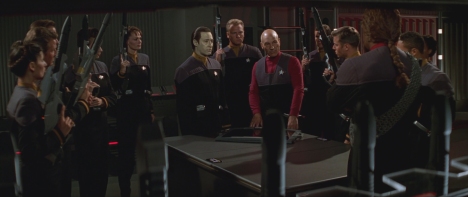
Even more, the impact of the film reached well beyond this set of characters. The other three television series were all heavily shaped and defined by this particular feature film. Star Trek: Deep Space Nine inherited a lot of the look and feel of this film, with the crew swapping out into these grey uniforms with Rapture. The Dominion War would use a lot of the ships designed for the combat sequence towards the opening of the scene. Some of the other production design also bled in, including the space suits in Empok Nor.
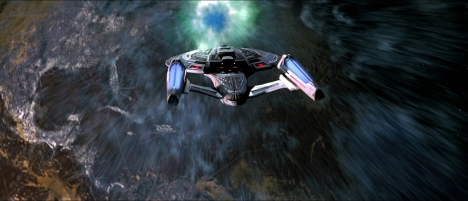
No time like the past.

No time like the past.

Star Trek: Voyager would inherit some of that production design as well, including the space suits in episodes like Day of Honour or Demon. However, the film’s biggest impact on that particular series was the renovation of the Borg. Brannon Braga would seize upon the idea of the Borg as a recurring threat, setting them up in episodes like Blood Fever and Unity mere months after the release of the film. The Borg would serve as the basis of the big third and fourth season two-parter, Scorpion, Part I and Scorpion, Part II. Alice Krige would appear in Endgame.

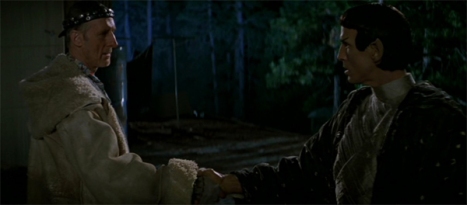
In its own way, this film also signals the end of the Berman era. The arrival of the Vulcan ship in the closing minutes serves to set up the premise of Star Trek: Enterprise. James Cromwell would make the torch-passing cameo in Broken Bow, reprising his role as Zefram Cochrane. The idea of doing a prequel television series that charted the origin of the franchise feels very much rooted in the (critical and commercial) success of this iteration of the film franchise.
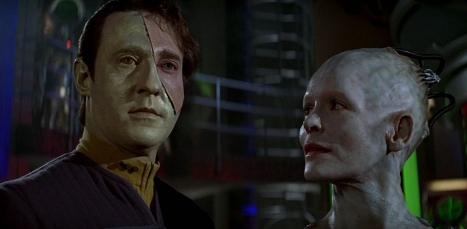
"Captain, when the Borg promised you a pound of flesh, it turns out that they meant it literally."

“Captain, when the Borg promised you a pound of flesh, it turns out that they meant it literally.”

On the audio commentary, writers Brannon Braga and Ronald D. Moore speak of the thirtieth anniversary as “the peak” of the franchise. After all, it seemed like the celebrations would last forever. First Contact was just one small part of a whole season of television that marked the best that the franchise had to offer. There was a wide selection of material, including episodes like Trials and Tribble-ationsFlashbackFuture’s End, Part I and Future’s End, Part II. Following all of those, First Contact was really just the cherry on top of a very delicious cake.

However, the issue with First Contact as “the peak” is quite simple. From this vantage point, the audience can survey the entire Berman era. First Contact is positioned so that the audience can see the metaphorical beginnings of the Star Trek franchise, but also the makings of the end of this particular iteration. From the peak, there is only one direction.

"Just checked Rotten Tomatoes there. Still the best in the series. Don't make me put on Nemesis, Mister Worf."

“Just checked Rotten Tomatoes there. Still the best in the series. Don’t make me put on Nemesis, Mister Worf.”

Continue reading

Non-Review Review: I, Daniel Blake

I, Daniel Blake is seething with a righteous anger.

To be fair, this is very much what one might expect from Ken Loach. Loach is a very socially conscious filmmaker, with films like Cathy Come Home and The Riff-Raff exploring themes related to poverty and working class life in twentieth and twenty-first century Britain. I, Daniel Blake offers a timely and searing critique of the government policies that have left the working class tired and resentful. It is a searing portrayal of twenty-first century Britain, perhaps even more timely now than when it won the Palme d’Or in May.

Sign of the times.

Sign of the times.

I, Daniel Blake is anchored in two fantastic central performances. Dave Johns is mesmerising as the title character, a middle-aged widower facing a humiliating gauntlet of public sector bureaucracy in order to claim benefits to help him recover from a heart attack. Hayley Squires is impressive as Katie, a single mother moved to a strange town struggling to make ends meet anyway she can. Johns and Squires bring a humanity to I, Daniel Blake that balances well against Loach’s sheer unadulterated contempt for the status quo.

There are times at which I, Daniel Blake threatens to turn into a polemic, an angry rant more than a narrative. However, the performances keep the film grounded. More than that, Loach’s piping hot fury feels so necessary and so timely that any heavy-handedness can be excused.

Flat-out contempt.

Flat-out contempt.

Continue reading

Non-Review Review: Inferno

Inferno is not a good movie.

It is clunky and contrived, moving at so gentle a pace that even the character need to constantly remind each other that the fate of the human race lies in the balance. Its action sequences are clumsily staged, its twists are all entirely predictable and its impressive international cast strain to stretch their roles out to two dimensions. This is a film that has trouble generating tension despite the fact that there is an imminent threat to half of the world’s population. Inferno simply doesn’t work.

"It says... 'one if by land, two if by sea'?"

“It says… ‘one if by land, two if by sea’?”

And yet, in spite of all that, there is something strangely compelling about it. Inferno is amess of a film, but one that holds attention by virtue of how strikingly odd it is. Inferno feels very much like a James Bond film, if only they’d sanded down the rough edges of that nice old Roger Moore fellow, cast that quirky uncle who is really useful at table quizzes, and combined it with something like The Crystal Maze. The film plays like afternoon television on an epic scale, with Robert Langdon feeling like he could call in a favour from Perry Mason or R. Quincy at any moment.

Inferno is strange enough that it holds interest, feeling more unique than the recycled pseudo-histories of The DaVinci Code or Angels and Demons. There is an endearing eccentricity to the film, which might just be the gentlest apocalyptic thriller ever made. It is a weekday afternoon blockbuster.

"I belong in a museum!"

“I belong in a museum!”

Continue reading

Non-Review Review: The Girl on the Train

What would you get if you tried to produce Gone Girl without David Fincher?

It is a tough question to answer, given Fincher’s style is an integral part of the film. It is impossible to divorce Gone Girl from Fincher’s steady cam shots and clinical framing. However, The Girl on the Train still makes a valiant attempt to answer. Whatever about the source material, the adaptation of The Girl on the Train is monomaniacally fixated upon that pulpy breakout psychological thriller, constructing another gaslighting murder investigation in desaturated terms to an electronic score that cannot help but evoke the work of Trent Reznor and Atticus Ross.

A pale reflection.

A pale reflection.

However, director Tate Taylor is no David Fincher. Fincher keenly understood the pulpy absurdity of his source material, playing into the ridiculousness of layered twists and double-bluffs that reimagined marriage as some sort of long-form psychological warfare. Taylor fundamentally misunderstands the tone of his film, pitching the forced coincidences and crazy revelations of The Girl on the Train as something to be taken entirely seriously. Gone is the irony that made Gone Girl so effective, replaced with an ill-advised earnestness that refuses to blink.

The problem is not that The Girl on the Train comes off the rails as the overly elaborate details of its storytelling world come into focus. The problem is that it doesn’t nearly enough momentum to reach its destination.

A trained observer.

A trained observer.

Continue reading

Non-Review Review: Miss Peregrine’s Home for Peculiar Children

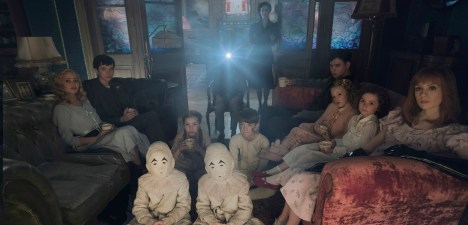
Miss Peregrine’s Home for Peculiar Children works best when it serves as a vehicle for Tim Burton’s imagination, exploring a world where tall tales seem to be real and monsters manifest themselves literally, where trauma and loss are explained through escape into fantasy, and where shadows distort and bend into uncanny shapes as if to suggest that there is so much more to this world than it might first appear. This is all stock Burton imagery, but the director approaches it with an endearing energy.

Unfortunately, there is more to Miss Peregrine’s Home for Peculiar Children. The film is not content to play as broad Burton fantasy of childhood mythmaking and coming of age. Despite an opening act that hints at something of a young adult follow-up to Big Fish, Miss Peregrine’s Home for Peculiar Children inevitably gets bogged down in the finer trappings of its young adult source material. Exposition is ladled on, rival orders are established, sequels are set up, familiar plot beats are not so much hit as hammered.

Movie night.

Movie night.

Continue reading

Non-Review Review: Free State of Jones

Free State of Jones does a decent job approximating the feel of a prestige picture.

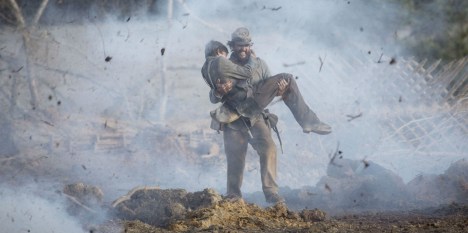
Free State of Jones feels almost like writer and director Gary Ross is running through a checklist of all the elements expected from a successful prestige picture. It deals with heavy subject matter, unfolding primarily during the Civil War and touching upon Reconstruction. It is paced indulgently, never rising to more the a sitting trot. It is anchored in performance by a critically-acclaimed Oscar-winning actor who dominates the film. Its cinematography is uncomplicated and stately. It is laboured with a framing device that offers the illusion of depth.

When the dust settles...

When the dust settles…

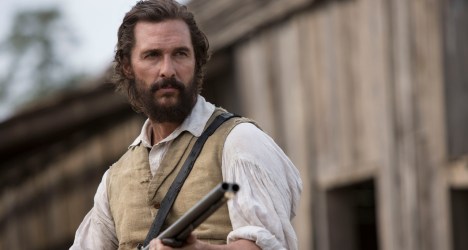
Free State of Jones plays as an imitation of a much bolder and provocative film. There are points at which the film brushes up against potentially brilliant ideas, only to back away. For a film about slavery, Free State of Jones finds itself unable to look beyond its white leading character. The framing and scene composition is clearly intended to seem dignified, but instead feels lifeless. The film’s perspective is limited, in both a literal and figurative sense. There are a lot of interesting ideas inside Free State of Jones, but none of them are allowed to grow.

There is a heavy earnestness to Free State of Jones, but it suffocates the story.

Riding shotgun on secession.

Riding shotgun on secession.

Continue reading

Non-Review Review: The Girl With All the Gifts

The Girl With All the Gifts is brilliant and uncompromising.

Elevated by a smart script drawing from a clever book, and fantastically tense direction from Colm McCarthy, The Girl With All the Gifts is at once a brilliant example of the classic zombie movie tropes and a sly subversion of them. The Girl With All the Gifts was originally published in 2014, but it feels strangely of this cultural moment. It is very much a young adult science-fiction commentary on the world as it exists today, perfectly capturing the anxiety simmering beneath Brexit and Trumpism.

Gifted.

Gifted.

The Girl With All the Gifts in an exception piece of work, Carey’s script understanding the myriad of genre conventions that it is navigating while McCarthy pushes the material just a little bit further. It is unsettling and palpable in the ways that a post-apocalyptic zombie film needs to be, but it also goes that bit further. The strongest aspect of The Girl With All the Gifts is a willingness to follow its strands through to their logical conclusion, as unrelenting and confrontational as they might be.

The Girl With All the Gifts reimagines the zombie movie for a new generation.

Putting her neck on the line.

Putting her neck on the line.

Continue reading

Non-Review Review: The Magnificent Seven

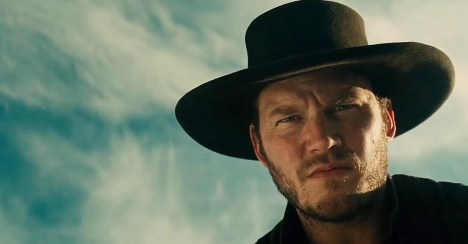
The Magnificent Seven is a western, pure and simple.

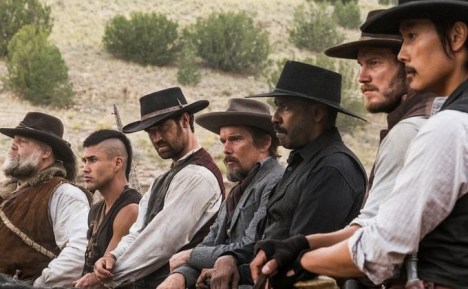
It is not a deconstruction. It is not a reconstruction. It is not filtered through the lense of postmodernism or through the prism of postcolonialism. It does not interrogate the underlying assumptions of the western, nor does it explore the relationship between the myth of the frontier and the brutal reality. From beginning to end, through and through, The Magnificent Seven is very much a straightforward execution of the familiar western tropes delivered with a minimum of irony or reflection.

"Ain't we magnificent?"

“Ain’t we magnificent?”

There is a certain charm to this. Director Antoine Fuqua takes great pleasure in running through the standard western tropes, particularly those epic tracking steadicam shots of riders galloping through acres of beautiful countryside as the theme music builds. There is a certain pleasure to be had in The Magnificent Seven as a film resistant to modernisation, a film content in the assumption that the language and iconography of the genre does not need to be tweaked or updated beyond the application of some computer-generated imagery and a modern cast.

There is also something deeply frustrating in all of this, something that reduces The Magnificent Seven to a rather lifeless collection of western imagery tied together in a fairly unimaginative way without anything particularly bold or exciting to say.

The sky's the limit.

The sky’s the limit.

Continue reading