• Following Us

  • Categories

  • Check out the Archives


  • Awards & Nominations

Non-Review Review: Emma.

Emma. is gorgeous to look at.

Autumn de Wilde’s adaptation of Jane Austen’s classic novel is immensely stylised in a way that suits the material. Austen’s Emma has always been a story about characters who exist ensconced in a world without any material wants or desires, without any existential threats or simmering tensions. The story’s stakes derive within the context of the comforts and luxuries in which Emma Woodhouse has lived her life. When the film opens, Emma’s biggest concern is the departure of her beloved governess, who is simply moving a kilometre and a half down the road and will remain part of her social circle.

Indeed, de Wilde even opens with an intertitle quoting the novel’s opening setnence, “Emma Woodhouse, handsome, clever, and rich, with a comfortable home and happy disposition, seemed to unite some of the best blessings of existence; and had lived nearly twenty-one years in the world with very little to distress or vex her.” The film is built around this idea, creating a stylish cocoon for Emma, a world that looks like it might have been entirely constructed from those brightly coloured confections that its characters serve at afternoon tea.

The result is a beautiful and charming film that captures a lot of the low-stakes charm of the source material, offering a richly designed world in which the novel’s romantic comedy trappings might unfold.

Continue reading

Non-Review Review: Greed

Greed, for lack of a better word, is not good.

Greed belongs to a relatively recent subgenre, the sort of ironic and winking social commentary of films like The Big Short, Vice and Bombshell. There is a sense with these sorts of films that earnestness is overdone, that aching sincerity will only get a strong moral message so far, and that the proper way to engage with audiences is through a wry self-awareness that acknowledges the cynicism of the world in which people live. Theoretically, this approach allows the film to communicate strong central themes without potentially alienating audiences through self-righteousness or self-satisfaction.

Like all subgenres, the quality of the end result varies on a case-by-case basis. However, Greed seems like a project perfectly suited to director Michael Winterbottom. Winterbottom is a director who frequently blends fact and fiction in his work – to point where, due to his work on projects like The Trip and Tristram Shandy, a lot of his collaborations with Steve Coogan involve the actor playing a fictionalised version of himself. So there’s something interesting in the way that Greed takes a template often applied to true stories and instead builds a story around a fictional avatar of capitalism, Sir Richard MacReady.

However, Greed just doesn’t work. It’s not consistently funny enough to pull off the knowing approach to its tale of global inequality. It packs fewer genuine laughs into its runtime than more direct critiques of capitalist excess like The Wolf of Wall Street. It also lacks the comfort of projects like The Big Short and Vice in blending exposition into narrative, often clumsily halting its story to deliver earnest lectures almost directly into the camera through painful framing devices. “Think of me as an idiot,” insists one character, before setting in motion the obligatory “how capitalism works” montage.

More to the point, the narrative elements themselves also struggle, with the film awkwardly trying to casually set up dominoes to build to a seemingly chaotic outcome that looks a little too arch and too planned to come across as spontaneous. This is the problem with Greed. The film, ironically enough, seems greedy. It wants to do too much, it wants to be too many things. As a result, it winds up under-cooking the constituent elements and struggling to find a way to integrate them into a cohesive whole.

Greed is an interesting work in that – like Bombshell – it serves as a reminder that films like The Big Short and Vice are managing a much more complicated balancing act than might originally appear.

Continue reading

Non-Review Review: The Rhythm Section

Perhaps the most revealing distinction between The Rhythm Section and the James Bond franchise is that the characters in The Rhythm Section appear to have done their beer sponsorship deal with Stella Artois rather than Heineken.

That’s a little facetious. After all, it seems highly likely that Heineken paid a great deal more to sponsor No Time to Die than Stella Artois paid for a few minutes of screentime in a late January release from producers Barbara Broccoli and Michael G. Wilson. Nevertheless, there is something to it. Although the marketting copy is keen to sell The Rhythm Section as something of a gender-swapped teaser for No Time to Die“from the producers of James Bond,” boasts the trailer and the advertising – it’s to the credit of director Reed Morano that she is interested in something a little bit more complex and sophisticated.

Taking a shot at it.

Of course, The Rhythm Section doesn’t entirely work. It is a messy and clumsy film. At points, this seems to be a deliberate stylistic choice and a clear point of contrast, an attempt to imbue the classic spy movie format with a sense of the chaos that informs and shapes the real world. At other moments, it feels like a miscalculation and an error in judgment. The Rhythm Section is an earnest attempt to crash the trappings of an espionage revenge thriller into a more intimate personal drama about grief and trauma, but sometimes the mix goes wrong and the film veers into the realm of indulgent self-parody.

Still, there’s a lot to like about The Rhythm Section in spite of its imbalances. The film is genuinely trying something something ambitious, even if it occasionally buckles under the weight of those attempts. At its best, The Rhythm Section suggests a new spin on an old formula. At its worst, it is at least anchored in a compelling central performance amid overwrought clichés. The Rhythm Section might not hit every note perfectly, but it manages to keep time.

Spy, craft.

Continue reading

Non-Review Review: Horse Girl

Horse Girl is certainly an ambitious work, if not an entirely successful one.

Directed by Jeff Baena and co-written with star Alison Brie, Horse Girl is essentially a study of a socially awkward young woman who gradually loosens her grip on reality. Sarah is a charming and isolated young woman. She works a steady job at an arts and crafts shop, to which she seems quite suited – she’s immediately able to identify the best paint for a classroom setting. She lives with a roommate who clearly harbours some affection for her. She assists at the local stables. She even attends weekly dance fitness classes.

Horsing around.

However, beneath the surface, Sarah is increasingly isolated. She lives in a world of her own, absorbed in her supernatural procedurals, lying about the extent of her social circle, and haunted by dreams that don’t seem quite right. Sarah increasingly begins to feel that there is something very wrong with the world, as she experiences lost time and lucid dreams. Naturally, things only escalate from there.

Horse Girl plays with some interesting ideas, and approaches its subject matter in interesting ways, but it suffers a little bit too much from a suffocating sense of forced whimsy. Horse Girl premiered at Sundance, and for all its ambition, it is very much a “Sundance indie.” There is constantly a sense of a more interesting film bubbling beneath the surface, waiting to get out, but never quite able to materalise beneath the trappings of its own particular brand of independent cinema.

Getting it all back to front.

Continue reading

Non-Review Review: Uncut Gems

Uncut Gems is a two-hour panic attack. And it’s brilliant.

Uncut Gems is a propulsive tension engine. The film follows the wheeling and dealing of Howard Ratner. Ratner operates a jewellery story in Manhattan’s Diamond District, but his real passion is gambling. Have accrued considerable debts, Howard concocts a simple plan to clear the slate. Smuggling in a rare black opal from East Africa, Howard plans to auction it and use the proceeds to settle up with his creditors. Naturally, things quickly spiral out of control as Howard’s impulsiveness and competitiveness get the better of him, pushing him to greater and greater lengths.

Off the chain.

Anxiety permeates Uncut Gems. Howard is a free-wheeling opportunist defined largely by his recklessness and his resilience, but his self-assuredness stands in contrast to the experience of watching Uncut Gems. As the film unfolds, the audience (and Howard) understands how fragile Howard’s elaborate improvisations truly are. Almost every scene in Uncut Gems threatens to bring Howard’s house of cards around his ears. Even the film’s triumphant and celebratory moments feel uncomfortable, as the audience and the protagonist wrestle with how precarious it all is.

Uncut Gems is a triumph, a shining diamond.

This diamond is about to get roughed up.

Continue reading

Non-Review Review: Richard Jewell

Richard Jewell is a paradox of a film, a narrative so propelled with righteous fury that it somehow misses its own point.

Clint Eastwood’s latest is his tightest and leanest narrative since Sully: Miracle on the Hudson, and this is not a coincidence. There’s considerable thematic overlap between Richard Jewell and Sully, both of which speak to themes that interest Eastwood as one of the defining American filmmakers. Like Sully, Richard Jewell is the story of an exception person who heroically saves lives only to witness the bureaucratic institutions of the state (and the press) turn upon them.

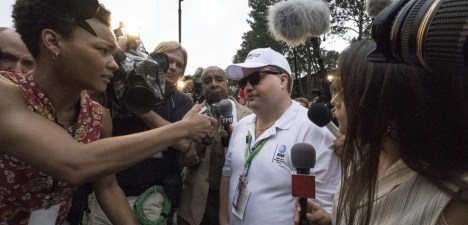
Pressing on.

Of course, Richard Jewell is quite distinct from Sully. Eastwood trades out “America’s Dad” Tom Hanks for the more ambiguous figure of Paul Walter Hauser. While Hanks is the embodiment of American decency, a clear-cut spiritual successor to Jimmy Stewart, Hauser has largely been defined by more muddy and murky roles with fantastic turns in films like I, Tonya and BlackKklansman. Indeed, the opening act of Richard Jewell leans into Hauser’s inscrutability, suggesting a more ambiguous interrogation of masculine heroism.

Unfortunately, Richard Jewell does not develop in that direction. Its early suggestions of moral complexity and anxieties about individual as much as collective authority give way to a stirring condemnation of a conspiracy to “railroad an innocent man.” This righteous fury is entirely justified, after all. The press and the authorities demonised Jewell, arguably hounding him to an early grave. However, Richard Jewell winds up so caught up in its righteous fury that it winds up “railroading” another innocent, abusing its power in the same way it accuses the press and authorities.

Lawyer up.

Continue reading

Non-Review Review: Bad Boys For Life

Bad Boys For Life is an extremely stupid and occasionally veering on incoherent film. It is also a lot of fun.

There are any number of obvious problems with Bad Boys For Life. The pacing and plotting is a mess, stopping and starting at random intervals depending on the film’s mood as much as its own internal logic. Characterisation varies wildly from one scene to the next. Bad Boys For Life has even picked up some of the more frustratingly formulaic narrative beats from modern blockbusters, stumbling blindly into overwrought bathos and even attempting to offer a retroactively Freudian origin story for veteran police officer Mike Lowrey. It also understands that modern blockbusters have to be “about” things; in this case, growing old.

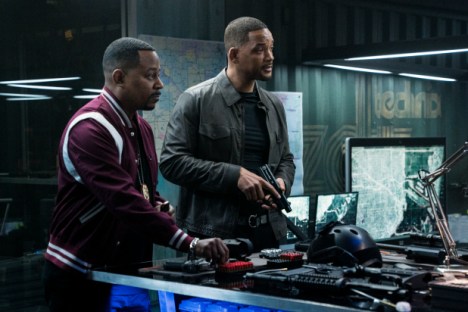
Welcome to Miami.

However, a large part of the charm of Bad Boys For Life is the way in which the film seems to have taken virtually every note that an executive might possibly offer and decided to approach these notes in a way that feels surprisingly fitting for a belated follow-up to Michael Bay’s bombastic duology. Bad Boys For Life is unashamedly and unapologetically its own thing. This results in a cocktail that doesn’t exactly go down smooth, but at least offers a refreshing and distinctive flavour. It helps that Belgian directors Adil El Arbi and Bilall Fallah lean strongly into the series’ sensibility, and invest heavily in its core strengths.

For all its gestures towards the modern age of intellectual-property-driven franchise-building, Bad Boys For Life grasps that the heart and soul of the series has always been the charm in watching Will Smith and Martin Lawrence bounce off one another. That dynamic between Smith and Lawrence, two performers who know how to work an audience and a camera, are arguably what grounded the first two films – keeping a very human perspective amid the ensuing “Bayhem.” In Bad Boys For Life, they does something similar, adding a charismatic star power that is often absent from contemporary blockbuster production.

Police don’t stop.

Continue reading

Non-Review Review: A Hidden Life

A Hidden Life is both surprisingly moving and about an hour too long.

Writer and director Terrence Malick bases A Hidden Life around the true story of Austrian farmer Franz Jägerstätter. During the Second World War, Jägerstätter was called up to serve in the armed forces. He refused to swear an oath of loyalty to Hitler, and so was punished for his pacifism. It’s a weighty and important story, and Malick ensures that any contemporary relevance will not be lost on viewers. A Hidden Life grapples with that most fundamental of questions, what it means to be a good person in a fallen world and how the measure of such morality might be taken.

Going to grass…

As one might expect from Malick, A Hidden Life is shot and edited in a rather disjointed and impressionist fashion. The film often feels like a waking dream. Scenes are not always clearly delineated, often beginning in the middle of abstract conversations that then play over atmospheric establishing shots like some sort of historical stream of consciousness. It’s an approach that has defined a lot of Malick’s later work, but is perhaps best seen as an outgrowth from Tree of Life. That sort of emotive and drifting storytelling style works oddly well when applied what is both a linear story and a familiar historical milieu.

The big problem with A Hidden Life is that it feels highly repetitive and redundant, particularly in its final ninety minutes. Rather than advancing or developing his thesis, Malick spends the final ninety minutes of the film just bluntly restating it over and over. It is exhausting, and not necessarily in the way that a film about the virtues of peaceful protest in an unjust world should be.

Peak Malick?

Continue reading

Non-Review Review: Queen & Slim

Queen & Slim is a stylish modern indie that occasionally bites off more than it can chew, but is elevated by a surprising amount of warmth and humour.

It is no surprise that Queen & Slim looks beautiful. It marks the theatrical debut of director Melina Matsoukas, perhaps best known for her work on some of the most striking and memorable music videos of the past decade – including Rihanna’s We Found Love and Beyoncé’s Formation. Matsoukas has a wonderful eye, and she brings that to bear on this story of two unlikely fugitives who watch as their frankly uninspiring first date takes a sharp turn into an outlaw romance that finds them racing desperately for Cuba.

Getting the show on the road.

Queen & Slim is recognisably a modern American indie, drawing from the kind of cinema that Barry Jenkins helped to mainstream with Moonlight and If Beale Street Could Talk. It focuses on two young African Americans, and examines the world from their perspective. It is also dazzling to look at, cinematographer Tat Radcliffe saturating the frame with warm golds and neon purples. It exists in a liminal space, somewhere between a grounded naturalism and heightened dream logic – and all the more effective for that juxtaposition.

Queen & Slim occasionally veers a little bit too heavily into the stylistic clichés of this sort of cinema, leaning a little too heavily on shots studying the contemplative faces of its leads or taking in the breathtaking vistas of the American wilderness at an always perfectly calibrated distance from the eponymous couple’s vehicle of choice. It is to Matsoukas’ credit that Queen & Slim largely avoids indulgence, demonstrating an endearing humanism and humour beneath this carefully crisp and calibrated exterior.

Out(run the)law…

Continue reading

Non-Review Review: Bombshell

Bombshell is a strange and imbalanced piece of awards fare.

On the surface, Bombshell looks like a standard awards season movie. It is a story about sexual harassment, focusing on three women telling three different stories exploring three very distinct facets of that sort of abuse. The movie follows each independently, as their narratives wind and interconnect, offering a holistic perspective on a problem that remains both far too common and very highly charged. Bombshell should be a slam dunk of a story, particularly in the era of #metoo.

Shell shocked.

Unfortunately, Bombshell chooses to construct this triumphant story of virtue defeating villainy within Fox News against the backdrop of the 2016 election. It spoils very little to reveal that the big climactic moments of Bombshell offer a stunning juxtaposition; the deposing of harasser Roger Ailes is set against Donald Trump’s speech to the Republican National Convention. There should be something bittersweet in this, a compelling and complex narrative of culpability and complicity. Instead, Bombshell attempts to sell this as big heroic narrative beat.

Bombshell is wrestling with something thorny and nuanced, but instead seeks to simplify it down to a simple story with clear cut heroes and cardboard antagonists. Bombshell is a movie that asks the audience to cheer for the women of Fox News as the characters head into an election cycle that would be defined by Donald Trump’s admission of sexual assault, his casual misogyny and widely-reported rape allegations. This is – at best – a complicated note on which to conclude a film. Bombshell tries to package it as a feel-good celebration of sisterhood.

Kelly’s a Hero.

Continue reading