• Following Us

  • Categories

  • Check out the Archives


  • Awards & Nominations

Non-Review Review: Lady and the Tramp (2019)

Lady and the Tramp represents a new frontier for Disney’s reimaginings of their animated classics.

The studio has had great success adapting those older films for younger audiences with a hybrid of live action and computer-generated remakes, with Aladdin and The Lion King ranking among the highest grossing movies of last year. Mulan looked like it might have been on course to continue the trend, and the studio is working away on a new version of The Little Mermaid. However, what makes Lady and the Tramp so interesting is that it is not going to be one of those theatrical blockbusters. Instead, it was released directly on Disney+, the company’s streaming service.

A completely identical meatball game.

There are two ways of looking at this. Disney might have been hoping to give Disney+ a bit of a boost by offering an exclusive brand-name and star-driven family-friendly film. Alternatively, the studio might have accepted that Lady and the Tramp was never a viable theatrical release to begin with, whether because it didn’t scratch the right nostalgic itch or because of the quality of the adaptation simply wasn’t up to snuff. In reality, it seems like a combination of the two factors.

Lady and the Tramp is fairly standard as these adaptations go. It is hurt by the push to verisimilitude and by the decision to expand a tight animated story into a bloated live action one. It is also very visually, aurally and tonally flat. It’s a film that seems built around the ethos of “just enough”, often feeling like a television movie that has somehow earned a theatrical special effects budget. Lady and the Tramp is not the worst of the Disney live action adaptations, but it may be the most lifeless.

No far horizons.

Continue reading

Non-Review Review: The Way Back

The Way Back is a paint-by-numbers redemption narrative, anchored in a tremendous central performance from Ben Affleck and enriched by its keen observations.

The basic plot of The Way Back will be familiar to most audience members. Jack is an alcoholic construction worker who is struggling to hold his life together. He has learned to do just enough to remain functional, but not so much that the people around him haven’t noticed his struggles. Jack stubbornly refuses any assistance offer by his family or by his ex-wife, believing that he has found something resembling an equilibrium. His addiction has pushed him into a slow and noticeable decline, but he has yet to implode.

He’s Backfleck.

Almost entirely by chance, Jack finds himself drafted back to his old high school, emotionally blackmailed into coaching their basketball team. Jack had played basketball as a teenager, but gave up on the sport in much the same way that he has recently withdrawn from the world around him. Inevitably, through his coaching, Jack finds himself connected with the lovable misfits that he takes under his wing. Jack guides these young men towards sporting glory, helping them (and himself) to find purpose in what they are doing.

It is all very conventional. There are very few surprises in The Way Back, which feels almost like one of those well-executed manoeuvres that Jack has his team execute out of the court. Everything lines up, all the pieces are moved with purpose, and the end result is never really in doubt. However, The Way Back elevates this well-worn formula with two secret weapons. Most obviously, Affleck finds an intersection of his traditional movie-star charisma with the baggage of his star persona. More subtly, the film is willing to just observe its characters, to let them be themselves.

Team works.

Continue reading

Non-Review Review: Bloodshot

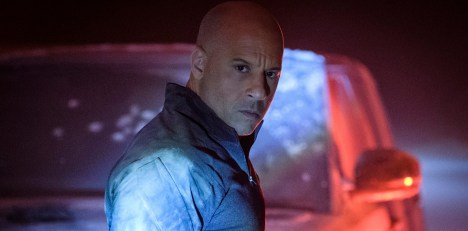
Bloodshot is a deeply dysfunctional movie.

At its core, Bloodshot offers a collision of old-fashioned nineties-era action spectacle with modern superhero genre tropes. There’s certainly a rich vein of material to be mined in the uncanny valley between Hollywood’s recent past and its inescapable present, with the intersection of these two styles of film-making being a larger part of the appeal of the trainwreck theatre of movies like Venom. Unfortunately, Bloodshot finds a way to combine the least appealing aspects of each approach, resulting in a film that feels hollow and unsatisfying.

Pounding excitement?

Bloodshot does get some points for the cleverness of its pivot from stock nineties action movie into modern superhero fare. Indeed, given the character’s origin as one of the most nineties of comic book characters at one of the most nineties of comic book publishers, there’s even something a little wry in trying to transition him from an older style of blockbuster into something a little more modern. Indeed, there’s even some interesting metatext there, with Vin Diesel himself as one of the last nineties action heroes transforming into a straight-up superhero.

Unfortunately, Bloodshot never manages to get these moving parts to line up in an interesting or compelling manner, always following the path of least resistance towards inescapable destinations. The film offers a couple of heavy-handed meditations on free will and self-determinism, but there’s a grim irony in a movie so formulaic arguing for the importance of making one’s own choices.

Diesel powered.

Continue reading

Non-Review Review: The Jesus Rolls

The Jesus Rolls is a loaded premise on a number of levels.

Most obviously, it is a film that takes a memorable supporting character from a beloved film and asks them to hold focus for ninety-odd minutes. Not all characters are designed to support a feature film, as the cavalcade of failed Saturday Night Live films will attest. It’s possible to get lucky, as with cases like Wayne’s World, but these happen relatively infrequently. Jesus might be a character who works best as part of the larger wacky ensemble of The Big Lebowski, where he exists in a heightened world of wandering cowboys, conceptual artists, pornographers and nihilists.

The risks are compounded by the change of authorship. Jesus Quintana was a character created by the Coen Brothers, and so makes a great deal of sense in their world of dysfunctional and cartoonish eccentrics. While actor John Turturro has experience as a writer and director, he is very clearly a different sort of filmmaker. Turturro’s last theatrically released feature was Fading Gigalo, released in 2013. There’s little in Turturro’s filmography to suggest that his approach to Jesus will mesh with the character’s origin in a stylised Raymond Chandler homage.

The Jesus Rolls is a strange sort of misfire. It’s a surprisingly flat film, which says a lot considering its gonzo inspirations and its bawdy preoccupations. There’s a hollowness to it all, an emptiness and a lack of focus. It lacks the energy or zeal that might excuse its paper-thin approach to its plot and protagonist, aspiring towards a weightiness that neither its characterisation nor its content can support. The Jesus Rolls often feels like a series of interlocking vignettes rather than a movie, but none of which succeed at holding the audience’s attention.

Continue reading

Non-Review Review: Misbehaviour

Misbehaviour is a charming an engaging film that suffers slightly from the lack of a clear focal point.

Philippa Lowthorpe’s historical drama-comedy is set against the backdrop of the 1970 Miss World pageant in London. The event became something of a point of convergence in the cultural wars spilling over from the end of the sixties, a target for the anarchist fringe, the anti-apartheid campaign, and for the nascent women’s liberation movement. At the same time, a quieter revolution was taking place within the event itself. Grenada had sent its first contestant to take part, while South Africa sent a black woman to represent them for the first time.

Misbehaviour features an incredibly stacked cast and diverse array of perspectives, looking at the central event through a variety of radically different prisms. There’s a sense that Misbehaviour wants to offer a genuinely intersectional perspective on the events of that explosive contest, the film’s form resembling its core themes. It helps that Lowthorpe has assembled an increidbly charming cast, and that spending time with just about any member of the ensemble is a worthwhile endeavour of itself.

At the same time, though, the film struggles to balance its large ensemble. There are occasionally too many plates spinning, and too much space between them. By the time that the film has checked in on all the major characters and circled back around, dramatic momentum has been lost and the film has to spend a minute or two regaining its footing. As a result, Misbehaviour never works as well as it might, feeling a little too clumsy and broad. Still, there’s a lot to like about it.

Continue reading

Non-Review Review: The Hunt

The Hunt could never live up to the controversy.

After all, The Hunt was a film that attracted a considerable deal of attention. The basic premise of the movie finds a number of “deplorables” kidnapped and taken to a secret location, where wealthy liberals hunt them for sport. This premise attracted the attention of Fox News back in August. From there, it attracted the attention of the President of the United States. Donald Trump tweeted angrily about The Hunt, and within a day it was pulled from the release calendar.

The Hunt arrives in cinemas cresting that wave of controversy. The trailer for the new release date openly acknowledges the controversy and leans into it, encouraging prospective audience members to “decide for [themselves]” about it. So The Hunt arrives as an object of curiosity and fascination. Unfortunately, none of that feels earned. Indeed, it looks like the most remarkable thing about the shift in release dates was that it allowed The Hunt to avoid a direct class with the similar-but-superior “elites riff on The Most Dangerous Game” film Ready or Not.

The Hunt goes looking for controversy, but comes home empty handed.

Continue reading

Non-Review Review: Calm With Horses

This film was seen as part of the Virgin Media Dublin International Film Festival 2020. Given the high volumes of films being shown and the number of reviews to be written, these may end up being a bit shorter than usual reviews.

Calm With Horses is a solid, atmospheric crime drama.

There are very few surprises in Nick Rowland’s West of Ireland gangster film. The plot is fairly straightforward, focusing on a muscle-bound enforced for a local crime family who finds himself torn between the man that he wants to be and the tool that his employers see him to be. There are familiar dreams of escape, and those inevitable consequences that ripple outwards from a single morally-justified-but-strategically-stupid decision towards inevitable disaster. Thematically, Calm With Horses belongs to that familiar genre of violent men trying to live with their violence. Even the metaphors are familiar.

That said, Calm With Horses benefits from strong execution. The film received funding as part of the WRAP initiative, encouraging film production on the western coast of the island. Rowland skillfully leverages the film’s location work in Clare and Galway, providing his moody character study with a rich sense of atmosphere. In its strongest moments, Calm With Horses taps into a lingering melancholy that suggests a desolation extending beyond the rugged rural landscapes. There is a sense that these characters are as stark and haunted as the landscapes that they wander.

Calm With Horses doesn’t really offer any new twists on a familiar genre, but elevates its familiar trappings through the execution.

Continue reading

Non-Review Review: Promising Young Woman

This film was seen as part of the Virgin Media Dublin International Film Festival 2020. Given the high volumes of films being shown and the number of reviews to be written, these may end up being a bit shorter than usual reviews.

Promising Young Woman is a deeply uncomfortable watch. As it should be.

The basic premise of Emerald Fennell’s theatrical debut is decidedly thorny. Cassandra is a thirty-year-old woman who spends her weekends going to bars and acting so drunk that she can barely stand. Inevitably, a “nice guy” arrives to volunteer to help. He usually bundles her into the back of a taxi and takes her back to his place. Then, things get very uncomfortable – particularly when they realise that Cassandra is nowhere near as incapacitated as she appears to be. It’s a hell of a hook.

Promising Young Woman is the kind of film that is going to generate lots and lots of “discourse.” It will stoke strong opinions. It will spark uncomfortable conversations. It is an incredibly loaded film. All of this makes Fennell’s accomplishment all the more impressive. Promising Young Woman is a remarkably confident and assured debut feature, a film which navigates an almost impossibly fraught subject with a surprising amount of charm and wit. Promising Young Woman is heartbreaking and hilarious, raw and riotous, often pivoting between extremes in the space of a single scene. It’s a deft balancing act.

However, the most remarkable thing about Promising Young Woman isn’t just the way that Fennell manages all these tensions within the film. Promising Young Woman manages to create a palpable and compelling tension with the audience – a perfectly calibrated push-and-pull that knows exactly which buttons to push and when, for maximum effect. Promising Young Woman is a film that challenges its audience as much as its characters, and that is what makes it such a striking piece of film-making.

Note: It is probably best to see Promising Young Woman as blind as possible, without any real foreknowledge of what the film is doing or how it does it. This review will not go into too much depth, but discussing the film means discussing some of those mechanics. Consider this a light spoiler warning, and an unqualified recommendation.

Continue reading

Non-Review Review: Radioactive

This film was seen as part of the Virgin Media Dublin International Film Festival 2020. Given the high volumes of films being shown and the number of reviews to be written, these may end up being a bit shorter than usual reviews.

The life of Marie Curie is fascinating. Radioactive is not.

Curie is easily one of the great figures of the twentieth century, a scientist who changed the way in which mankind fundamentally understood the workings of the universe. That is no small accomplishment, and there is plenty of dramatic fodder to be found in her personal life; the manner in which she was marginalised by the scientific community because of her gender, her complicated relationship with Pierre Curie, even the tabloid scandal that defined so much of her later life. There are any number of interesting angles through which a biopic might approach Curie.

Unfortunately, Radioactive is greedy. Jack Thorne’s screenplay doesn’t just want to encompass the totality of Curie itself, the script hopes to offer something close to a cinematic biography of radiation itself. There is no doubt that Radioactive is ambitious, with director Marjane Satrapi even trying to break up scenes of exposition with helpful cinematic illustrations of the concepts under discussion. However, there is simply too much to cover. Radioactive struggles to maintain a consistent throughline, often feeling like a bullet point summary of Curie’s Wikipedia page rather than a compelling narrative of itself.

Radioactive could use some refining.

Continue reading

Non-Review Review: It Must Be Heaven

This film was seen as part of the Virgin Media Dublin International Film Festival 2020. Given the high volumes of films being shown and the number of reviews to be written, these may end up being a bit shorter than usual reviews.

It Must Be Heaven offers a Chaplin-esque meditation on what it means to be “a citizen of the world,”, albeit filtered through a Palestinian lens.

Writer and director Elia Suleiman neatly divides his comedy into three acts. Playing himself, the veteran Palestian director journeys from Palestine in a bid to finance his latest movie. First, he visits Paris. Then, he visits New York. Along the way, he acts a silent and deadpan observers of the chaos of the world around him. Over the course of the film Suleiman only talks on a handful of occasions. Indeed, it would be handy enough to exorcise those sequences and reduce him to a classic silent film protagonist. However, the world buzzes around him.

So much of It Must Be Heaven is a purely observational film. Suleiman drifts idly from one scene to the next, always watching with mild bemusement as he steps into another story that is already in progress, often without any larger context: a father and son squabble across the balconies of their shared home, two brothers threaten a restaurant owner for serving wine in their sister’s food, a woman marches slowly and certainly from a well carrying two containers of water in a rather relaxed relay. Sometimes narratives reveal themselves through the act of looking, and sometimes they don’t. Such is life.

It Must Be Heaven seems more like a resigned sigh than a profound statement, a candid acknowledgement of how people are strange all over, even if some places offer their own unique brands of eccentricity.

Continue reading