• Following Us

  • Categories

  • Check out the Archives


  • Awards & Nominations

Star Trek (DC Comics, 1984) #9-16 – New Frontiers (aka The Mirror Universe Saga) (Review)

The first Star Trek pilot, The Cage, was produced in 1964. To celebrate its fiftieth anniversary, this December we are reviewing the second season of the original Star Trek show. You can check out our first season reviews here. Check back daily for the latest review.

Eight issues is a long time in the world of comic books, even by the standards of modern storytelling. Committing to the same story arc for two-thirds of a calendar year is a big decision, even moreso in December 1984. Nevertheless, DC comics committed to an eight-issue Star Trek story arc in the wake of Star Trek III: The Search for Spock, on throwing Kirk and the crew into a truly epic adventure with the fate of the Federation hanging on the line. It is no wonder that The Mirror Universe Saga remains the gold standard for Star Trek comic books, reprinted and repackaged repeatedly over the years.

The Mirror Universe Saga is an epic in just about every sense of the word, spanning two universes and eight issues. Not only do writer Mike Barr and artist Tom Sutton find themselves handling the fallout from the last feature film, but they also dabble in an iconic piece of Star Trek history. The Mirror Universe Saga takes full advantage of its format to offer a spectacular and impressive adventure that would have been impossible to realise on film in 1984 – indeed, it is hard to imagine television or cinema doing justice to the scale of the adventure now.
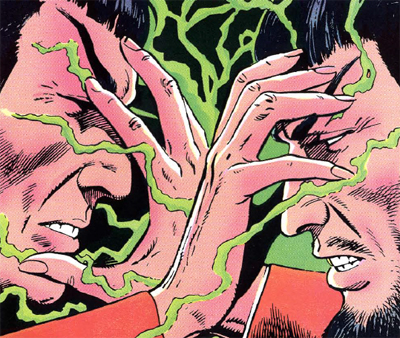
Meeting of minds...

Meeting of minds…

However, The Mirror Universe Saga succeeds on more than simply epic scale and meticulous attention to detail – although Barr and Sutton provide those with gusto. Despite everything going on around it, The Mirror Universe Saga largely works because it never loses track of the characters at the heart of the story. While the Terran Empire might be plotting an invasion in the midst of an internal revolution, the more powerful moments of The Mirror Universe Saga come from throwing the characters into contact with their alternate selves.

In 1984, it seems like The Mirror Universe Saga had figured out what would be the core ingredients for the most successful follow-ups to Mirror, Mirror. It deduced that the mirror universe could not just be playground where everything is gloriously and campily evil; it had to retain some level of emotional reality or connection. What good is a mirror if it is not reflecting anything?

Set course... for eeeevil!

Set course… for eeeevil!

Continue reading

Star Trek – New Visions #1: The Mirror, Cracked (Review)

The first Star Trek pilot, The Cage, was produced in 1964. To celebrate its fiftieth anniversary, this December we are reviewing the second season of the original Star Trek show. You can check out our first season reviews here. Check back daily for the latest review.

It is interesting the ideas that wind up becoming the focal points for fans and tie-in fiction.

For example, there is a wealth of tie-in material based around individual episodes of the Star Trek franchise. Despite the fact that Gary Seven only appeared in Assignment: Earth, the character has inspired tie-in novels and comic books about his exploits from a wealth of different writers. Similarly, the history of Khan Noonien Singh has been thorough explored (and re-explored) in various novels and comic books as well, despite the fact that he only appeared in one episode of the classic television show and one of the theatrical films – his popularity grew to the point where he reappeared in the rebooted series.

Boom, boom, boom, shake the bridge!

Boom, boom, boom, shake the bridge!

There is a lot of fixation on the perceived “missing” adventures from Kirk’s five-year mission, a revisionism that occasionally seems intended to downplay the two seasons of Star Trek: The Animated Series. Michael Jan Friedman wrote a series of novels exploring Captain Picard’s tenure commanding the Stargazer. There is a wealth of material filling the gaps between The Turnabout Intruder and Star Trek: The Motion Picture; and from there to Star Trek II: The Wrath of Khan.

In contrast, there is less material filling the gap between the opening sequences of Star Trek: Generations and Encounter at Farpoint; particularly if you exclude material focusing on Captain Sulu or Captain Picard. The Lost Era novel series was short-lived, and the comics have little interest in it. Similarly, the tie-in novels may have expanded continuity past Endgame, but there is an incredible “safeness” to it all. Sure, Deep Space Nine might be destroyed; but it will be rebuilt with most of the same craft. Voyager may be home, but it’ll be sent out again. Janeway may die, but she’ll be back.

A transporter, darkly...

A transporter, darkly…

Continue reading

Star Trek (IDW, 2009) #13 – The Red Shirt’s Tale (Review)

The first Star Trek pilot, The Cage, was produced in 1964. To celebrate its fiftieth anniversary, this December we are reviewing the second season of the original Star Trek show. You can check out our first season reviews here. Check back daily for the latest review.

The IDW monthly comic series that launched after the release of Star Trek is an interesting beast.

Writer Mike Johnson has been on board since the title launched in September 2011, lending the comic a sense of creative consistency. Much has been made of the involvement of Roberto Orci as “creative consultant” on the title, as if to imply that the comic might somehow be legitimised in relation to the blockbuster franchise that spawned it. Certainly, the series does not enjoy the same loose attitude towards contemporary continuity that characterised the DC comics series published during the mid-eighties.

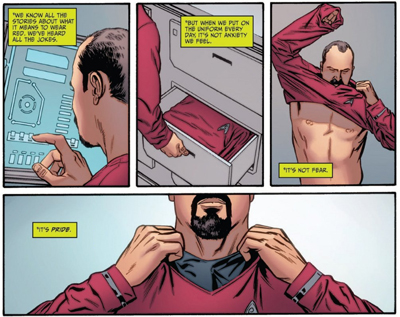
Suit up!

Suit up!

At the same time, it is not as if IDW’s on-going Star Trek comic series can claim a closer relation to canon. After all, the events of the comic’s first arc were rendered explicitly non-canonical by a casual conversation between Pike and Kirk in the first twenty minutes of Star Trek Into Darkness. This is not a problem of course – any more than continuity issues were a problem for the mid-eighties DC series – but they do suggest that the series’ fixation on continuity is perhaps misplaced.

This weird fetishisation of “continuity” defined the first year or so of the title’s existence, with issues dedicated to essentially re-telling classic Star Trek stories using the new cast and crew. (Indeed, only one story from that year – Vulcan’s Vengeance – was not based on a classic episode.) The Red Shirt’s Tale serves as something of a half-way marker as the comic began to transition away from these sorts of continuity-heavy retellings, focusing a bit more on the new characters and the new world. The issue is a retelling of The Apple, but in a way that is more thoughtful and playful than a lot of what came before.

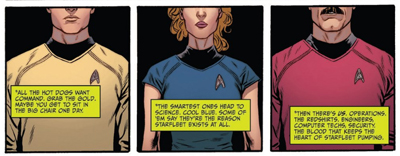
Colour-coded...

Colour-coded…

Continue reading

Star Trek (DC Comics, 1984) #43-45 – The Return of the Serpent! (Review)

The first Star Trek pilot, The Cage, was produced in 1964. To celebrate its fiftieth anniversary, this December we are reviewing the second season of the original Star Trek show. You can check out our first season reviews here. Check back daily for the latest review.

One of the benefits of a franchise as old and as diverse as Star Trek is the opportunity it provides for introspection and reflection. Star Trek has existed for almost fifty years. In those fifty years, the franchise has been written by a lot of different people at a lot of different points in time. As such, it makes sense that viewpoints shift and core principles are questioned. One of the more intriguing aspects of watching Star Trek grow older is watching the franchise question some of its earlier decisions and opinions.

The Return of the Serpent plays very much as a criticism of The Apple, a three-issue storyline dedicated to exploring just how wrong Kirk was to impose his own attitudes and beliefs upon the people of Gamma Trianguli VI. In some ways it can be see as both a spiritual successor to Star Trek II: The Wrath of Khan and a precursor to the Star Trek: Deep Space Nine episode Crossover, in that it is a story based significantly around critiquing a moral judgement made by James Tiberius Kirk and endorsed by the show.

Shocking twists!

Shocking twists!

The Return of the Serpent is an interesting story, because it consciously problematicises a story from the original Star Trek television show. It is essentially a story about how Kirk made a terrible decision that cost countless lives. This criticism is voiced more explicitly that the criticism of Kirk in The Wrath of Khan and half-a-decade before Crossover would make it to air. This is a very bold and brave tie-in from DC comics. It is hard to imagine a story like The Return of the Serpent being published during Richard Arnold’s tenure overseeing Star Trek tie-ins.

That said, Mike Carlin’s script is not without its own problems. For all that it challenges a decision that Kirk made during the original run of the series, the ending rather consciously avoids the implications of that decision. The Return of the Serpent seems to assume that Kirk can just reverse the damage he has caused by flicking a switch – by going back and repairing the original mistake. For all that The Return of the Serpent cleverly interrogates Kirk’s decisions and motivations, it is undermined by a rather clean and convenient resolution.

Into the belly of the beast...

Into the belly of the beast…

Continue reading

Stefan Petrucha and Charles Adlard’s Run on The X-Files (Topps) (Review)

This November (and a little of December), we’re taking a trip back in time to review the third season of The X-Files and the first (and only) season of Space: Above and Beyond.

Topps’ X-Files comic was a massive success in the nineties.

The monthly series ran for forty-one issues between January 1995 and September 1998. In that time, Topps also produced an X-Files graphic novel, three digests, two annuals, a spin-off line of Season One comics and a miniseries adaptation of a Kevin Anderson novel. They also reprinted the series in quite a few formats, indicating that the comic sold well even outside the monthly schedule. The only reason that the series came to an end was because Topps eventually decided to retire from comic book publishing.

xfiles-feelingsofunreality4

After Topps withdrew from the comic book market following the Great Comic Crash of the mid-to-late nineties, the X-Files license lay fallow. Barring two Lone Gunman comics published by Dark Horse in 2001, there would be no new officially licensed X-Files comics written between September 1998 and September 2008, when Frank Spotnitz scripted a miniseries for Wildstorm. It is incredible to look back on the success of the Topps line for those three-and-a-half years when it held the license.

A lot of the credit for that success is owed to writer Stefan Petrucha, cover artist Miran Kim and interior artist Charles Adlard.

xfiles-homeofthebrave17

Continue reading

The X-Files (Topps) #15-16 – Home of the Brave (Review)

This November (and a little of December), we’re taking a trip back in time to review the third season of The X-Files and the first (and only) season of Space: Above and Beyond.

And so, we approach the end of an era.

The end of the third season of The X-Files brought down the curtain in a number of different ways. It was the last season of The X-Files to air beginning-to-end on Friday nights, turning it into a truly global phenomenon. It was the last season to air before Chris Carter launched Millennium and the last season broadcast before the show began to focus on The X-Files: Fight the Future; perhaps making it the last season of the show to have Chris Carter’s completely undivided attention for quite some time.

This is the end...

This is the end…

Amid all these changes, the shifting of the creative team on the tie-in comic book is not the biggest change taking place, but it contributes to a larger sense that The X-Files is changing. Writer Stefan Patrucha and artist Charles Adlard had worked on The X-Files since Topps launched the comic. On top of their sixteen issues of the regular series, the duo had worked on an annual, two digests and a variety of short (and special) stories during their tenure.

It is very strange to see the pair departing, because their work on X-Files tie-in comic book ranks as one of the most consistently interesting tie-ins published in mainstream comics.

Don't go into the light...

Don’t go into the light…

Continue reading

Star Trek – New Visions #3: Cry Vengeance (Review)

The first Star Trek pilot, The Cage, was produced in 1964. To celebrate its fiftieth anniversary, this December we are reviewing the second season of the original Star Trek show. You can check out our first season reviews here. Check back daily for the latest review.

These Are the Voyages… aired in May 2005. Star Trek has been off the air for almost a decade; longer in the eyes of certain fans who have their own earlier cut-off dates. Although JJ Abrams brought Star Trek back to the big screen, it is not quite the same. It is not simply that – as Ronald D. Moore has arguedStar Trek feels more at home on the small screen. There is also a sense that there is a dearth of “new” stories in the Star Trek universe. One two-hour movie ever three years does not cut it, after all.

A whole cottage industry has developed around trying to sate Star Trek fans – to deliver the new episodes that it seems so many fans so desperately want. There are month comic books set within the continuity of the recent movies. There are novels that unfold in a loosely serialised format building off the end of the various twenty-fourth century shows. There are numerous fan projects churning out their own new Star Trek stories, whether featuring the original characters or a novel twist on the franchise.

Shaking things up a bit...

Shaking things up a bit…

This desire for new Star Trek is understandable. Given the rate at which the franchise was produced during the nineties, it is hard to imagine living in a world where new Star Trek arrives by drip-feed. In a way, John Byrne’s New Visions series is the most candid attempt to cater to this impulse among Star Trek fans. Using a wealth of images from the original Star Trek series, some photoshop skills, and years of experience writing comic books, John Byrne is literally able to stitch together new stories from the eighty classic Star Trek shows.

It is a bizarre blend of storytelling and cannibalism that serves as a fairly cynical metaphor for a particular approach to tie-in Star Trek material.

"Use your indoor voice..."

“Use your indoor voice…”

Continue reading

The X-Files (Topps) Digest #2 – Dead to the World (Review)

This November (and a little of December), we’re taking a trip back in time to review the third season of The X-Files and the first (and only) season of Space: Above and Beyond.

Stefan Petrucha and Charles Adlard are winding at this point in their curatorship of Topps’ The X-Files comic book. The duo have contributed an absolutely staggering volume of work to the line. On top of monthly issues and short stories, there have been annuals and digests. The volume of the output has been staggering. All of it has been written by Petrucha and the vast majority was illustrated by Adlard. The quality has – generally speaking – been quite impressive.

Dead to the World is the headline story in the second “digest” published by Topps comics. As with Big Foot, Warm Heart before it, the format of the “digest” feels a little strange. There is a single (and rather long) comic written by Petrucha and illustrated by Adlard, following by a collection of shorts taken from Ray Bradbury Comics, a somewhat less popular feature of Topps’ comic book publishing line. There is a sense that the format might have worked better as a collection of short X-Files-themed stories for a variety of creators.

Face to face...

Face to face…

Nevertheless, the result is interesting. In many ways, Big Foot, Warm Heart seemed to point at where Petrucha and Adlard would go when they wrapped up their massive twelve-part “Aquarius” mega-arc. With its reflections on human failings and human abuses, it seemed like Big Foot, Warm Heart set the tone for the stories that would follow – like One Player Only or Falling. It offered a tease of things to come, suggesting the humanity could be more monstrous than any mythological creature.

In contrast, it is very tough to see where Dead to the World might have been pointing. Then again, Petrucha and Adlard would be gone from the comic a month after its publication. So perhaps the story’s funereal atmosphere feels appropriate.

Here there be monsters...

Here there be monsters…

Continue reading

The X-Files (Topps) #14 – Falling (Review)

This November (and a little of December), we’re taking a trip back in time to review the third season of The X-Files and the first (and only) season of Space: Above and Beyond.

Falling is a delightfully nasty piece of work.

It is, to be fair, something that has been gestating for quite a while in Petrucha and Adlard’s extended run on The X-Files. If their first year on the title explored the loose boundary between reality and unreality, their final few issues shifted to more grounded and cynical themes. Most explicitly, the idea that humanity makes the best monsters. It is a gleefully subversive twist on one of the core elements of The X-Files: the idea that monsters are real.

Falling to pieces...

Falling to pieces…

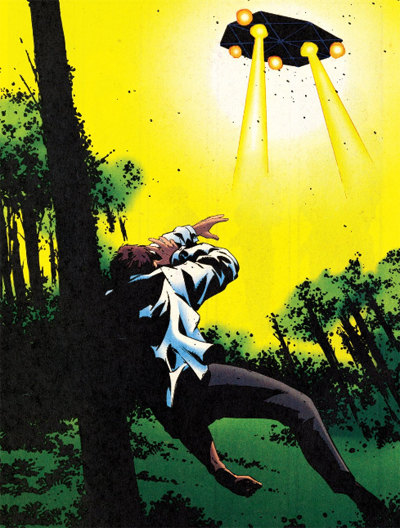
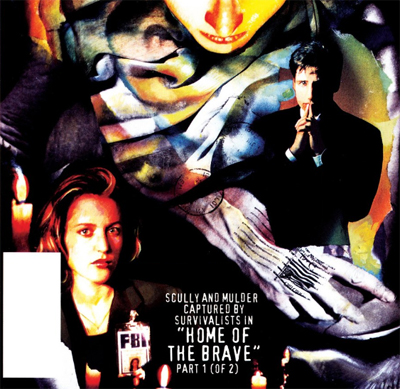
Petrucha and Adlard had broached this before. This was the key point in Big Foot, Warm Heart, where the eponymous creature shows more humanity than the human antagonist of the story. One Player Only featured a delightful red herring when it suggested a murderous artificial intelligence had driven a developer to a killing spree at a software company, only to reveal that the developer’s actions were entirely his own. It will be taken to the logical extreme in Home of the Brave, essentially the duo’s grand finalé.

Blending together the Americana and nostalgia of Stand By Me with the brutal cynicism of Lord of the Flies, Falling is a compelling and unsettling read.

If a tree falls in the woods...

If a tree falls in the woods…

Continue reading

Star Trek (Marvel Comics, 1980) #4-5 – The Haunting of Thallus!/The Haunting of the Enterprise! (Review)

The first Star Trek pilot, The Cage, was produced in 1964. To celebrate its fiftieth anniversary, this December we are reviewing the second season of the original Star Trek show. You can check out our first season reviews here. Check back daily for the latest review.

Marvel certainly had an unconventional approach to publishing Star Trek.

The company had licensed the comic book rights following the release of Star Trek: The Motion Picture. They had released a successful adaptation of the film as part of their Marvel Super Special line and had re-package the three-part adaptation as the first three issues of an on-going Star Trek comic book. Written by Marv Wolfman and illustrated by Dave Cockrum, it was clear that Marvel had big plans for Star Trek. However, it also quickly became clear that they had no idea where they wanted to go with the comic.

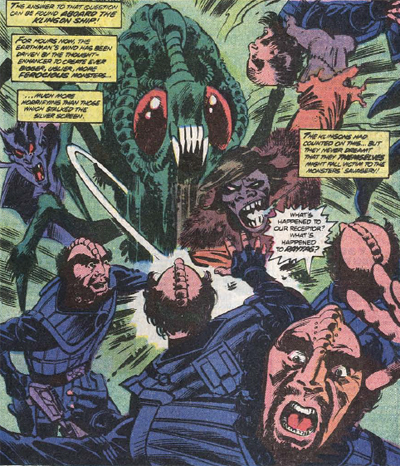
Here there be monsters...

Here there be monsters…

After all, they immediately followed up the big three-issue opening arc with a comic where the Enterprise discovered a haunted house floating in space. While it was certainly a catchy image, it wasn’t exactly a quintessential Star Trek premise. It seemed that Marvel had no idea what to do with the comic. Writer Marv Wolfman wrote the first of the two issues comprising the storyline, handing the second issue over to Mike W. Barr. He would only stick around for two issues before handing the comic over to Tom DeFalco. DeFalco wrote a single issue before moving on.

It is a rather disjointed comic book, one which lacks the strong narrative voices that DC would give to their late-eighties licensed Star Trek comics. Then again, it is probably easy enough to deduce all of this from the fact that the first original Star Trek storyline published by Marvel featured a haunted house floating in space.

In space, everyone can hear you scream...

In space, everyone can hear you scream…

Continue reading