• Following Us

  • Categories

  • Check out the Archives


  • Awards & Nominations

The X-Files (Topps) #18-19 – Night Lights (Review)

This February and March, we’re taking a trip back in time to review the fourth season of The X-Files and the first season of Millennium.

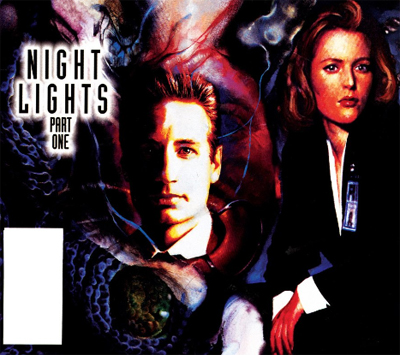
With Night Lights, incoming X-Files writer John Rozum teams up with veteran X-Files artist Charles Adlard. While Stefan Petrucha’s involvement in the line was pretty much finished, pending the release of Afterflight, Adlard would work as part of the book’s rotating art team for a while longer.

Thin Air made it quite clear that Rozum was going to be writing a more traditional X-Files comic book than his predecessor. Stefan Petrucha seemed happy to stretch the series as far as possible, to tease out big ideas about The X-Files and to play with the show’s sacred cows. The result was always intriguing, even if it sometimes went a little beyond what readers would have expected from a comic book based on The X-Files.
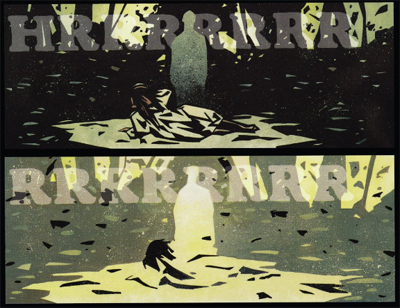
We will be gods, on night lights...

We will be gods, on night lights…

Rozum’s stories tend to be a bit more straightforward. They are very much conventional X-Files stories. They hue closer to the standard formula, and feature a whole host of expected ingredients. Thin Air was a very conventional and fairly rote X-Files story, particularly following on from stories like Falling or Home of the Brave. Rozum appeared to have some teething troubles, particularly when it came to pacing and characterisation.

While Night Lights feels a little too jumbled and confused to really work, it does seem a lot more confident and assured. The comic has a host of good ideas, and moves considerably smoother than Thin Air did. In fact, there is a rather brilliant idea nestled at the heart of the story. Rozum just buries it a little too well.

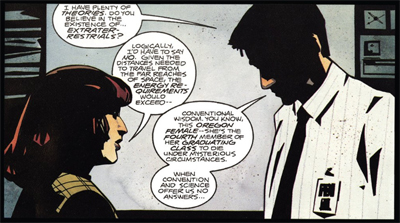
Keep watching the skies...

Keep watching the skies…

Continue reading

The X-Files (Topps) #17 – Thin Air (Review)

This February and March, we’re taking a trip back in time to review the fourth season of The X-Files and the first season of Millennium.

By all accounts, this was the kind of creative team that Ten Thirteen Productions probably wanted on Topps’ X-Files comic since the start.

Stefan Petrucha and Charles Adlard had done a phenomenal amount of work on The X-Files comic line. They had written sixteen issues of the monthly series, an annual, two digests and a slew of short stories scattered across various forums. However, it was quite clear that their approach to the comic was not quite what Ten Thirteen had hoped for when they licensed the comic to Topps. Petrucha’s scripts were ambitious, bold and playful; they were occasionally downright cheeky. Adlard was a master of mood and expression; he was less suited to likeness.

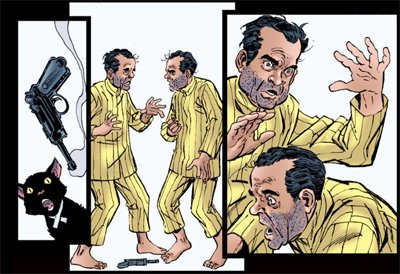
Here come the men in black...

Here come the men in black…

This had caused no small amount of friction between the production company and the creative team. By all accounts, the working relationship between Petrucha and the production company was quite strained. Eventually they fired him from the comic, making Home of the Brave the last story written by Stefan Petrucha and Charles Adlard on Topps’ The X-Files comics. Given the two had been with the comic from the start, this was quite a radical change.

However, this did allow Topps to put a team more agreeable to Ten Thirteen’s demands on the comic.

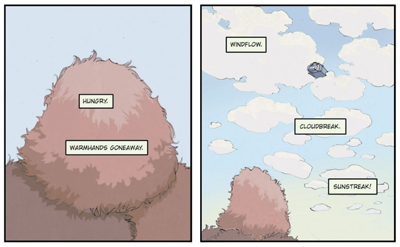
"I call it blue steal..."

“I call it blue steal…”

Continue reading

The X-Files: Season One (Topps) #0 – Pilot (Review)

This February and March, we’re taking a trip back in time to review the fourth season of The X-Files and the first season of Millennium.

Given the success of the monthly comic book series, it made sense for Topps to try to capitalise on The X-Files as much as possible. The series was exploding into the mainstream. Chris Carter was launched a second television show, Millennium, to capitalise on the success. Fox were planning to move the series to Sunday nights. There was already talk about a possible movie franchise. This was a great time to be publishing X-Files comics.

Topps had already used the series to sell “digests” packed with unrelated comics, and had published annuals to get a little extra sales revenue into the fiscal year. However, there was a clear desire to publish more X-Files work with more consistency. Ideas began to percolate – Kevin J. Anderson would pen a miniseries based on his Ground Zero novel during the show’s fifth season, for example. The company also decided to publish a series of comic books adapting early episodes of the series.

The truth is out there...

The truth is out there…

The series didn’t properly launch until the following year, with a series of monthly adaptations of first season episodes running from the start of the fifth season through to the month following the release of X-Files: Fight the Future. Conveniently titled Season One, these comics were only cancelled when Topps folded its comic book division – vanishing quite suddenly from the stands, with little warning.

The adaptation of The Pilot was actually released a year earlier than the monthly series – it was re-packaged and re-released once Topps committed to a monthly series of adaptations. As such, it makes for a strange teaser of things to come.

This could be the start of a beautiful friendship...

This could be the start of a beautiful friendship…

Continue reading

Star Trek – Assignment: Earth (IDW, 2008) (Review)

The first Star Trek pilot, The Cage, was produced in 1964. To celebrate its fiftieth anniversary, this December we are reviewing the second season of the original Star Trek show. You can check out our first season reviews here. Check back daily for the latest review.

John Byrne’s five-issue Assignment: Earth miniseries is fascinating, because it is perhaps the closest that fans will ever come to getting an actual series spinning out of the episode Assignment: Earth. Of course, the second season finalé had been planned as a backdoor pilot for a new television show, but it never quite materialised. Understandably, Gary Seven tends to appear in spin-off material as a guest star or supporting player. Assignment: Earth focuses on the adventures of Supervisor 194 on his own terms.

Coupled with Byrne’s decidedly old-school done-in-one storytelling structure, Assignment: Earth manages to tell four separate stories featuring Gary Seven and Roberta Lincoln doing what they do in the late sixties and into the seventies. A series of unique and episodic adventures delivered on a regular, Assignment: Earth comes quite close to capturing the feel of a television show. Taking the television episode as his starting point, John Byrne manages to pitch a series of adventures that feel like they might hint at the direction the show could have gone.

Sensors detect a spin-off!

Sensors detect a spin-off!

While the Assignment: Earth miniseries is ultimately disposable and largely forgettable, it is an interesting experiment. By their nature, prose novels like The Eugenics Wars can only focus on a single plot starring the character. Using his fairly compressed approach to comic book storytelling, Byrne can tell five different stories in rapid succession, each with a clear beginning, middle and end. While these stories are inevitably written from the vantage point of 2008, they still feel like they might offer a glimpse at what the show might have looked like.

In many respects, Byrne is hampered by his source material. While the writer and artist has a bit of fun with the concept, a lot of Assignment: Earth ultimately feels a little dry and a little heavy-handed. Despite all the nods towards relevance and social commentary, Assignment: Earth lacks the spirit of adventure and excitement that a television show like this would need in the longer term.

"You'll have fifty percent less Nixon to kick around!"

“You’ll have fifty percent less Nixon to kick around!”

Continue reading

Star Trek (DC Comics, 1989) #49-50 – The Peacekeepers (Review)

The first Star Trek pilot, The Cage, was produced in 1964. To celebrate its fiftieth anniversary, this December we are reviewing the second season of the original Star Trek show. You can check out our first season reviews here. Check back daily for the latest review.

There is something quite disconcerting about Gary Seven.

Abducted from Earth at a young age by a race of mysterious aliens, Gary Seven was then returned to Earth in order to ensure that human history unfolds as expected. The unstated assumption is that “as expected” is a euphemism for “according to the wishes of his mysterious employers.” Using his advanced technology, Gary Seven manipulates the world around him. His technology allows him to cloud the minds of his enemies, and to materialise wherever he might wish. He tinkers with nuclear weapons, keeping his existence – and his objectives – a secret from the local people.

Everything comes apart...

Everything comes apart…

It is interesting to wonder how Assignment: Earth might have developed had it successfully spun off from Star Trek. After all, a pilot does not exist to completely define a new television show; it exists to set up a framework through which interesting stories might be told. Would a weekly television show built around Gary Seven have explored these big questions? Or would it have been content to exist as an imitation of Mission: Impossible? As with ever road not taken, it is absolutely impossible to be sure where it might lead.

Still, Howard Weinstein’s The Peacekeepers teases out some of these interesting questions and queries. Even if it never really offers any answers, there is a lot to chew over.

A spectre...

A spectre…

Continue reading

Star Trek: Alien Spotlight – Tribbles (Review)

The first Star Trek pilot, The Cage, was produced in 1964. To celebrate its fiftieth anniversary, this December we are reviewing the second season of the original Star Trek show. You can check out our first season reviews here. Check back daily for the latest review.

There is something delightfully gonzo about trying to write a comic book from the perspective of a bunch of Tribbles.

IDW’s Alien Spotlight series did not always work as well as it might, but the delightful done-in-one format of stand-alone stories told from the perspective of iconic Star Trek aliens allowed for a bit more versatility and flexibility than the line was normally afforded. Alien Spotlight: Cardassians was set after the end of Star Trek: Deep Space Nine. Alien Spotlight: Borg featured a delightfully clever logical paradox and a Borg invasion. Alien Spotlight: Klingons allowed Keith R.A. DeCandido to work his magic with the Klingons. Alien Spotlight: Romulans served as a springboard for John Byrne towards his Romulans saga.

You think you've got tribbles?

You think you’ve got tribbles?

There were more than a few disappointments along the way, but the Alien Spotlight series stands as one of the highlights of IDW’s Star Trek licensing. Alien Spotlight: Tribbles is a very odd piece of work. It is the kind of high-concept story that might feel like a gimmick and feels stretched over a single issue, let alone an arc. However, it is just silly enough that it works. Telling the story of a conflict between a bunch of Klingons and a human freighter crew through the eyes of the Tribbles is a fascinating idea.

While there is a sense that writer Stuart Moore occasionally has to stretch to get the story to where it needs to go, but Alien Spotlight: Tribbles is a delightfully charming (if perhaps a little too light) Star Trek diversion.

Laugh it up, fur ball...

Laugh it up, fur ball…

Continue reading

Star Trek (DC Comics, 1984) #39-40 – The Return of Mudd (Review)

The first Star Trek pilot, The Cage, was produced in 1964. To celebrate its fiftieth anniversary, this December we are reviewing the second season of the original Star Trek show. You can check out our first season reviews here. Check back daily for the latest review.

By its nature, Star Trek had very few recurring guest stars – outside of recurring extras and the supporting senior staff.

Star Trek was a prime-time science-fiction show in the sixties. As such, it was strongly episodic. More than that, it was a show that included its stated goal – “to explore strange new worlds” – in a narration over the opening credits. As such, the show did not tend to bring back too many recurring characters. Gene L. Coon had tried to introduce a recurring foil for Kirk in the second season, but Robert Justman had vetoed the reappearance of Kor in A Private Little War and Coon would depart before he could follow through on plans to make Koloth a recurring adversary.

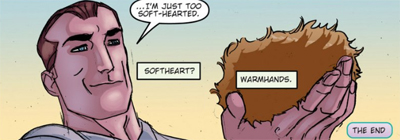
Our man Mudd...

Our man Mudd…

Of course, this has not stopped Star Trek fans from seizing on various one-shot characters from the three seasons of the original Star Trek. Despite only appearing in Errand of Mercy, Kor has become a frequently recurring character in the Star Trek mythos. Gary Seven has spun off from Assignment: Earth into a string of novels and comics. Christopher Pike only appeared with Kirk in one single story, but there is a huge amount of literature dedicated to him. Still, this means that the elements which do recur are given a bit more weight.

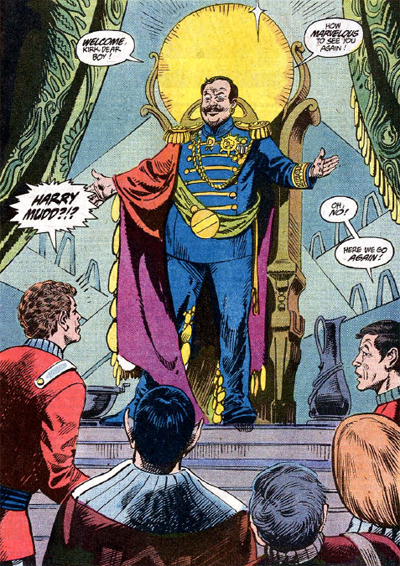
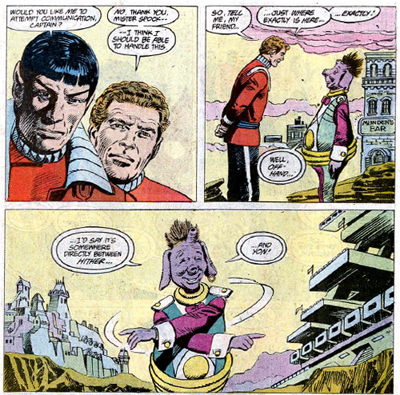
Klingons, Romulans and Vulcans are a vital part of the Star Trek mythos. Khan Noonien Singh only appeared in Space Seed and Star Trek II: The Wrath of Khan, but his memory haunts the franchise to the point where he was revived for Star Trek Into Darkness. Harry Mudd has the distinction of being the only non-crewmember to recur within the original run of eighty episodes. So it is no surprise that Harry Mudd has become one of the most frequently recurring guest stars in the history of the franchise.

Kirk meets quirky...

Kirk meets quirky…

Continue reading

Star Trek (Gold Key) #61 – Operation Con Game (Review)

The first Star Trek pilot, The Cage, was produced in 1964. To celebrate its fiftieth anniversary, this December we are reviewing the second season of the original Star Trek show. You can check out our first season reviews here. Check back daily for the latest review.

The Gold Key comics came a long way, in the end.

The early issues were full of errors and contradictions – feeling like Star Trek as described across a crowded bar, the broad strokes present but the details never synching up. Those early comics – much like James Blish’s novelisations – suggest a missing link between Star Trek and fifties science-fiction. The earliest issues offered a glimpse of Star Trek through a prism. However, the comics grew more professional (and more familiar with their source material) as they went along.

Beam me down, Scotty...

Beam me down, Scotty…

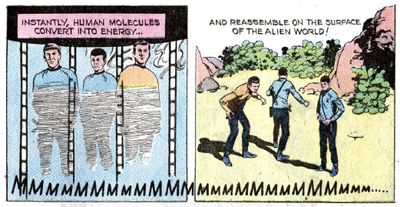
Indeed, the series attracted a number of notable writers and artists, including Len Wein. Wein would go on to write for the franchise when DC procured the license in the mid-eighties. More than that, it was clear that the writers and artists had begun to watch the show. There were none of the early mistakes that come from working with publicity materials and without context. Although the earliest issue of the comics achieved infamy among Star Trek fans, the book ran for over a decade – stumbling a bit close to traditional Star Trek values as it went along, even if it never quite abandoned its more absurd tendencies.

Operation Con Game is the last issue of Star Trek published by Gold Key, and serves as an example of how far the comics have come.

Disrupting that thought...

Disrupting that thought…

Continue reading

Star Trek (IDW, 2009) #15-16 – Mirrored (Review)

The first Star Trek pilot, The Cage, was produced in 1964. To celebrate its fiftieth anniversary, this December we are reviewing the second season of the original Star Trek show. You can check out our first season reviews here. Check back daily for the latest review.

The mirror universe is a fun concept.

Over the run of the franchise, quite divorced from the context of Mirror, Mirror, the mirror universe itself is an excuse to go big; to indulge in hammy and silly behaviour. There’s no need to worry about putting the toys back in the box, or even the general philosophy of the franchise as a whole. Appropriately enough, it becomes a place where you can do almost anything you might imagine with no real consequences. Writers get to do big space opera stuff, actors get to munch on the scenery.

All hail the empire...

All hail the empire…

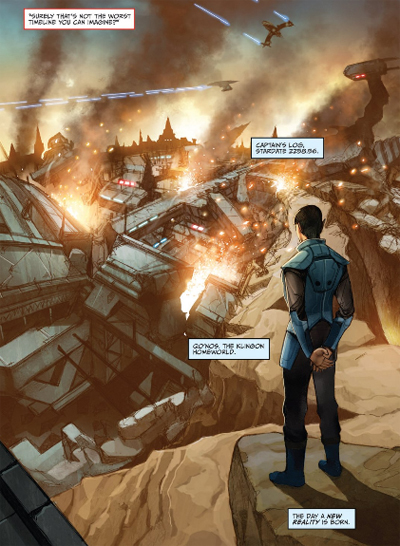
There is a reason that the most giddy and indulgent fan service from the already giddy and fan-service-filled fourth season of Star Trek: Enterprise was the two-parter set in the mirror universe. Indeed, Mirrored arguably borrows more from In a Mirror, Darkly than it does from Mirror, Mirror. The entire two-part story is launched from a casual conjectural conversation between Scotty and McCoy – suggesting that this might just be some flight of fancy. Indeed, the story cuts to the mirror universe as Scotty asks McCoy about “the worst timeline [he] can imagine.”

Mirrored is a very silly, very disposable story. It combines the weird fascination with alternate universes that runs through IDW’s monthly Star Trek series with the fixation on the events of JJ Abrams’ franchise-launching reboot. The result does not rank with the best mirror universe stories ever told, feeling too indulgent for its own good.

A cutting retort...

A cutting retort…

Continue reading

Star Trek – Mirror Images (Review)

The first Star Trek pilot, The Cage, was produced in 1964. To celebrate its fiftieth anniversary, this December we are reviewing the second season of the original Star Trek show. You can check out our first season reviews here. Check back daily for the latest review.

There has always been something rather strange about IDW’s Star Trek publishing line. How does the company decide what ideas got to print? What indicators do they look at in order to determine that one concept is worth exploration, but another is not? Basing the monthly on-going comic series around JJ Abrams’ rebooted Star Trek universe makes a great deal of sense, as does commissioning D.C. Fontana to write Year Four – The Enterprise Experiment. However, there is a sense that a lot of their output comes from throwing darts at boards.

For example, comics based on Star Trek: The Next Generation and Star Trek: Deep Space Nine have been confined to miniseries or arcs of the on-going monthly series; this seems odd, given that the market buying comics books would have been at the perfect age to feel nostalgia for them. However, miniseries like Intelligence Gathering or Assimilation2 are given as much prominence as strange alternate universe stories as The Last Generation or Mirror Images.

Pained leadership...

Pained leadership…

It isn’t that The Last Generation or Mirror Images aren’t interesting, at least on paper. While the execution in both cases might leave a little to be desired, there are interesting stories to be told in the classic “what if…” comic book style. However, it is hard to believe that there is as much demand for the four-issue story of mirror!Kirk taking command of the I.S.S. Enterprise and killing mirror!Pike as there is to see Data or Odo or Picard again. Given the success that IDW has enjoyed resurrecting The X-Files, it would seem nineties nostalgia is out there.

There is an argument to be made that the classic crew is currently more popular and iconic than any of the spin-offs, largely thanks to the recent cinematic reboot. However, is there really so much demand for a story based around Christopher Pike that four issues of mirror!Pike scheming demand to published?

Only logical...

Only logical…

Continue reading