• Following Us

  • Categories

  • Check out the Archives


  • Awards & Nominations

Stan Lee’s Iron Man – The Invincible Iron Man Omnibus, Vol. 1 (Review/Retrospective)

To get ready for Iron Man 3, we’ll be taking a look at some Iron Man and Avengers stories, both modern and classic. We hope to do two or three a week throughout the month, so check back regularly for the latest update.

Working in collaboration with a stable of fantastic artists, Stan Lee created so many iconic characters and franchises at Marvel Comics that you could easily believe that everything he touched turned to gold. His work on The Fantastic Four, Thor and The Avengers with Jack Kirby so perfectly captured the sci-fi spirit of the sixties, and his creation of The Amazing Spider-Man with Steve Ditko redefined comic books, so it’s hard not to imagine that everything Lee set his mind to worked out perfectly.

Of course, inevitably, there were books that didn’t quite work right out of the gate. While his first reboot of Captain America was so awkward that he had to retroactively re-write the stories to feature a crazed Captain America impersonator, a lot of these titles were given the time and space necessary to try to figure out how to make them work. You’d be forgiven for thinking that Lee was quite sentimental towards some of his creations, with the awkward development history of The Incredible Hulk suggesting that Lee was going to try to figure out any way to make that character gel.

The Invincible Iron Man was never quite that troublesome, but he also never entirely clicked under Lee’s pen. While none of the character’s re-tools and re-workings are as severe as the kind of things that Marvel tried to do with the Hulk, there’s a very clear sense – reading this mammoth collection of Tales of Suspense short stories – that Lee wasn’t entirely sure about how to write Iron Man.

I am Iron Man!

I am Iron Man!

Continue reading

Avengers vs. X-Men (Review/Retrospective)

To get ready for Iron Man 3, we’ll be taking a look at some Iron Man and Avengers stories, both modern and classic. We hope to do two or three a week throughout the month, so check back regularly for the latest update.

I’ll admit, I’ve always been broadly curious about how the Avengers and the X-Men franchises fit together. I’m not normally a massive fan of over-thinking the whole “shared universe” aspect of superhero comics. After all, how can Spider-Man continue to have it so tough when there’s a bunch of wealthy and well-loved superheroes who could vouch for him? Why wouldn’t Batman use Superman or Green Lantern for back-up all the time? It’s best not to dwell on the implication that all these comic books are unfolding at the same time, despite how fun the occasional crossover might be.

Still, I’ve always found it interesting that the X-Men books apparently share a continuity with Marvel’s publishing line. After all, the merry mutants are frequent victims of persecution and attempted genocide, the subjects of institutionalised racism and seem to spend the majority of their time as pariahs or outlaws. You’d assume that at least Captain America – the Sentinel of Liberty and all that – would probably want to take an interest in mutant affairs, or try to help them out a little.

Avengers vs. X-Men is a massive line-wide crossover between Marvel’s two largest and most iconic franchises. It is – as you might expect – mostly an excuse to throw the two sets of toys against each other, but it still has its fair share of interesting ideas. It doesn’t necessarily develop those interesting ideas in the most satisfactory direction, but it is surprisingly coherent for a twelve-issue series from five of Marvel’s highest profile writers and three of the company’s most respected artists.

Exactly what it says on the tin...

Exactly what it says on the tin…

Continue reading

Brian Michael Bendis’ Avengers – Avengers Assemble (Review/Retrospective)

To get ready for Iron Man 3, we’ll be taking a look at some Iron Man and Avengers stories, both modern and classic. We hope to do two or three a week throughout the month, so check back regularly for the latest update.

How do you cash in on the success of a big-budget blockbuster comic movie? Especially a film that has gone on to be the most successful film of 2012, and one of the most successful films of all time? It’s a tough question, and I’d like to imagine that Marvel thought long and hard about how to capitalise off the success of The Avengers. After all, comics are a medium that have been trying any number of desperate ploys to maintain sales and to attract fans over the past decade, so it would be stupid not to try to turn some of the cinema-goers into comic book fans. I made the transition, so it can’t be that tough.

Avengers Assemble, an eight-issue miniseries, seems to have been created as an answer to that question. Not only does it carry the name used by the film in several international markets, it uses the iconic roster from the film, tries to tell what appears to be a continuity-light tale and comes from a high-profile creative team. Unfortunately, these factors all feel rather cynical, rather than a genuine attempt to court new readers.

Hey, it's that guy, from that thing!

Hey, it’s that guy, from that thing!

Continue reading

Iron Man by David Michelinie & Bob Layton (& John Romita Jr.) Omnibus, Vol 1 (Review/Retrospective)

To get ready for Iron Man 3, we’ll be taking a look at some Iron Man and Avengers stories, both modern and classic. We hope to do two or three a week throughout the month, so check back regularly for the latest update.

It’s hard to believe, given the high profile the character has attained since Robert Downey Jr. first played Tony Stark in Iron Man back in 2008, but Iron Man used to be one of Marvel’s second-tier characters. Of course, like any other comic book character, Iron Man has had his ups and downs. There have been solid runs by great creative teams, and disappointing stories told by writers and artists unsuited to the character. However, Iron Man never really had one of those iconic comic book runs of the seventies and eighties, the kind of high-profile character-defining run like Walt Simonson’s tenure on Thor or Frank Miller’s work on Daredevil or Chris Clarement’s extended run on the X-Men franchise.

Perhaps the closest to such a run from the Bronze Age is the work by David Michelinie and Bob Layton, who actually enjoyed two extended runs writing for the character at the end of the seventies and into the eighties. This gigantic omnibus collection includes the first of those two runs, which were bisected (mostly) by Denny O’Neil’s extended time on the title. While it’s not as cohesive and solid a run as any of the aforementioned examples, it still demonstrates a solid understanding of Iron Man, and features two of the character’s most iconic stories.

You have to whip it...

You have to whip it…

Continue reading

The Spirit Archives, Vol. 26 (Review/Retrospective)

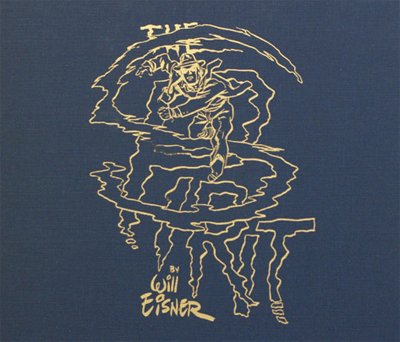
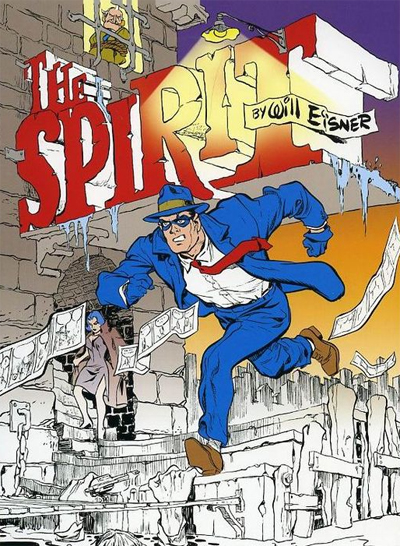
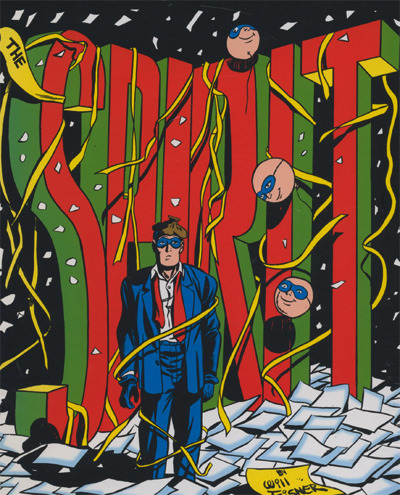
It’s strange reading The Spirit Archives, Vol. 26. Not just because it’s a collection of absolutely everything (from stories to pin-ups to posters to sketches) rather than a set of comic strips. Also because of the scope of this final hardcover collection in DC’s Spirit Archives programme. While, with the exception of the last volume, each book collected six months of the weekly strip, this final book collects pretty-much everything Will Eisner did with the character from the time that the weekly strip ended through to his death in 2005.  I’m a bit surprised that there’s only one book of this material, although it does allow the reader to flick through the decades following the end of the strip as if examining a family photo albums – watching the subtle changes as time marches on.

Despite the fact that he was cancelled, The Spirit never seemed to quite go away. There was a lot of work featuring the character by other writers and artists, but most of that isn’t collected here. Instead, this admittedly disjointed collection reads best as a sort of a documentary charting the on-going relationship between Will Eisner and arguably his most popular creation.

Still making waves…

Continue reading

The Spirit Archives, Vol. 25 (Review/Retrospective)

DC have done a tremendous job with their Spirit Archives collection. Twenty-four volumes collecting the twelve years of the Sunday strip is quite an accomplishment, and they’d be forgiven for stopping there. No other character in DC’s back catalogue has such a consistent collection of their early years. (Batman and Superman might have similar volumes of material collected, but somewhat haphazardly.) It’s to the company’s credit that they decided to close out their collections of Eisner’s work on the character with what might be considered two appendices. The next collection will include most of Eisner’s post-1952 work on the character, but this hardcover collects each and every daily Spirit strip published between 1941 and 1942. While it might not be the most essential collection every published (whether in terms of the character or in the history of daily newspaper strips), but it’s still nice to see it collected with the rest of Eisner’s work.

Continue reading

The Spirit Archives, Vol. 24 (Review/Retrospective)

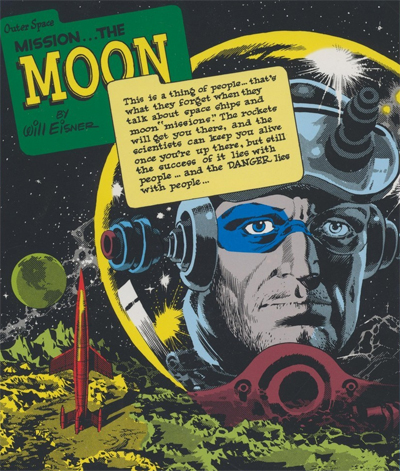
And so, the end is near. The Spirit Archives, Vol. 24 is a bumper-sized edition, collecting every Spirit weekly strip published in 1952, from January through to October. It’s nice of DC to put out a slightly larger collection to finish out the weekly strip, rather than breaking the final year of the comic into two smaller (possibly more profitable) volumes. This collection devotes its cover to The Outer Space Spirit, but that storyline only emerges towards the end of the book. Given how much attention Wally Wood and Jules Feiffer’s reinvention of the masked crimefighter has generated, it’s interesting that it’s actually a fairly small contribution in terms of page count. Still, reading those adventures now, it’s easy to see why the storyline has attracted such a strong following, even if you practically see the weekly strip dwindling as you approach the final pages.

And we're flying to the moon and back...

And we’re flying to the moon and back…

Continue reading

The Spirit Archives, Vol. 23 (Review/Retrospective)

You know that The Spirit is in a state of declining health when even the back cover concedes that, “by the second half of 1951, The Spirit was winding down.” Still, having read the collection from cover-to-cover, I find it quite difficult to disagree. The Spirit Archives, Vol. 23 provides an interesting study of a comic strip coming to terms with its own mortality, but there’s also a sad sense that the magic is slowly evaporating from Will Eisner’s iconic creation. We are no longer watching a beloved comic strip missing a few steps. Instead, we’re watching a slow and painful deterioration.

I gather, from the look on his face, he has read the strips...

I gather, from the look on his face, he has read the strips…

Continue reading

The Spirit Archives, Vol. 22 (Review/Retrospective)

There’s a sense that Eisner and his staff knew that the end was rapidly approaching. Narratively speaking, there’s a lot of different elements here that suggest – at least unconsciously – an effort to tidy up The Spirit so that it could be neatly folded up and put away. Eisner hadn’t completely abandoned his creation to its fate at this point, but it seemed like he was well aware that the strip might not continue forever. The Spirit Archive, Vol. 22 seems a bit more reflective than the editions that came before, acknowledging that the worm is slowly turning.

Gun to my head, I'd say the strip is in trouble...

Gun to my head, I’d say the strip is in trouble…

Continue reading

The Spirit Archives, Vol. 21 (Review/Retrospective)

The end is nigh. Even if I didn’t know that these wonderful hardcover collections from DC comics were finishing up soon (with the last of the weekly strips collected in The Spirit Archives, Vol. 24), I could probably get a sense that things were winding down from a quick read of The Spirit Archives, Vol. 21. Up until this point, The Spirit has had five years of quality following Will Eisner’s return from service in the Second World War. It’s very hard to think of any comic (then or now) that has enjoyed any four consecutive years of quality that measures up to the work by Eisner on The Spirit at the very height of its game.

And it is, I must confess, very easy to get caught off-guard by the slow (but steady) decline in quality in The Spirit. After all, off-peak Spirit by Will Eisner is still better than most of its contemporary comics. And, to be fair, the vast majority of modern comics. There is some great stuff here – some truly fantastic, great stuff. Unfortunately, there’s also a lot of evidence that Eisner’s creative energies were ebbing just a bit. The end was fast approaching, and this collection features the first truly noticeable stumbles.

Somebody's a fan of the Great Train Robbery...

Somebody’s a fan of the Great Train Robbery…

Continue reading