• Following Us

  • Categories

  • Check out the Archives


  • Awards & Nominations

The X-Files – Talitha Cumi (Review)

This November (and a little of December), we’re taking a trip back in time to review the third season of The X-Files and the first (and only) season of Space: Above and Beyond.

Talitha Cumi is a staggeringly confident piece of television, the kind of episode casually produced by a show at (or approaching) the top of its game.

It is interesting just how much this season finalé seems to promise business as usual. It is perhaps the least radical of the show’s season-ending cliffhangers, with the third season closing on an immediate rather than a conceptual threat to our leads and to The X-Files as a show. The Erlenmeyer Flask ended with the death of Deep Throat and the closing of the X-files. Anasazi ended with Mulder being burnt alive in a boxcar filled with alien bodies. Gethsemane ups the ante further.
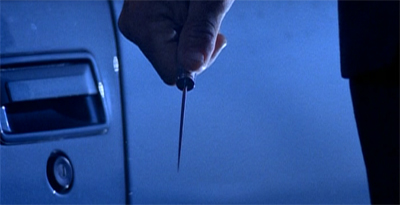
A stab in the dark...

A stab in the dark…

In contrast, Talitha Cumi ends with the Alien Bounty Hunter walking towards Mulder and Scully in a rather menacing fashion. It is very effective television – and a solidly suspenseful cliffhanger – but it also feels rather low-key when compared to other season-ending episodes. Talitha Cumi feels like a pretty effective hook, rather than a game-changer. There’s an immediacy to the cliffhanger, but nothing that threatens to upend the show as a whole.

Then again, one suspects that is entirely the point. The third season has been largely about consolidation of The X-Files. It makes sense that it wouldn’t throw everything up into the air at the end of the season.
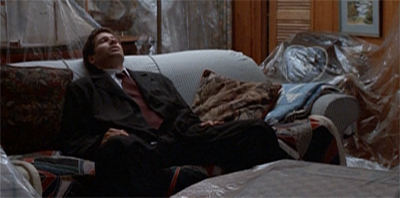
It's been a long year...

It’s been a long year…

Continue reading

Stefan Petrucha and Charles Adlard’s Run on The X-Files (Topps) (Review)

This November (and a little of December), we’re taking a trip back in time to review the third season of The X-Files and the first (and only) season of Space: Above and Beyond.

Topps’ X-Files comic was a massive success in the nineties.

The monthly series ran for forty-one issues between January 1995 and September 1998. In that time, Topps also produced an X-Files graphic novel, three digests, two annuals, a spin-off line of Season One comics and a miniseries adaptation of a Kevin Anderson novel. They also reprinted the series in quite a few formats, indicating that the comic sold well even outside the monthly schedule. The only reason that the series came to an end was because Topps eventually decided to retire from comic book publishing.

xfiles-feelingsofunreality4

After Topps withdrew from the comic book market following the Great Comic Crash of the mid-to-late nineties, the X-Files license lay fallow. Barring two Lone Gunman comics published by Dark Horse in 2001, there would be no new officially licensed X-Files comics written between September 1998 and September 2008, when Frank Spotnitz scripted a miniseries for Wildstorm. It is incredible to look back on the success of the Topps line for those three-and-a-half years when it held the license.

A lot of the credit for that success is owed to writer Stefan Petrucha, cover artist Miran Kim and interior artist Charles Adlard.

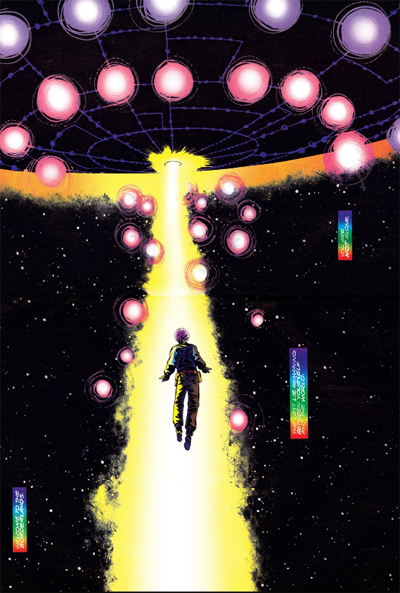
xfiles-homeofthebrave17

Continue reading

Non-Review Review: Exodus – Gods and Kings

Exodus: Gods and Kings might be more traditional in structure and execution than the year’s other big biblical epic, but it shares a lot of the same core sentiments of Noah. Both films posit the Old Testament God as a primordial and almost unfathomable force, transforming biblical parables in epic horror stories. Both accept the divine as inhuman, almost by definition; both offer harrowing and unsettling depictions of stories that many viewers will know from childhood or have heard dozens of times before.

Exodus: Gods and Kings suffers a bit with its pacing, trying to boil the core Moses stories down into a single two-and-a-half hour narrative. The film runs through a check list of iconic moments, struggling to squeeze so much in that the story of the reed basket is mentioned only in passing. Instead, the film moves from Moses’ relationship with Ramses II through to his exile through to his epiphany through to his military rebellion through to the plagues through to the exodus.

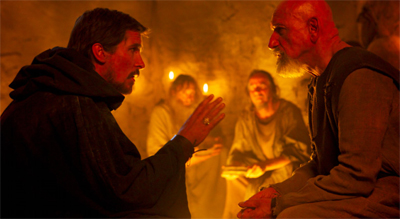
"Well, I got back to Gotham in six days, I think I can get us to the Promised Land."

“Well, I got back to Gotham in six days, I think I can get us to the Promised Land.”

It is an epic story in almost every sense of the word, and Exodus: Gods and Kings struggles to contain it all. Often key elements are only present for moments before the film has to hurry along – the burning bush lingers in the background; the golden calf is glimpsed only from the distance. So much ground is covered that it is occasionally difficult to maintain focus, as Moses seems to lose and gain families with each passing act break. Exodus: Gods and Kings holds itself together under the pressure, but the strain can be felt.

Nevertheless, Exodus: Gods and Kings largely works. Feeling more like Kingdom of Heaven than Gladiator, the movie does a wonderful job of building a massive and sprawling (and foreign) world. Exodus: Gods and Kings looks and feels like a more traditional biblical epic than Noah, and Scott’s efforts to ground the film in a tangible reality only serves to enhance the awe-inspiring scale of the horror on display here. Exodus: Gods and Kings is an exploration of faith and devotion, asking uncomfortable questions and leaving the answers to the audience.

"Let us sit upon the ground and tell sad stories of the death of kings..."

“Let us sit upon the ground and tell sad stories of the death of kings…”

Continue reading

The X-Files – Wetwired (Review)

This November (and a little of December), we’re taking a trip back in time to review the third season of The X-Files and the first (and only) season of Space: Above and Beyond.

Wetwired is an oddity.

It is the penultimate episode of the third season, written by special effects supervisor Matt Beck. It is very much a conspiracy episode, albeit one lacking any real sense of forward moment and with only the loosest thematic ties to the rest of the show’s mythology. Unlike – say – Soft Light, this is not simply a “monster of the week” story with elements of the mythology grafted in. The show has largely move past those, which is why Avatar felt so weird.

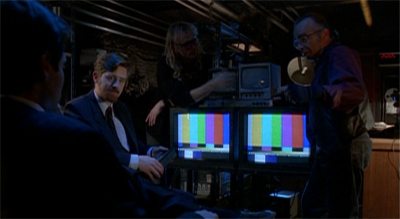
More like

More like “terror vision”, am I right?

Instead, Wetwired is that strangest of government conspiracy stories. It is an episode dedicated almost exclusively to shady goings-on at the highest levels of government, but with no mention or inference of aliens or other sinister long-term plots. Wetwired stands out as something strange and hard to place; perhaps its closest analogue is The Pine Bluff Variant from towards the end of the fifth season.

The result is an oddity that is a little uneven and disjointed, an episode packed with clever ideas and concepts, but difficulty connecting them to each other.

Scully has had it with Mulder's quips about her driving...

Scully has had it with Mulder’s quips about her driving…

Continue reading

Star Trek – The Doomsday Machine (Review)

The first Star Trek pilot, The Cage, was produced in 1964. To celebrate its fiftieth anniversary, this December we are reviewing the second season of the original Star Trek show. You can check out our first season reviews here. Check back daily for the latest review.

The Doomsday Machine is another Star Trek classic.

Much like Amok Time directly before it, The Doomsday Machine is a piece of Star Trek that works both as powerful drama and clever allegory. It is an episode that has had a tremendous influence on the franchise. The “planet killer” has become a staple of Star Trek tie-in fiction, and even the franchise itself has kept the episode’s legacy alive, with the son of Commodore Decker originally planned as a regular in Star Trek: Phase II and eventually appearing in Star Trek: The Motion Picture.

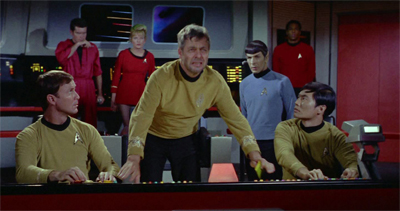
All hands on Decker...

All hands on Decker…

The Doomsday Machine is at once a beautifully tragic character study and a potent cautionary tale for the atomic age. The episode the first example of “Star Trek does Moby Dick”, a story template that would become popular enough to sustain another episode in the same season, quite a few later Star Trek episodes across the franchise and no fewer than two of the franchise’s trips to the big screen. In many ways, The Doomsday Machine sets the template for Star Trek engaging with classic literature, building off The Conscience of a King.

It’s also beautifully produced, right down to the creature that Spinrad himself described as “a windsock dipped in cement.”

A commandeering presence...

A commandeering presence…

Continue reading

The X-Files (Topps) #15-16 – Home of the Brave (Review)

This November (and a little of December), we’re taking a trip back in time to review the third season of The X-Files and the first (and only) season of Space: Above and Beyond.

And so, we approach the end of an era.

The end of the third season of The X-Files brought down the curtain in a number of different ways. It was the last season of The X-Files to air beginning-to-end on Friday nights, turning it into a truly global phenomenon. It was the last season to air before Chris Carter launched Millennium and the last season broadcast before the show began to focus on The X-Files: Fight the Future; perhaps making it the last season of the show to have Chris Carter’s completely undivided attention for quite some time.

This is the end...

This is the end…

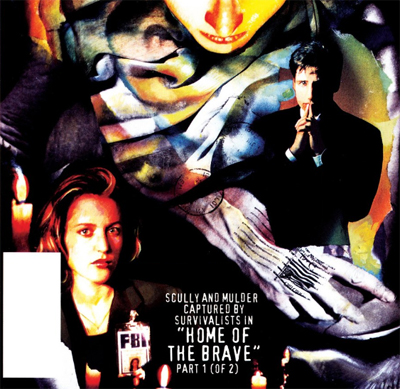
Amid all these changes, the shifting of the creative team on the tie-in comic book is not the biggest change taking place, but it contributes to a larger sense that The X-Files is changing. Writer Stefan Patrucha and artist Charles Adlard had worked on The X-Files since Topps launched the comic. On top of their sixteen issues of the regular series, the duo had worked on an annual, two digests and a variety of short (and special) stories during their tenure.

It is very strange to see the pair departing, because their work on X-Files tie-in comic book ranks as one of the most consistently interesting tie-ins published in mainstream comics.

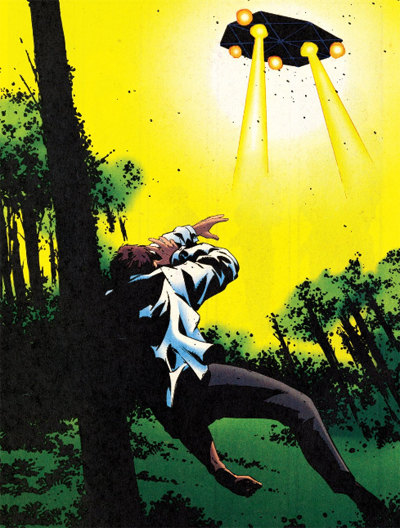
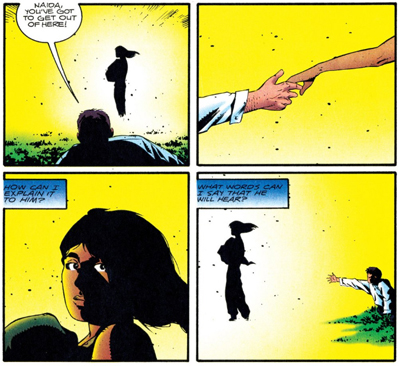
Don't go into the light...

Don’t go into the light…

Continue reading

Star Trek – New Visions #3: Cry Vengeance (Review)

The first Star Trek pilot, The Cage, was produced in 1964. To celebrate its fiftieth anniversary, this December we are reviewing the second season of the original Star Trek show. You can check out our first season reviews here. Check back daily for the latest review.

These Are the Voyages… aired in May 2005. Star Trek has been off the air for almost a decade; longer in the eyes of certain fans who have their own earlier cut-off dates. Although JJ Abrams brought Star Trek back to the big screen, it is not quite the same. It is not simply that – as Ronald D. Moore has arguedStar Trek feels more at home on the small screen. There is also a sense that there is a dearth of “new” stories in the Star Trek universe. One two-hour movie ever three years does not cut it, after all.

A whole cottage industry has developed around trying to sate Star Trek fans – to deliver the new episodes that it seems so many fans so desperately want. There are month comic books set within the continuity of the recent movies. There are novels that unfold in a loosely serialised format building off the end of the various twenty-fourth century shows. There are numerous fan projects churning out their own new Star Trek stories, whether featuring the original characters or a novel twist on the franchise.

Shaking things up a bit...

Shaking things up a bit…

This desire for new Star Trek is understandable. Given the rate at which the franchise was produced during the nineties, it is hard to imagine living in a world where new Star Trek arrives by drip-feed. In a way, John Byrne’s New Visions series is the most candid attempt to cater to this impulse among Star Trek fans. Using a wealth of images from the original Star Trek series, some photoshop skills, and years of experience writing comic books, John Byrne is literally able to stitch together new stories from the eighty classic Star Trek shows.

It is a bizarre blend of storytelling and cannibalism that serves as a fairly cynical metaphor for a particular approach to tie-in Star Trek material.

"Use your indoor voice..."

“Use your indoor voice…”

Continue reading

The X-Files – Quagmire (Review)

This November (and a little of December), we’re taking a trip back in time to review the third season of The X-Files and the first (and only) season of Space: Above and Beyond.

Quagmire is a delightful little episode, one of third season episodes that most effectively embodies what casual fans (or even those who have never seen the show) think of when they hear the words The X-Files.” In Wanting to Believe, author Robert Shearman describes Quagmire as something akin to a “live action Scooby Doo, and he’s not far wrong. This is Mulder and Scully searching together in the darkness, looking for a monster that may or may not be there. You don’t get more archetypical X-Files than that.

One of the defining features of the third season of The X-Files has been a sense of consolidation. It feels like the show experimented a great deal in its first two years, but the third season is very much about cementing and solidifying its identity. It is no wonder, then, that the third season has such a high concentration of archetypal episode – episodes you can show an interested viewer and say this is The X-Files in a forty-five minute nutshell.” In that respect, Quagmire ranks with D.P.O. or Pusher or Clyde Bruckman’s Final Repose as a great introduction to the show.

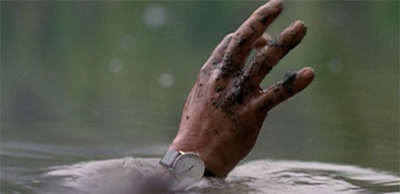
There's something in the water!

There’s something in the water!

Of course, Quagmire is a very good introduction to The X-Files for new viewers, but it is also something of a farewell. It is Kim Newton’s last script for the show. Newton had joined the writing staff at the start of the third season. Her other major credit was Revelations. Like Revelations, there is a sense that Quagmire was heavily re-written before it made it in front of the cameras. In this case, it is something of an open secret that Quagmire received a fairly significant polish from departing story editor Darin Morgan, whose fingerprints are all over the finished draft.

If Darin Morgan bid farewell to The X-Files with Jose Chung’s “From Outer Space”, then Quagmire serves as something of a coda to his time on the show. If that is the case, it makes for an uncharacteristically upbeat postscript to Morgan’s work on the show.

They really collared the bad guy...

They really collared the bad guy…

Continue reading

Star Trek – Amok Time (Review)

The first Star Trek pilot, The Cage, was produced in 1964. To celebrate its fiftieth anniversary, this December we are reviewing the second season of the original Star Trek show. You can check out our first season reviews here. Check back daily for the latest review.

Amok Time was the fifth show produced for the second season of Star Trek, but was the first show to air. This isn’t unusual. The production and broadcast order of various Star Trek episodes have not necessarily matched up. On shows like Star Trek: The Next Generation or Star Trek: Deep Space Nine, this was usually due to production delays or changes on specific episodes. On Star Trek: Voyager, the first and second seasons produced episodes that would not be aired until the other side of summer.

However, on the original Star Trek, the production and broadcast order of the episodes is radically different. For example, Friday’s Child was the third episode of the second season produced, but the eleventh broadcast. This makes watching the show in production order on blu ray a delightfully frustrating experience. The first five episodes produced for the second season are split across three different discs.

Good wholesome family fun...

Good wholesome family fun…

Sometimes the changes in production order were purely practical. For example, The Man Trap was the first episode of Star Trek to air because it happened to be the most suitable of the episodes that had been produced to that point. The broadcast order of the first season introduced all manner of production and continuity glitches, with uniforms and cast changing seemingly randomly. Still, The Man Trap was felt to be, effectively, the least bad option to introduce new audiences to Star Trek.

Amok Time, the second season premiere, was an entirely different kettle of fish. This was easily the strongest of the three Star Trek season premieres, and there’s a sense that the production team knew this going into the episode. Designed to ruthlessly capitalise on the popularity and success surrounding the character of Spock, the episode was very clearly intended to put the show’s best foot forward for audiences returning to watch the second season. The result is one of the best episodes the franchise ever produced.

Spock remains as sharp as ever...

Spock remains as sharp as ever…

Continue reading

The X-Files (Topps) Digest #2 – Dead to the World (Review)

This November (and a little of December), we’re taking a trip back in time to review the third season of The X-Files and the first (and only) season of Space: Above and Beyond.

Stefan Petrucha and Charles Adlard are winding at this point in their curatorship of Topps’ The X-Files comic book. The duo have contributed an absolutely staggering volume of work to the line. On top of monthly issues and short stories, there have been annuals and digests. The volume of the output has been staggering. All of it has been written by Petrucha and the vast majority was illustrated by Adlard. The quality has – generally speaking – been quite impressive.

Dead to the World is the headline story in the second “digest” published by Topps comics. As with Big Foot, Warm Heart before it, the format of the “digest” feels a little strange. There is a single (and rather long) comic written by Petrucha and illustrated by Adlard, following by a collection of shorts taken from Ray Bradbury Comics, a somewhat less popular feature of Topps’ comic book publishing line. There is a sense that the format might have worked better as a collection of short X-Files-themed stories for a variety of creators.

Face to face...

Face to face…

Nevertheless, the result is interesting. In many ways, Big Foot, Warm Heart seemed to point at where Petrucha and Adlard would go when they wrapped up their massive twelve-part “Aquarius” mega-arc. With its reflections on human failings and human abuses, it seemed like Big Foot, Warm Heart set the tone for the stories that would follow – like One Player Only or Falling. It offered a tease of things to come, suggesting the humanity could be more monstrous than any mythological creature.

In contrast, it is very tough to see where Dead to the World might have been pointing. Then again, Petrucha and Adlard would be gone from the comic a month after its publication. So perhaps the story’s funereal atmosphere feels appropriate.

Here there be monsters...

Here there be monsters…

Continue reading