• Following Us

  • Categories

  • Check out the Archives


  • Awards & Nominations

Star Trek – Whom Gods Destroy (Review)

This July and August, we’re celebrating the release of Star Trek Beyond by taking a look back at the third season of the original Star Trek. Check back every Monday, Wednesday and Friday for the latest update.

Whom Gods Destroy is a mess.

In a lot of ways, Whom Gods Destroy is shoddy and lazy. In many ways, the episode plays like a collection of familiar Star Trek elements blended together to pad out forty-odd minutes of television with no regard for internal logic or plotting and with minimal regard for the characters caught in the middle of it all. There are very few ideas in Whom Gods Destroy that have not been done before, and done better. The episode is not only a rehash of familiar concepts, but it is an exercise in diminishing returns.

Dance with destiny.

Dance with destiny.

This is to say nothing of the chaos unfolding behind the scenes during the production of the episode. It seemed only appropriate that Kirk’s latest mission would take him to what is effectively a gothic asylum in outer space, because it seemed more and more that Star Trek was turning into a madhouse. Veteran staffers were leaving the show in droves, while tensions were mounting on the set, and Fred Freiberger was struggling to keep the budget under control. More than that, there was a clear sense that the series was over, and this was the end of the line.

Whom Gods Destroy really sounds like a disaster. It is certainly not a good episode of television. However, this is the third season. Whom Gods Destroy is interesting enough that it works much better than the season’s weaker episodes. It is elevated by a manic energy that goes some way towards covering for the more illogical elements of the plot, and three central performances that play into the high camp of the premise. Whom Gods Destroy is far from classic Star Trek, but it is much better than it has any right to be.
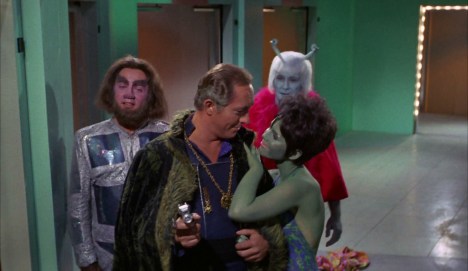
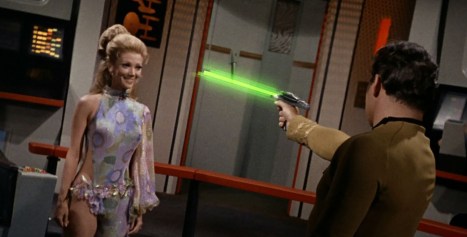
Absolute madness.

Absolute madness.

Continue reading

Star Trek – Let That Be Your Last Battlefield (Review)

This July and August, we’re celebrating the release of Star Trek Beyond by taking a look back at the third season of the original Star Trek. Check back every Monday, Wednesday and Friday for the latest update.

Let That Be Your Last Battlefield is iconic Star Trek.

Let That Be Your Last Battlefield is a reminder that the iconic Star Trek is not necessarily good Star Trek.

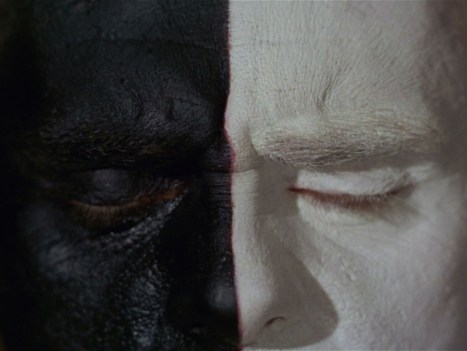
Half and half.

Half and half.

Let That Be Your Last Battlefield has become a cultural shorthand for the show.

Let That Be Your Last Battlefield is a testament to the weird influence that the dysfunctional third season has on the cultural memory of Star Trek.

Two sides of the same coin.

Two sides of the same coin.

Continue reading

It Follows the Rules – Horror Movies and “the Rules”

As with all cinema, horror movies tend to reflect the era in which they were created.

There are any number of obvious examples. The b-movie horrors of the fifties fixated on atomic horrors as an expression of anxiety of the development of the nuclear bomb and fears about science gone mad. The haunted house became a fixture of horror in the seventies owing to economic uncertainty, while the zombie became a reflection of unchecked mindless consumerism. The late eighties gave way to body horror as the AIDS virus became an international crisis. In the nineties, knowing irony seemed to take over.

itfollows3

Even in the first couple of years of the twenty-first century, the genre came to be dominated by supernatural monsters and found footage. Found footage offered a more grounded and realistic depiction of terror, reflecting the footage of real-life horrors captured on camcorders and mobile telephones for broadcast on the evening news. This dependence on found footage seemed to represent a logical extension of the ironic postmodernism of the nineties, a fear that the real world and the world of the horror were overlapping.

Indeed, it is quite easy to draw parallels between the War on Terror and the horror movies of the early twenty-first century. The found footage style recalls the images of 9/11 captured by citizen journalists and imprinted upon the public consciousness. The emphasis on torture in franchises like Saw and Hostel reflects contemporary political debates about how best to face the future. The renewed emphasis on foreign countries as inherently hostile in horrors like Hostel, The Ruins and Touristas.

Still waters...

Recent horror movies have seen a bit of a shift away from those kinds of themes and stories, although there are still traces to be found; The Shallows is very much an “American tourist in hostile territory” film while The Girl With All the Gifts looks to be a clever twist on the zombie genre that is still going strong following a millennial resurgence. Still, recent years have seen modern horror become increasingly nostalgic and old-fashioned, a trend best demonstrated by the horrors produced by James Wan like The Conjuring.

However, there is something else interesting happening in the background. Perhaps an extension of the same postmodern irony thread threaded through late nineties films like Scream and then evolving into the blurred fiction of found footage, modern horror films seem increasingly fixated on the idea of the “rules.” more and more, it seems like horror films insist upon their monsters conforming to an internal logic that the protagonists and audience can deduce (and exploit) through observation and experimentation.

lightsout

Note: This post includes spoilers for It Follows and Lights Out. If you haven’t seen them yet, consider yourself warned.

Continue reading

Non-Review Review: Lights Out

For the bulk of its runtime, Lights Out is a very old-fashioned and very clever horror movie.

The basic premise of Lights Out is quite clever, even on its own terms. The central antagonist of the film is a demonic entity that seems to move through darkness. Characters are safe from its influence so long as they remain in the light. It is a very smart riff on a primal fear. The fear of darkness is the most primal of fears, the anxiety about the unknown and what might lurk in the shadows. Lights Out takes that universal fear and mines it for scares, in a fashion that is very classic while also quite clever.

A bit of the old ultraviolet...

A bit of the old ultraviolet…

The premise alone is enough to drive Lights Out, to power an eighty-one-minute horror film. However, director David Sandberg and writer Eric Heisserer go a great deal further. In the style of many classic horror stories, Lights Out positions its demon as an allegorical device. This demon that stalks its prey through darkness is treated as an apt metaphor for depression, a creature that has latched on to a small suburban family and tormented them quietly for years. It is a premise that The Babadook used to great effect, and it adds a little extra heft to Lights Out.

However, there is a sense that Lights Out is just a little bit too clever for its own good. The film follows its basic premise to a very clever and innovative conclusion within the world that it has created. The problem is that the movie’s final big plot development rather brutally undercuts the central allegory in such a way that the film trips over its own wit. Still, discounting those final few minutes, Lights Out is a visceral thrill-ride and a joy from start to almost-finish.

Red sky at night...

Red sky at night…

Continue reading

Star Trek – That Which Survives (Review)

This July and August, we’re celebrating the release of Star Trek Beyond by taking a look back at the third season of the original Star Trek. Check back every Monday, Wednesday and Friday for the latest update.

Even the title feels morbid.

That Which Survives is sad and mournful. It is a story about returning, but wrong. It is the story of a dead world that by all accounts should not be, haunted by the image of a woman who has been dead for millennia. This spectre both is the original woman and is not; it is mechanical guardian that retains just enough of its subjects personality to be horrified by what it is doing. It is an unsettling premise, particularly for an episode that features Lee Meriwether menacing the crew with her arm outstretched while repeating “I am for you.”

The more, the Meriwether.

The more, the Meriwether.

However, Losira is not the only character who “comes back wrong” over the course of the episode. Over the course of That Which Survives, the crew of the Enterprise are thrown throw space and find themselves racing to rescue Captain Kirk. However, mysterious malfunctions begin to affect the script. Eventually, Spock deduces the cause. “The Enterprise was put through a molecular transporter and reassembled slightly out of phase.” In other words, the Enterprise was taken apart and put back together wrong.

This seems like as an apt a metaphor for the third season as any. Star Trek had been killed at the end of its second season, cancelled by NBC. The show was resurrected for a third season, although it did not return at full strength. Vital members of the production team departed the show. The budget was cut. An outside producer with no previous experience of working on the show was drafted. For many watching at home, there was a sense that the third season had changed. In some ways, Star Trek had come back wrong.

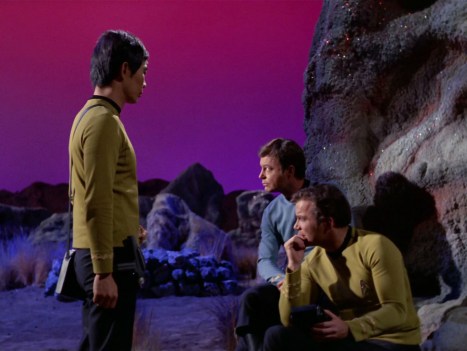
"At least we got in before the purple rain."

“At least we got in before the purple rain.”

Continue reading

Star Trek – Wink of an Eye (Review)

This July and August, we’re celebrating the release of Star Trek Beyond by taking a look back at the third season of the original Star Trek. Check back every Monday, Wednesday and Friday for the latest update.

The third season of Star Trek has an ethereal and mystical quality to it.

The Tholian Web is probably the best example of this, an episode structured as a ghost story in space. However, there are other examples; the barely-there ghost town of Spectre of the Gun, the legend of the Gorgan in And the Children Shall Lead, the H.P. Lovecraft monster at the heart of Is There in Truth No Beauty?, the half-formed world of The Empath, the siren of That Which Survives and the planetary madhouse of Whom the Gods Destroy. In the third season of Star Trek, it increasingly seems like space is an irrational place, a haunted and spectral realm.

It doesn't faze her in the slightest.

It doesn’t faze her in the slightest.

Wink of an Eye fits quite comfortably within that tradition. This is the perfect example of an episode which makes little sense as a science-fiction story, but which plays quite well as fantasy. Much like The Tholian Web draws upon centuries of stories about ghost ships, Wink of an Eye draws from another rich literary genre. This is the story about a man who is mysterious spirited away by a queen and her people, only to discover that time has been distorted in this mysterious realm.

In other words, Wink of an Eye fits quite comfortably in the tradition of fairy stories.

All's fair in love and war.

All’s fair in love and war.

Continue reading

Star Trek – Plato’s Stepchildren (Review)

This July and August, we’re celebrating the release of Star Trek Beyond by taking a look back at the third season of the original Star Trek. Check back every Monday, Wednesday and Friday for the latest update.

Another third season episode. Another iconic episode.

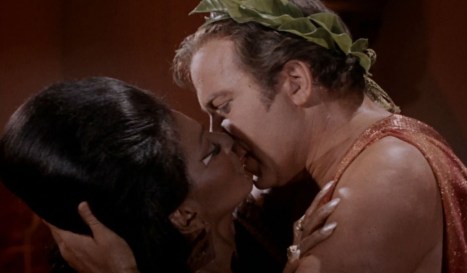
As with a lot of third season episodes, Plato’s Stepchildren is easily reduced to a selection of imagery and iconography. It is one of the episodes most likely to be cited as an “important” moment in the cultural evolution of Star Trek, full of clips that are likely to pop up on documentaries covering the history of television. Plato’s Stepchildren is an episode that has permeated popular culture, in large part due to a singular and memorable image that ultimately has very little to do with what the story is actually about.

"A kiss can be even deadlier, if you mean it."

“A kiss can be even deadlier, if you mean it.”

There is something frustrating about this. It feels inappropriate that Plato’s Stepchildren should have become such an important part of the history and the mythology of Star Trek. Not only is Plato’s Stepchildren offensive in ways that deliberately and brutally cut against the imagery that is so lauded, it is also a terrible piece of television in its own right. As with a lot of the third season of Star Trek, it seems like the mythology of the show is brushing up against the quality of the show itself.

Plato’s Stepchildren is memorable and important, but it is all boring and offensive. It encapsulates a lot of the third season, all in all.

"I can see you."

“I can see you.”

Continue reading

The Death of the Auteur Blockbuster, 2000-2016

Suicide Squad premiered last week, to incredibly negative reviews and an incredibly impressive box office.

There are a lot of discussions to be had about that, but the most interesting narrative is the story that has developed behind the scenes. If rumours are to be believed, it seems that there is a very intriguing book to be written about the production of Suicide Squad, although the less said about Jared Leto’s bodily fluids the better. Writer and director David Ayer was reportedly given six weeks to write a script featuring almost a dozen major characters, only for the final cut to be given to a company that had cut the film’s viral trailers.

suicidesquad

It is not particularly proud moment for film-making, particularly given the emphasis that Warner Brothers had put on their blockbuster slate as “film-maker driven.” Indeed, the laundry list of rumoured deleted scenes has become a convenient stick with which the movie might be beaten. How in the name of goodness could Suicide Squad be so messed up as to portray the fundamentally abusive relationship between the Joker and Harley Quinn as loving and affectionate? The answer is that the original cut of the movie was candid about the abuse, but it was cut out.

Although Warner Brothers’ DC movie slate has become an easy target for pundits looking to score cheap shots and drive page-views, the problem is more fundamental than that. In hindsight, with the summer of 2016 coming to the close, it feels like the end of the era. The curtain is drawing down on the short-lived “blockbuster auteur” era of big budget franchise film-making.

captainamerica-civilwar8

Continue reading

Non-Review Review: David Brent – Life on the Road

Perhaps David Brent: Life on the Road represents the edge case for the current wave of nineties nostalgia.

The Office premiered in July 2001. It was the first year of the twenty-first century, but spiritually near the end of what might be termed “the long nineties.” The mockumentary sit-com was something of a novelty at the time, building upon the rich history and legacy of British comedy personalities like Alan Partridge, with Ricky Gervais introducing the character of David Brent. Gervais did not invent cringe-comedy, but he certainly pushed it forward. Gervais’ work in The Office and Extras would inspire a whole generation of awkward social comedy.

He's got a t-shirt gun and he's not afraid to use it.

He’s got a t-shirt gun and he’s not afraid to use it.

David Brent is an interesting beast. On the one hand, it seems like a nostalgic return to familiar ground for a comedian who has long evolved past this persona. Barring a brief reprisal of the role for Red Nose Day in March 2013, Gervais retired the role of David Brent more than a decade ago. In some respects, David Brent finds the comedian retreading old ground that had been ceded to a generation of imitators and innovators years earlier. Gervais slips effortless back into the role, but there is a sense that the world has changed around him.

Despite Gervais’ best efforts, there is an awkwardness to David Brent. It is hard to tell whether Gervais has soften in the intervening years or whether the world has gotten harder, but David Brent feels trapped between two extremes. The feature film adaptation feels at once too mean-spirited and too kind-hearted towards its protagonist, offering a version of the character who is as awkward and offensive as he has even been while constructing a film that coddles the obnoxious former manager. The result is a film that feels off-balance, an old standard played out of tune.

Get Brent.

Get Brent.

Continue reading

Star Trek – Day of the Dove (Review)

This July and August, we’re celebrating the release of Star Trek Beyond by taking a look back at the third season of the original Star Trek. Check back every Monday, Wednesday and Friday for the latest update.

It is striking how iconic and influential the third season of Star Trek is.

The third season is often written off, by both fans of the show and members of the production team. There are any number of reasons for this; a slashed budget, an exodus of talent, a new producer, conflicts behind the scenes. There is also the simple fact that the third season is wildly more variable than either the first or second seasons of the series, with its most consistent string of episodes being the three episodes from Is There in Truth No Beauty? to The Tholian Web.

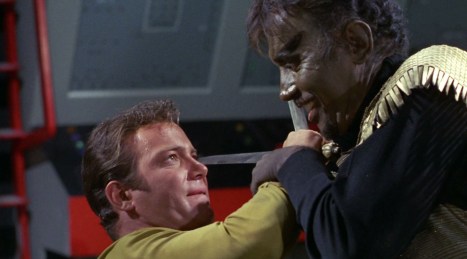
Crossed swords.

Crossed swords.

However, in spite of that, there is a sense that a lot of what modern fans consider to be Star Trek is rooted in this dysfunctional assemblage of episodes. This applies to all sorts of things. The third season offers more than its fair share of continuity minutiae, from the first appearance of a Klingon ship and the first space battle in Elaan of Troyius to the first appearance of the IDIC in Is There in Truth No Beauty? to the memorable appearance of the Tholians in The Tholian Web. However, the season’s legacy is more than just one of continuity.

It occasionally seems like the franchise’s philosophy is truly galvinising over the third season, that Star Trek is coming close to explicitly embracing a utopian humanist philosophy. With The Empath, the show laid out a template for the “humans are special” stories that would dominate the early years of Star Trek: The Next Generation, a much more effective (and less condescending and patronising) celebration of humanity’s potential than later episodes like Lonely Among Us, The Last Outpost and The Neutral Zone.

Into darkness.

Into darkness.

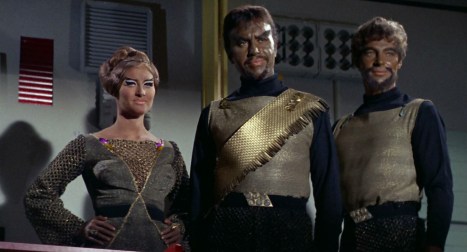
Day of the Dove is an episode that is singularly influential in terms of the future of the franchise, both in terms of continuity detail and in terms of its core themes. Most superficially, Day of the Dove offers the first real suggestion that the Klingons might be anything more than vaguely Asian antagonists, suggesting a culture that makes sense internally and allowing them an agency earlier stories lacked. Kang is in many ways the first true Klingon, who would fit comfortably with the spin-offs’ interpretations of the Klingons.

The episode’s influence runs deeper than that. Like The Empath before it, there is a clear sense that Day of the Dove has embraced the idea of the twenty-third century as a utopia in which mankind has transcended all of their hate and violence. Star Trek is presented as something approaching a paradise.

Don't blame me. I voted for Kodos.

Don’t blame me. I voted for Kodos.

Continue reading