• Following Us

  • Categories

  • Check out the Archives


  • Awards & Nominations

Luke Cage – Suckas Need Bodyguards (Review)

This all looks very familiar.

There is a gangster, who does not like to be called a gangster. He is involved in real estate in Manhattan. He dressed in fancy suits, but deep down is an emotionally stunted manchild. Over the course of putting together a big real estate deal, this gangster crosses paths with a superhero. The superhero becomes an obsession. Things escalate. The mobster’s friends on the police force turn against him. It all comes down to one dirty cop with enough details to blow the whole case wide open and finally put this mobster behind bars where he deserves to go.

lukecage-suckasneedbodyguards23a

This is the basic plot outline of Suckas Need Bodyguards, in which Detective Raphael Scarfe has enough evidence in a little black note book to put Cornell “Cottonmouth” Stokes in prison for a very long time, with Luke Cage tasked with delivering Scarfe and the note book to authorities. It is also the basic plot outline of Daredevil, the first season finale of Daredevil, in which Detective Carl Hoffman has enough evidence to put Wilson “Kingpin” Fisk in prison for a very long time, with Matt Murdock tasked with delivering Scarfe and the note book to authorities.

Imitation might be the sincerest form of flattery, but it seems a strange choice to imitate the weakest of that otherwise very strong first season.

lukecage-suckasneedbodyguards25a

Continue reading

Luke Cage – Just to Get a Rep (Review)

In many ways, Just to Get a Rep wraps up the big character arc that spans the first half of Luke Cage.

It builds upon Step in the Arena by allowing Luke to embrace his superhero persona and craft something bigger than himself. This is the point at which Luke fulfils the character arc established in those early scenes with Pop back in Moment of Truth, using his gifts to make the world a better place for other people. Appropriately enough, Luke publicly accepts the mantle of hero at the memorial service held in honour of Pop. Standing up to Cornell; standing up for the community; rallying the church. This is really the end of Luke’s hero’s journey.

lukecage-justtogetarep3a

There is just one slight problem with this, and it comes down to the biggest problem with this thirteen-episode season as a whole. There is simply too much storytelling real estate to fill with the character and story arcs. So, although Luke has effectively completed his hero’s journey, this story continues for two more episodes. To be fair, Manifest is an episode clever enough to work on its own terms as a coda to this opening half of the season, but it does leave Suckas Need Bodyguards feeling rather redundant.

This is a shame, because Just to Get a Rep has the makings of a great season (or even mid-season) finale. Unfortunately, the season order means that there are still two whole episodes to go.

lukecage-justtogetarep7a

Continue reading

Non-Review Review: The Girl on the Train

What would you get if you tried to produce Gone Girl without David Fincher?

It is a tough question to answer, given Fincher’s style is an integral part of the film. It is impossible to divorce Gone Girl from Fincher’s steady cam shots and clinical framing. However, The Girl on the Train still makes a valiant attempt to answer. Whatever about the source material, the adaptation of The Girl on the Train is monomaniacally fixated upon that pulpy breakout psychological thriller, constructing another gaslighting murder investigation in desaturated terms to an electronic score that cannot help but evoke the work of Trent Reznor and Atticus Ross.

A pale reflection.

A pale reflection.

However, director Tate Taylor is no David Fincher. Fincher keenly understood the pulpy absurdity of his source material, playing into the ridiculousness of layered twists and double-bluffs that reimagined marriage as some sort of long-form psychological warfare. Taylor fundamentally misunderstands the tone of his film, pitching the forced coincidences and crazy revelations of The Girl on the Train as something to be taken entirely seriously. Gone is the irony that made Gone Girl so effective, replaced with an ill-advised earnestness that refuses to blink.

The problem is not that The Girl on the Train comes off the rails as the overly elaborate details of its storytelling world come into focus. The problem is that it doesn’t nearly enough momentum to reach its destination.

A trained observer.

A trained observer.

Continue reading

Star Trek: Deep Space Nine – Let He Who Is Without Sin… (Review)

It would be tempting to treat Let He Who Is Without Sin… as an anomaly.

After all, it is very much the worst episode of the fifth season. There is a very strong argument to be made that it is the worst episode between Meridian and Profit and Lace, which makes it easier to forgive. After all, it is not as though Star Trek: Deep Space Nine has been regularly churning out episodes like Twisted, Tattoo, Alliances, Threshold and Investigations. The second worst episode of the fifth season is The Assignment, and the biggest problem with that episode is that it is both painfully generic and ground zero for a set of major future problems.

This episode is pants.

This episode is pants.

Still, it is important not to gloss over just how terrible Let He Who Is Without Sin… actually is and the very specific ways in which it is terrible. While these sorts of misfires are quite rare in the context of the series’ fourth and fifth seasons, Let He Who Is Without Sin… is not a fluke. The episode did not materialise from nowhere. It is very much the result of a number of creative impulses within Deep Space Nine firing in the worst possible ways. Unlike The Assignment, this episode does not fail because the concept and execution is an awkward fit for Deep Space Nine.

Let Who Is Without Sin… fails in ways that are very specifically tied to Deep Space Nine.

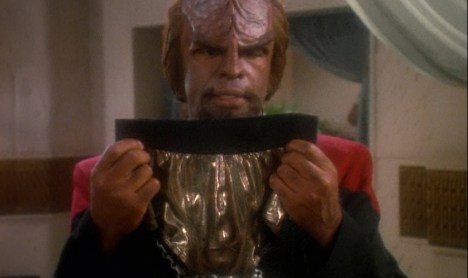
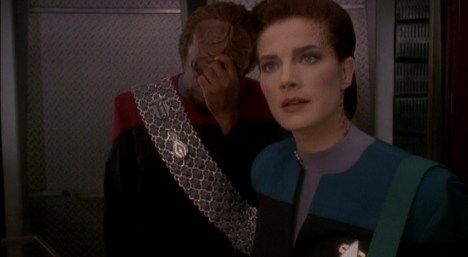
"It's okay, Worf. The writers promised that was only the first draft they sent through."

“It’s okay, Worf. The writers promised that was only the first draft they sent through.”

Continue reading

Luke Cage – Step in the Arena (Review)

My name is Luke Cage.

Step in the Arena is the obligatory origin episode. It is also the strongest episode of the season.

One of the most striking aspects of Luke Cage is the thrill that the show takes in being a superhero story. It isn’t simply that showrunner takes an established set of plot and character beats and stretches them over thirteen episodes, much like the first season of Daredevil seemed to do with the structure of Batman Begins. After all, Luke Cage messes with the superhero story structure in a few interesting ways, particularly with regards to the character of Cornell Stokes.

lukecage-stepinthearena29a

Luke Cage adores the trappings of superhero storytelling. It thrives on comic book iconography. It revels in the familiar tropes. It embraces the goofy concepts. It latches on to the absurd coincidences. Step in the Arena is a very familiar superhero origin story, populated with familiar beats like the suspect human experimentation or the dead best friend or the fugitive status. However, the film executes those story beats with an incredible and infectious energy. There is no hesitation here, no deconstruction, no undermining.

However, the beauty of Step in the Arena lies in how it subtly shifts the emphasis of these familiar storytelling beats in a way that emphasises its status as a black superhero origin story. A lot of the charm of Luke Cage lies in realising that the writers do not have to choose between telling a story that speaks to the black experience in contemporary America or offering an archetypal superhero television series. Luke Cage never has to compromise, using broth threads to illuminate and inform one another.

lukecage-stepinthearena33a

Continue reading

Luke Cage – Who’s Gonna Take the Weight? (Review)

Who’s Gonna Take the Weight? is largely shaped and defined by its central hall way fight sequence.

The hallway fight sequence was hyped in the first teaser trailer for Luke Cage, which set an abridged version of the scene to Shimmy Shimmy Ya by Dirty Ol’ Bastard. However, a scene like this seemed inevitable even before that trailer landed. After all, the extended one-take hallway fight sequence from Cut Man, the second episode of Daredevil, had been a watershed moment for the Marvel Netflix properties; that impressively choreographed centrepiece really demonstrated what the shows could accomplish from a technical and action-driven perspective.

lukecage-whosgonnataketheweight25a

Indeed, the second season of Daredevil treated the hallway fight sequence as something approaching a holy artifact, offering two extended homages to the brawl. The multi-level fight sequence in New York’s Finest was a rather blatant (and awkward) attempt to maintain the one-take conceit while escalating the action to an absurd degree. The prison corridor brawl in Seven Minutes in Heaven shrewdly dropped the insistence on maintaining a single take while increasing the carnage exponentially. The hallway fight sequence is a sacred moment for the Netflix properties.

Jessica Jones notably avoid a tribute to the sequence, but that could be explained any number of ways; from the fact that Jessica Jones would have been in production before the response to the fight sequence hit through to Jessica Jones‘ reluctance to embrace the conventional and expected story beats from a superhero story. In contract, Luke Cage is very keen to deliver upon all these expectations. The extended corridor sequences in Who’s Gonna Take the Weight? are a way for Luke Cage to embrace its superhero stylings, but on its own terms.

lukecage-whosgonnataketheweight27a

Continue reading

Luke Cage – Code of the Streets (Review)

What does it mean for Luke Cage to be the first entry in the so-called Marvel Cinematic Universe to focus on an African American character?

Of course, there have been superhero films built around black characters. Shaq starred in Steel and Halle Berry starred in Catwoman. The most successful example of black superhero cinema is probably the Blade trilogy, which launched slightly before Sam Raimi’s Spider-Man and Bryan Singer’s X-Men reinvented the comic book movie for the new millennium. However, Wesley Snipe’s half-vampire vampire hunter is frequently forgotten in these discussions, perhaps because the films are generally pitched as action horror movies rather than superhero films.

lukecage-codeofthestreets

It is astonishing that it has taken so long for the superhero boom to encompass stories focusing on protagonists that are not white men. So Luke Cage arrives with a lot of expectations. The series is keenly aware of this fact, never shying away from the Luke’s cultural perspective. Then again, this makes a certain amount of sense. Luke Cage is a black superhero whose superpower is his own skin. The opening credits make this quite clear, projecting evocative images of Harlem on to that skin so as to reaffirm that connection.

Luke Cage is a black superhero. Luke Cage is a black superhero television show. The result is a fascinating piece of television that finds something new to say about a long-established genre by looking beyond the stock perspective.

lukecage-codeofthestreets3a

Continue reading

Netflix and Marvel’s Luke Cage – Season 1 (Review)

Luke Cage is an exceptional black superhero show.

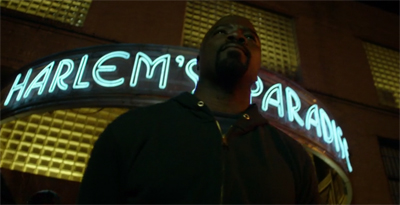
Those twin concepts cannot be divorced from one another. The thrill of Luke Cage is how skilfully and how cleverly executive producer Cheo Hodari Coker interweaves those two strands. Luke Cage is not simply a story about Harlem that happens to feature superpowers, nor is just a superhero story that happens to feature African American characters. Coker carefully crafts the show that those two parts of itself become inseparable and indivisible. Luke Cage relishes its superhero storybeats, and bringing them together in service of a different kind of protagonist.
lukecage-nowyourmine29

It feels entirely appropriate that Luke Cage should be the focus of this series, the first superhero story of the franchise age to focus on a black protagonist. (There are a number of earlier examples from Blade to Catwoman to Steel, but those largely predate the current shared-universe-driven popular consciousness.) Luke Cage was the first black comic book hero to have his own on-going monthly title, and one of the earliest high-profile examples of a black superhero character not to incorporate “black” into his name, like the Black Panther or Black Lightning.

Of course, it feels shameful that it took this long. Hawkeye has somehow managed to appear in four blockbuster feature films before Marvel Studios produced a franchise film with a black lead actor. Spider-Man has been rebooted three separate times, but Black Panther will not open until 2018. Guardians of the Galaxy came out of nowhere long before Marvel Studios or Warner Brothers opened a summer tentpole superhero film with a minority or female lead. Meanwhile, Marvel has an influx of blonde white guys named Chris.
lukecage-dwyck2a

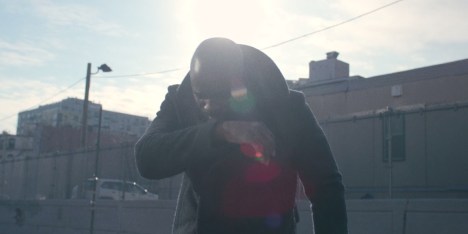
As such, Luke Cage is definitely overdue. And it keenly understands this. Every aspect of Luke Cage is filtered through an African American perspective that helps to give it a vibrance and energy that revitalises the format. In terms of plotting and structure, Luke Cage is perhaps the most traditional superhero story since Thor. However, the true beauty of the thirteen-episode miniseries lies in the improvisation around those beats and how the production team choose to hit the requisite notes. Luke Cage feels like an extended jazz album riffing on old standards.

However, as delayed as this appearance might be, it still feels perfectly attuned to the climate of late 2016. As Method Man reflects in and interview with the Sway Universe podcast in Soliloquy of Chaos, a great example of how keenly Luke Cage engages with black culture, “You know, here’s something powerful about seeing a black man that’s bulletproof, and not afraid.” That has never been more true.
lukecage-dwyck9a

Continue reading

New Podcast! The X-Cast – Season 2, Episode 1 (“Little Green Men”)

Just a quick link to a guest appearance over on The X-Cast, an X-Files podcast run by the wonderful Tony Black.

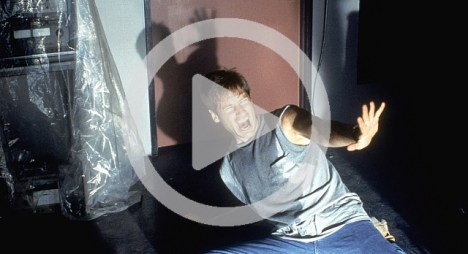
I had the privilege of guesting on the show to talk about the second season premiere, Little Green Men. Wherein we discuss the worst government surveillance agents ever, how parking charges are the real crime at the Watergate, and whether Mulder really is a “pig.” More seriously, it was an absolute pleasure to guest on the show, and Tony knows his stuff inside and out. Check it out the episode here, or click the link below.

podcast

Continue reading

Luke Cage – Moment of Truth (Review)

There is a lot to be said for how the Netflix television series choose to introduce their central characters.

The first season of Daredevil opens with the eponymous vigilante laying a brutal smackdown on Turk and breaking up a people-smuggling ring, clearly establishing the world of the show and the character’s rougher edges. The second season opened with a similar action set-piece in which the masked hero tracks a bunch of armed robbers to a downtown church leading to a suitably atmospheric image. Jessica Jones lifted its opening scene from Brian Bendis and Michael Gaydos’ Alias, with the hero smashing a deadbeat client through the glass pane on her door.

lukecage-momentoftruth

These are all sequences intended to set up the year ahead. The first season of Daredevil is preoccupied with the question of whether Matt is trying to do good or whether he is simple enabling his own baser impulses. The second season of Daredevil is much more of a traditional superhero tale with prophecies and ninja cults, along with super assassin ex-girlfriends. The broken glass in the door to Jessica’s office becomes a recurring motif across the first season of Jessica Jones, a reminder of how the character is constantly clearing up the shattered remains of her life.

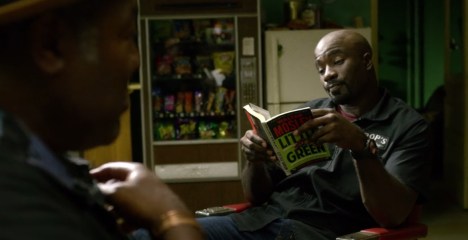
In contrast, Luke Cage opts to introduce its character in a very different manner. Although Moment of Truth inevitably builds to an action set piece, that action set piece is tucked away neatly in the final minutes of the episode, feeling almost like an afterthought. Instead, Moment of Truth sets the tone for the season ahead. It opens with an extended conversation in a barbershop that covers topics from the merits of former Los Angeles Lakers (and Miami Heat) coach Pat Riley to whether Al Pacino has an “eternal ghetto pass.”

lukecage-momentoftruth1

It is a very relaxed conversation. And in many ways, Luke Cage is a very relaxed kind of show. That is in many ways the best thing that can be said about the series and the worst thing that can be said about it. Luke Cage unfolds at a pace that might be affectionately described as stately and cynically dismissed as glacial, taking its time hitting expected beats. However, the greatest strength of Luke Cage is the confidence and verve with which it hits those marks. Luke Cage is a pleasure to watch, a show charming enough that it earns enough goodwill to take its time.

Luke Cage starts as it means to go on. Charming and comfortable in itself, relaxed and confident. Despite the plotting a structural similarities that run through the season, this is a decision that immediately distinguishes itself from Daredevil and Jessica Jones. Like its lead character, Luke Cage walks tall and acts like it is bulletproof.

lukecage-momentoftruth2

Continue reading