• Following Us

  • Categories

  • Check out the Archives


  • Awards & Nominations

Star Trek: Deep Space Nine – For the Cause (Review)

This February and March (and a little bit of April), we’re taking a look at the 1995 to 1996 season of Star Trek, including Star Trek: Deep Space Nine and Star Trek: Voyager. Check back daily for the latest review.

For the Cause essentially refocuses the fourth season of Star Trek: Deep Space Nine, rallying the season’s strength as the finalé approaches.

After a bunch of lackluster episodes, from Rules of Engagement through to Shattered Mirror and The Muse, the show finds its voice once again. For the Cause is not just a great episode of television, it is an episode uniquely tailored to this particular show. For the Cause would not work on any of the other for Star Trek shows, so precisely is it calibrated to what makes Deep Space Nine unique. It is a story about trust and betrayal, but also one that chips away at the romance of Starfleet and the Federation.
Pinning his colours to the mast...

Pinning his colours to the mast…

What is particularly interesting about the stretch of episodes running from here through to Broken Link is the sense that Deep Space Nine is getting back to basics. The fourth season is somewhat overshadowed by the addition of Worf to the cast and the emphasis placed on the Klingons in The Way of the Warrior. Although the production team do a great job working within the studio mandate, this shift in focus has meant that many more traditional elements of Deep Space Nine have been shunted into the background.

The final stretch of the fourth season finds the show returning to ideas that were threaded through earlier seasons and were shifted slightly out of focus with the return of the Klingons. For the Cause brings the Maquis back to the fore. To the Death, The Quickening and Broken Link focus on the Dominion threat. Body Parts returns to Ferengi politics. To be fair, the Maquis were the only element that totally faded from view over the fourth season, so it makes sense to return to them first.

A stunning betrayal...

A stunning betrayal…

Continue reading

Star Trek: Voyager – The Thaw (Review)

This February and March (and a little bit of April), we’re taking a look at the 1995 to 1996 season of Star Trek, including Star Trek: Deep Space Nine and Star Trek: Voyager. Check back daily for the latest review.

The Thaw is a visually striking piece of Star Trek.

The Thaw is among the most delightfully surreal and abstract episodes of Star Trek to be broadcast after October 1975. One of the more interesting aspects of Star Trek: Voyager is how consciously the show tries to return to the storytelling aesthetic of the original Star Trek show, at least in its early years. While the design aesthetics and characters might have been largely ported over from Star Trek: The Next Generation, the first few seasons of Voyager frequently feel like a conscious attempt to update sixties Star Trek tropes for the nineties.

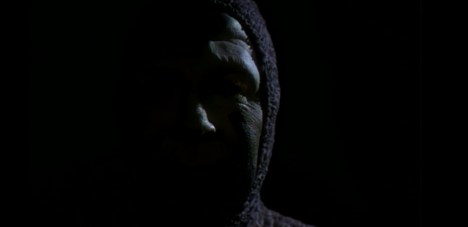
In darkness dwells...

In darkness dwells…

This is obvious in a number of ways. Caretaker consciously tried to evoke the old “space western” aesthetic, to the point of featuring a Native American first officer and introducing the Kazon as horribly racist “primitive” stereotypes. Time and Again relished primary colour costuming for their suspiciously human-like aliens. These themes became more prominent in the second season, with the b-movie aesthetic of Threshold, the space horror of Persistence of Vision and Meld, and the reverse aging allegory of Innocence.

While Tuvix essentially offers a reverse twist on The Enemy Within, it is The Thaw that feels most obviously like a sixties episode trapped in ember. The allegorical storytelling, the abstract set design, the creepy campy tone. Voyager might be half-way across the galaxy, but it is never too far from the familiar.

"We never bother to scream... ... when your mask came off."

“We never bother to scream…
… when your mask came off.”

Continue reading

Non-Review: Eye in the Sky

Eye in the Sky is a powerful contemporary morality play.

Eye in the Sky feels a lot like an old-style “television play.” It recalls the sorts of stories from the period when television was trying figure out its relationship between film and stage. The action unfolds in a number of relatively confined locations with a relatively modest cast. This cast is then presented with a moral dilemma, which the script spends most of its one-hundred-minute runtime carefully twisting and unpacking. Even today, it is not too difficult to imagine an event “live” broadcast on a smaller broadcaster working from the same premise.

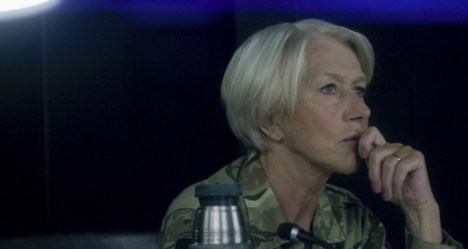
Mirr(en)ed in doubt...

Mirr(en)ed in doubt…

That is not to suggest that Eye in the Sky is cheap or uncinematic. Director Gavin Hood imbues the story with a lush cinematic style that feels a lot bigger than the moral drama playing out between the characters. Hood gives Eye in the Sky a sense of scale and heft that belies any formal similarities of classic television productions. At times, Hood is a little too cinematic, the hand of the director feeling a little too heavy in a morality play that takes great pains to be even-handed and complex.

However, these moments are fleeting; the film’s power lingers longer.

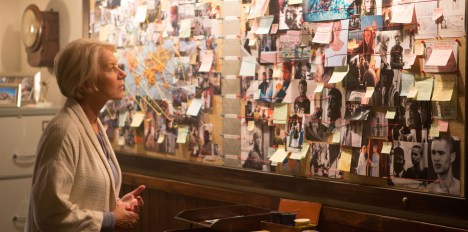
Eye see all...

Eye see all…

Continue reading

Star Trek: Deep Space Nine – The Muse (Review)

This February and March, we’re taking a look at the 1995 to 1996 season of Star Trek, including Star Trek: Deep Space Nine and Star Trek: Voyager. Check back daily Tuesday through Friday for the latest review.

If Shattered Mirror represents the writing staff on Star Trek: Deep Space Nine trying to stave off late-season exhaustion by cutting loose with an extended Star Wars homage, then The Muse represents an altogether different response to the strain of the twenty-six episode season.

The Muse was a painful episode. It did not emerge fully-formed, with writer René Echevarria struggling to bring the story to screen. The result is a mess of an episode. The Muse is not a good episode of television, and is almost universally accepted as such. Afforded the opportunity to remove one episode from his Star Trek CV, director David Livingston suggested it was with obvious choice. “Which would I erase? Which was the one with Meg Foster? The Muse. That was not very good. In fact, that was not good.”

Blood on the page...

Blood on the page…

Continue reading