• Following Us

  • Categories

  • Check out the Archives


  • Awards & Nominations

The X-Files – Roland (Review)

Roland is an episode that works much better than it really should. On the surface, it has many of the same problems as Born Again, to the point where it seems like “angry spirits” take up a disproportionate amount of Mulder and Scully’s case load. The filming and broadcast of Born Again and Roland in rapid succession probably points to the kind of pressure that Carter and his crew were under towards the end of the first year – both episodes play a lot better spaced out, and having the room to shuffle the production order on the two stories probably would have helped them seem less derivative.

And yet, Roland is elevated by a superb guest performance. Željko Ivanek isn’t the first stellar guest star that we’ve seen this year. Doug Hutchinson was perfectly cast as Tooms, and Brad Dourif did a marvellous job as Luther Lee Boggs. However, Ivanek might be the first guest star on The X-Files to elevate an otherwise bland episode through the sheer force of his performance.
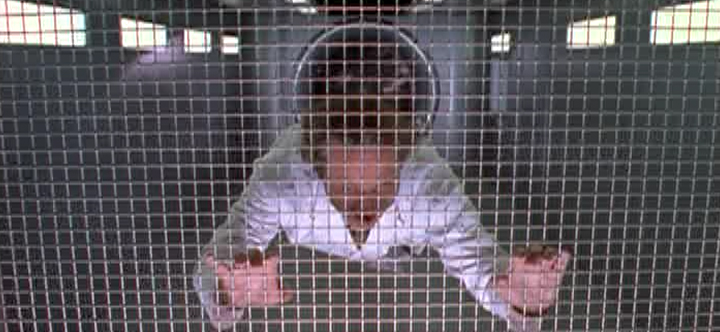
It doesn't suck or blow...

It doesn’t suck or blow…

Continue reading

Star Trek: Deep Space Nine – Season 2 (Review)

Star Trek: Deep Space Nine is twenty years old this year. To celebrate, I’m taking a look at the first and second seasons. Check back daily for the latest review or retrospective.

Well, that’s more like it. The second season of Star Trek: Deep Space Nine might not rank with the very best of the franchise, but it doesn’t have to. Deep Space Nine is still a young show, and Star Trek spin-offs have a long history of taking their time to find their feet. The second season of Deep Space Nine contains its fair share of classic or memorable episodes, but it’s defined by a sense that the producers are still trying to figure out what works and what doesn’t.

While the first season occasionally felt like the series was stumbling back towards safety, trying to become a lighter version of Star Trek: The Next Generation as faith in its premise wavered, the second season is a lot more confident in itself. It’s willing to play around a bit to figure out how to be the show that it wants to be. And there’s a sense, as the season winds to a close, that we’re almost there.

By the time we hit the second half of the season, it seems the show has learned to churn out inoffensive episodes that feel unique and distinctively Deep Space Nine – episodes like Playing God or Shadowplay. However, it’s in the final third that the show seems to figure out how make truly great episodes of Deep Space Nine.

ds9-playinggod22

Continue reading

Star Trek: Deep Space Nine – The Collaborator (Review)

Star Trek: Deep Space Nine is twenty years old this year. To celebrate, I’m taking a look at the first and second seasons. Check back daily for the latest review or retrospective.

It’s surprising how long we’ve had since a solid Bajoran episode of Star Trek: Deep Space Nine. Barring the dark reflection of Bajor as a power-broker (and brief allusion to a colony in the Gamma Quadrant) in Crossover, the last episode to really explore the planet’s political and religious structure was probably Sanctuary, which aired more than half a season earlier. After a reasonably high concentration of Bajoran political adventures in the first season and the first half of the second, it seems that further explorations will be more broadly spaced.

Indeed, the first season ended (and the second season began) with a five-episode run that was heavily anchored in the show’s Bajoran surroundings. However, as of late, it feels we’ve been strangely disengaged from the show’s stated objective of welcoming Bajor to the Federation. With episodes like The Maquis, it seems like the show is making a conscious effort to disentangle Cardassian politics from those of Bajor.

In a way, this probably represents Deep Space Nine growing into the form that it will take for the rest of its run. The second season has really been about Deep Space Nine figuring out what it wants to be, and what it doesn’t want to be. With The Collaborator‘s focus on Bajoran politics feeling conspicuous by the lack of other Bajor-centric episodes in this half of the season, it seems like Deep Space Nine doesn’t want to be a show about Bajor.

Enough rope to hang himself...

Enough rope to hang himself…

Continue reading

Star Trek: Deep Space Nine – Armageddon Game (Review)

Star Trek: Deep Space Nine is twenty years old this year. To celebrate, I’m taking a look at the first and second seasons. Check back daily for the latest review or retrospective.

It’s been a while since we’ve had a fairly generic “could have happened on any Star Trek episode of Deep Space Nine. So it’s a lot easier to forgive Armageddon Game its simplicity and lack of nuance. This isn’t a story specific to Deep Space Nine. The basic concept could – rather easily – have been tailored to fit Star Trek: The Next Generation or even Star Trek: Voyager, with two crew members on the run for their lives on an alien world.

Armageddon Game is another story idea from Morgan Grendel, a writer who tends towards extremes. The Inner Light remains one of the best episodes of Star Trek ever produced. The Passenger ranks among the worst episodes of Deep Space Nine ever to make it to the screen. Armageddon Game sits somewhere in the middle.

Talk about chemistry...

Talk about chemistry…

Continue reading

Star Trek: Deep Space Nine – Season 1 (Review)

Star Trek: Deep Space Nine is twenty years old this year. To celebrate, I’m taking a look at the first season. Check back daily for the latest review or retrospective.

Well, that was actually pretty satisfying. Star Trek: Deep Space Nine has probably the most satisfying debut season of any of the Star Trek spin-offs. While the show’s first year can’t quite measure up to the very first season of Star Trek ever produced, it can hold its head high among the spin-offs. Although I will concede that the bar isn’t exactly high when it comes to measuring the first year of the tie-in television shows.

When I began a recent re-watch of Star Trek: The Next Generation, I was glad to finish the show’s rocky first season. It was a slog, like the work one has to put in before delving into “the good stuff.” I recently picked up the blu ray of the first season of Star Trek: Enterprise. While there are a couple of nice episodes, there are quite  a few I’d forgotten entirely because they were so bland. There are more I would like to forget. Star Trek: Voyager‘s first season is the single largest missed opportunity in the history of the franchise.

So Deep Space Nine‘s first year doesn’t have to do that much beyond “not sucking” in order to earn the coveted title of “best pilot season of a Star Trek spin-off.” However, as I watched the season, I was continually impressed with the quality of work done. There are a few duds (and a few classics), but the first year demonstrates remarkable insight into what is unique about the show’s premise. It doesn’t always have the courage to follow through on that promise, but it at least acknowledges it.

ds9-season1a

Continue reading

Star Trek: Deep Space Nine – The Forsaken (Review)

Star Trek: Deep Space Nine is twenty years old this year. To celebrate, I’m taking a look at the first season. Check back daily for the latest review or retrospective.

Following on directly from If Wishes Were Horses…, The Foresaken combines another bunch of familiar Star Trek clichés into a plot that fells like it has been elsewhere. To be fair, the “malfunctioning computer” plot is a plot that lends itself to a Star Trek setting, and the key is the execution of that most familiar set up. The franchise has done it quite well in the past. I’m fond of Star Trek: The Next Generation‘s foray into the subgenre with Disaster. Even Star Trek: Deep Space Nine would do a number of later episodes working quite well from this starting point – Civil Defense and Starship Down ranking quite highly.

The problem with The Foresaken, then, isn’t the fact that it falls back on a bunch of familiar Star Trek clichés, but it fails to use them to tell an especially compelling story.

Oh, what a world!

Oh, what a world!

Continue reading

Star Trek: Deep Space Nine – The Passenger (Review)

Star Trek: Deep Space Nine is twenty years old this year. To celebrate, I’m taking a look at the first season. Check back daily for the latest review or retrospective.

And here we hit what amounts to the rock bottom of Star Trek: Deep Space Nine‘s first season. The Passenger and Move Along Home exist as the two weakest stories in this first season, and the point from which Deep Space Nine begins to map a path towards recovery, climaxing in the best final two episodes of any first season in the history of Star Trek. We’re a long way from that, and we seem furthest from it here.

While Move Along Home is a legitimately bad episode, one with flaws that probably should have been spotted in any of the episode’s troubled development history, The Passenger suffers because it is the most bland and generic of the first season Deep Space Nine episodes. It accomplishes nothing, but it feels worse because its ambitions were so low. It’s the kind of story that could easily have been told on any Star Trek show, or any science-fiction series, but with no sense of local colour to give it distinctive flavour.

The Passenger is just as bland as the title makes it sound.

The not-so-good Doctor...

The not-so-good Doctor…

Continue reading

Star Trek: Deep Space Nine – Dax (Review)

Star Trek: Deep Space Nine is twenty years old this year. To celebrate, I’m taking a look at the first season. Check back daily for the latest review or retrospective.

Dax is a very weird episode. It is the first episode centred around Jadzia Dax, but it also demonstrates the problems that will affect Dax-centric episodes throughout Terry Farrell’s time on the show. Due to the nature of the character, the stories about Dax tend to treat her as a plot point or a macguffin rather than a character in and of herself. Here, for example, Dax finds herself on trial for the actions of her direct predecessor, Curzon Dax. It’s a fascinating moral and philosophical dilemma (can you hold somebody accountable for their actions in a past life?), but it’s a story about Dax that isn’t about the character as she currently exists. It’s fascinating and frustrating in equal measure, but at least it’s a sign that Star Trek: Deep Space Nine is content to do more than merely imitate Star Trek: The Next Generation.

Touching...

Touching…

Continue reading

Star Trek: Deep Space Nine – Q-Less (Review)

Star Trek: Deep Space Nine is twenty years old this year. To celebrate, I’m taking a look at the first season. Check back daily for the latest review or retrospective.

And the first season of Deep Space Nine continues its trend towards mediocrity. I feel I should qualify that. The first season of Deep Space Nine is never truly terrible. Even the (very) dodgy Move Along Home is superior to any number of episodes from the first season of Star Trek: The Next Generation, like Code of Honour or Angel One. The first season of Deep Space Nine just winds up feeling like it’s treading water, as if it is trying too hard to emulate The Next Generation, instead of exploring the unique storytelling opportunities offered by the show’s setting.

Q-Less is arguably the most obvious example of these attempts at imitation. While episodes like Babel and The Passenger could have been reworked as episodes of The Next Generation with a minimum of fuss, Q-Less rather cynically takes two recurring guest stars from The Next Generation and allows them to steal focus from an ensemble that is still finding its feet. It feels not only a little ill-judged, but also a bit rude.

Guess Q...

Guess Q…

Continue reading

Star Trek: Deep Space Nine – Babel (Review)

Star Trek: Deep Space Nine is twenty years old this year. To celebrate, I’m taking a look at the first season. Check back daily for the latest review or retrospective.

With Babel, we hit the most significant flaw in the first season of Star Trek: Deep Space Nine. Put frankly, Babel is the first story that could easily have worked as an episode of the original Star Trek or of Star Trek: The Next Generation. Indeed, Michael Piller concedes in Captains’ Logs Supplemental – The Unauthorized Guide to the New Trek Voyages that Babel had a history longer than that of Deep Space Nine itself:

We had this premise for over five years at Next Generation. It was written by the same person who wrote “Hollow Pursuits” for us, and we had always been attracted to the idea that you could suddenly lose the ability to use language and communicate, and how people are able to communicate with each other.

This isn’t necessarily a bad thing, but it’s worth noting that the first season of Deep Space Nine was airing concurrently with the sixth season of The Next Generation. If people wanted to see stories that could work on The Next Generation, it made more sense to see them executed on that show by a production team with experience in these sorts of plots.

While Babel isn’t a bad episode by any means, there’s a sense that it has been cobbled together from leftovers at another table, and the result isn’t nearly as satisfying as it should be.

Chief concerns...

Chief concerns…

Continue reading