• Following Us

  • Categories

  • Check out the Archives


  • Awards & Nominations

Doctor Who: Bad Wolf (Review)

To celebrate the fiftieth anniversary of the longest-running science-fiction show in the world, I’ll be taking weekly looks at some of my own personal favourite stories and arcs, from the old and new series, with a view to encapsulating the sublime, the clever and the fiendishly odd of the BBC’s Doctor Who.

Bad Wolf originally aired in 2005.

The Dalek stratagem nears completion. The fleet is almost ready. You will not intervene.

Oh, really? Why’s that, then?

We have your associate. You will obey or she will be exterminated.

No.

Explain yourself.

I said no.

What is the meaning of this negative?

It means no.

But she will be destroyed.

No! Because this is what I’m going to do. I’m going to rescue her. I’m going to save Rose Tyler from the middle of the Dalek fleet and then I’m going to save the Earth, and then, just to finish off, I’m going to wipe every last stinking Dalek out of the sky!

But you have no weapons, no defences, no plan.

Yeah. And doesn’t that scare you to death. Rose?

Yes, Doctor?

I’m coming to get you.

– the Daleks, the Doctor and Rose give the Ninth Doctor perhaps his best moment

Looking back at the first season, I’d argue that it’s the most cohesive run of episodes that Russell T. Davies produced on the dhow. Now because of the whole “bad wolf” thing, as that feels a bit like a clumsy link randomly inserted. Instead, as we watch the final episode, it becomes quite clear what Davies was trying to do with his first year on the show. The patterns, the themes, the subtext, the references – it all becomes quite clear. More than any other season of Davies’ tenure, the first season is really one gigantic story – and not just because the show never leaves Earth or the finalé returns to the setting of The Long Game.

The first season is a bridge. It’s a link between the last years of the classic series into the new and revived show as written by Davies. It’s a moment to gather up the dead, tidy away the loose ends and basically manage the stage so that the show can really come into its own. One of the things I loved about Davies’ Doctor Who was how accessible it all was, but it still had all this continuity ticking away in the background.

This first season finalé feels like it isn’t only a conclusion to Christopher Eccleston’s time in the lead role, it’s also closing the last of the dangling threads from the eras of Colin Baker and Sylvester McCoy in the eighties. As soon as David Tennant steps into the lead role, it seems the show is entirely and utterly free of everything that came before. It’s a testament to Davies’ skill that we’re not even sure that he’s doing it.
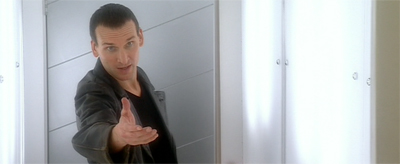
Come with me if you want to live...

Come with me if you want to live…

Continue reading

Doctor Who: The Sensorites (Review)

To celebrate the fiftieth anniversary of the longest-running science-fiction show in the world, I’ll be taking weekly looks at some of my own personal favourite stories and arcs, from the old and new series, with a view to encapsulating the sublime, the clever and the fiendishly odd of the BBC’s Doctor Who.

The Sensorites originally aired in 1964.

There’s one thing about it, Doctor. We’re certainly different from when we started out with you.

That’s funny. Grandfather and I were talking about that just before you came in. How you’ve both changed.

Well we’ve all changed.

Have I?

Yes.

Yes, it all started out as a mild curiosity in a junkyard, and now it’s turned out to be quite a, quite a great spirit of adventure, don’t you think?

Yes. We’ve had some pretty rough times and even that doesn’t stop us. It’s a wonderful thing, this ship of yours, Doctor. Taken us back to prehistoric times, the Daleks.

Marco Polo, Marinus.

And the Aztecs.

Yes, and that extraordinary quarrel I had with that English king, Henry the Eighth. You know, he threw a parson’s nose at me.

What did you do?

Threw it back, of course.

– Ian, Susan, Barbara and the Doctor discuss character development

The Sensorites feels like a bit of a mess of an episode. It’s a six-part adventure, but one that feels quite a bit longer than it should be. The trip to Skaro in The Daleks ran for seven episodes, but it never felt quite as padded as this. There are some decent ideas and some nice character moments to be found in The Sensorites, if you’re willing to look hard enough, but there’s also quite a lot of padding, quite a lot of nonsense, and some plot developments that feel just a little bit convenient or contrived. This isn’t Doctor Who at anything approaching its best, but there’s still some measure of potential here.

Using your head...

Using your head…

Continue reading

Doctor Who: The Keys of Marinus (Review)

To celebrate the fiftieth anniversary of the longest-running science-fiction show in the world, I’ll be taking weekly looks at some of my own personal favourite stories and arcs, from the old and new series, with a view to encapsulating the sublime, the clever and the fiendishly odd of the BBC’s Doctor Who.

The Keys of Marinus originally aired in 1964.

While the initial thirteen-episode block helped established Doctor Who, it was the follow-up stories that built on those initial blue-prints. Marco Polo was a historical adventure in the style of An Unearthly Child, paying homage to the original educational aim of the series, designed to teach kids about history and science. However, the real breakout of the initial run had been The Daleks, with those adorable psychotic pepper pots. Keen to capitalise on the success of the futuristic adventure, another adventure serial was commissioned to take place on an alien world, with Terry Nation’s The Keys of Marinus helping to establish science fantasy as a concrete part of the show’s identity.

All a-Voord!

Continue reading

Doctor Who: The Edge of Destruction (Review)

To celebrate the fiftieth anniversary of the longest-running science-fiction show in the world, I’ll be taking weekly looks at some of my own personal favourite stories and arcs, from the old and new series, with a view to encapsulating the sublime, the clever and the fiendishly odd of the BBC’s Doctor Who.

The Edge of Destruction originally aired in 1964.

The Edge of Destruction is an interesting little two-parter. Basically created to fill out a two-episode gap in the end of the initial run of episodes following the four-part An Unearthly Child and the seven-part The Daleks. It wasn’t possible to bring Marco Polo forward into this production block, as it was too long, and there wasn’t any budget provided for a guest cast or for new sets. So, as seemed to happen quite a lot on the show, the production team’s ingenuity forced their creativity. The Edge of Destruction (or Inside the Spaceship) ended up being a two-part “bottle” episode, featuring only the four members of the lead cast.

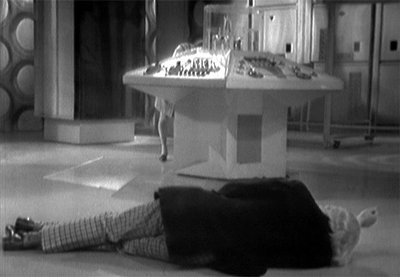
After seven episodes of The Daleks, I can’t blame the Doctor for wanting a nap…

Continue reading

Doctor Who: An Unearthly Child (Review)

To celebrate the fiftieth anniversary of the longest-running science-fiction show in the world, I’ll be taking weekly looks at some of my own personal favourite stories and arcs, from the old and new series, with a view to encapsulating the sublime, the clever and the fiendishly odd of the BBC’s Doctor Who.

An Unearthly Child originally aired in 1963.

“Just open the doors, Doctor Foreman.”

“Eh? Doctor who? What’s he talking about?”

– Ian and the Doctor drop the title

And so, it begins…

There from the beginning…

Continue reading