• Following Us

  • Categories

  • Check out the Archives


  • Awards & Nominations

Doctor Who: Shada (2003) (Review)

To celebrate the fiftieth anniversary of the longest-running science-fiction show in the world, I’ll be taking weekly looks at some of my own personal favourite stories and arcs, from the old and new series, with a view to encapsulating the sublime, the clever and the fiendishly odd of the BBC’s Doctor Who.

Shada originally broadcast on the BBC website in 2003.

Doctor, a fool would realise that it was written in code!

Skagra, this thing is written in code!

– Skagra and the Doctor have some communication difficulties

Has a failed Doctor Who story every haunted the collective consciousness in the way that Shada does? There’s a wealth of adventures that were proposed and never produced, from the last Master story that never happened in The Final Game, through to the laundry list of unproduced adventures that would have made up Colin Baker’s second season if the show hadn’t been parked by the BBC. However, Shada is something different. So different, in fact, that it has been told quite a few times. In fact, it might be the only Doctor Who story I end up covering twice.

This was a webcast version, a very simply animated version of the tale produced for the BBC website, using an audio play adapted from Douglas Adams’ original script by Big Finish, the fan collective who produce a range of celebrated audio plays for the classic series. Starring Paul McGann, the Eighth Doctor who never really got a chance to develop the role in live action, it’s an interesting glimpse at what might have been.

Lost in time...

Lost in time…

Continue reading

Doctor Who: Death Comes to Time (Review)

To celebrate the fiftieth anniversary of the longest-running science-fiction show in the world, I’ll be taking weekly looks at some of my own personal favourite stories and arcs, from the old and new series, with a view to encapsulating the sublime, the clever and the fiendishly odd of the BBC’s Doctor Who.

Death Comes to Time originally broadcast on the BBC website in 2001.

I’m just another alien…

Alien to where?

Everywhere.

– the Doctor and Bedloe

There is quite a lot to like about Death Comes to Time. It offers a conclusion to Ace’s character arc. It features a stellar voice cast. Tannis is great villain. The script isn’t mired in continuity or slavishly devoted to the letter of the continuity of Doctor Who.

On the other hand, there’s quite a lot to loathe about Death Comes to Time. In moving away from Doctor Who continuity, it feels like a generic space opera. There’s a loss of the intimacy that defined the series. There’s a central revelation that makes no sense and a central moral philosophy which seems at odds with the very heart of Doctor Who. On top of that, it seems rather clumsily constructed. If it was intended as a pilot, the wrong characters are in focus for most of its not-insignificant runtime.

Hello, stonehenge!

Hello, stonehenge!

Continue reading

Doctor Who: The Vampires of Venice (Review)

To celebrate the fiftieth anniversary of the longest-running science-fiction show in the world, I’ll be taking weekly looks at some of my own personal favourite stories and arcs, from the old and new series, with a view to encapsulating the sublime, the clever and the fiendishly odd of the BBC’s Doctor Who.

The Vampires of Venice originally aired in 2010.

Tell me the whole plan!

One day that will work.

– the Doctor

The Vampires of Venice is interesting because it looks very different in 2013 as compared to when it was originally broadcast in 2010. In 2010, it looked a bit overly familiar, a collection of the tropes and storytelling tricks that we took for granted in the show under Russell T. Davies. The elements felt, at the time, a little over-familiar. Indeed, it seemed like Toby Whithouse’s script owed a great deal to his earlier adventure School Reunion.

However, Doctor Who looks very different in 2013. The show has definitely radically changed, so that these familiar plot points don’t seem quite so familiar any longer. Whereas The Vampires of Venice didn’t feel so strange after five years of Russell T. Davies, it does seem a bit more unique after three years of Steven Moffat. It doesn’t seem so much an attempt to repackage these story elements as it does one final celebration of them, a fond farewell to many of the narrative bits and pieces that we’d come to take for granted.

How times change.

A late-night bite...

A late-night bite…

Continue reading

Doctor Who: The Parting of the Ways (Review)

To celebrate the fiftieth anniversary of the longest-running science-fiction show in the world, I’ll be taking weekly looks at some of my own personal favourite stories and arcs, from the old and new series, with a view to encapsulating the sublime, the clever and the fiendishly odd of the BBC’s Doctor Who.

The Parting of the Ways originally aired in 2005.

Everything must come to dust. All things. Everything dies. The Time War ends.

– Rose

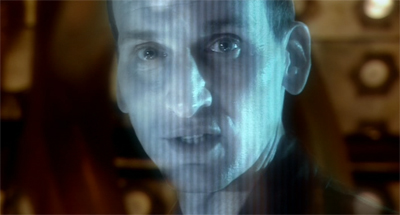
And so the first season of Russell T. Davies’ revived Doctor Who comes to a close. If you asked me, it’s the best season of the show that Davies has produced. The year contains a few clunkers, and it doesn’t contain the highest concentration of enjoyable episodes, but I think the first year has a much clearer direction and purpose than any of the years that followed. Although apparently Christopher Eccleston’s departure was only decided after the show went into production, the first season seems like it is constantly building to the death of the Doctor. The entire first season seems to build, logically and rationally, towards that moment.

He's not all there...

He’s not all there…

Continue reading

Doctor Who: The War Games (Review)

To celebrate the fiftieth anniversary of the longest-running science-fiction show in the world, I’ll be taking weekly looks at some of my own personal favourite stories and arcs, from the old and new series, with a view to encapsulating the sublime, the clever and the fiendishly odd of the BBC’s Doctor Who.

The War Games originally aired in 1969.

Well, what was happening? Why was it so difficult to move?

It was the Time Lords.

But they’re your own people, aren’t they, Doctor?

Yes, that’s right.

Why did you run away from them in the first place?

What? Well, I was bored.

What do you mean, you were bored?

Well, the Time Lords are an immensely civilised race. We can control our own environment, we can live forever, barring accidents, and we have the secret of space time travel.

Well what’s so wrong in all that?

Well we hardly ever use our great powers. We consent simply to observe and to gather knowledge.

And that wasn’t enough for you?

No, of course not. With a whole galaxy to explore? Millions of planets, eons of time, countless civilisations to meet?

Well, why do they object to you doing all that?

Well, it is a fact, Jamie, that I do tend to get involved with things.

– Jamie, the Doctor and Zoe

The War Games represents the end of the era. It is the last appearance of Jamie as a regular companion. It is the last show featuring Patrick Troughton as the Doctor, although he would return for the occasional guest spot, celebration or charity episode. It was also the last of the series to be shot in black and white. The transition from Troughton to Pertwee would arguably be one of the most dramatic shifts in the history of the show. Not only would the show suddenly be broadcast in colour, and not only would it feature a new lead actor, but it would also have a new focus, grounded on Earth, and with that a new status quo and new rules. The show was only six years old at the time, but the change must have seemed radical to those watching.

The War Games isn’t the perfect episode – it’s too long and too plodding – but it is a lot more entertaining than some of the longer adventures, and it serves as a fond farewell to the “cosmic hobo” interpretation of the Doctor. Indeed, the episode probably seems a great deal harsher than it did in hindsight, with the specifics of regeneration not quite codified, the Doctor’s forced transformation seemed less like a formal execution than it does to modern audiences who watched the Tenth Doctor plead for more time.

The War Games is an effective and fond farewell to not only a particular iteration of the title character, but also a version of the show as a whole.

Run!

Run!

Continue reading

Doctor Who: Closing Time (Review)

Look! They gave me a badge with my name on it, in case I forget it… Which is very thoughtful, because that does happen.

– The Doctor shows off his name badge

I have to admit, I liked Closing Time. It wasn’t quite as good as The Lodger, but it was an entertaining diversion at the end of what has been a pretty gloomy run of episodes for Doctor Who. And based on the previews for The Wedding of River Song, it isn’t going to get any lighter next week. I do have to admit, I kinda like the idea of Craig as an almost “stationary” companion – one whose life is constantly interrupted by the return of the Doctor to his relatively quiet existence, something that works quite well in contrast to the relationship between Amy and the Doctor.

It's all under (remote) control...

Continue reading