• Following Us

  • Categories

  • Check out the Archives


  • Awards & Nominations

The X-Files – Salvage (Review)

This October/November, we’re taking a trip back in time to review the eighth season of The X-Files and the first (and only) season of The Lone Gunmen.

Salvage is another mid-season “monster of the week” that doesn’t quite work.

As with Surekill, it is possible to imagine the interplay between David Duchovny and Gillian Anderson elevating this episode had it been produced in the seventh season, as was originally planned. The Doggett and Scully pairing lacks that easy dynamic that made so many generic episodes flow so easily. That is not to say that Robert Patrick and Gillian Anderson don’t work well together, simply that they don’t replicate the once-in-a-lifetime chemistry that Randy Stone found with David Duchovny and Gillian Anderson.

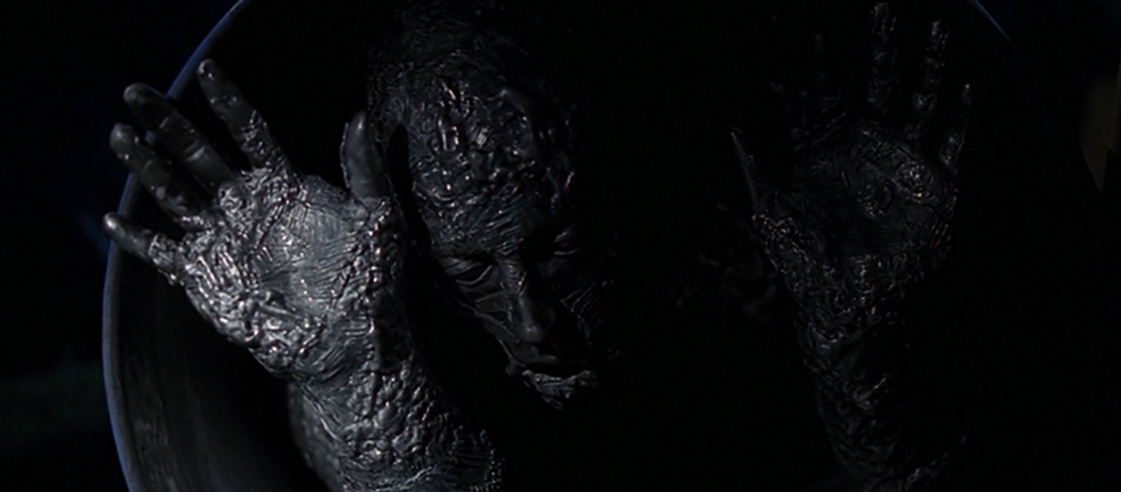
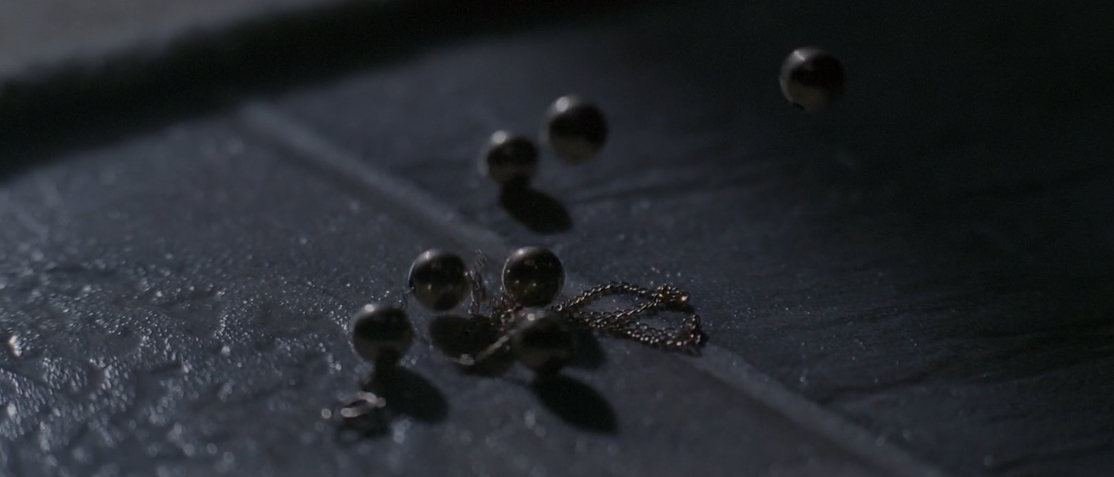
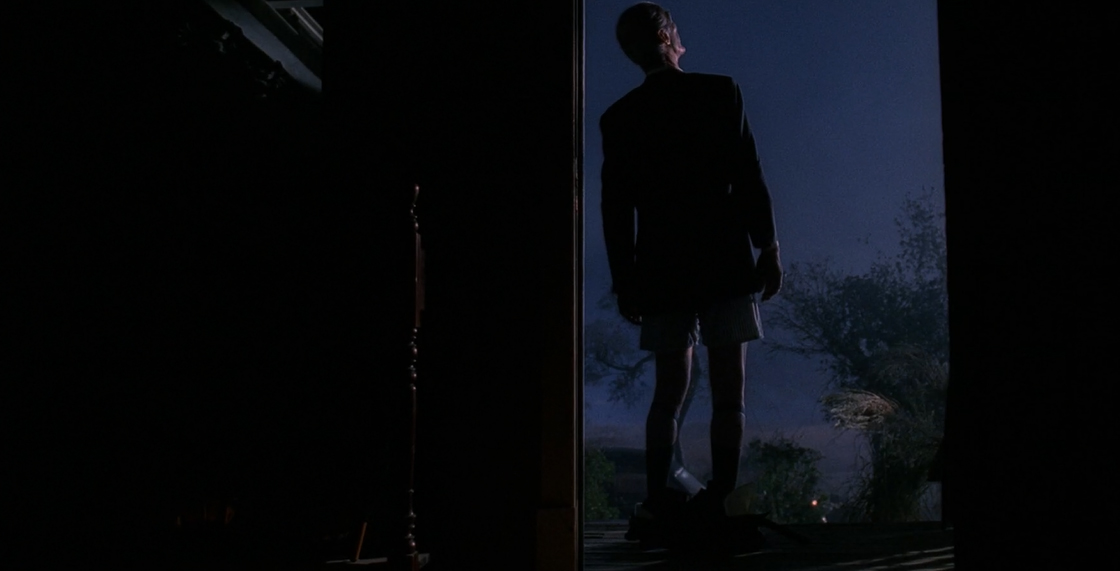
Testing his metal...

Testing his metal…

That said, Salvage has more severe problems than Badlaa or Medusa. In many respects, Salvage feels like a first season episode of the show that arrived seven years too late – in terms of tone, design and aesthetic. There is a clumsiness to the execution, an awkwardness to the presentation, that feels like the show has forgotten many of the lessons that it learned in its time on television. If it is fair to argue that the eighth season is as much the first season of a new show as the last season of the old one, Salvage is the most “first season” episode of the bunch.

Salvage has a host of interesting concepts and ideas, but it lacks the skill and confidence that the show would need to pull off a story like this. Salvage is one of the handful of season eight stories that would arguably have worked better in season seven, albeit only barely.

Scrap that...

Scrap that…

Continue reading

The X-Files – Surekill (Review)

This October/November, we’re taking a trip back in time to review the eighth season of The X-Files and the first (and only) season of The Lone Gunmen.

And with Surekill, the eighth season of The X-Files hits a problem.

The eighth season of The X-Files starts out strong, doing a good job of introducing a new major character without forcing him down the audience’s throat and allowing viewers to come to terms with the idea of The X-Files without Mulder. Even if some of the episodes are not jaw-droppingly amazing, there is a novelty to the format and a genuine curiosity that makes the opening seven episodes of the season more intriguing and exciting than the show has been in quite some time.

A hole lot of trouble...

A hole lot of trouble…

The eighth season also finishes strong. It is tempting to put this all upon the return of David Duchovny to the show, bringing a sense of stability to the series. That is definitely a factor, but discussions of the eighth season tend overlook how the final stretch of the year is the most serialised that the show (and the mythology) has ever been and ever will be. For one brief (roughly ten-episode) run, it seemed like The X-Files had burst into the twentieth century with a new-found purpose and joie de vivre.

Notably, this leaves something of a lull in the middle of the season, between the opening stretch and before the season begins gathering momentum. This is the point at which it feels like this grand experiment might not actually work out, after all. It is very much an attempt to do by-the-book “monster of the week” stories in the traditional style of The X-Files, now that Doggett has settled in. Unfortunately, this only has the effect of reinforcing that one of the key ingredients of a classic by-the-book “monster of the week” story is sorely missing. Doggett is no Mulder.

Throwing in the towel...

Throwing in the towel…

Continue reading

The X-Files – Via Negativa (Review)

This October/November, we’re taking a trip back in time to review the eighth season of The X-Files and the first (and only) season of The Lone Gunmen.

Why no! I never thought other than
That God is that great absence
In our lives, the empty silence
Within, the place where we go
Seeking, not in hope to
Arrive or find. He keeps the interstices
In our knowledge, the darkness
Between stars. His are the echoes
We follow, the footprints he has just
Left. We put our hands in
His side hoping to find
It warm. We look at people
And places as though he had looked
At them, too; but miss the reflection.

– R.S. Thomas, Via Negativa

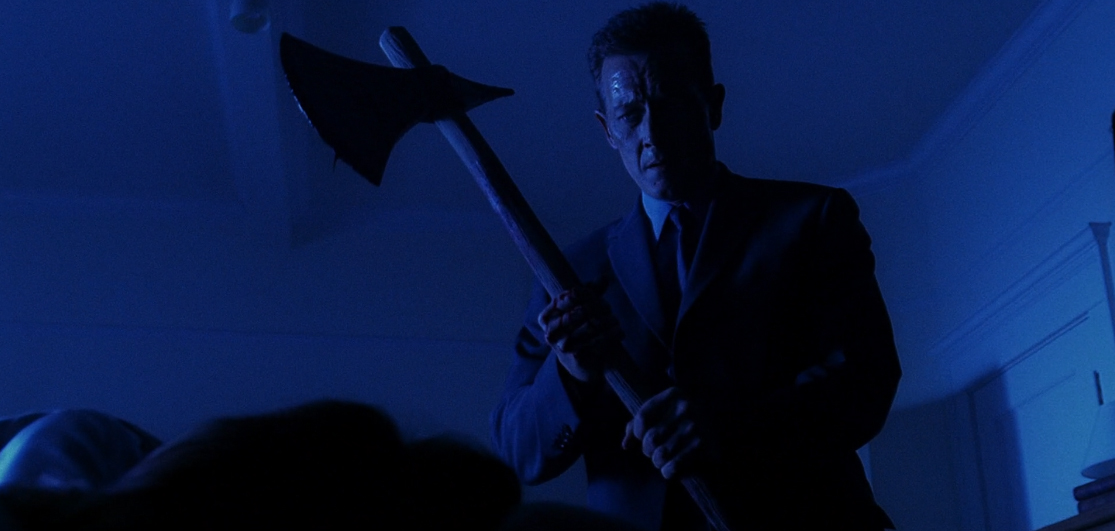
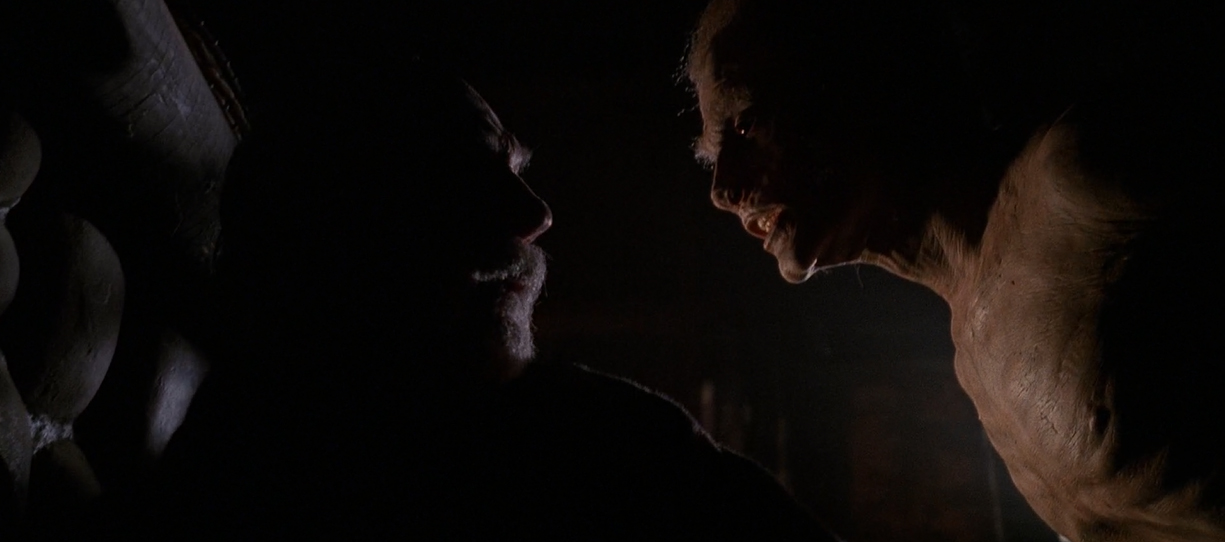
Facing the axe...

Facing the axe…

Continue reading

The X-Files – Redrum (Review)

This October/November, we’re taking a trip back in time to review the eighth season of The X-Files and the first (and only) season of The Lone Gunmen.

Redrum is perhaps notable as the highest concept episode of the eighth season of The X-Files, a character drama that unfolds backwards.

As a rule, the eight season is more conservative than the seasons around it. In terms of narrative, it may be the most conservative season of The X-Files since the show’s first year. Redrum is perhaps the season’s biggest formal experiment. While very few high-profile prime-time television shows would attempt to tell a story backwards, Redrum feels a lot less bold than something like HumbugJose Chung’s “From Outer Space”Musings of a Cigarette-Smoking Man, The Post-Modern Prometheus, Bad Blood, Triangle, X-Cops or even Improbable.

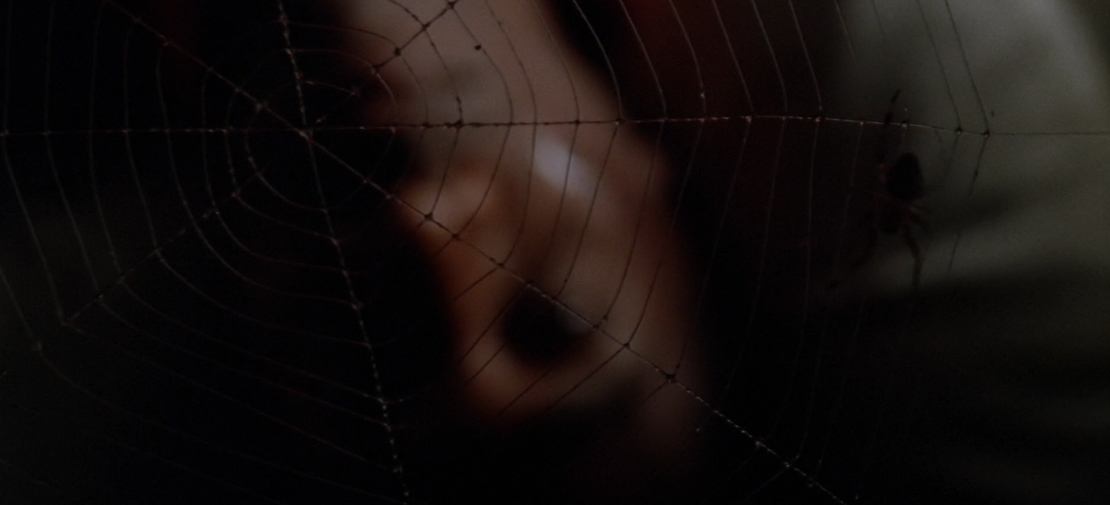
A tangled web...

A tangled web…

On paper, this should be a highlight of the season. Redrum features a guest performance from Joe Morton, receiving a coveted “special guest star” credit for his work. (Notably, Kim Greist did not earn a similar credit on Invocation.) The high-concept premise of the episode seems like it would make a great pitch for Sweeps, like X-Cops did only a year earlier. In fact, Redrum was produced as the first stand-alone episode of the season, priming it for the slot occupied by Drive and Hungry in earlier seasons.

There is a sense that the production team are wary of Redrum. The episode was pushed back from its production slot relatively deep into the season. It was with second-last episode of the eighth season to air before the Christmas break. The show attracted a relatively small amount of publicity, particularly as compared to the “where’s Mulder?” hype of that greeted the début of the season. There is a sense that Redrum would have garnered more attention only a year or two earlier.

"The teacup that I shattered did come together."

“The teacup that I shattered did come together.”

It is easy to see why the production team were so wary of Redrum. The eighth season is a point of transition for The X-Files. The show is still reeling from the loss of David Duchovny; there is a sense that the show never moves past that. The agenda for the eighth season is to convince viewers that The X-Files is still a viable television show, even without the lead actor who helped to make it famous. While the show is smart enough not to downplay the change, the production team are keen to demonstrate the show can still do what it always did.

As such, the eighth season finds the show adopting a “back to basics” approach, harking back to many of the tropes that made The X-Files such a breakout hit in the first place. There is a lot more horror and mood in the eighth season, a lot more of the traditional scares. That means that Redrum ends up feeling very much like the odd episode out.

It's all gone a bit Martha Wayne...

It’s all gone a bit Martha Wayne…

Continue reading

The X-Files – Roadrunners (Review)

This October/November, we’re taking a trip back in time to review the eighth season of The X-Files and the first (and only) season of The Lone Gunmen.

In case there was any doubt, Roadrunners proves that the eighth season of The X-Files means business.

In some ways, it seems remarkable that Roadrunners did not receive a warning about graphic content. The season would wait until Via Negativa before offering a viewer discretion advisory. Roadrunners is one of the most uncomfortable and unsettling episodes in the show’s nine-season run, one that cements the “back to basics” horror aesthetic of the eighth season as a whole. It was clear from the opening three episodes that the eighth season was intended as a return to the darkness of the first five seasons, but Roadrunners commits to the idea.

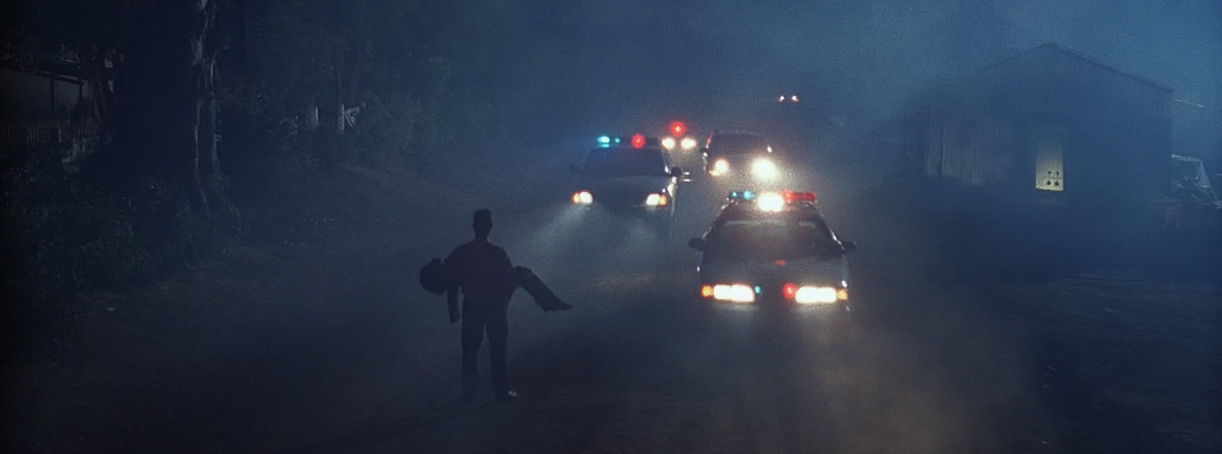
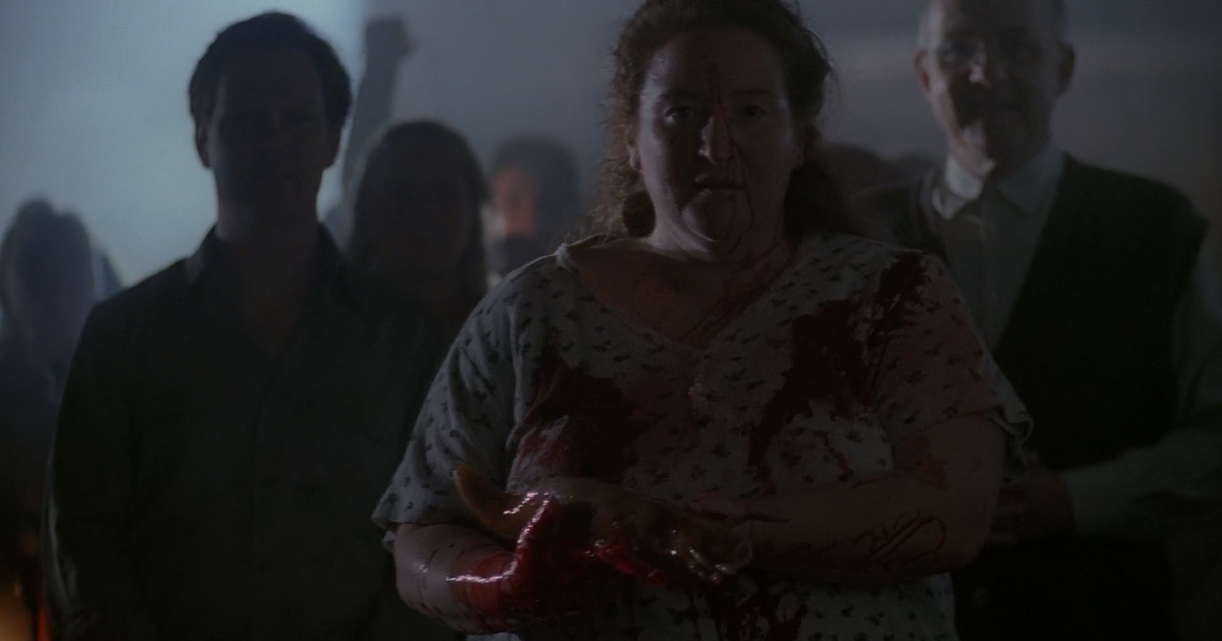
Off-road...

Off-road…

Roadrunners is a “back to basics” script in a number of ways, even beyond its very graphic horror stylings. It is a very good “small town” story, returning to the motif that populated many of the show’s early episodes. It is a story about an eccentric and isolate space in America, a place with its own unique character and its own rich history and traditions. It is a place that stands quite apart from the modern world, that might have looked the same at the turn of the twentieth century as it does at the start of the twenty-first.

Roadrunners could be seen as Vince Gilligan’s answer to Home, a similarly brutal (and unsettling) small-town tale.

"On to new business. Today's mission is for all of you to go to the brain slug planet." "What are we going to do there?" "Just walk around not wearing a helmet."

“On to new business. Today’s mission is for all of you to go to the brain slug planet.”
“What are we going to do there?”
“Just walk around not wearing a helmet.”

Continue reading

The X-Files – Patience (Review)

This October/November, we’re taking a trip back in time to review the eighth season of The X-Files and the first (and only) season of The Lone Gunmen.

Patience is necessary.

The eighth season of The X-Files is conservative. There are arguments to be made that this is true in a political sense, but it is certainly true in a narrative sense. The eighth season generally plays it quite safe when it comes to the structuring and plotting. The most structurally ambitious episode of the eighth season is perhaps Redrum, which feels a lot less “out there” than episodes like The Post-Modern Prometheus, Bad Blood, Triangle, X-Cops or First Person Shooter. Narratively, the eighth season plays it relatively “safe.”

Batsh!t crazy...

Batsh!t crazy…

There is a reason for this, of course. Losing David Duchovny for half the season and rotating in Robert Patrick represents perhaps the biggest risk that the show will ever take. Given how essential Duchovny had been to the show’s success, the eighth season is taking quite the gamble. With that in mind, it makes sense to play it safe. Without Mulder around, the show’s primary goal is to reassure fans that it is still The X-Files. This is not the time for experimental “event” episodes, because “Mulder is not in this episode” is an experimental event of itself.

As such, the eighth season feels largely like a return to a more traditional X-Files aesthetic, a “back to basics” approach. In that respect, Patience is essentially about kicking the tires and taking the show for a gentle test drive in its new configuration.

The show won't be caught with its pants down...

The show won’t be caught with its pants down…

Continue reading

The X-Files – Without (Review)

This October/November, we’re taking a trip back in time to review the eighth season of The X-Files and the first (and only) season of The Lone Gunmen.

Taken as a whole, the eighth season of The X-Files is remarkable.

It is not a perfect season of television, by any stretch. The eighth season doesn’t hit as many highs as the fourth, fifth or sixth seasons. As great as Robert Patrick is as John Doggett, and as skilfully as he is introduced, it is impossible to replace the easy dynamic between Mulder and Scully. The actual mythology of the season feels overcrowded and convoluted, with “supersoldiers” feeling a tad cliché and Mulder’s terminal illness going nowhere of note. The season’s recurring motifs of darkness, death and body horror are not for everybody.

I bet David Duchovny really missed working on The X-Files...

I bet David Duchovny really missed working on The X-Files

At the same time, there is a staggering consistency and reliability to the season. From the outset, the eighth season seems to know what it wants to be and where it wants to go. There is a stronger sense of purpose to the eighth season than to any other season of the show, with the possible exception of the third. Even the lead-up to the release of The X-Files: Fight the Future did not feel this single-minded and focused. In terms of consistency of theme and imagery, this is the closest the show ever came to pulling off a season-long arc.

It is tempting to credit this renewed vigour and energy to the absence of David Duchovny; the search for Mulder provides a solid and compelling hook for the season ahead. However, there is more to it than that. Mulder’s disappearance is a part of it, but the big thematic bow wrapped around the eighth season is Scully’s pregnancy. After all, David Duchovny returns to the show two-thirds of way through the season; it is Scully’s pregnancy that provides the season’s finalé.

"Thank goodness we all wore different ties. That might have been awkward."

“Thank goodness we all wore different ties. That might have been awkward.”

Continue reading

The X-Files – Within (Review)

This October/November, we’re taking a trip back in time to review the eighth season of The X-Files and the first (and only) season of The Lone Gunmen.

What is The X-Files without Mulder? Can it even exist without Mulder?

The show entered its eighth season facing an existential dilemma. David Duchovny had renewed his contract with Fox at the last possible minute, three days before Requiem consigned his character to limbo. However, it was not necessarily the renewal that Fox would have wanted. Duchovny had agreed to reprise the role of Mulder in the eighth season of The X-Files, but only for eleven of the season’s twenty-one episodes. This meant that the character of Mulder could only actually appear in just over half of the season’s episodes.

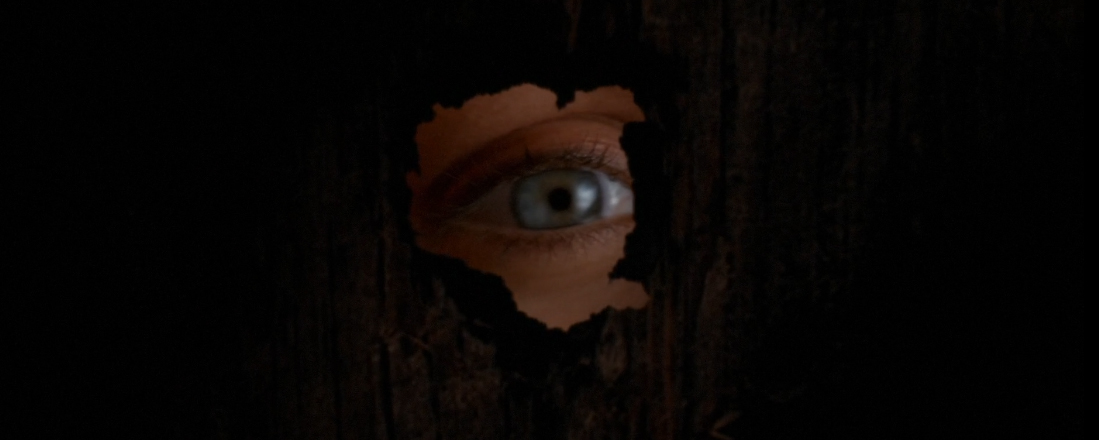
Eye see...

Eye see…

This was a pretty significant blow to The X-Files. The title of the show referred to the procedural cases investigated by Mulder and Scully, but the series had long abandoned any pretense of focusing on those cases ahead of Mulder and Scully. David Duchovny and Gillian Anderson had elevated the characters to pop culture icons, with any pop savvy person capable of easily slipping a reference to Mulder and/or Scully into casual conversation. The chemistry between the two was so strong it forced the global conspiracy to second billing in The X-Files: Fight the Future.

Attempting The X-Files without Mulder (or with “just under fifty percent less Mulder”) was perhaps the most daring and ambitious decision of the show’s entire nine-season run.

"And introducing Robert Patrick."

“And introducing Robert Patrick.”

Continue reading

The X-Files – Je Souhaite (Review)

This September, we’re taking a trip back in time to review the seventh season of The X-Files and the first (and only) season of Harsh Realm.

The late seventh season has something of a twilight quality to it.

Even the show’s production staff are unsure whether the show will be coming back for an eighth season, so every episode takes on a special significance. Could this episode be “the last time that…”? Is Brand X the last time that the show does a traditional monster of the week? Is Hollywood A.D. the last time that David Duchovny writes and/or directs? Is Fight Club the last time that Chris Carter writes a non-mythology episode? Is Je Souhaite the last time that Mulder and Scully just investigate a weird standalone case together? There is a weight to it all.
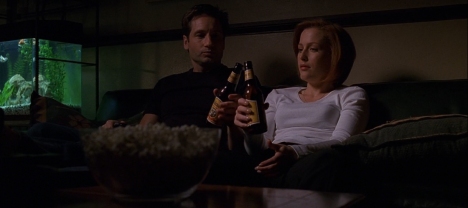
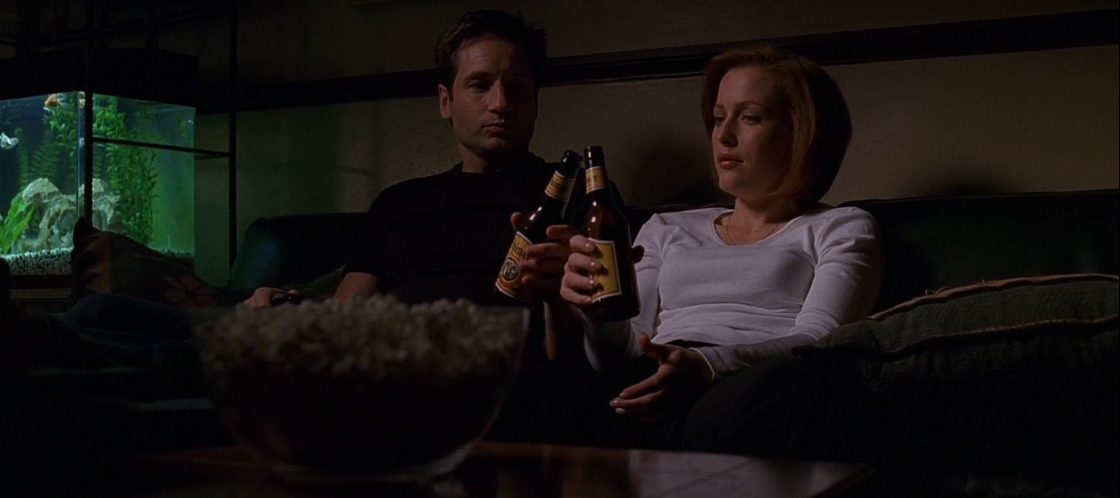
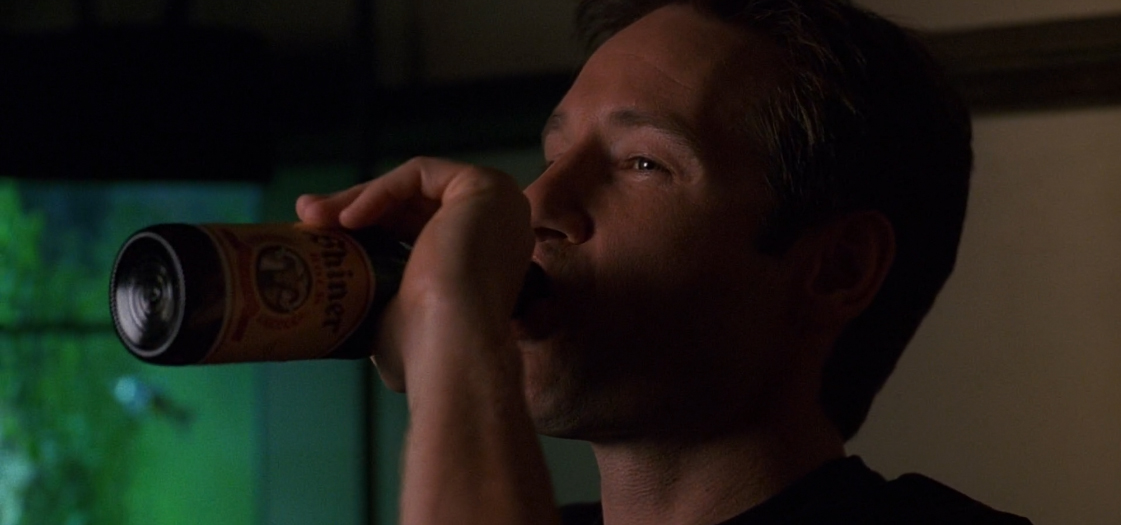
"I'll drink to that."

“I’ll drink to that.”

Of course, the show would come back for an eighth season. There would be lots of traditional monster of the week stories after Brand X. David Duchovny would enjoy another story and directorial credit after Hollywood A.D. Chris Carter would get to write non-mythology episodes after Fight Club, and even get to direct a much more successful whimsical adventure. Mulder and Scully would get to hang out together in the late eighth season and even at the very end of the ninth. In a very real way, this is not the end.

However, in an equally real way, this is the end. It has become hyperbole to suggest that something “… will never be the same again.” Even The X-Files has reinvented itself at least twice by this point, at the start of the third and sixth seasons. However, it is also perfectly reasonable to argue that The X-Files actually will never be the same again. The show changes on a very fundamental level after this point, with Je Souhaite serving as the very last glimpse of the show as it was. In many ways, this is the end of the road.
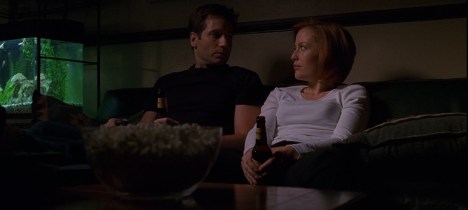
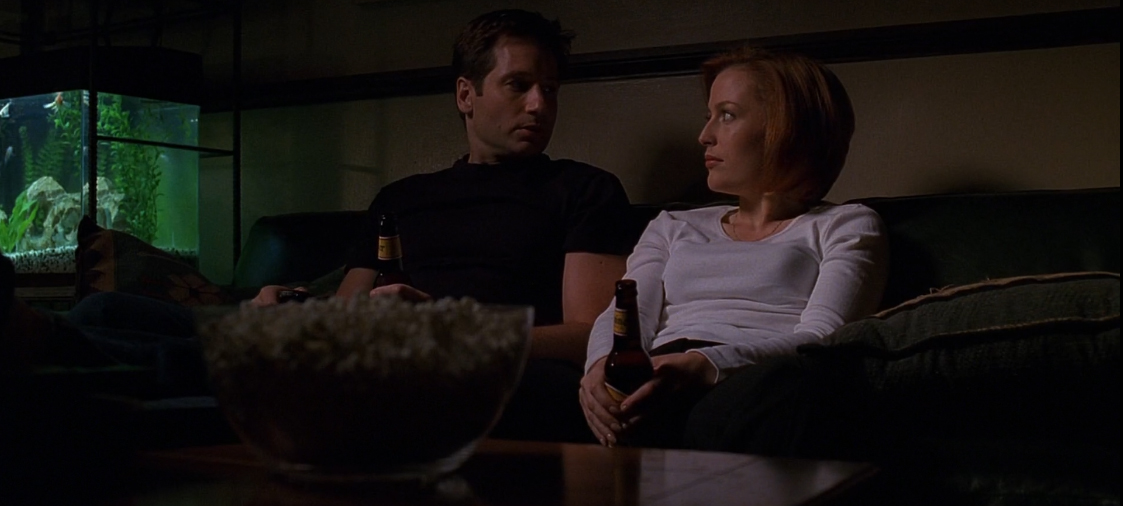
"So... meet up in about fifteen years?"

“So… meet up in about fifteen years?”

Gilligan would get to write and direct another episode of The X-Files before the show finally came to an end. In fact, there are a few thematic similarities between Je Souhaite and Sunshine Days, with both stories serving as affectionate and romantic finalés to Vince Gilligan’s version of The X-Files. There are still two full seasons ahead. Indeed, it is interesting to wonder what it would be like had Je Souhaite come earlier in the season, or even during the sixth season; it would be a light and fun episode, but would have the same heft and weight?

However, there is something different about Je Souhaite. In hindsight, it feels like a snapshot of an extended (seven-year-long) moment coming to end; it is a picture in an photo album that captures Mulder and Scully right on the edge of a transition. It is innocuous, yet profound. It is a picture of college friends sharing a drink at the end of the last term, unaware (or silently aware) of how things will change in the coming months. It is a picture of friends just hanging out before one gets married or has children.
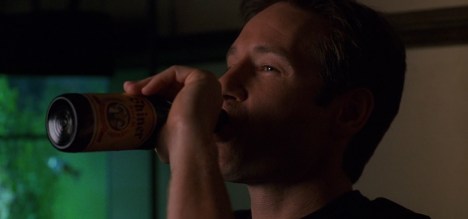
"I am outta here!"

“I am outta here!”

Of course, Mulder and Scully see each other after this point; there is the second half of season eight and the revival hanging in the future. (To say nothing of The X-Files: I Want to Believe or the comics.) College buddies still hang out. People with families maintain friendships. Still, those dynamics change. They are never quite the same. Not better, not worse. Just different. As weird as it is to describe an episode where Mulder encounters a genie as “the point before things got weird”, that’s exactly what Je Souhaite feels like.

What is most striking about Je Souhaite is how much the episode accepts that reality. It is not morose or melancholy; it is practically celebratory. Instead of eulogising the good times, it decides to have a good time. There is something very sweet about that.
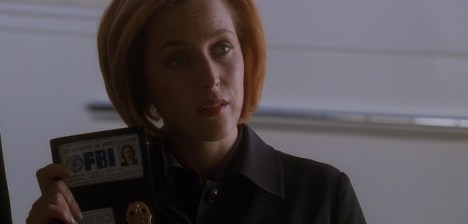
"I'm still here for two seasons..."

“I’m still here for two seasons…”

Continue reading

The X-Files – Fight Club (Review)

This September, we’re taking a trip back in time to review the seventh season of The X-Files and the first (and only) season of Harsh Realm.

Fight Club is an unpleasant episode of The X-Files.

It’s not “unpleasant” in a good way, like (arguably) Signs and Wonders or (definitely) Theef. It is “unpleasant” in a way that feels ill-judged and tone-deaf. Following on the charm and whimsy of Hollywood A.D., the script for Fight Club seems packed with forced charm and staged whimsy. At its most basic level, Fight Club is a comedy episode that simply isn’t funny. More than that, it’s an episode that isn’t particularly funny or clever to begin with, but then spends forty-five minutes insisting upon its own wit.

"Some of us are looking at the stars..."

“Some of us are looking at the stars…”

There is also a sense of unpleasantness about the themes and content of the episode in the context of the late seventh season. After all, it is no secret that the production team were facing considerable internal and external pressure. These pressures included a lawsuit involving the show’s lead actor and the show’s creator (not to mention the show’s network) and the fact that everybody on the production team was waiting for David Duchovny to determine if they would have a job the following season.

With all of this going on in the background, maybe an episode the implicitly features the show’s two lead actors knocking the stuffing out of each other for no good reason is not the best idea in the world.

"Hm..."

“Hm…”

Continue reading