• Following Us

  • Categories

  • Check out the Archives


  • Awards & Nominations

Doctor Who: The Face of Evil (Review)

To celebrate the fiftieth anniversary of the longest-running science-fiction show in the world, I’ll be taking weekly looks at some of my own personal favourite stories and arcs, from the old and new series, with a view to encapsulating the sublime, the clever and the fiendishly odd of the BBC’s Doctor Who.

The Face of Evil originally aired in 1977.

The Evil One!

Well, nobody’s perfect, but that’s overstating it a little.

– Leela and the Doctor make a great first impression

The Face of Evil is probably the most underrated story of the entire Hinchcliffe era, and it’s not hard to see why. For one thing, it is positioned in the middle of a run of classic stories. Any story sitting between The Deadly Assassin and both Robots of Death and The Talons of Weng-Chiang is probably going to be written off for being anything less than a perfect piece of Doctor Who.

More than that, though, The Face of Evil feels like it arrive a bit too early. Doctor Who is a show that can be many things at many different times, and The Face of Evil eschews the gothic horror evident throughout the Hinchcliffe era for the more intellectual and abstract science-fiction of Tom Baker’s final year. The Face of Evil feels more like a companion to Warriors’ Gate or Full Circle than to Planet of Evil or Brain of Morbius.

Still, it’s a triumph for the show, and one highly recommended. A wealth of good ideas, a great execution and the introduction of one of the show’s more iconic companions.

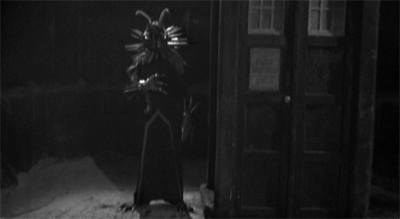
Face to face with evil...

Face to face with evil…

Continue reading

Doctor Who: Smith & Jones (Review)

To celebrate the fiftieth anniversary of the longest-running science-fiction show in the world, I’ll be taking weekly looks at some of my own personal favourite stories and arcs, from the old and new series, with a view to encapsulating the sublime, the clever and the fiendishly odd of the BBC’s Doctor Who.

Smith & Jones originally aired in 2007.

It’s only roentgen radiation. We used to play with roentgen bricks in the nursery. It’s safe for you to come out. I’ve absorbed it all. All I need to do is expel it. If I concentrate I can shake the radiation out of my body and into one spot. It’s in my left shoe. Here we go, here we go. Easy does it. Out, out, out, out, out. Out, out. Ah, ah, ah, ah! It is, it is, it is, it is, it is hot. Hold on.

Done.

You’re completely mad.

You’re right. I look daft with one shoe.

– the Doctor and Martha get off to a good start

I’d argue that Smith & Jones is Russell T. Davies’ most successful season-opener of Doctor Who. By its third year, Davies had firmly established the format of the show, to the point where he could successfully lose both of his leading actors. Christopher Eccleston had been replaced by David Tennant at the end of the first season, and Billy Piper had departed at the end of the second. Davies had demonstrated that the series could survive a cast rotation like that, and there’s a sense of looseness about Smith & Jones that suggests the show has really found its comfort zone.

The reason that Smith & Jones works so very well is not that it has an abundance of ambition. Its goal is relatively modest: to tell an enjoyable modern day adventure while introducing a new companion to the show. The beauty is in the execution. Smith & Jones races along, barely pausing to catch its breath, relying on Tennant’s abundant charisma, a constant flow of clever high concepts and a charming new companion to carry it through.

It works surprisingly well.

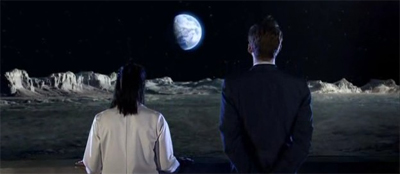
Standing in the Earthlight...

Standing in the Earthlight…

Continue reading

Doctor Who: Planet of Fire – Special Edition (Review)

To celebrate the fiftieth anniversary of the longest-running science-fiction show in the world, I’ll be taking weekly looks at some of my own personal favourite stories and arcs, from the old and new series, with a view to encapsulating the sublime, the clever and the fiendishly odd of the BBC’s Doctor Who.

Planet of Fire originally aired in 1984.

I don’t know where the girl is. I don’t have the comparator!

Commence the burning!

No! You must believe me!

Oh, but I do believe you. Commence the burnings!

Stop this!

You are quite powerless. Continue the sacrifices. See that this Doctor burns slowly.

– The Doctor and the Master continue the theme for the year

Planet of Fire is a strange little episode, positioned as it is directly before The Caves of Androzani. Writer Peter Grimwade was effectively assigned a set of list of story points to get through (write Kamelion and Turlough out, kill the Master, write Peri in) and manages to hit just about all of them successfully. It’s a wonder that the serial isn’t a gigantic mess, especially given that it comes from the writer of Time-Flight. On the other hand, though the serial starts off in a rather interesting manner, it ends as a disappointingly conventional adventure, calling to mind Frontios from earlier in the season.

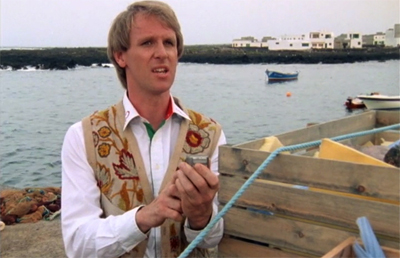
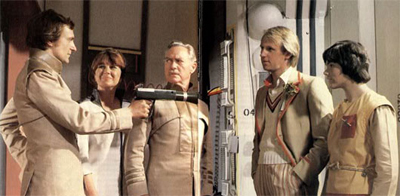
Davison's not waisted here...

Continue reading

Doctor Who: The Rescue (Review)

To celebrate the fiftieth anniversary of the longest-running science-fiction show in the world, I’ll be taking weekly looks at some of my own personal favourite stories and arcs, from the old and new series, with a view to encapsulating the sublime, the clever and the fiendishly odd of the BBC’s Doctor Who.

The Rescue originally aired in 1965.

Oh, but Doctor, the trembling’s stopped.

Oh, my dear, I’m so glad you’re feeling better.

No, not me, the ship.

– Barbara and the Doctor

The Rescue is a surprisingly sturdy two-parter, following directly on from The Dalek Invasion of Earth. Despite the fact it’s noticeably brief, the adventure is fairly important in the grand scheme of Doctor Who, representing the first time that the show has a recruited a new companion since our bunch of time-travelers departed Earth. However, it’s also a well-told little story, and one which emphasises the relatively subtle shift in the Doctor’s character and role in the story.

While An Unearthly Child and The Daleks presented the character as a cantankerous and untrustworthy trickster, the show has gradually pushed the character into the role of the hero, culminating in the Doctor’s successful attempt to save the whole planet Earth in The Dalek Invasion of EarthThe Rescue continues this trend, presenting the Doctor as a genuinely sympathetic and compassionate old man, pretty far from the grump we first met.

The version of the Doctor we see in The Rescue feels a lot more like the character we’d come to love over the rest of the show’s fifty-year history.

Here' there be monsters...

Here’ there be monsters…

Continue reading

Doctor Who: The Name of the Doctor (Review)

How do we get down there? Jump?

Don’t be silly. We fall.

– Clara and the Doctor set things straight

Like The Wedding of the River Song, The Name of the Doctor suggests that Moffat might be better served by reverting to the Davies-era model of two-part season finalés. The strongest season ender of the Moffat era (and probably the best season finalé of the revived show) was The Big Bang, because it felt like Moffat had enough space to allow his ideas to breathe. The Name of the Doctor is a lot sharper and a lot more deftly constructed than any of the closing episodes from Russell T. Davies’ seasons, but it feels a little too compact, a little too tight for its own good.

To be fair, Moffat is has very cleverly structured his season. The mystery of Clara was seeded as early as Asylum of the Daleks and hints have been scattered throughout the past year of Doctor Who. Even the build-up to the final line of the episode feels like an idea that Moffat has been toying with since The Beast Below. Despite all this, it still feels like The Name of the Doctor could do with a little more room to elaborate and develop the concepts at the core of the story.

Journey to the centre of the Doctor?

Journey to the centre of the Doctor?

Continue reading

Doctor Who: Time-Flight (Review)

To celebrate the fiftieth anniversary of the longest-running science-fiction show in the world, I’ll be taking weekly looks at some of my own personal favourite stories and arcs, from the old and new series, with a view to encapsulating the sublime, the clever and the fiendishly odd of the BBC’s Doctor Who.

Time-Flight originally aired in 1982.

I’ve never heard such an extravagant explanation.

– Hayter’s gonna hate

Time-Flight is a much maligned piece of Doctor Who, and hardly the best way to round out a season that has, generally speaking, done a reasonable job introducing a new lead actor following the departure of the most iconic actor ever to play the role. The show’s nineteenth season holds together reasonably well, with Earthshock generally highly regarded and only Time-Flight considered to be a complete failure.

And yet, despite that, I can’t hate Time-Flight. That’s not to suggest that the traditional criticisms of the serial are off-base. They are entirely spot-on. The production is shoddy, the plot is nonsense and the dialogue is terrible. It seems like everybody was trying to push one last story out the door before breaking for holidays, and nobody cared too much about the final product. And yet, despite that, I find myself able to forgive quite a lot of the show’s problems.

Don’t get me wrong. It’s not good Doctor Who. It’s not even passable Doctor Who. However, I’d argue that it is nowhere near the worst that the Davison era would produce.

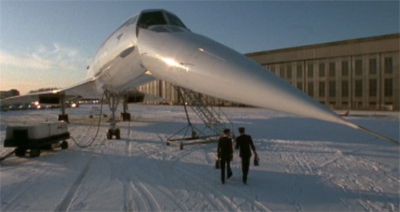
Keeping the nose clean...

Keeping the nose clean…

Continue reading

Doctor Who: Earthshock (Review)

To celebrate the fiftieth anniversary of the longest-running science-fiction show in the world, I’ll be taking weekly looks at some of my own personal favourite stories and arcs, from the old and new series, with a view to encapsulating the sublime, the clever and the fiendishly odd of the BBC’s Doctor Who.

Earthshock originally aired in 1982.

I would suggest you get your people well back. The hatch may be booby-trapped.

What about you?

Well, my arms are only this long. I can’t get any further away.

– the Doctor and Scott

Earthshock is regarded as one of the stronger stories of Peter Davison’s tenure on Doctor Who. It’s easy enough to see why. After all, it features not one but two memorable twists. It also harks back to the classic “base under siege” stories of the Patrick Troughton era. While it’s still very clearly a piece of early eighties Doctor Who, its production values hold up rather well compared to adventures from that era of the show. It’s written by Eric Saward and, like The Visitation, it has that same sense of tension and pace, building towards a truly massive final twist.

And yet, despite that, I find it very difficult to love Earthshock. I suspect a lot of that is down to how it seems like Doctor Who learned all the wrong lessons from Earthshock, retroactively tainting an otherwise very solid serial.

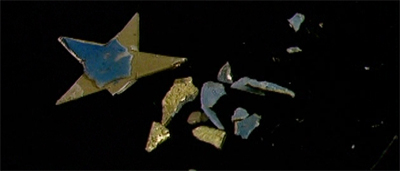
Shattered...

Shattered…

Continue reading

Doctor Who: Black Orchid (Review)

To celebrate the fiftieth anniversary of the longest-running science-fiction show in the world, I’ll be taking weekly looks at some of my own personal favourite stories and arcs, from the old and new series, with a view to encapsulating the sublime, the clever and the fiendishly odd of the BBC’s Doctor Who.

Black Orchid originally aired in 1982.

Why would I attack you? Have you done me any harm?

No!

No, then I’ve no reason to harm you. And besides…

Besides what?

Well, it wouldn’t be cricket.

– the Doctor, Ann Talbot and Muir

Black Orchid is pretty damn frustrating. There’s a lot of interest here, but sadly it’s mostly from a technical point of view. This is the first two-part adventure since The Sontaran Experiment. It’s also the first historical story told with no science-fiction elements excluding the TARDIS crew since The Highlanders. It’s also the penultimate adventure starring this version of the TARDIS crew, and the last Fifth Doctor serial before his world is turned upside down in Earthshock. So there’s a lot that should be interesting here.

Unfortunately, the writing is at best generic and at worst actively crap. Black Orchid feels exactly like the sort of thing that the BBC was doing without countless television shows other than Doctor Who, so Black Orchid needs to be able to do it to a reasonable standard. Instead, it feels like a murder mystery written by somebody writing with an Agatha Christie adaptation on in the background. It’s frustrating, because there’s a lot of potential here, but the end result is just disappointing.

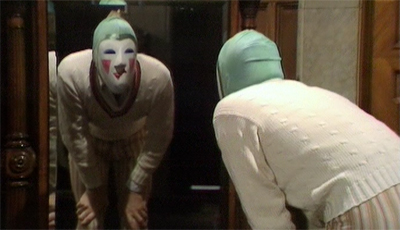
Clowning around...

Clowning around…

Continue reading

Doctor Who: The Visitation (Review)

To celebrate the fiftieth anniversary of the longest-running science-fiction show in the world, I’ll be taking weekly looks at some of my own personal favourite stories and arcs, from the old and new series, with a view to encapsulating the sublime, the clever and the fiendishly odd of the BBC’s Doctor Who.

The Visitation originally aired in 1982.

It’s survival, Doctor. Just as these primitives kill lesser species to protect themselves, so I kill them.

That’s hardly an argument.

It’s not supposed to be an argument. It’s a statement!

– the Terileptil is in no mood for debate with the Doctor

As far as writing débuts go, The Visitation is not a bad first script. Writer Eric Saward had experience writing for radio, but The Visitation was his first live action script to be produced. It’s a pretty solid piece of Doctor Who, even if it’s not anything exceptional. Then again, Robert Holmes’ first script was the perfectly average The Krotons. So there’s room for improvement, and The Visitation is not a bad place to start from.

Of course, Holmes feels like the appropriate comparison here. Not only was Saward a massive fan of Robert Holmes, with the treatment of the ailing Holmes during The Trial of a Time Lord serving as one of the reasons for his departure from the show, but it also seems that The Visitation was very clear attempt to emulate Holmes’ approach to Doctor Who. In fact, it feels like an attempt to update Holmes’ Third Doctor story, The Time Warrior.

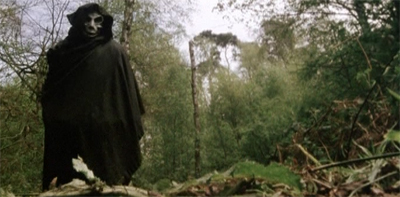
Death stalks the countryside...

Death stalks the countryside…

Continue reading

Doctor Who: Kinda (Review)

To celebrate the fiftieth anniversary of the longest-running science-fiction show in the world, I’ll be taking weekly looks at some of my own personal favourite stories and arcs, from the old and new series, with a view to encapsulating the sublime, the clever and the fiendishly odd of the BBC’s Doctor Who.

Kinda originally aired in 1982.

My dear, you can’t possibly exist, so please go away.

– a figment of Tegan’s imagination… or is it?

Every once in a while, there’s a story that undergoes something of a critical reappraisal among Doctor Who fans, as particular fans champion a forgotten story as a classic, attack the assertion that a given story is a classic or even suggest a stinker is in serious need of reevaluation. I actually like that, even fifty years after the show originally aired, there are still discussions to be had around what the good, bad and indifferent stories are. I think Kinda has cycled through this process quite a bit – a story initially overlooked in Peter Davison’s “much better than you remember, if you can get past the cheesy production values” first season, but one that has been somewhat re-appraised in the decades that followed.

A hot-shot colonist...

Continue reading