• Following Us

  • Categories

  • Check out the Archives


  • Awards & Nominations

Doctor Who: Thin Ice (Review)

“How is that a screwdriver?”

“In a very broad sense.”

“Well, how is it sonic?”

“It makes a noise.”
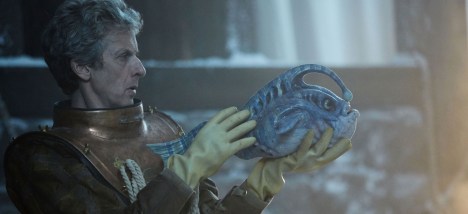
Pilot fish.

Thin Ice is a fairly solid historical adventure, one that takes a fairly conventional Doctor Who template and puts a slightly self-aware spin on it.

As with The Pilot and Smile, there is a decidedly nostalgic quality to Thin Ice. As with the two prior episodes, Thin Ice feels like a conscious throwback to the structure of the Davies era. Moffat’s final season as showrunner has opened with the classic present-future-past triptych that recalls Rose, The End of the World and The Unquiet Dead, or The Christmas Invasion, New Earth and Tooth and Claw or Smith and JonesThe Shakespeare Code and Gridlock. This is a very familiar and comforting pattern.

Hat’s off to him.

As with Smile before it, Thin Ice is built upon a stock plot. A series of mysterious disappearances lead the Doctor and his companion to one inescapable conclusion: there is a monster menacing Regency England. Thin Ice feels very much like the kind of episode that Mark Gatiss has been known to write, an affectionate historical depiction of an iconic chapter in British history like The Unquiet Dead, The Idiot’s Lantern or The Crimson Horror. Indeed, Thin Ice looks lavish, complete with all the costume drama trappings that one might expect.

However, much like Smile, there is a slight twist on the tale. Whereas Smile attempted to subvert the classic “machines gone awry” plot with a clumsy last-minute twist, Thin Ice instead makes a point to weave its commentary and theme through the familiar structure of the episode. Thin Ice might be a very conventional historical monster story, but it engages with themes of race and class that are often under-explored in these stories.
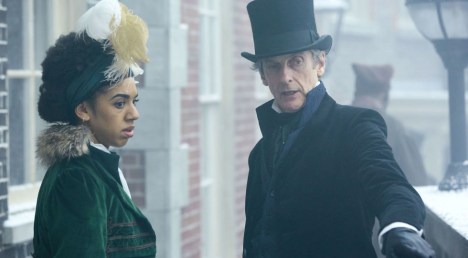
The time travelers who came in from the cold…

Continue reading

Doctor Who: Smile (Review)

Smile is a retro future thriller updated for the twenty-first century. It is 2001: A Space Odyssey and Logan’s Run by way of Ex Machina or The Girl With All the Gifts.

On the surface, Smile is the story of a rogue computer program seeking to enslave or destroy mankind. Popular culture is littered with that particular nightmare, a sentient AI that embarks upon patricide; Skynet from The Terminator, Alpha 60 in Alphaville. Indeed, Doctor Who has a rich history of playing with the trope; the sentient computer in The Keys of Marinus, B.O.S.S. from The Green Death, WOTON from The War Machines, P7E from Underworld. It is a classic science-fiction trope, and Smile plays with the idea of help robots becoming self-aware and murderous.

Bad bots.

Indeed, even the aesthetic of the episode consciously evokes those retro stories. Smile was filmed in Valencia’s City of Arts and Sciences, a beautiful architectural marvel defined by its smooth white surfaces and peaceful atmosphere. It feels very sterile and very clean, its minimalism evoking the set designs of those classic films and its relative lack of colour harking back to the time when Doctor Who was broadcast in black-and-white. For most of its runtime, Smile feels like a very old-fashioned piece of science-fiction.

However, around the halfway point, a shift takes place. All of a sudden, the smooth whites of the city give way to the grim industrial earth tones of the rocket. The episode seems to jump forward to gritty late seventies and early eighties science-fiction, the “used future” of Star Wars and Alien. As the episode continues, it pushes even further. Ultimately, it becomes a sly subversion of the archetypal “robot rebellion” story, instead exploring the implications of that narrative. The Vardi are transformed from renegade robots to freed slaves. It is a clever twist, albeit somewhat rushed.

Character arcs.

Continue reading

Doctor Who – The Return of Doctor Mysterio (Review)

What is that?

Well, in terms you would understand…

… sorry, there aren’t any.

The Return of Doctor Mysterio feels very much like a return to the aesthetic of the Doctor Who Christmas Specials of the Russell T. Davies era.

Russell T. Davies tended to build his Christmas Specials as blockbuster events, stories featuring gigantic invasions and the end of the world. In some ways, the perfect fodder for a family sitting down after Christmas dinner, half paying attention to the television and very much in need of a plot that was packed with spectacle while moving a mile-a-minute. As a rule, the Russell T. Davies specials did not demand the complete and devoted attention of the best episode, instead feeling more like a lavish desert than a hearty main course.

Here comes a hero.

Here comes a hero.

For Davies, Christmas entertainment itself seemed to be the genre to which he wrote, with his specials very consciously intended to evoke a general mood or feeling of Christmas television. Indeed, Davies would even extend the tone of his specials beyond stereotypical Christmas concerns as in The Christmas Invasion or The Runaway Bride. Voyage of the Damned is the most obvious example, a riff on The Poseidon Adventure and other maritime disaster films that have little directly to do with Christmas but air in constant rotation during the season.

Steven Moffat has tended to use his Christmas Specials as part of larger emotional and story arcs. A Christmas Carol involved some light “timey wimey” stuff. The Doctor, the Widow and the Wardrobe built to a big emotional reunion with the Pond family. The Snowmen was all about the Doctor’s angst over the loss of River and the Ponds. The Time of the Doctor was a subversion of the “thirteenth regeneration” story. Last Christmas was very much about Clara. The Husbands of River Song was about saying farewell to River.

No escape.

No escape.

In contrast, the big emotional beats of the Davies Christmas Specials tended to be drawn in broader terms. The departure of Christopher Eccleston meant that The Christmas Invasion had to deal rather directly with the arrival of David Tennant, but the Tenth Doctor’s heartbreak over the loss of Rose played out in the background of The Runaway Bride paying off in one big moment where he repeated her name. The continuity elements in The End of Time, Part I were largely superfluous to the broad storytelling.

The Return of Doctor Mysterio very much evokes to the storytelling sensibilities of the earlier Davies era. Even the story beats harken back to Christmases past. Nardole’s brief closing acknowledgement of River Song evokes the Tenth Doctor’s brief closing acknowledgement of Rose in The Christmas Invasion. The action climax of the Doctor on the bridge of a crashing alien ship hurdling towards a major metropolis feels lifted from Voyage of the Damned. However, there is also the fact that The Return of Doctor Mysterio is a broadly-drawn superhero film.

Damned if you do, damned if you don't...

Damned if you do, damned if you don’t…

Continue reading

Doctor Who: The Girl Who Died (Review)

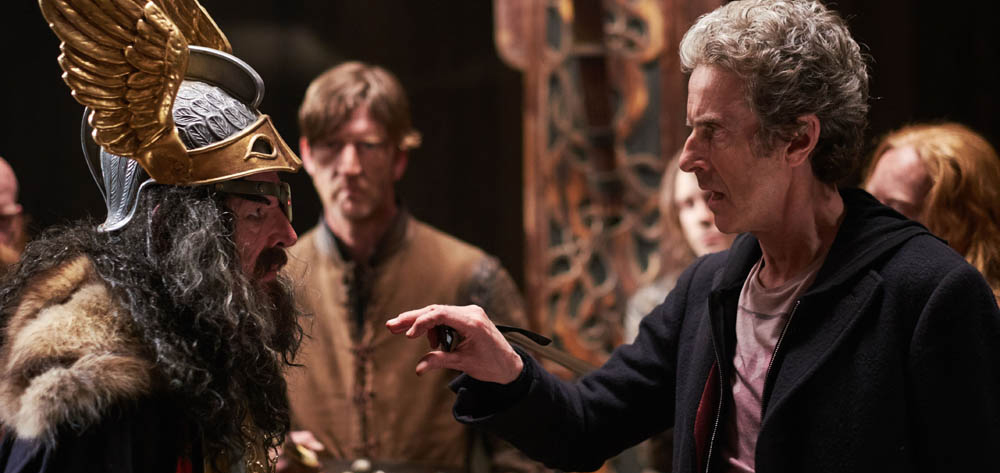
“He’s not really Odin, is he?”

“He hasn’t even got a yoyo.”

The Girl Who Died is very much in keeping with Jamie Mathieson’s previous scripts for Mummy on the Orient Express and Flatline. It is a script that expresses an affection and fondness for Doctor Who, but with just a hint of playful innovation. The Girl Who Died is recognisably part of the show, but in a way that feels like more than simple imitation or emulation. Mathieson does not just understand the mechanics of the show, he understands how and why they work in relation to one another.

After all, the set-up of The Girl Who Died is almost aggressively traditional. The Doctor wanders into a dangerous situation where he finds himself tasked with protecting a small community from a band of aggressive outsiders. Using his wits and no small amount of technobabble, the Doctor manages to stop the hyper-advanced aggressors in their tracks. He does this in a way that relies on trickery and subterfuge more than blunt force. The day is saved when the Doctor offers a quick-witted and chatty speech that sends his opponents reeling.

Not a patch on Odin.

Not a patch on Odin.

In terms of plot, there is not a lot happening here. The Mire are a fairly generic band of alien baddies, a stock science-fiction warrior race in the style of the Sontarans or the Klingons. (Indeed, Ronald D. Moore’s suggestion that the Klingons are “space Vikings” pays off here as the Mire find themselves squaring off against literal Vikings.) With the exception of Ashildr, most of the guest cast are reasonably bland; it seems highly unlikely that most of the audience will remember any of their actual names, instead remembering the Doctor’s “affectionate” nicknames.

However, The Girl Who Died takes the opportunity to flesh out its character dynamics, affording time and energy to long conversational (and philosophical) scenes in which the Doctor and Clara meditate upon responsibility and salvation. The Girl Who Died is very much an episode that feels like set-up, building towards that cliffhanger and into The Woman Who Lived, but its use of build-up is very canny and astute. Mathieson takes advantage of the two-part format adopted by the ninth season, expertly exploiting the space afforded by a two-parter.

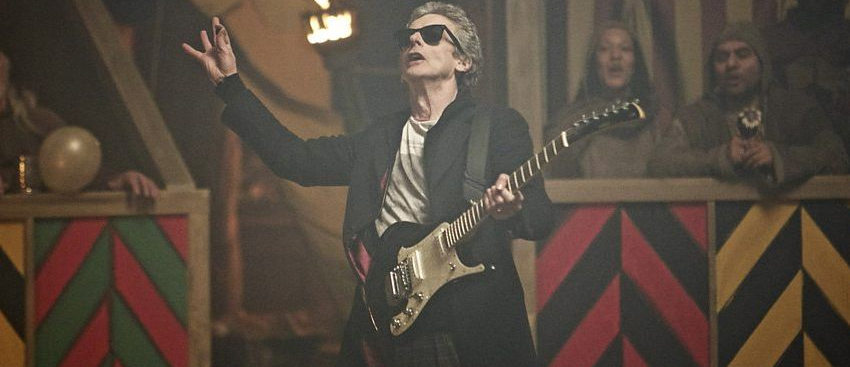
Viking Direct, eh?

Viking Direct, eh?

Continue reading

Doctor Who: The Witch’s Familiar (Review)

“Of course, the real question is where I got the cup of tea. Answer: I’m the Doctor, just accept it.”

– the Doctor tells it how it is

As is the norm for Moffat-era Dalek episodes, The Witch’s Familiar is a mess… but it is an interesting mess.

The Witch’s Familiar works best as a collection of intersecting character moments than a narrative in its own right. In some respects, The Witch’s Familiar feels like a season premiere in the same way that The Magician’s Apprentice did; it is light and breezy, with more energy devoted to character dynamics than to dramatic stakes. The Witch’s Familiar is quite blatantly set-up; it is all about establishing things that might possibly become more important later on. Davros is revived; the Hybrid is mentioned; Skaro is back in play.

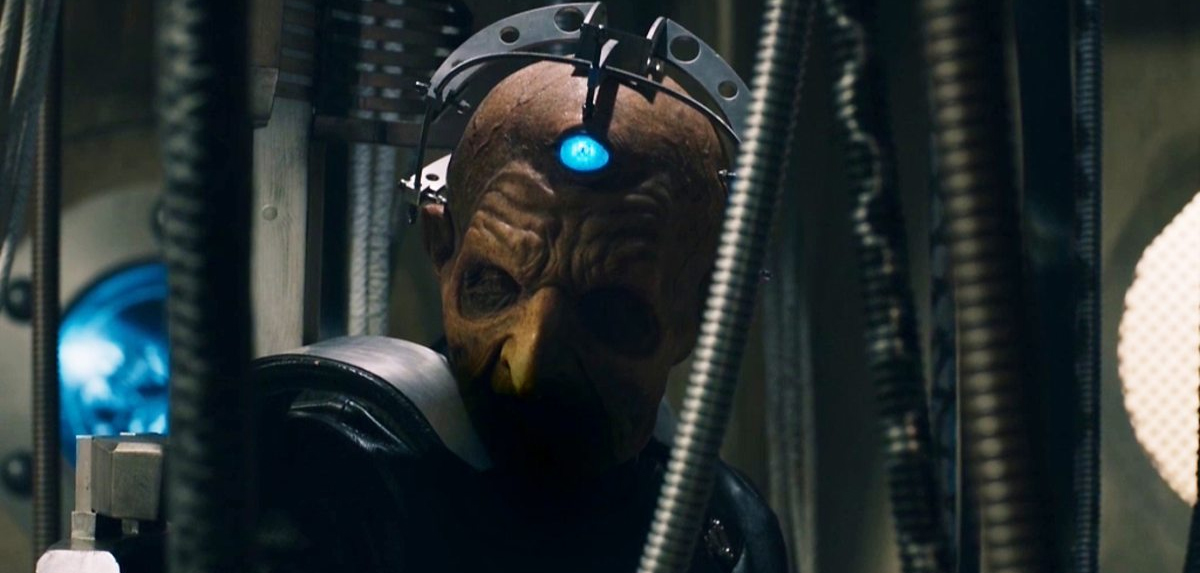
Destiny of the Davros...

Destiny of the Davros…

The plot is all over the place, with Moffat’s script avoiding retreading old thematic ground about “the Oncoming Storm” and justifiable genocide by barely alluding to the moral quandaries that The Magician’s Apprentice set-up. When Davros alludes to the idea of the Doctor wiping out the Daleks through a single act of murder, or harnessing all that power for his own ends, it feels like Davros is just barreling through a check list of cheap shots that any major adversary is expected to land when facing the Doctor. The Dalek Emperor did it more convincingly in The Parting of the Ways.

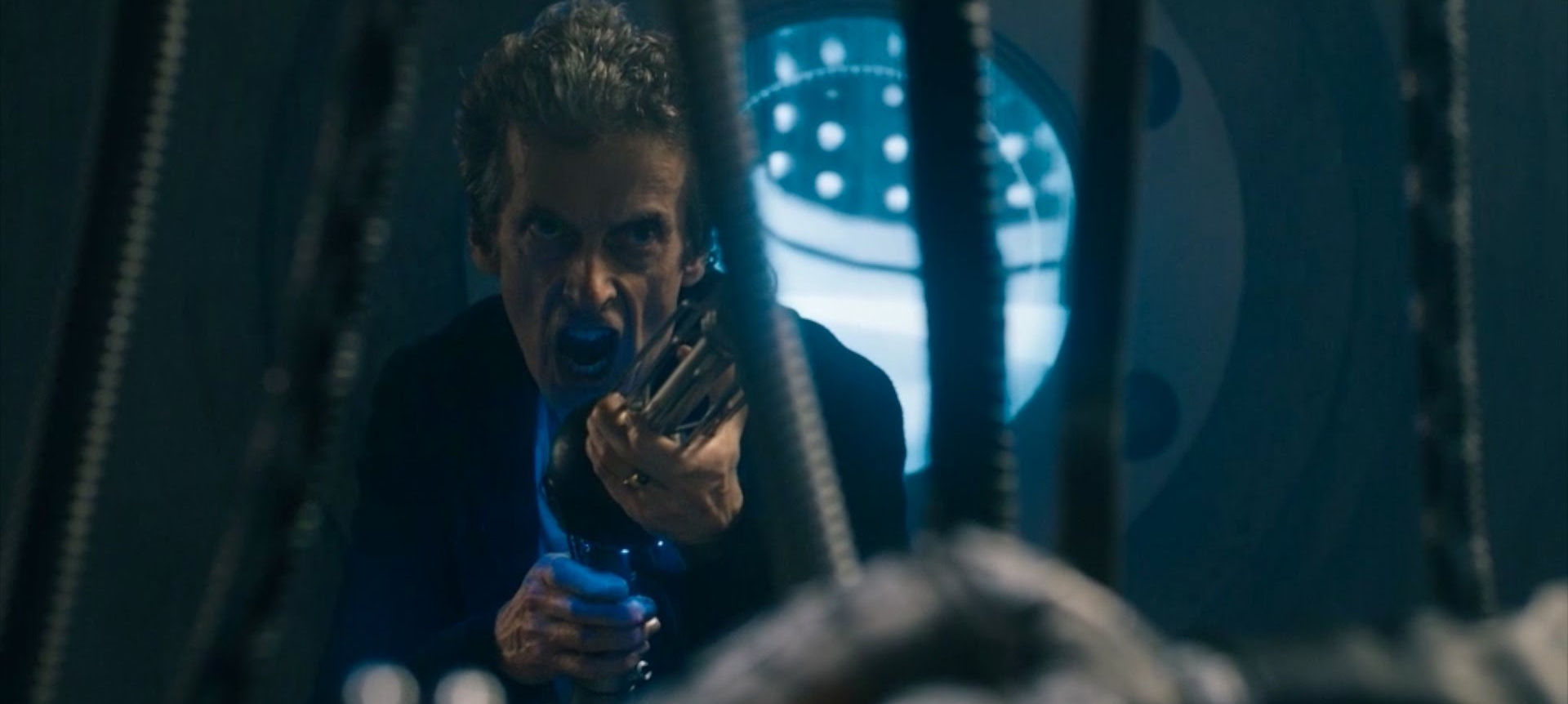
Still, this familiarity does allow The Witch’s Familiar to lock the Doctor and Davros in a room together for an extended period of time. It affords the pair the chance to trade barbs and to understand one another in a way that no previous story has attempted. One of the more interesting aspects of a season of ninety-minute stories told across multiple episodes in 2015 is that the format is remarkably different than a season of ninety-minute stories told across multiple episodes in 1989. This is a season of serialised stories, but it is not a return to the classic model.

Exterma- wait a minute!

Exterma- wait a minute!

The classic series would never have been able to pull off this sort of quiet and understated interaction between the Doctor and Davros. The nature of a classic Dalek story was to build to a climax of the Doctor and Davros screaming at each other across the room; the pleasure of The Witch’s Familiar is the space that it affords both characters to move past the shouting and to something towards mutual comprehension. It helps that The Witch’s Familiar has two fantastic central performers in Peter Capaldi and Julian Bleach.

The Witch’s Familiar might be yet another example of the Moffat era trying and failing to construct an entirely functional Dalek story, but it is quite possibly the single best Davros story ever told. (Give or take a Revelation of the Daleks.)

Shades of grey...

Shades of grey…

Continue reading

Doctor Who: The Magician’s Apprentice (Review)

“The TARDIS will not be entered. The TARDIS will be destroyed.

“Good luck with that. She’s indestructible.”

“Did the Doctor tell you that? Because you should never believe a man about a vehicle.”

 – The Daleks, Clara and Missy share some truths

The ninth season is certainly ambitious.

The idea of building an entire season around a series of interconnected two-parters is a departure from the show’s traditional format. It certainly makes it a lot harder to review the show on a week-by-week basis, if only because it means that reviewers are talking about each episode having only seen around half the story. That is not the way that people typically consume Doctor Who. Even modern DVD releases of the classic series package whole series together so it is not so much a four- (or six-) part episode as a single story.

Battlefield.

Battlefield.

Since it returned to television in 2005, Doctor Who has adopted an approach to narrative driven by the single episode as the default narrative unit. Sure, there were multi-part stories; but they were the exception rather than the rule. Sure, there were season long arcs; but they were largely driven by arc words and core themes as much as plot. This was, after all, the big controversy over Moffat’s “Impossible Girl” arc, which was presented as a plot mystery only to be revealed as a clever thematic point.

During the Davies era, the two-parters were typically allocated for big “event” episodes. There were roughly three in a season, and they allowed the show to adopt a bigger sense of scale and spectacle. The first two-parter was typically lighter and little bit toyetic (the “toy monster” two-parter) and the second was a lot darker and ominous (the “highlight of the season” two-parter). Davies would then use a two-parter to provide a suitably bombastic conclusion to the season, offering “blockbuster” family entertainment at the height of summer.

An axe to grind...

An axe to grind…

Continue reading

Star Trek: Enterprise – Future Tense (Review)

Next year, Star Trek is fifty years old. We have some special stuff planned for that, but – in the meantime – we’re reviewing all of Star Trek: Enterprise this year as something of a prequel to that anniversary. This April, we’re doing the second season. Check back daily for the latest review.

The Temporal Cold War arguably works better as a metaphor than a plot.

There is something quite compelling about the imagery of Star Trek‘s past and future doing battle within the confines of a troubled prequel, of outside forces meddling in a narrative, of the characters caught in the grip of forces they cannot understand. To expect the Temporal Cold War to make sense is to miss the point; to expect clear resolution is foolhardy. Instead of serving as a strong narrative thread running through Star Trek: Enterprise, it serves as a visual manifestation of the troubles haunting the show. It also serves as a very effective story backdrop.

Let's do the time warp again...

Let’s do the time warp again…

Future Tense has a pretty straightforward story. Archer and his crew discover a piece of floating space debris. They bring it aboard, discovering it is not what it appears to be. The Suliban show up, claiming salvage rights. The Tholians arrive, demanding the same. A chase ensues, as Archer tries to outrun the two alien species desperate to get their hands on the technology. Future Tense is a classic chase narrative, as multiple parties fight over what Hitchcock described as a “macguffin.” Little is revealed, nothing is proven, everything is resolved so neatly that it seems divine intervention is at work. Maybe it is.

And yest, despite – or perhaps because – of this narrative simplicity, Future Tense stands as a highlight of the troubled second season. Future Tense leaves almost every question about the Temporal Cold War unanswered, but it is a tight and efficient action adventure. Like Cold Front before it, it recognises that the Temporal Cold War is a story as much as a backdrop. The fact that it is mysterious and nonsensical and arbitrary make it all the more compelling. After all, that is how it must appear to Archer.

Alien bodies...

Alien bodies…

Continue reading

Doctor Who: Series Eight (or Thirty-Four) (Review/Retrospective)

You asked me if you’re a good man and the answer is, I don’t know. But I think you try to be and I think that’s probably the point.

Peter Capaldi’s first season of Doctor Who is astonishingly linear.

That feels like a very weird thing to type, but it’s true. Executive producer Steven Moffat backed away from the ambitious structural experiments that defined the two previous seasons, pushing the show back towards a fairly conventional and logical structure. Between Deep Breath and Death in Heaven, there was a clear logical progression. The season did not begin at the end like The Impossible Astronaut did, or end at the beginning like The Name of the Doctor.

doctorwho-deepbreath2

Instead, things progressed cleanly and logically. Character arcs evolved in a very clear and structured way; themes built organically; the season’s central mysteries had little to do with the intricacies of time travel and more to do with guessing the nature of the returning threat. The result was perhaps the most accessible and linear season of Doctor Who since Steven Moffat’s first year as executive producer. In fact, it was the first season not to be split since Steven Moffat’s first season as executive producer.

To be fair, it is easy to see why such an approach was taken. While Peter Capaldi might be one of the most high profile and most successful actors to ever take on the lead role, changing the lead actor on successful television show is always a risky proposition; it is impossible to be too careful in managing the transition. The actor’s first season in the role is an endearing effort; a rather safe first half of the season giving way to a more adventurous and playful second half. While the season has a few flaws, it is hard to consider it anything but a massive success.

doctorwho-intothedalek17

Continue reading

Doctor Who: Last Christmas (Review)

There’s a horror movie called Alien? That’s really offensive. No wonder everyone keeps invading you.

Last Christmas is perhaps the most Moffat-esque Christmas Special of the Moffat era.

As such, it is an episode that will inevitably provoke a strong reaction, playing as it does to the writer’s strengths and interests in Doctor Who. As a show, Doctor Who has a long history of crashing genres into one another. One of the most endearing aspects of the show is the way that it can be a completely different show from week to week. One week, it is a western; the next, it is a horror film. One episode is a period adventure; another is a science-fiction comedy. Doctor Who is a show about a mad man in a box who crashes into random stories.

doctorwho-lastchristmas4

Last Christmas is quite overt about this. When Shona wakes up towards the end of the episode, we are treated to a glimpse of her “to do” list for Christmas Day, which happens to feature a variety of clear influences on the episode. Strangely, she plans to open her Christmas Day binge with a double-bill of Alien and The Thing From Another World, before taking a breather and returning for Miracle on 34th Street – you really do need a bit of space before properly digesting the truly heavy stuff. (She’s also marathoning the Hugo-winning Game of Thrones.)

Last Christmas is a story that is incredibly (and almost cheekily) aware of its own fictionality. As with so much of Moffat’s Doctor Who, it is a story about stories. And dreams, which are really the same thing. “Time travel is always possible in dreams,” the Doctor observes, to borrow a quote from The Name of the Doctor. Dreams and stories.

doctorwho-lastchristmas Continue reading

Doctor Who: Death in Heaven (Review)

Welcome to the only planet in the universe where we get to say this. “He’s on the payroll.”

Am I?

Well, technically.

How much?

Shush.

Death in Heaven doesn’t work quite as well as Dark Water. Then again, it has a lot more to do.

After all, Dark Water was a sublimely extended joke – a forty-five minute gag. It is easier to affectionately parody the excess of the Davies-era finalés in the first part than it is to offer a straight-up imitation of those same finalés in the second. This simply isn’t the sort of season finalé to which Moffat’s style lends itself. This is very much a return to the scale and mood of The Parting of the Ways, Doomsday, The Last of the Time Lords or Journey’s End – the type of big emotive farewell season-ender that the show hasn’t done in quite a while.

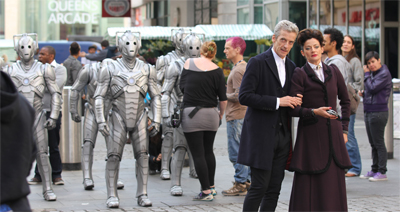
"Hm. It used to be a lot easier to inspire terror. Time was five Cybermen marching around St. Paul's Cathedral..."

“Hm. It used to be a lot easier to inspire terror. Time was five Cybermen marching around St. Paul’s Cathedral…”

This is a different beast than The Name of the Doctor, The Wedding of River Song or even The Big Bang. After all, although The Big Bang was the second part of a season finalé with the entire universe at stake, the bulk of the story featured familiar characters in a relatively confined space. In contrast, Death in Heaven is very much structured as an “event” story built around an iconic adversary and teasing the departure of a long-term companion. It is full of big emotional beats and stunning set-pieces, placing the entire Earth at the mercy of a massive extraterrestrial threat.

Most of Death in Heaven feels like Moffat is writing in a strange language; he knows the words, but the grammar does not entirely fit. And yet, despite that, Death in Heaven mostly works. It doesn’t work as well as it might; it isn’t the strongest script of the season by any stretch; it is a little disjointed, a little all over the place, a little too giddy with itself in places. However, it is as clever as viewers have come to expect from the show and the writer, remaining in tune with the season’s core themes and putting an impressive capstone in Peter Capaldi’s first season as the Doctor.

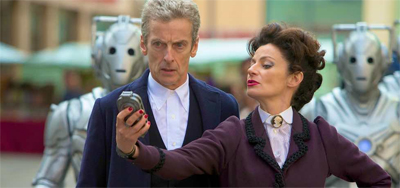
Psycho selfie!

Psycho selfie!

Continue reading